
15 Home Office Organization Ideas on a Budget
Hi, I’m Emma! A home office does not need a renovation to feel calm and work-ready — it needs a place for every pen, paper, and charging cable, and a desk you can actually see. The good news is that organizing a home office on a budget is mostly about small containers, a few hooks, and one honest clear-out, not new furniture. These are my 15 favorite home office organization ideas on a budget, and most of them cost under $25 — several cost nothing at all, using jars, boxes, and baskets already in your house.
The best home office organization ideas on a budget are a pegboard wall above the desk, a rolling cart that parks beside it, labelled jars for small supplies, cable clips under the desk, and a weekly reset tray that keeps the desktop clear. Most cost under $25 using dollar-store finds, thrifted boxes, and things already in the house — and every one of them makes a small workspace feel calm, focused, and ready for the day.
A Dollar-Store Desk Caddy for Pens and Supplies
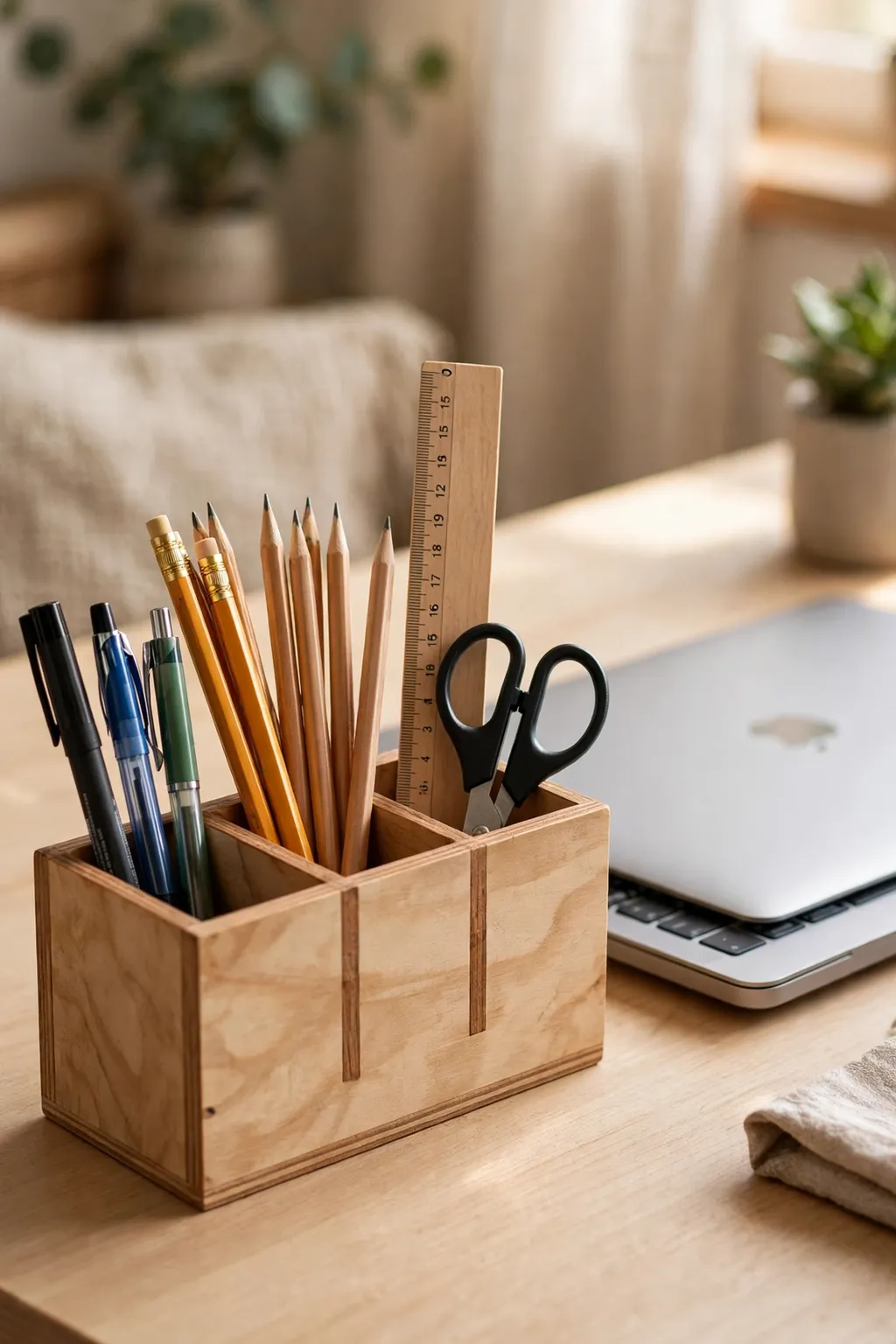
Start with the simplest fix of all: one caddy that holds every pen, pencil, and pair of scissors in one spot. A small wooden or metal caddy from the dollar store corrals the supplies that usually scatter across the desk, and keeping it at the back corner of the desk leaves the front clear for actual work. Sort it once — pens in one slot, scissors and rulers in another — and the desk stops swallowing things. For more desktop ideas, see my desk organization ideas on a budget.
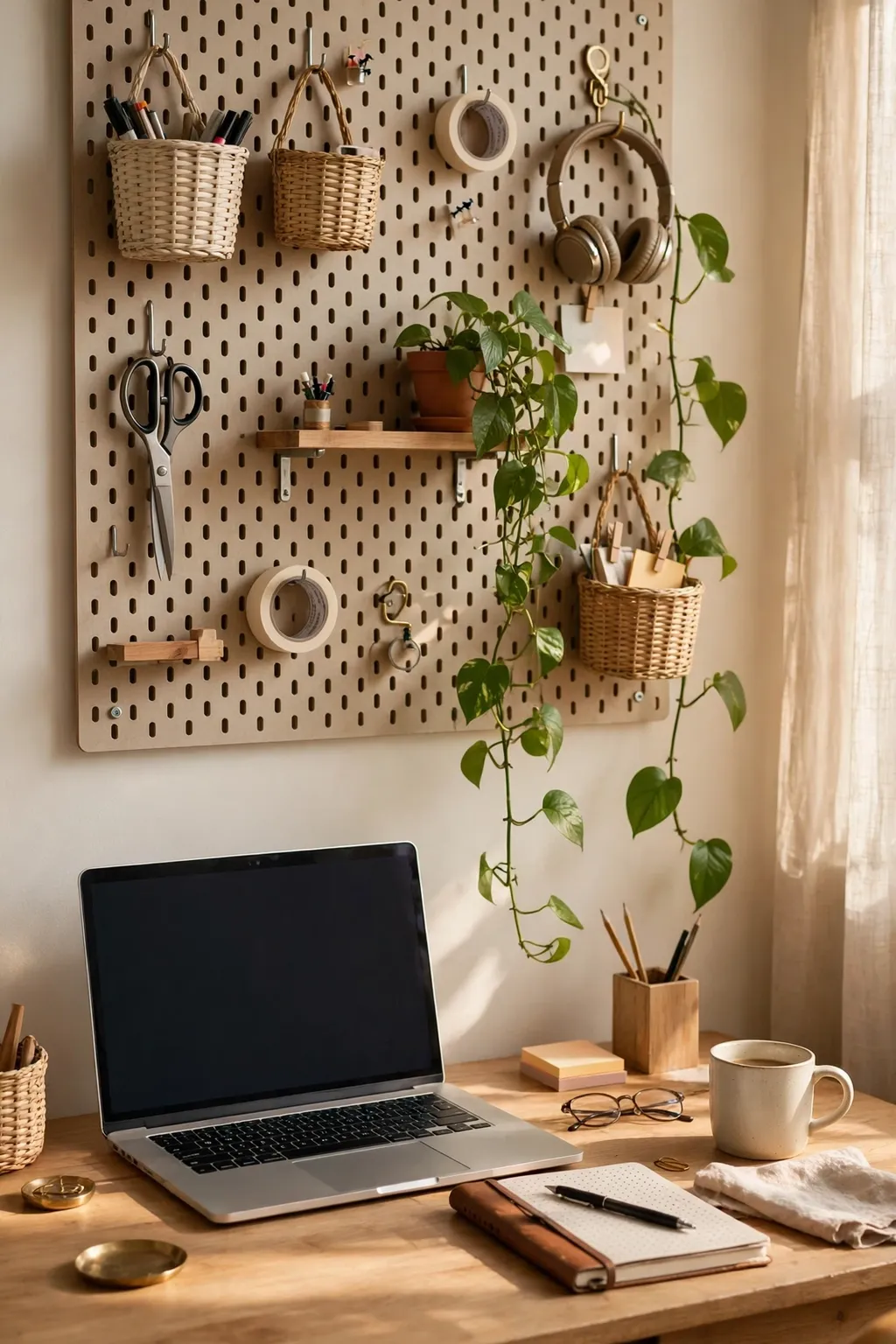
A Pegboard Wall Above the Desk
A pegboard turns the wall above your desk into storage without taking a single inch of desk space. Hang hooks for scissors and tape, small baskets for chargers and sticky notes, and a little shelf for a plant or a clock — and move everything around in seconds when your routine changes. A small pegboard costs less than a takeout lunch, paints easily to match the room, and keeps the tools you reach for most right at eye level. For more wall-storage ideas, see my craft room organization ideas on a budget.
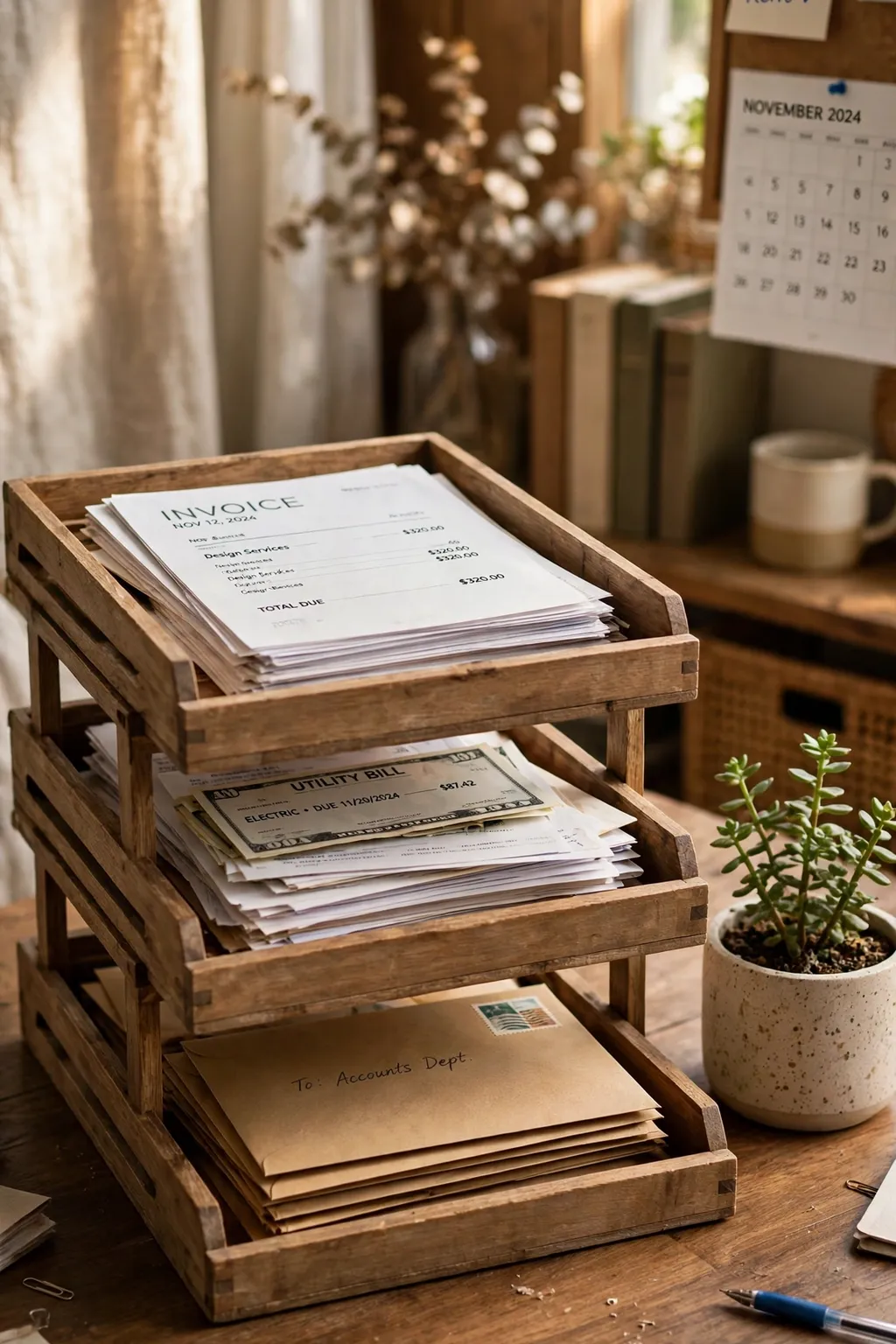
Stackable Letter Trays for Paper Piles
Paper piles grow because paper has nowhere to go, so give it three places: one tray for incoming mail, one for bills to pay, and one for things to file. Stackable letter trays cost a few dollars at the dollar store, sit neatly at the back of the desk, and turn a scary pile into a short, visible queue. Empty the top tray every Friday — file it, pay it, or toss it — and the pile never gets a second chance to grow. For more cheap organizing wins, see my Dollar Tree organization hacks on a budget.
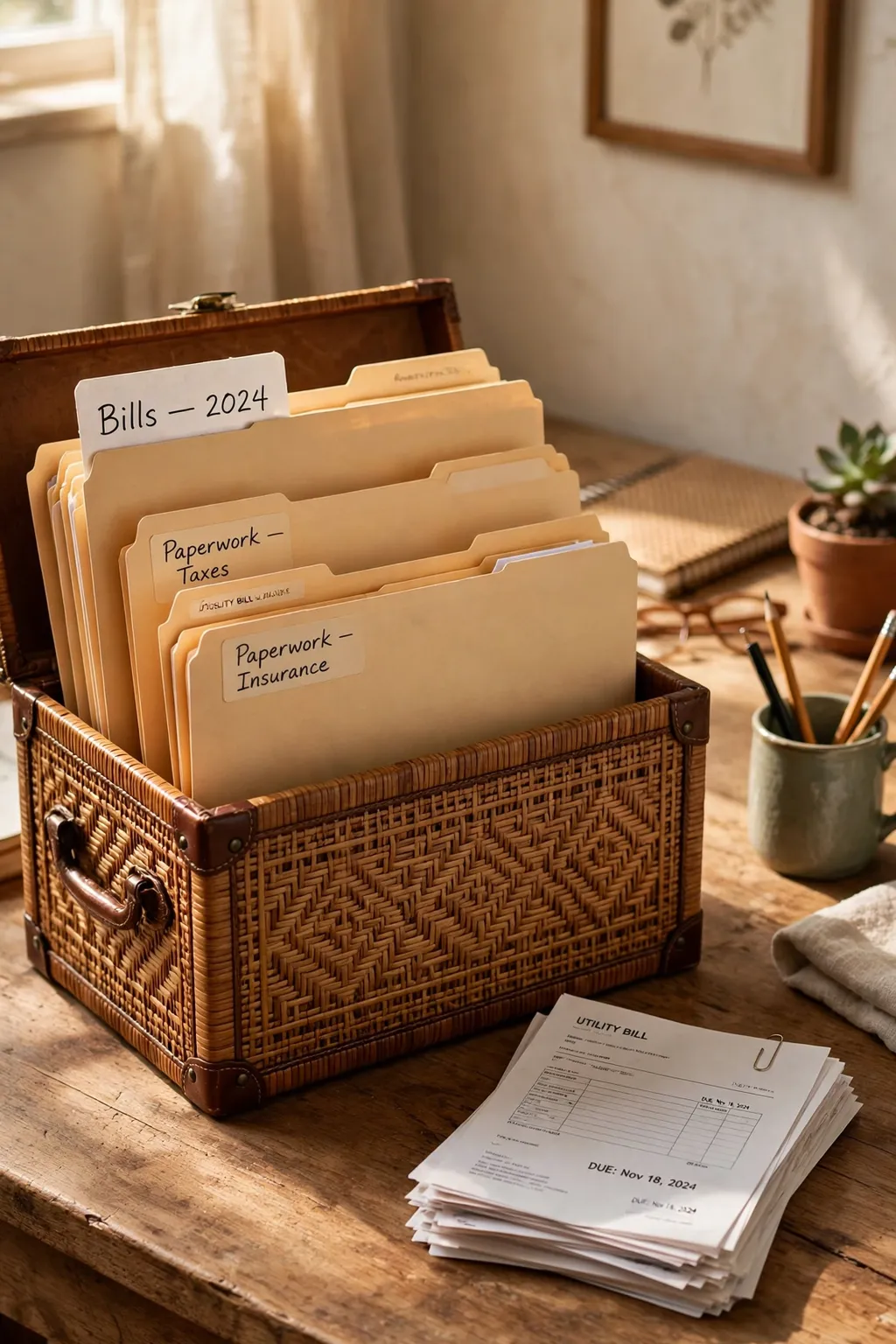
A Thrifted Filing Box for Bills and Paperwork
Not every paper needs a filing cabinet — a single sturdy filing box with a few labeled folders handles most of a home office. Thrift stores are full of decorative file boxes for a dollar or two, and a set of manila folders labeled by month or by topic keeps bills, tax papers, and warranties findable in seconds. Keep the box on a shelf or under the desk, not on the desktop, so the papers stay filed instead of becoming a pile. For more home office inspiration, see my home office makeover ideas on a budget.
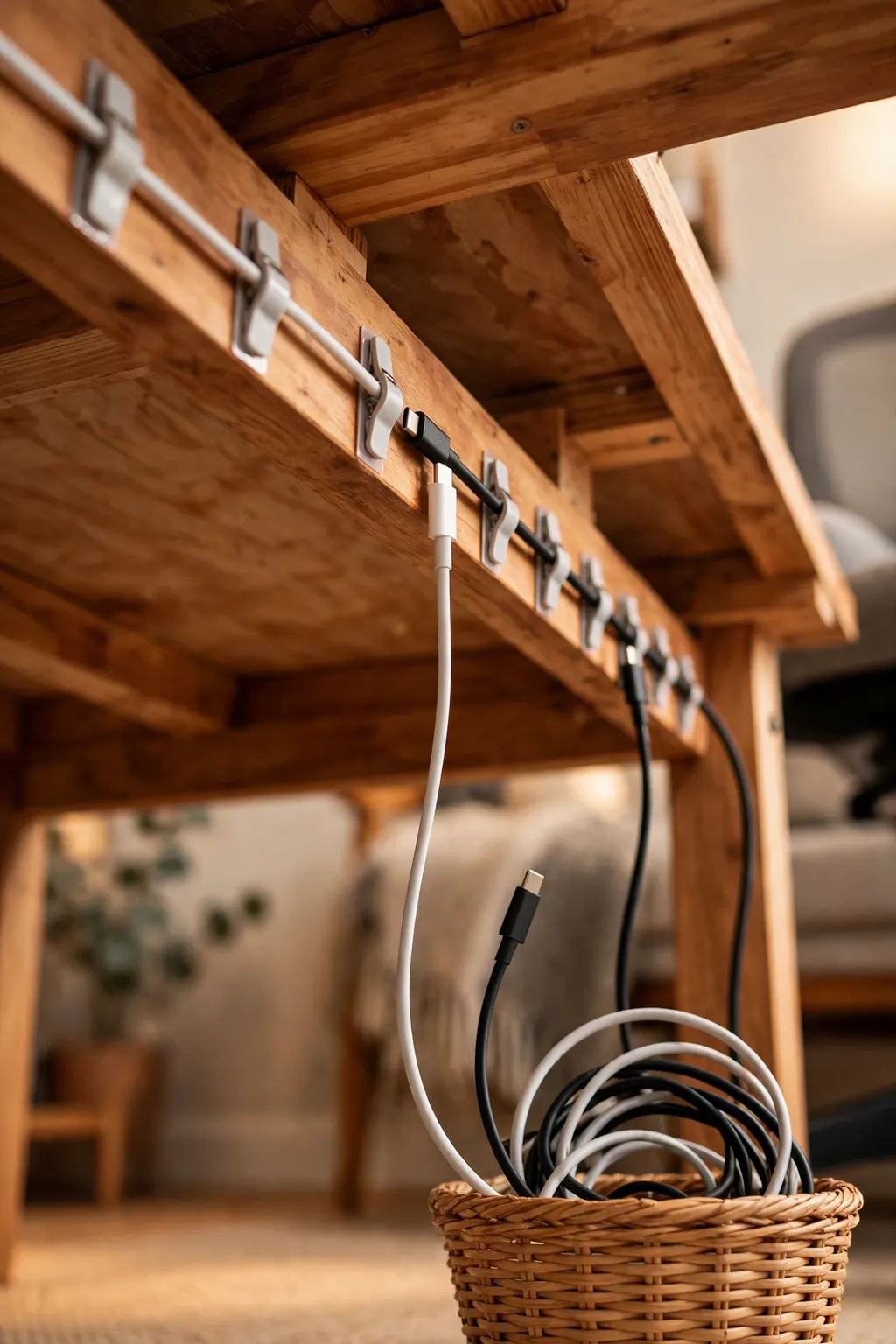
Cable Clips and a Cord Basket Under the Desk
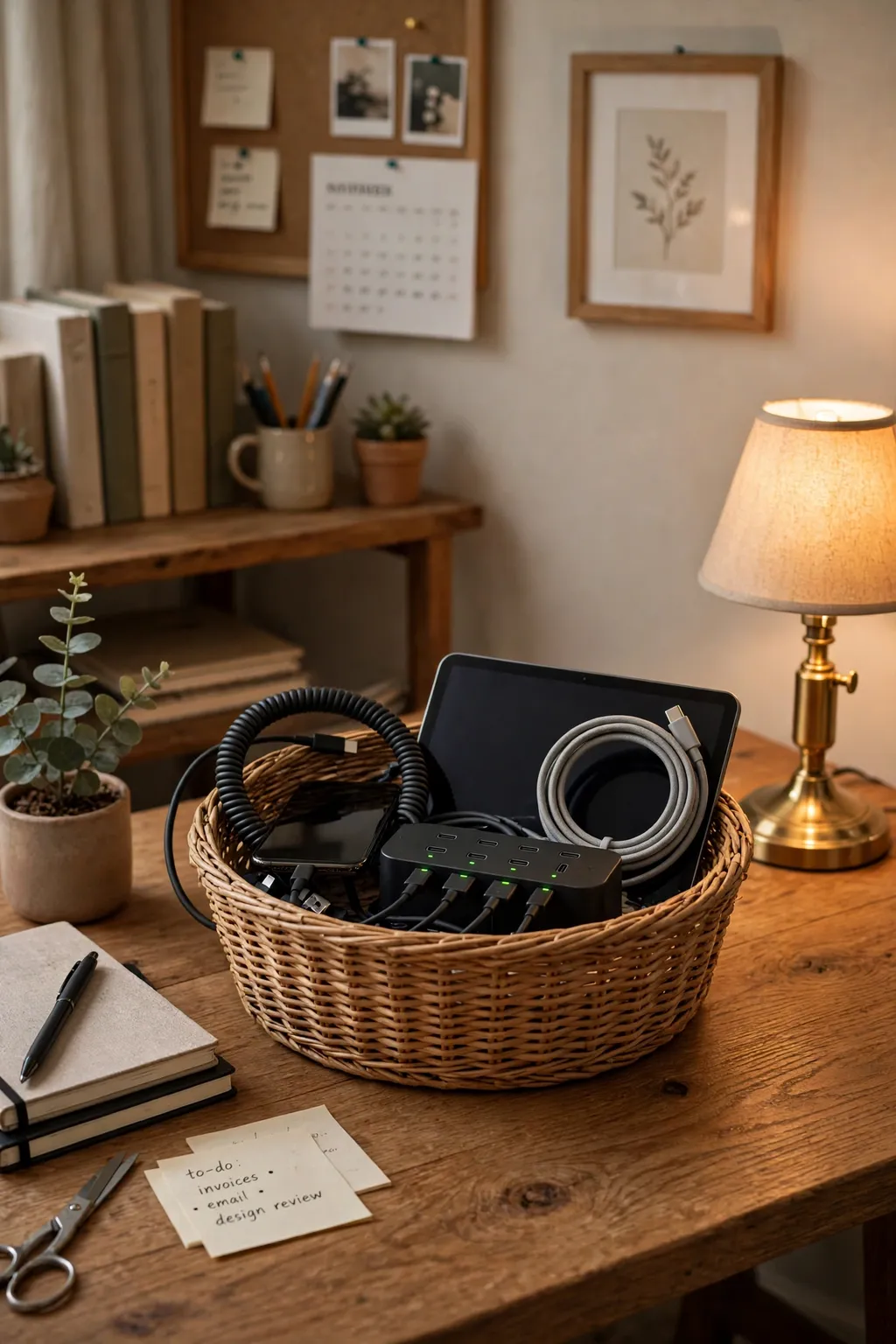
Tangled cords make even a tidy desk look messy, and they are the easiest mess to fix. Stick a row of small adhesive cable clips along the back edge of the desk so each charger has a home, and drop the power strip and extra cord slack into a small woven basket under the desk. The whole fix costs under $10, takes ten minutes, and means you never crawl under the desk hunting for the right cable again. For more office comfort ideas, see my cozy Christmas office decor ideas on a budget.
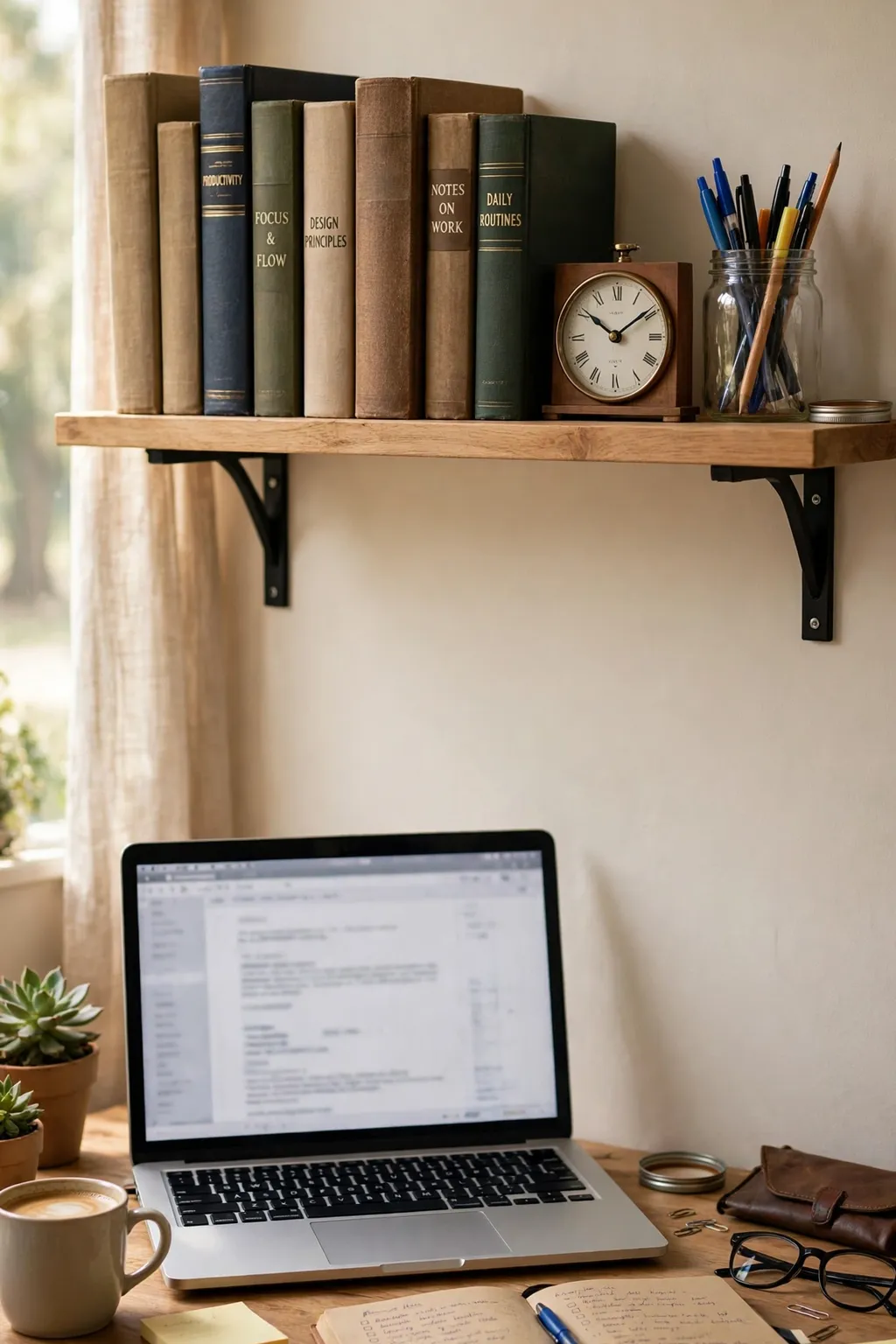
A Wall-Mounted Shelf for Books and Supplies
When the desk is full, look up: one wall-mounted shelf above the desk holds the books, binders, and reference materials that do not need to be within arm’s reach. A simple wooden shelf with two brackets costs very little, installs in twenty minutes, and frees a surprising amount of desk space. Keep only what you use weekly on the shelf and move the rest to a closet — a shelf is storage, not a display case for everything you own. For more shelf ideas, see my bookshelf organization ideas on a budget.
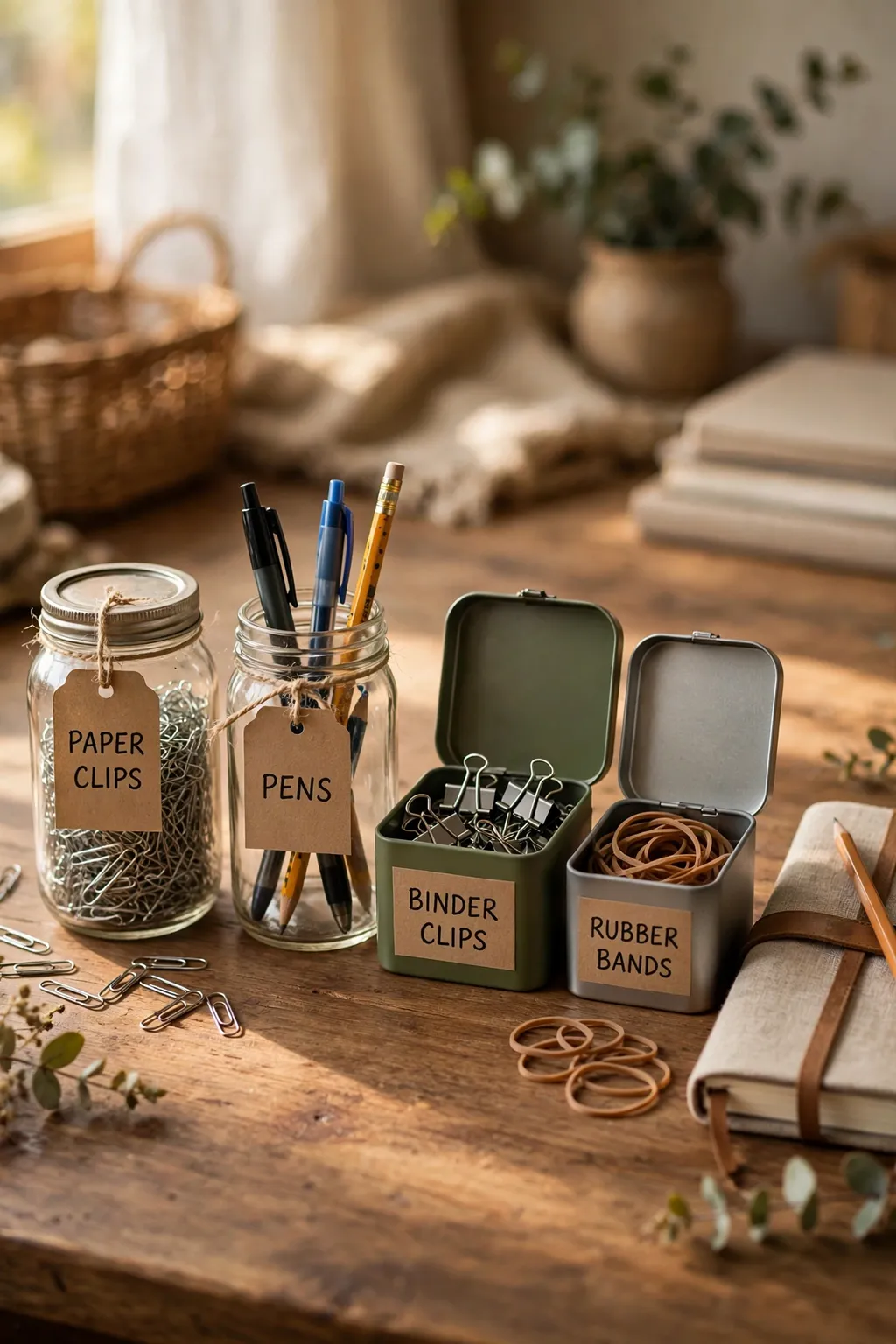
Labelled Jars and Tins for Small Supplies
Paper clips, binder clips, rubber bands, and thumbtacks vanish into drawers unless they have a visible home. Wash out a few glass jars or small tins, label them with a marker or a strip of tape, and line them up on the desk or a shelf — you can see what is inside at a glance, and the labels mean everything goes back where it belongs. Jars cost nothing if they come from the kitchen, and a row of them looks far more charming than a junk drawer ever will. For more jar-storage ideas, see my spice rack organization ideas on a budget.
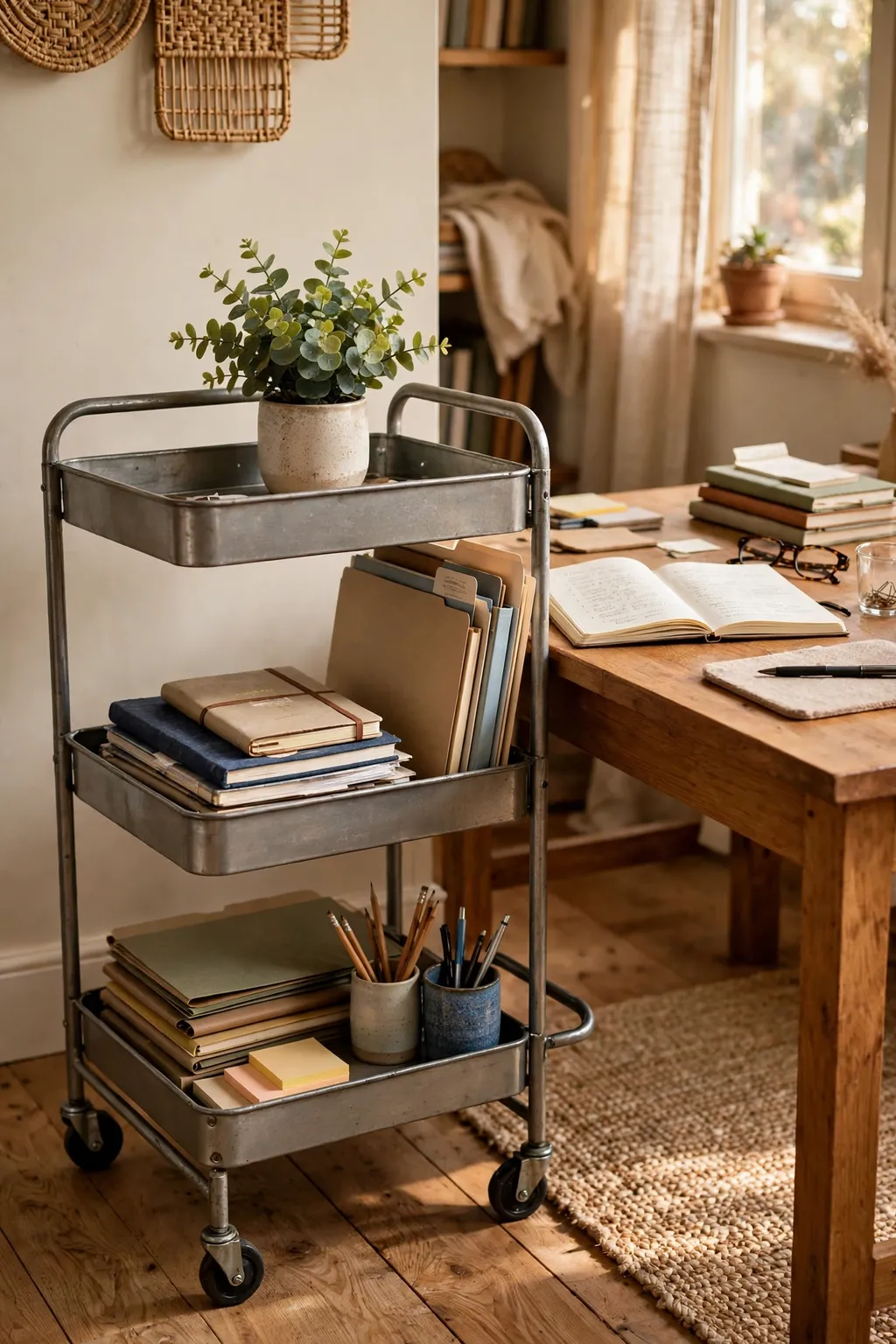
A Rolling Cart That Parks Beside the Desk
A three-tier rolling cart is the hardest-working piece of budget office furniture there is. Park it beside the desk with notebooks and current projects on the top tier, supplies in the middle, and reference folders at the bottom — then roll it away when you need the floor space back. Carts show up at discount stores for around $25, and a coat of spray paint makes a plain one match the room. For more cart ideas, see my makeup organization ideas on a budget.
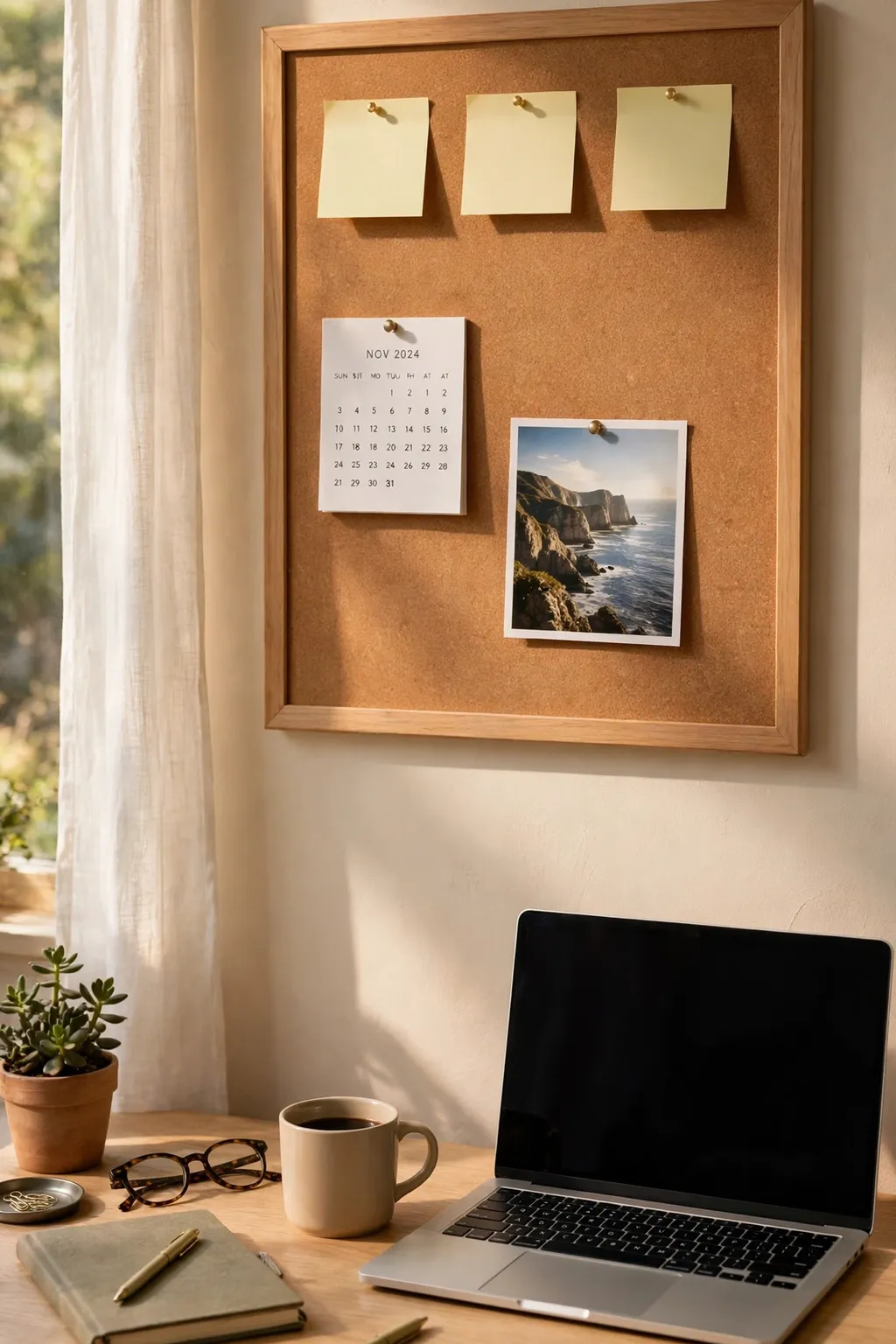
A Corkboard for Notes and Deadlines
Sticky notes stuck to a monitor fall off and get lost, but a corkboard keeps every deadline where you can see it. Pin the week’s to-dos, a small calendar, and the one or two notes that actually matter — and take down anything older than a month, or the board becomes wallpaper. A small corkboard costs a few dollars, hangs with a single nail, and turns a blank wall into your planning center. For more household organizing, see my laundry room organization ideas on a budget.
DIY Drawer Dividers from Cereal Boxes
Desk drawers turn into junk drawers because everything slides around in one big empty box. Cut up empty cereal boxes into dividers — measure the drawer, cut the cardboard to height, and tape the pieces into a simple grid — and suddenly pens, sticky notes, and paper clips each have a lane. It costs nothing, takes fifteen minutes, and works just as well as the dividers sold in stores. For more drawer fixes, see my kitchen drawer organization ideas on a budget.
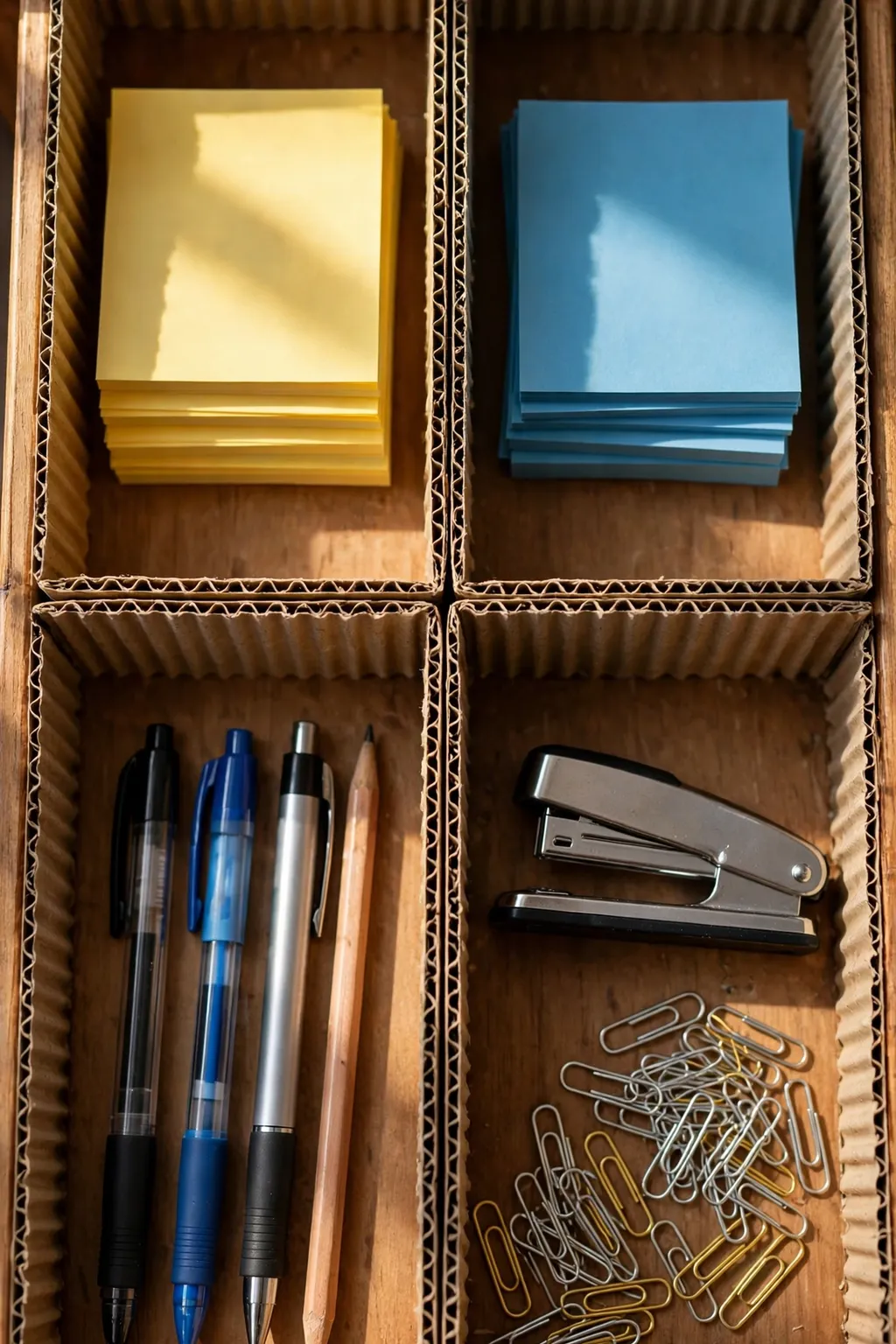
A Wall File for Active Projects
Active projects should live where you can grab them, not buried in a drawer. A wall-mounted file holder or magazine holder beside the desk keeps one folder per project — the report you are writing, the bills you are paying, the forms you are filling in — visible and within reach. Label each pocket, limit yourself to three or four active folders, and anything older goes into the filing box. For more storage ideas, see my kitchen cabinet organization ideas on a budget.

A Charging Station in a Basket
Phones, tablets, and earbuds each arrive with a cable, and together they take over a desk. Put a small power strip inside a woven basket on the desk or a shelf, thread the cables through the weave, and you have a charging station that looks like decor instead of a tangle. One basket, one strip, and every device charges in the same spot — no more hunting for a cable when the battery is at 4%. For more small-space storage, see my bathroom drawer organization ideas on a budget.
A Small Plant on the Desk
Organization is not only about containers — a small plant makes a tidy desk feel like a place you want to sit down at. A pothos or a little snake plant in a terracotta pot needs almost no care, survives a week of neglect, and softens the hard edges of the monitor and the desk. Keep it small and to one side so it never crowds your work, and if your desk gets no light at all, a good faux plant does the same job. For more cozy storage ideas, see my coat closet organization ideas on a budget.

A Weekly Reset Tray for the Desktop
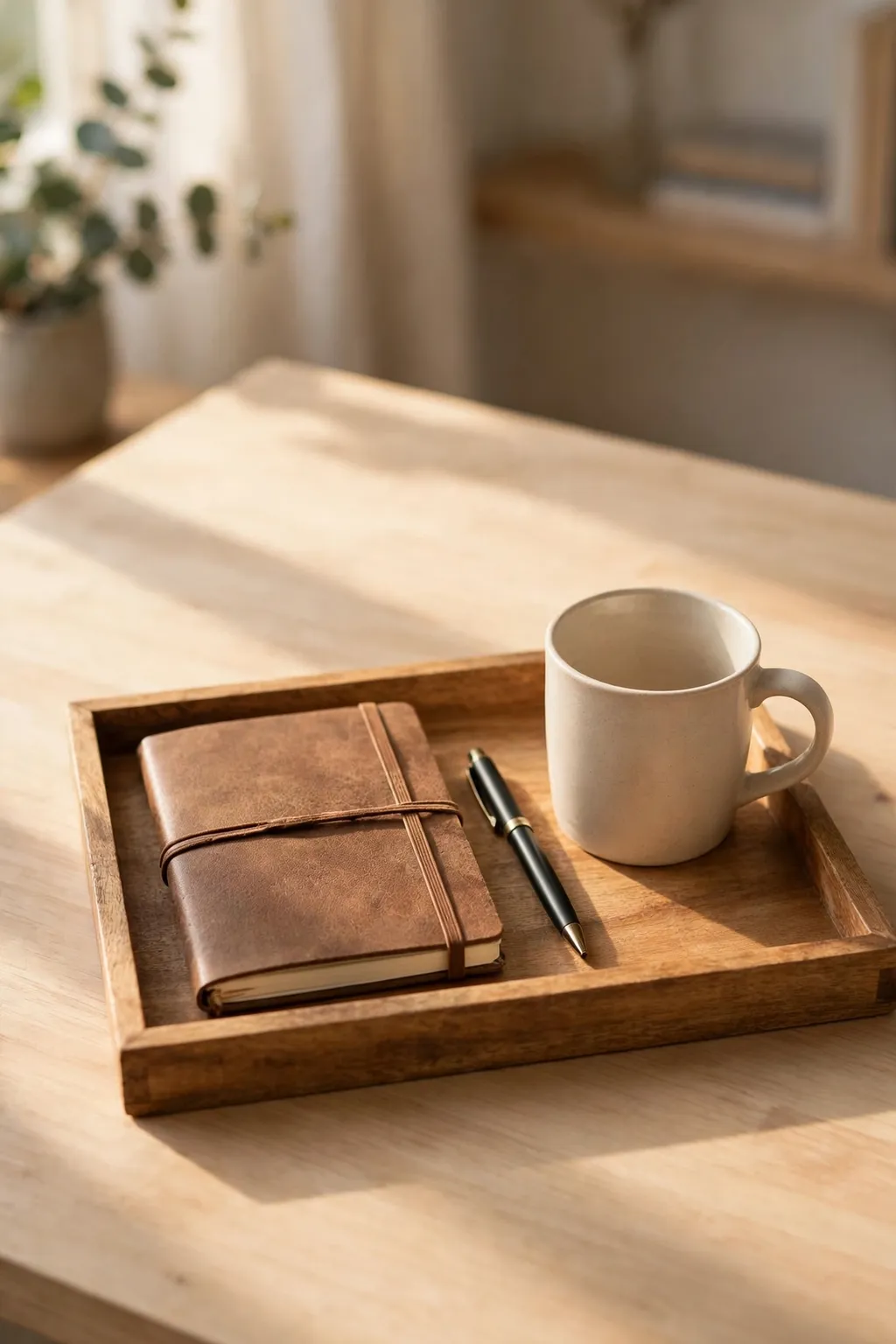
Even the most organized desk drifts during the week, so give the drift somewhere to land: a wooden tray that holds the notebook, the pen, and the mug, and nothing else. At the end of each workday, everything on the desk goes back into the tray or away — five minutes, no decisions — and Monday morning starts with a clear surface instead of last week’s clutter. A tray from the thrift store costs a dollar or two and does the job of a whole organizing system. For more closet-to-desk ideas, see my kids closet organization ideas on a budget.
A Storage Basket for Clutter
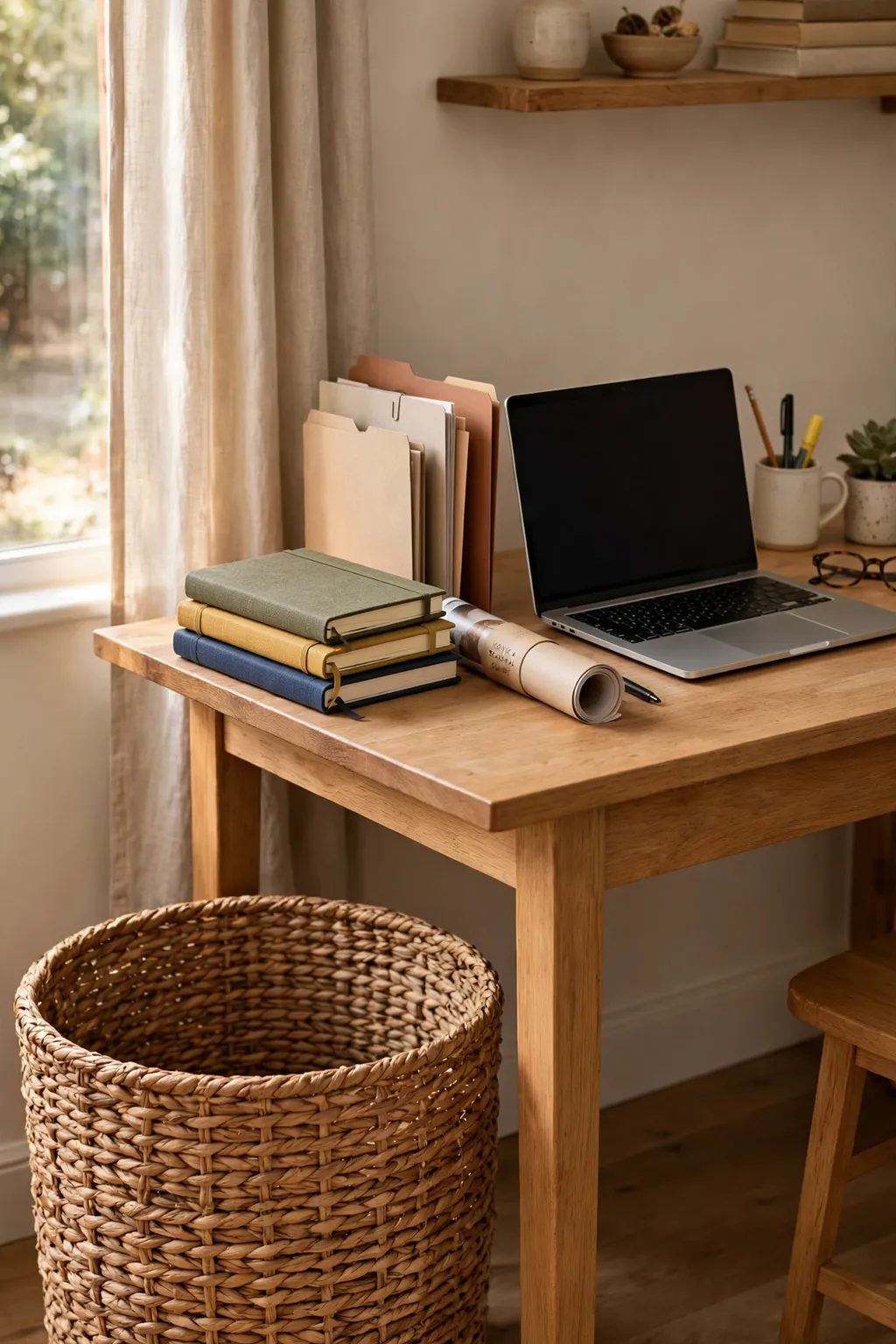
Every home office has the stuff that has no category — the extra notebooks, the spare cables, the magazines to read someday. Give it one large woven basket beside the desk and a rule: if it does not fit in the basket, something has to leave. The basket hides the clutter, keeps the floor clear, and forces an honest edit every few weeks when it starts to overflow. For more basket storage, see my shoe organization ideas on a budget.
A Few Tips Before You Start
- Clear the desk completely before you organize it — take everything off, wipe it down, and only put back what you actually use every week. For more ruthless edits, see my medicine cabinet organization ideas on a budget.
- Give every item a home before you buy a single container — measure the drawer, the shelf, and the desk first, or the pretty basket will not fit. For more container ideas, see my jewelry organization ideas on a budget.
- Keep the desktop to five things or fewer: laptop, lamp, notebook, pen cup, and one plant — everything else lives on a shelf, in a drawer, or on the wall. For more small-space rules, see my cozy walk-in closet ideas on a budget.
- Do a two-minute reset at the end of every workday — papers into trays, pens into the caddy, mug to the kitchen — so tomorrow starts clear. For more daily-reset ideas, see my under-bed storage ideas on a budget.
- Stick to one calm palette — warm wood, cream, and one soft green — across the caddy, trays, and baskets so the office feels styled, not scattered. For more palette ideas, see my small closet organization ideas on a budget.
Frequently Asked Questions
How much does it cost to organize a home office on a budget?
Most of these ideas cost under $25, and several cost nothing at all — the cereal-box drawer dividers, the labelled jars, and the weekly reset tray use things already in the house. The priciest pieces are usually the rolling cart and the pegboard, and even those stay cheap at discount stores. A whole home office can feel fully organized for about $50 to $75.
What is the first thing to organize in a home office?
The desktop itself. Clear it completely, then put back only the five things you use every day — laptop, lamp, notebook, pen cup, and a small plant. Once the surface is clear, the paper trays, the pegboard, and the cable clips have somewhere sensible to go, and the rest of the room follows. A clear desk is the fastest win in the whole list.
How do I organize a small home office with no storage space?
Go vertical and mobile: a pegboard and a wall shelf use the wall instead of the floor, a wall file holds active projects, and a rolling cart parks beside the desk and rolls away when you need the room back. A basket under the desk hides the rest. For more small-space ideas, see my desk organization ideas on a budget or my home office makeover ideas on a budget.
How do I keep my home office organized once it is done?
Run the two-minute reset at the end of every workday — papers into trays, pens into the caddy, mug to the kitchen — and empty the incoming-mail tray every Friday. Organization fails when things have no home, so the moment something starts living on the desk, give it a tray, a jar, or a basket the same day. A weekly reset tray makes the habit almost automatic.
WRAPPING UP
The Cozy Takeaway
A home office doesn’t need new furniture — it needs a place for every pen, paper, and cable, and a desk you can actually see. A pegboard on the wall, a rolling cart beside the desk, labelled jars for the small stuff, and a two-minute reset at the end of the day are all it takes to turn a cluttered corner into a calm, focused workspace. Start with the desk caddy, add one idea a week, and before long your home office will be the tidiest room in the house — and not one idea cost more than a cozy night in.