15 Bookshelf Organization Ideas on a Budget
Hi, I’m Emma! A messy bookshelf does not need a new bookcase or a big budget to feel calm and styled — some of my favorite shelves I have ever tidied started with nothing more than a color sort, a wicker basket from the thrift store, and a string of fairy lights I already owned. Every idea on this list costs under $15 to make, most of them under $10, and several use things you already have at home: baskets, jars, a spare frame, and books you already love. My rule for bookshelves is simple — tidy first, pretty second, and cozy always, because a shelf you love looking at is a shelf you will actually keep tidy.
Bookshelf organization ideas on a budget mean color-sorted shelves, wicker baskets on the lower shelves, and DIY bookends made from things you already own — plus small plants, fairy lights, and a few favorite covers facing out. The best budget bookshelf ideas start with what you already own, add one or two small buys like chalkboard labels or a string of lights, and come together in a single weekend afternoon. Pick two or three ideas from this list, keep the colors warm and calm, and your shelves will feel brand new before bedtime.
Sort Books by Color
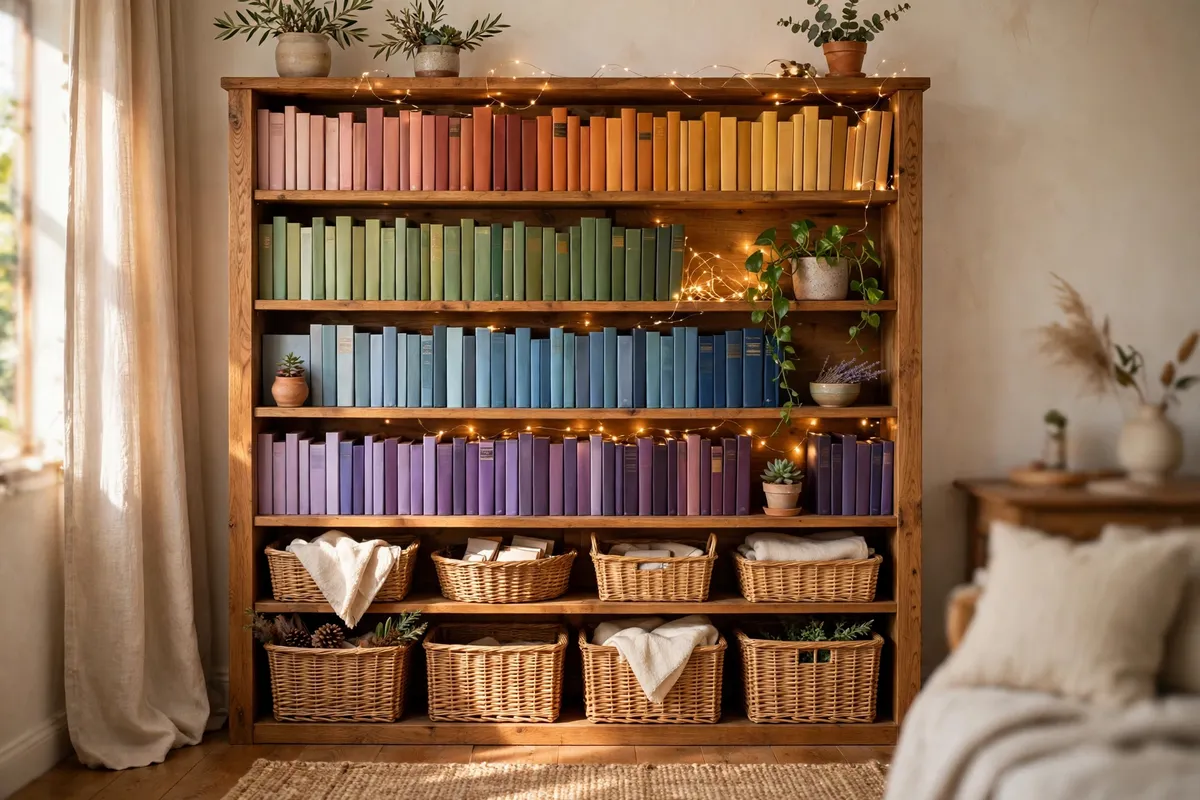
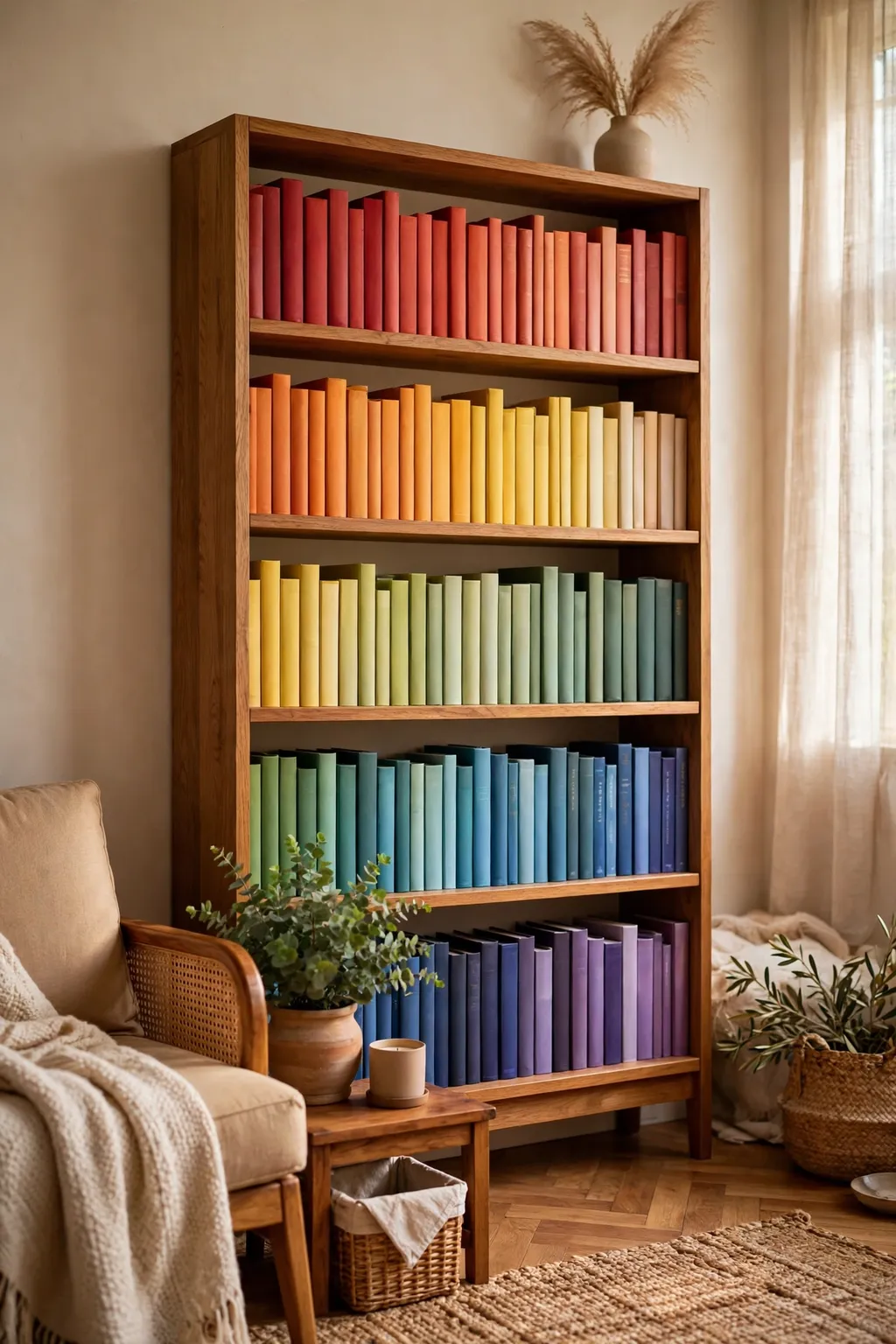
Sorting your books by spine color is the fastest free makeover a bookshelf can get: pull everything off, group the reds with the reds and the blues with the blues, and slide them back in a gentle rainbow from top to bottom. It costs nothing at all, it takes about half an hour, and a rainbow shelf makes even a mixed pile of paperbacks look styled. Keep the tallest books in the middle shelves so the color bands stay even, and leave one small gap at the end of each row for the books you are reading right now.
Group Books by Size
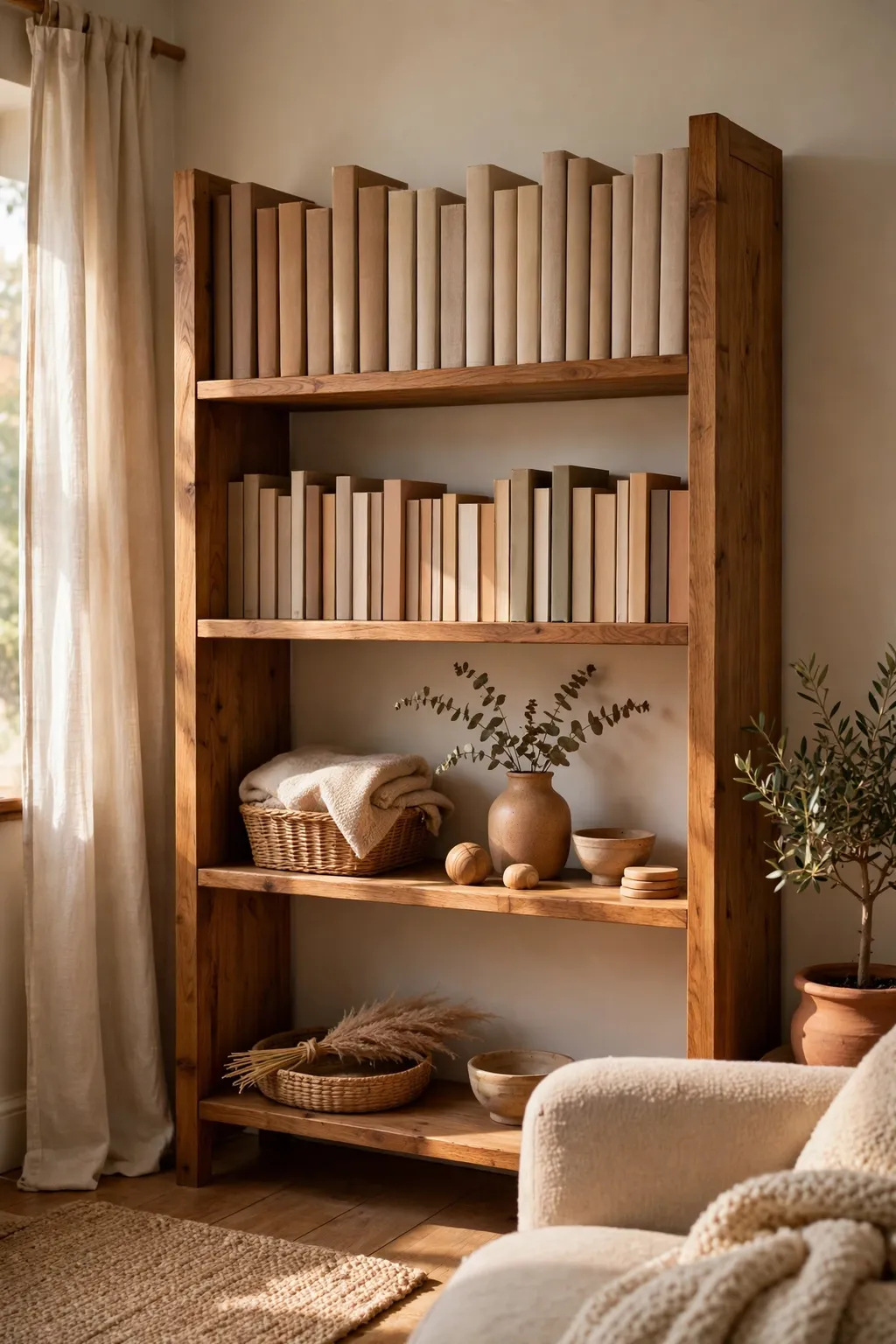
If a rainbow feels too bold for your room, group books by size instead: tall hardbacks together, small paperbacks together, and the odd oversized art book lying flat on top of a stack. Same-size books stand straighter, they are easier to pull out and put back, and the shelf looks calm even when it is completely full. A shelf of books grouped by height costs nothing to arrange and it hides a multitude of mixed-up spines behind one tidy rule.
Wicker Baskets on the Lower Shelves
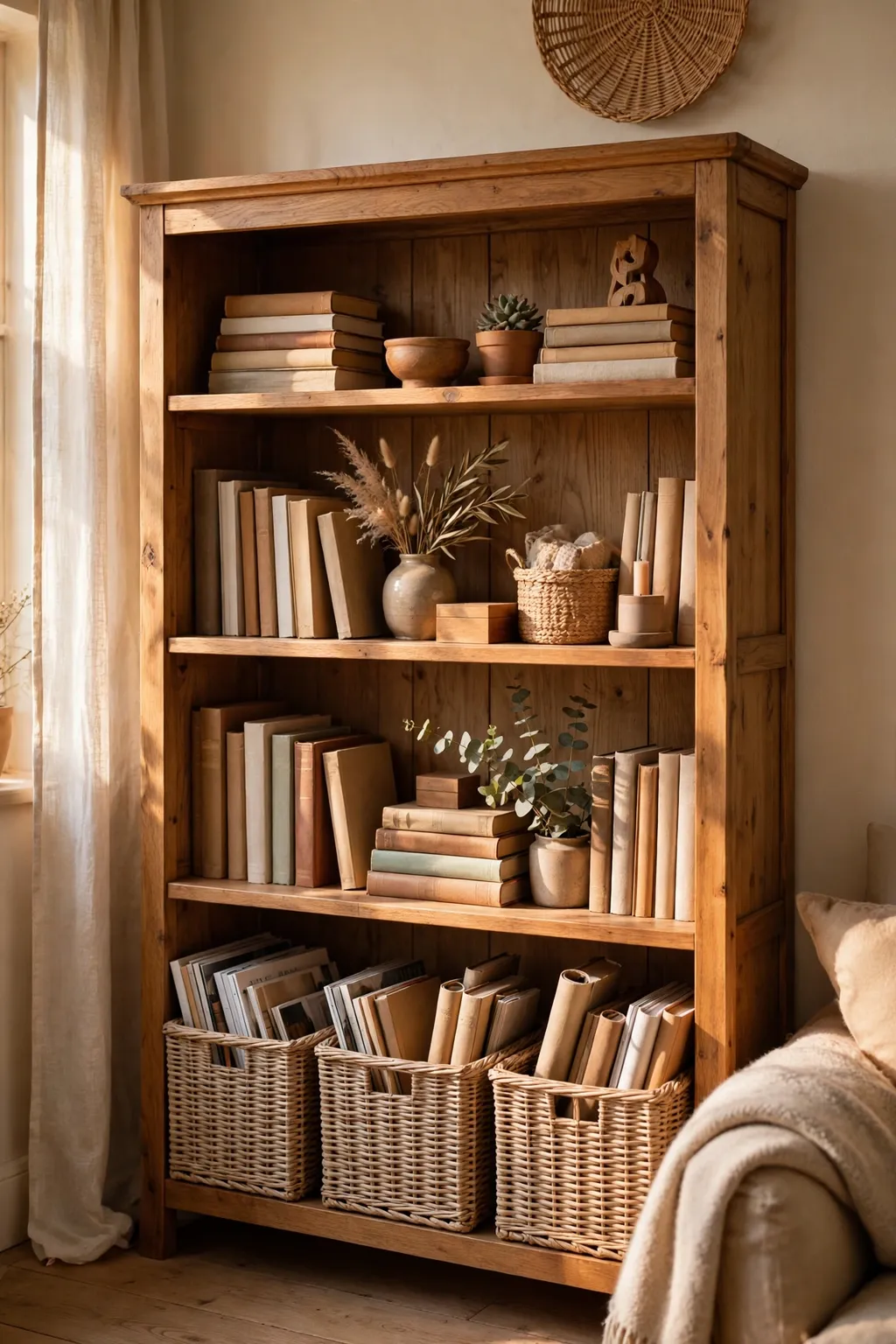
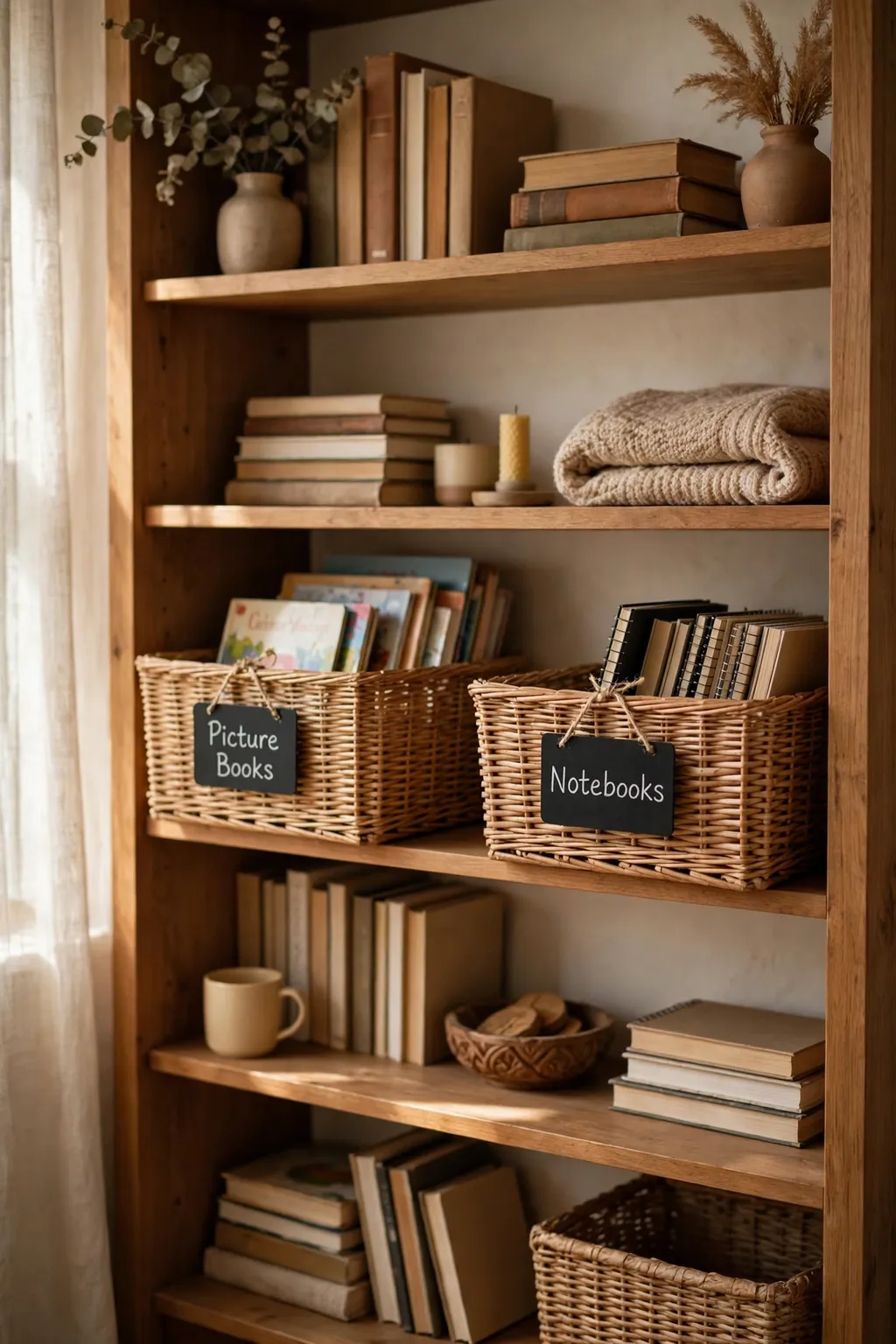
Wicker baskets are the prettiest way to hide bookshelf clutter: one big basket on the lowest shelf for oversized books, one medium basket for magazines and notebooks, and a small one for the bits that never seem to have a home. A set of three baskets costs about $12 at a thrift store, they slide neatly onto a shelf, and the natural texture warms up the whole bookcase. Label-free is fine here — you will know what lives in each basket, and the shelf stays tidy in about thirty seconds flat.
Small Potted Plants on the Top Shelf
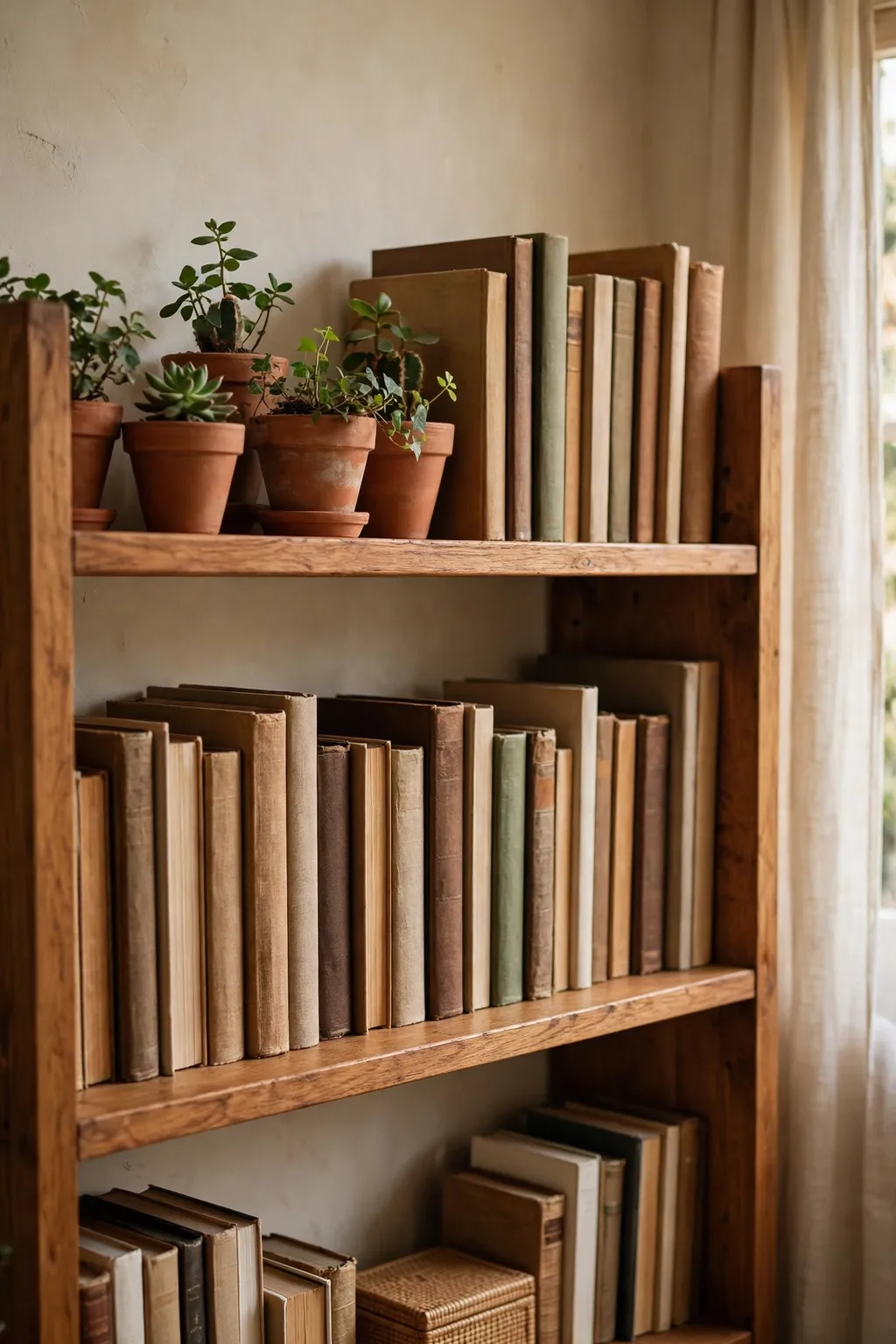
A small potted plant on the top shelf is the easiest way to make a bookshelf feel alive: a trailing pothos, a tiny succulent in a terracotta pot, or a sprig of eucalyptus in a jam jar. A small plant costs about $5, it softens the straight lines of all those book spines, and the green pops beautifully against warm wood. Keep the plant small so it never crowds the books, and water it with a little jug right at the shelf so you never have to move it.
Stack Books Horizontally for a Break
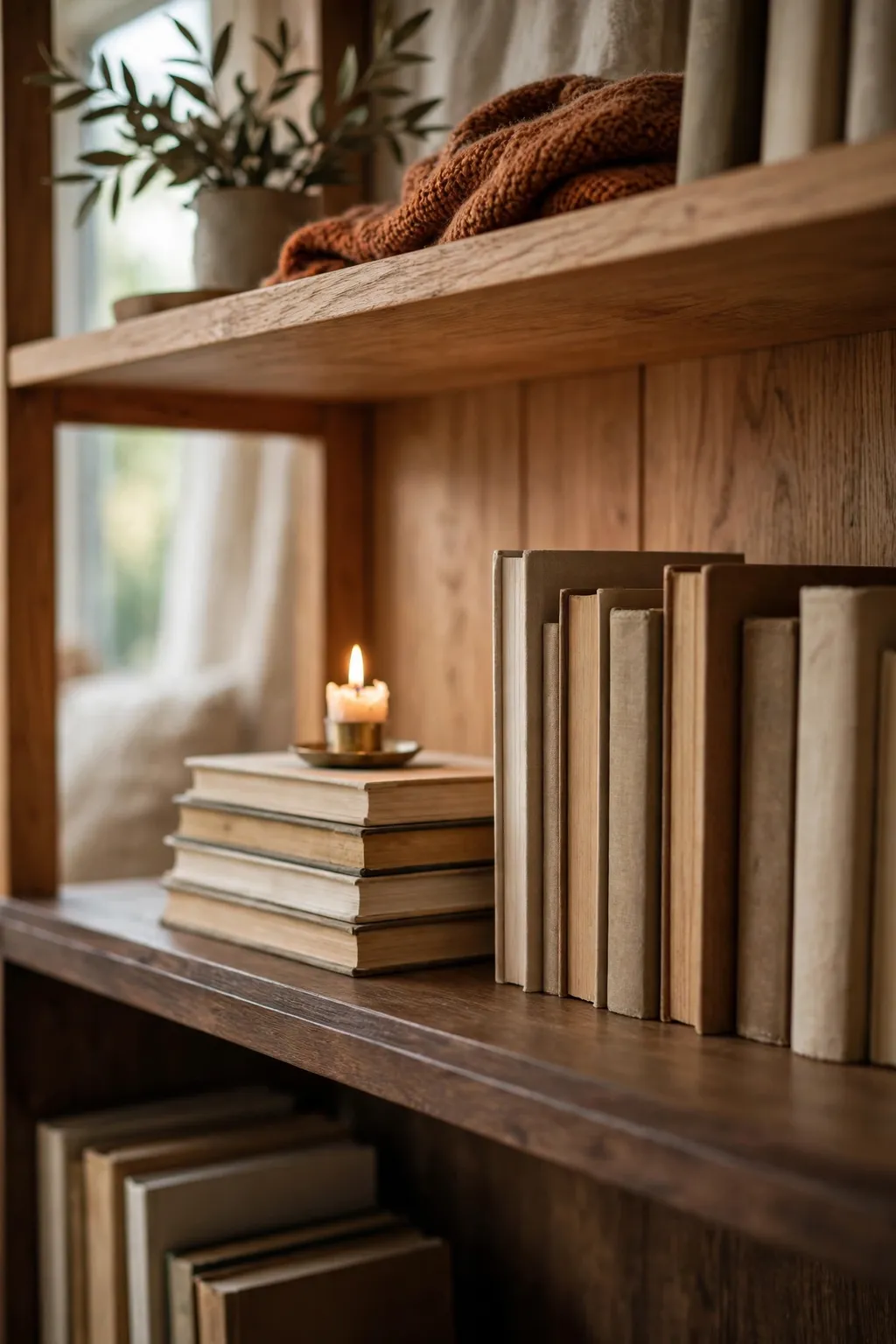
A short stack of books lying flat breaks up a long row of vertical spines and gives your eyes somewhere to rest: pick three or four books, stack them neatly, and top the pile with a small candle or a tiny plant. Horizontal stacks cost nothing, they make a tall shelf feel styled instead of stuffed, and they are the perfect home for the books that are too tall to stand up. Use one flat stack per shelf — any more and the shelf starts to look messy again.
Bookends You Already Own
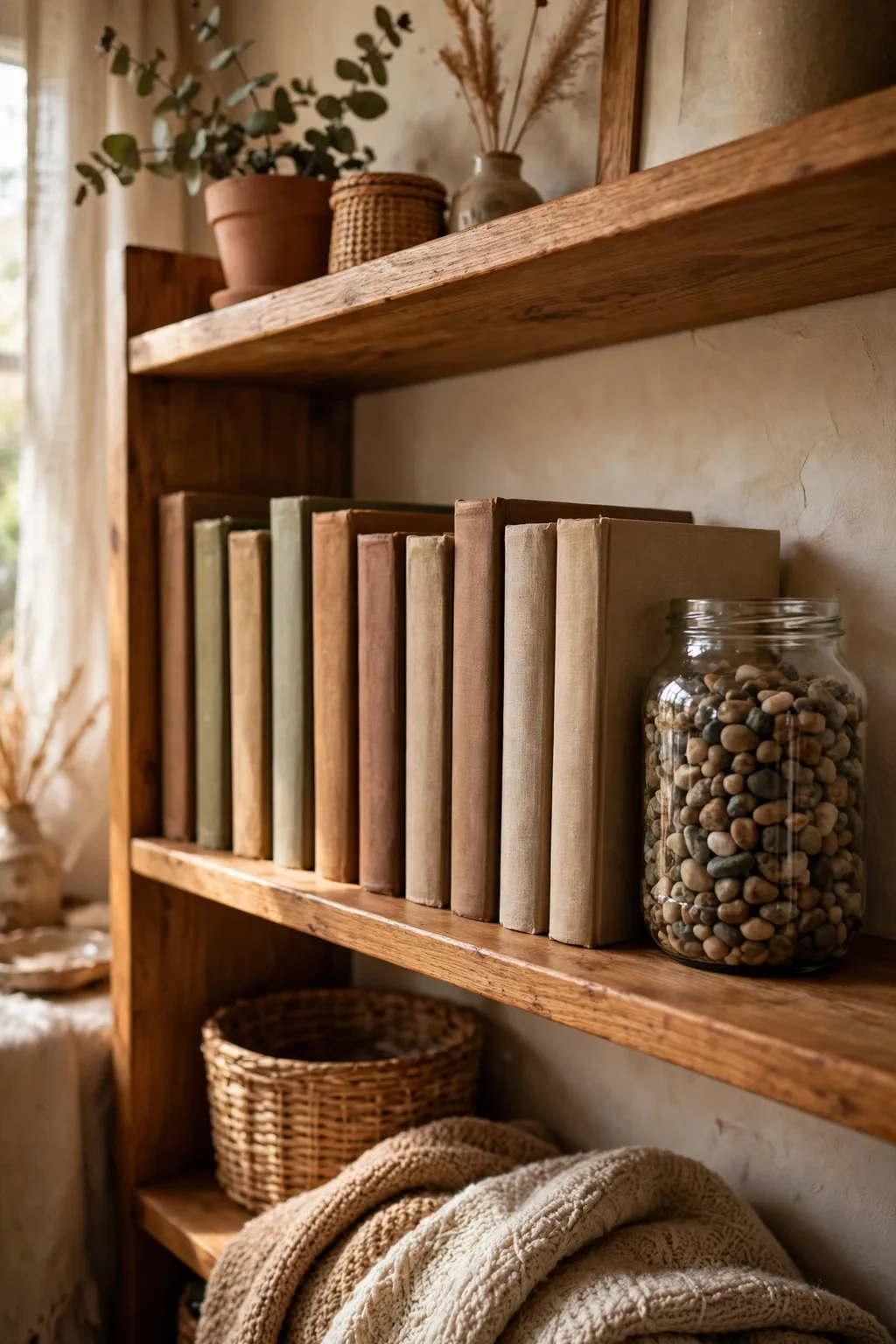
You do not need to buy bookends — a heavy jam jar filled with pebbles, a small stack of pretty stones, a thrifted brass animal, or even a chunky candle holds a row of books upright for free. A pair of DIY bookends costs about $3 in pebbles or nothing at all if you raid the garden, and they add more personality than any shop-bought pair. Choose something heavy and steady, keep it at the end of each row, and your books will stop their slow lean for good.
A String of Fairy Lights
A strand of warm white fairy lights woven along the back of a bookshelf turns an ordinary bookcase into the coziest corner of the room after dark. Battery lights cost about $3, they stay cool to the touch, and a timer means they switch themselves off after bedtime. Tuck the wire behind the books so only the soft glow shows, keep the battery pack hidden behind a basket, and the whole shelf glows like a little library at night.

Framed Prints Leaning on a Shelf
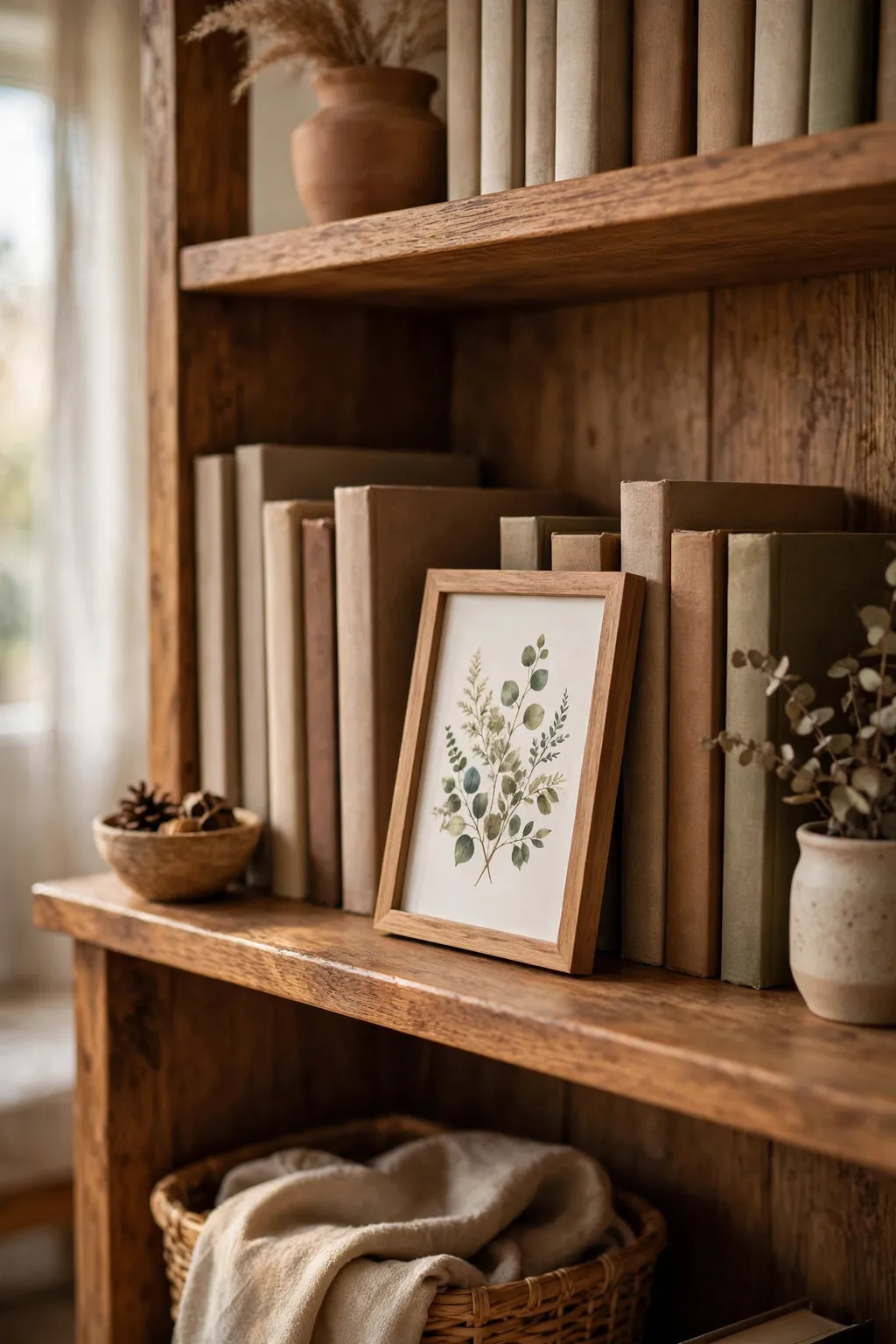
A small framed print leaning against the back of a shelf — a botanical sketch, a favorite quote, a little landscape — breaks up the wall of spines and makes the bookcase feel curated instead of crammed. Print free art at home, frame it in a thrift-store frame for about $4, and lean it at a slight angle so it catches the light. One print per shelf is plenty, and you can swap it out with the seasons for a fresh look in about a minute.
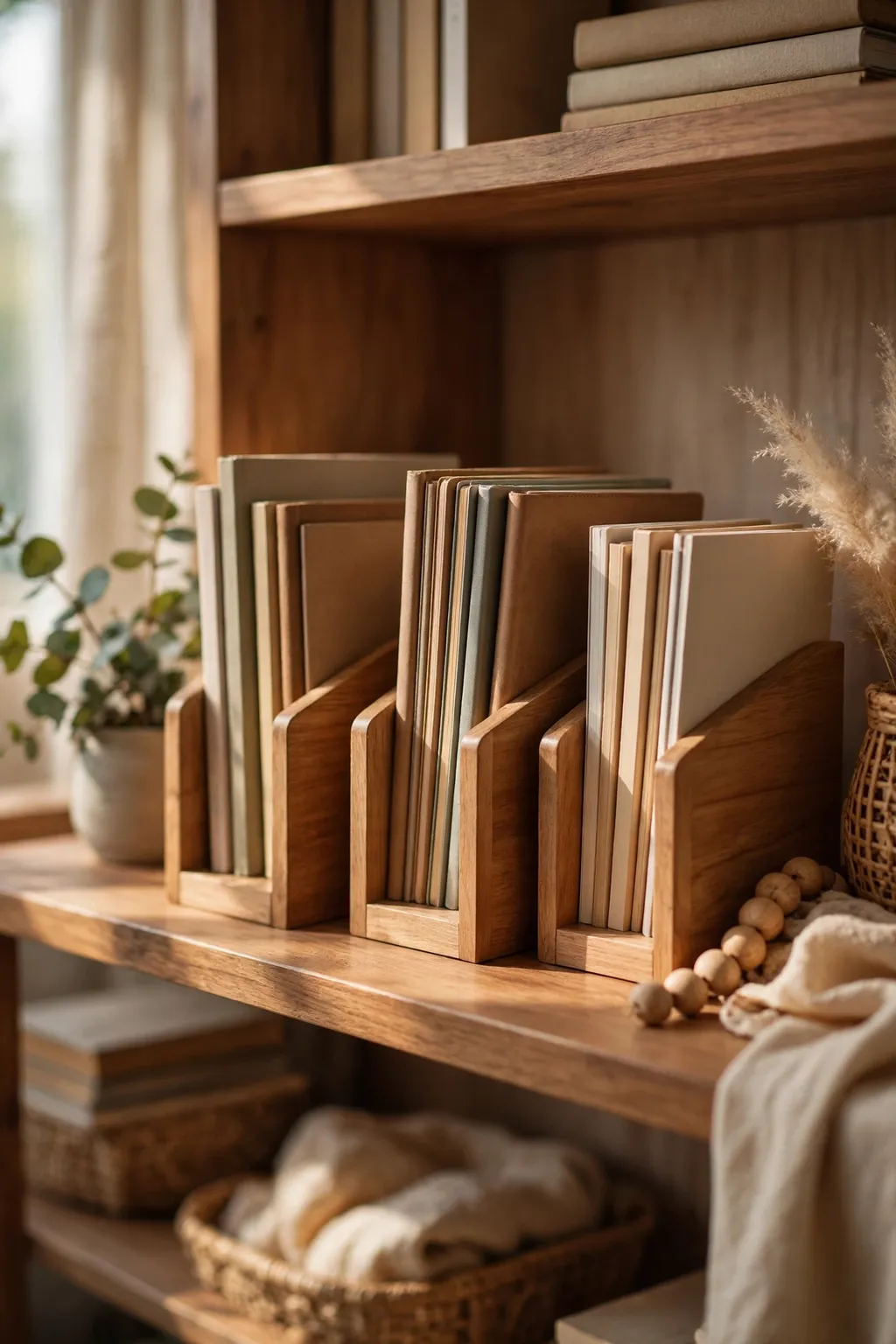
Magazine Holders for Thin Books
Thin books, notebooks, and magazines flop over without support, so stand them upright in a magazine holder: a wooden file box, a woven holder, or even a sturdy cardboard box covered in wrapping paper. A pair of holders costs about $8, they keep thin spines neat and easy to find, and they turn a jumbled pile into a tidy little library. Stand them on the lowest shelf where they are easy to reach, and label the front if you keep different topics in each one.
Leave a Little Breathing Room
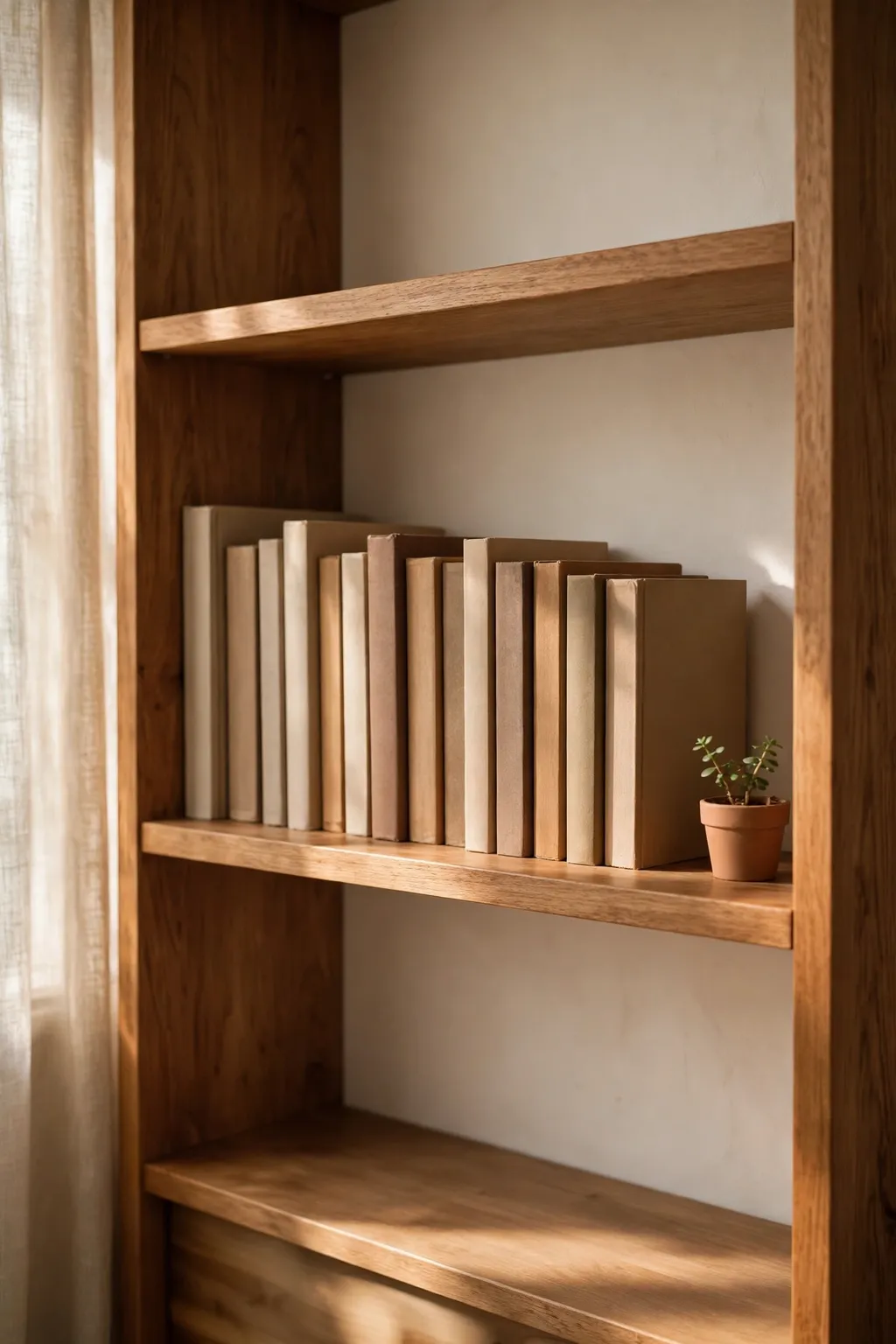
The tidiest bookshelves are never completely full: leave one small empty patch on each shelf — a gap at the end of a row, a clear corner, a shelf with just one stack and a plant — and the whole bookcase instantly looks calmer. Empty space costs nothing, it gives your eyes somewhere to rest, and it leaves room for the next book you bring home. A shelf packed to the edges feels like storage; a shelf with breathing room feels like a home.
Chalkboard Labels on Every Basket
A little chalkboard label on each basket tells everyone in the house where things belong: “Picture Books,” “Notebooks,” “Craft Bits,” written in chalk and easy to change when the contents change. A pack of chalkboard labels costs about $4, they stick neatly to wicker and wood, and they turn plain baskets into a proper little system. Write the labels in your neatest handwriting, keep the words short, and the whole shelf starts to look like a shop display.
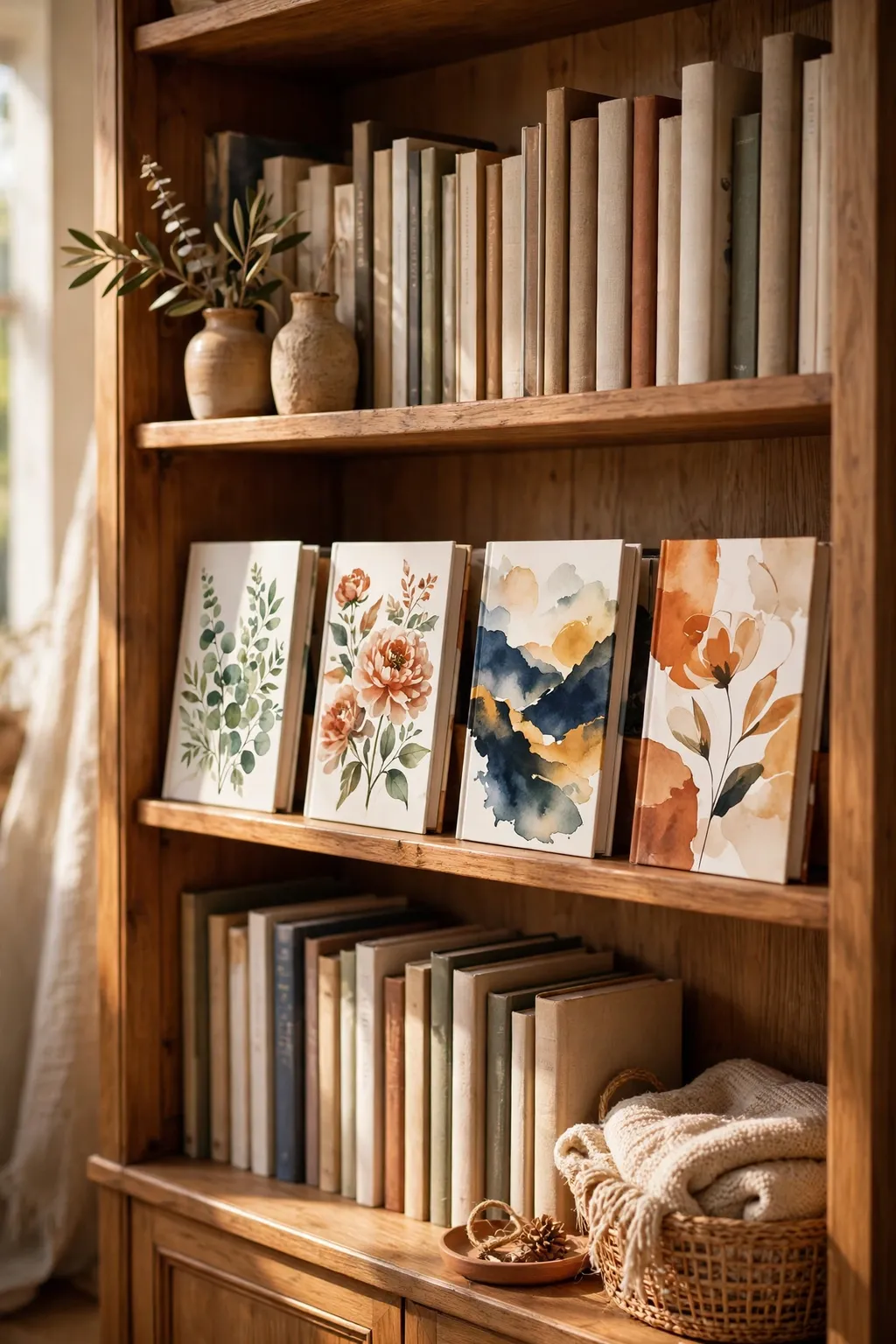
Face a Few Favorite Covers Out
Turn three or four of your prettiest book covers to face out, like a little shop window, and the whole shelf suddenly has a focal point. Pick the covers with the loveliest colors or the books you love most, lean them against the books behind them, and let them be the stars of the shelf. Facing books out costs nothing, it shows off the books you are proudest of, and it makes the shelf feel personal instead of generic.
A Reading Basket Beside the Shelf
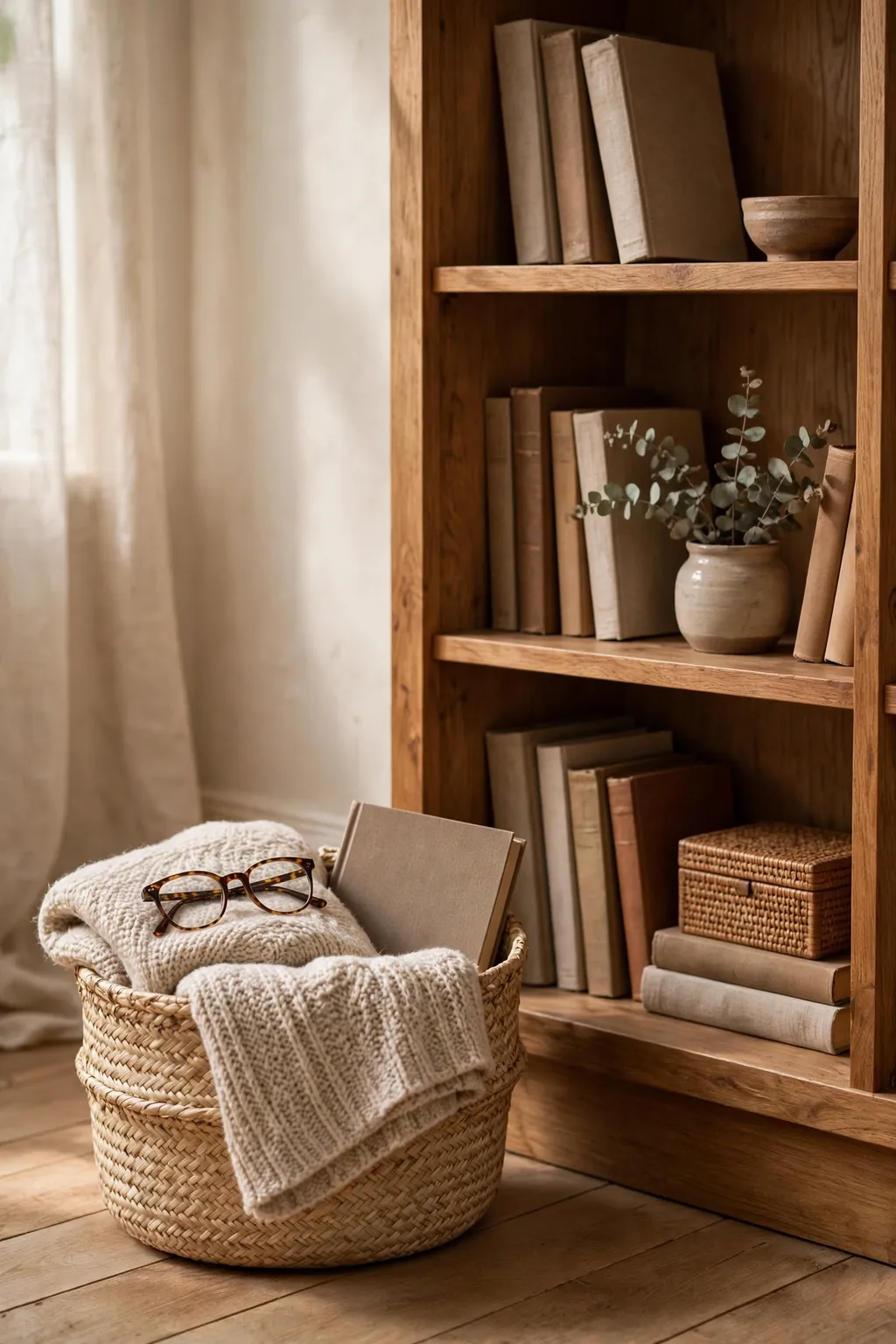
Keep a soft basket beside the bookshelf with the book you are reading right now, a cozy throw, and a pair of reading glasses, and the shelf becomes the start of a reading ritual instead of just storage. A basket costs about $6, the throw is one you already own, and the whole setup takes about two minutes to put together. For more small-space reading corner ideas, see my cozy reading nook ideas for small spaces — the same tricks work beautifully beside a bookshelf.
Mason Jars for Pencils and Bits
A row of mason jars on one shelf holds pencils, bookmarks, paper clips, and all the little bits that usually end up lost between books — and they look charming doing it. A set of three jars costs about $5, or reuse jam jars you already have, and a little twine tied around the neck makes them look styled instead of spare. The same trick works on a desk too — see my 15 desk organization ideas on a budget for the full desk version.

Rotate a Small Seasonal Display
Keep one small corner of the bookshelf for the season — a pinecone and a candle in winter, a tiny vase of daffodils in spring, a shell or two in summer — and swap it four times a year for a shelf that always feels fresh. A seasonal display costs almost nothing if you use things from the garden or the thrift store, it takes five minutes to change, and it gives you a reason to tidy the shelf every season. One small display is enough; the books are the stars, and the season is just the finishing touch.

A Few Tips Before You Start
- Pick two or three ideas from this list, not all fifteen — a color sort, a basket or two, and a string of fairy lights are enough to make the whole shelf feel brand new.
- Take everything off the shelf first — sorting books on a full shelf never works, and a clean shelf lets you see what you actually own.
- Keep the books you reach for most at eye level, the heavy books low down, and the pretty-but-rarely-read books up high.
- Choose one accent color to repeat — a terracotta pot, a cream basket, a sage book spine — so the shelf feels calm and put together.
- Leave one shelf or corner a little empty — a bookshelf with breathing room feels calmer than a shelf filled to the edges.
Frequently Asked Questions
How do I organize a bookshelf on a budget?
Start by taking everything off the shelf, then sort books by color or size, add wicker baskets on the lower shelves, and use things you already own as bookends. A full bookshelf tidy costs under $15 in total if you pick two or three ideas from this list — baskets, chalkboard labels, and a string of fairy lights are the only buys you are likely to need. Work one shelf at a time, and the whole bookcase can be done in a single afternoon.
Should I organize books by color or by author?
Organize by color if you want the prettiest shelf, and by author or topic if you reach for books by name. Color sorting looks wonderful and costs nothing, but it makes finding one specific book harder — so many people sort by color on the shelves they show off, and by author on the shelves they actually use every day. There is no wrong answer; pick the system you will actually keep up.
What can I use instead of bookends?
Almost anything heavy and steady works as a bookend: a jam jar filled with pebbles, a stack of pretty stones, a chunky candle, a small potted plant in a heavy pot, or a thrifted brass animal. The trick is weight — if it tips when a book leans on it, it is too light. Raiding the garden or the kitchen cupboard costs nothing, and a found object always looks more personal than a shop-bought pair.
How do I keep a bookshelf tidy long term?
Give everything a home and keep the system simple: baskets for the loose bits, one empty gap per shelf for new books, and a five-minute tidy every Sunday. The one-in-one-out rule helps too — when a new book comes home, an old one goes to a friend or the charity shop. A bookshelf stays tidy when the system is easy, not when it is perfect, so keep your labels short and your baskets within reach.
WRAPPING UP
The Cozy Takeaway
A tidy bookshelf does not need a big budget — it needs a good sort, a basket or two, and a few thoughtful touches that make the shelf feel calm and loved. Pick two or three ideas from this list, keep the colors warm, and set it all up this weekend. By Monday your shelves will be the prettiest corner of the room — and you will actually be able to find the book you are looking for.