13 Shoe Organization Ideas on a Budget
Hi, I’m Emma! If your front door looks like a shoe shop exploded, you are in good company — ours used to be a pile of sneakers, boots, and one lonely sandal by the door every single morning. I love how a few cheap fixes can turn that pile into a calm little system without a custom closet bill. These are the 13 shoe organization ideas I actually use all over our house.
The best shoe organization ideas on a budget start with a tiered bamboo rack by the door, a raised-lip boot tray, and a basket for each person, then add tension-rod shelves, PVC cubbies, and labeled boxes for the closet. Most of these projects cost under $40 each and take less than an hour, and they look far more organized than they cost. A rack by the door, a tray for wet boots, and a labeled box for the rest are enough to end the entryway pile for good.
A Tiered Bamboo Rack by the Door
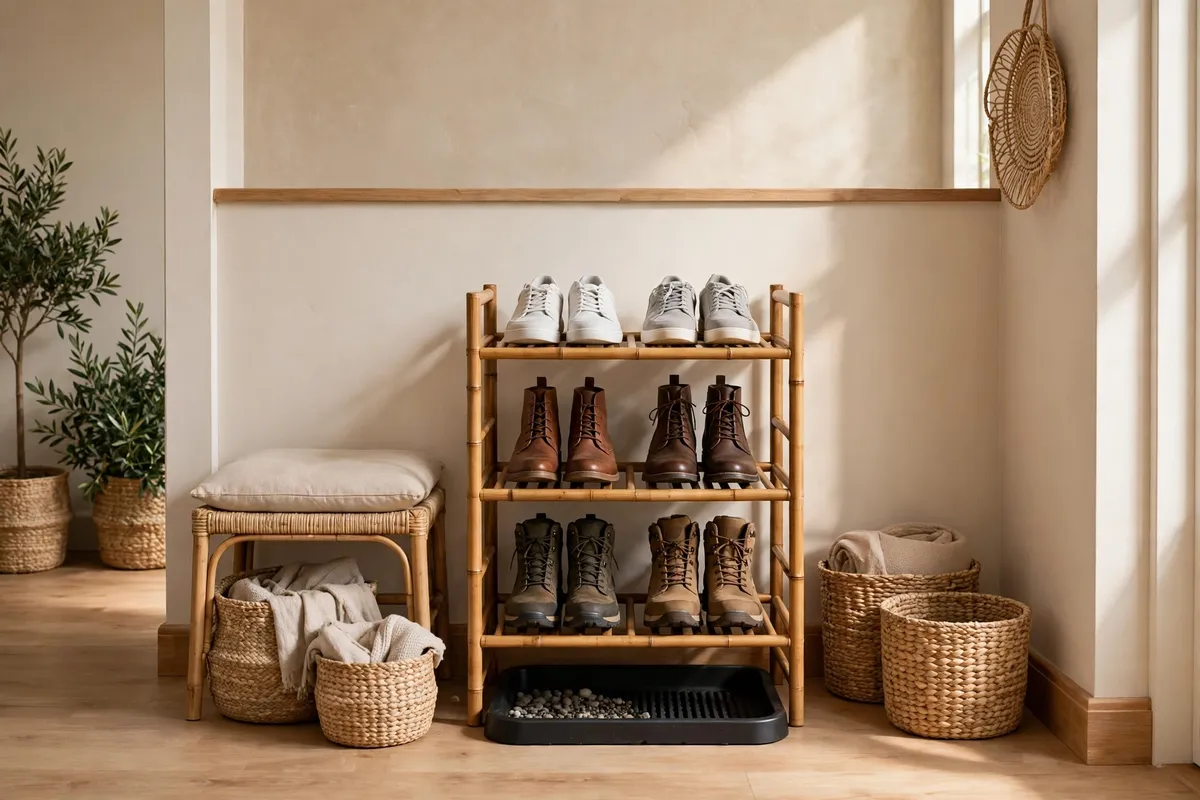
The classic three-tier bamboo rack is still the cheapest honest fix for a door corner, and it is the one I recommend first. A standard 27-inch-wide rack holds three or four pairs per tier, so nine to twelve pairs in total, and the open slats let wet soles drip and dry instead of soaking a shelf. They cost about $25 to $40, and most of them stack two high if your collection grows.

A Raised-Lip Boot Tray for Wet Shoes
A boot tray is the small thing that saves your floors every single winter. Pick one 30 to 36 inches long with a raised lip of an inch or two, and it holds three or four pairs of boots or soaked trainers while keeping melt water, salt, and mud off the floor. Rubber and galvanized metal trays run about $15 to $30, and they wipe clean in seconds.

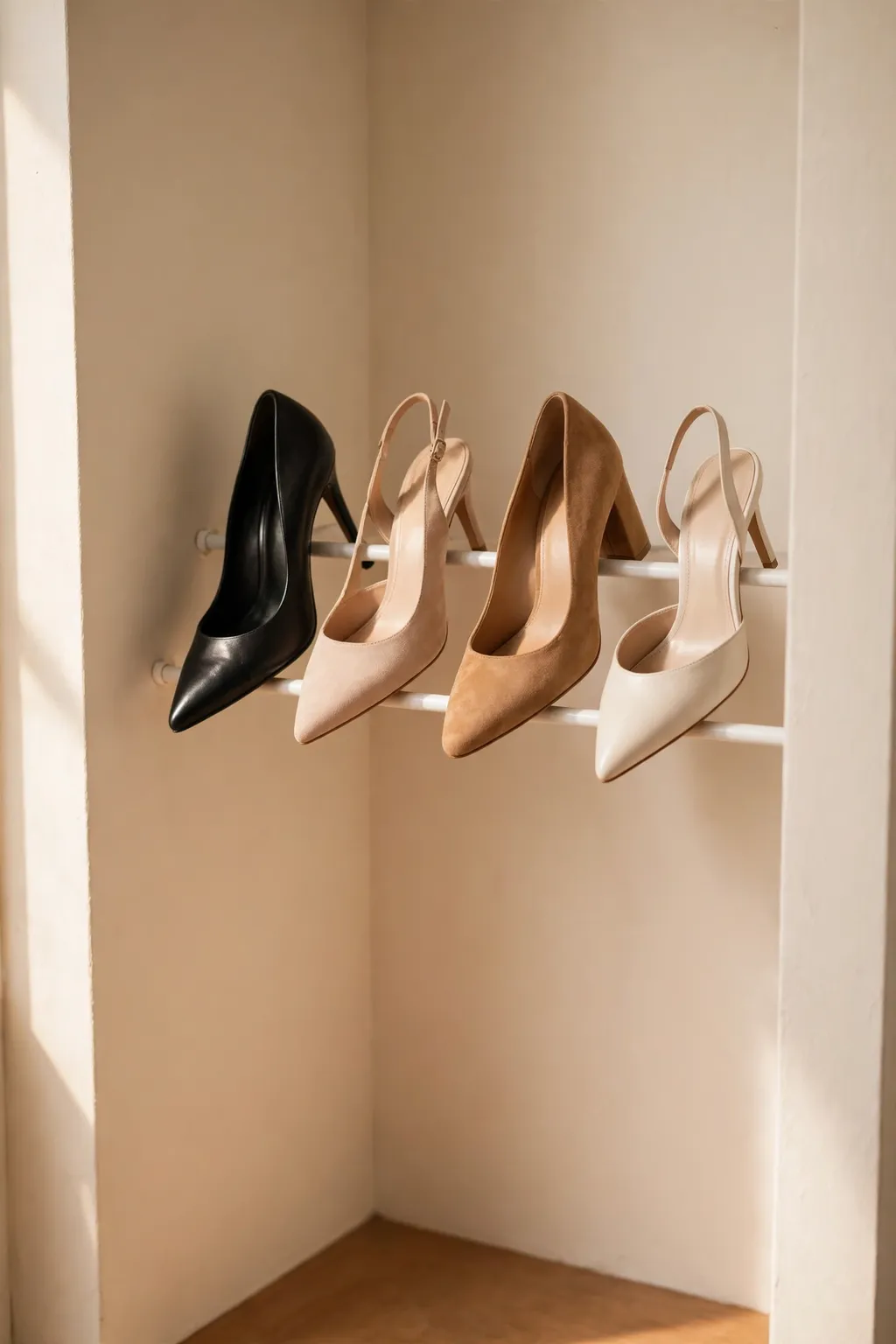
Tension Rods as Heel Shelves in a Nook
Grab two tension rods per shelf to create a simple, no-tools shoe rack in a closet nook or by the entryway. Position one rod a few inches from the back wall and a second bar farther forward and slightly lower, and for high heels, a single rod works — just balance the shoe with the heel behind the rod. It costs a few dollars, needs no drilling, and fits anywhere with two sturdy surfaces for the ends of the rods.
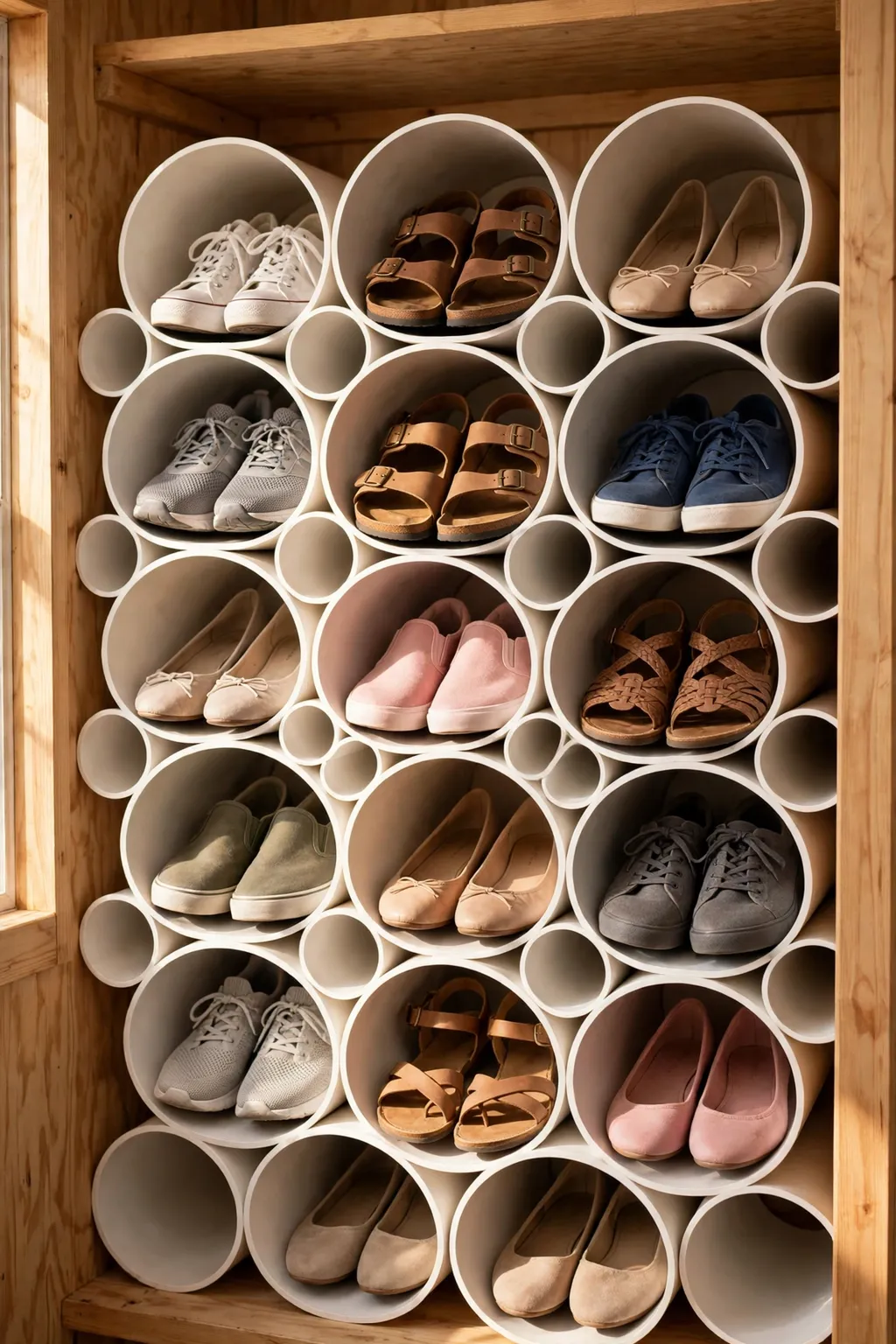
Stacked PVC Pipe Cubbies
This PVC hack makes the perfect shoe organizer on a budget, and you can configure it however you want. Cut PVC pipes into sections at least six inches across and ten inches long, stack them into a honeycomb grid on a closet wall, and each tube holds one pair of shoes. Sand the cut edges smooth, paint the tubes to match the wall, and the whole wall looks like a boutique display for the price of a few pipes.
An Over-the-Door Organizer That Looks Intentional
Over-the-door organizers get a bad reputation for looking cheap, but the right one — properly edited and styled — actually works beautifully in small closets. A slim powder-coated metal rack with individual compartments runs about $25 to $60, hangs in seconds with no tools, and is completely rental-friendly. A couple of Command strips at the bottom keep it from swinging, and it is best for lighter shoes — chunky boots will warp it, so keep those on a rack instead.

A Rolling Under-Bed Shoe Drawer
A rolling under-bed shoe drawer is the genius DIY that keeps shoes organized and out of sight. Build a simple low wooden box that is large enough to hold several pairs and short enough to slide under your bed, add small caster wheels, and it becomes the perfect home for off-season pairs and the shoes you only wear once in a while. For more hidden storage ideas, see my under bed storage ideas on a budget.

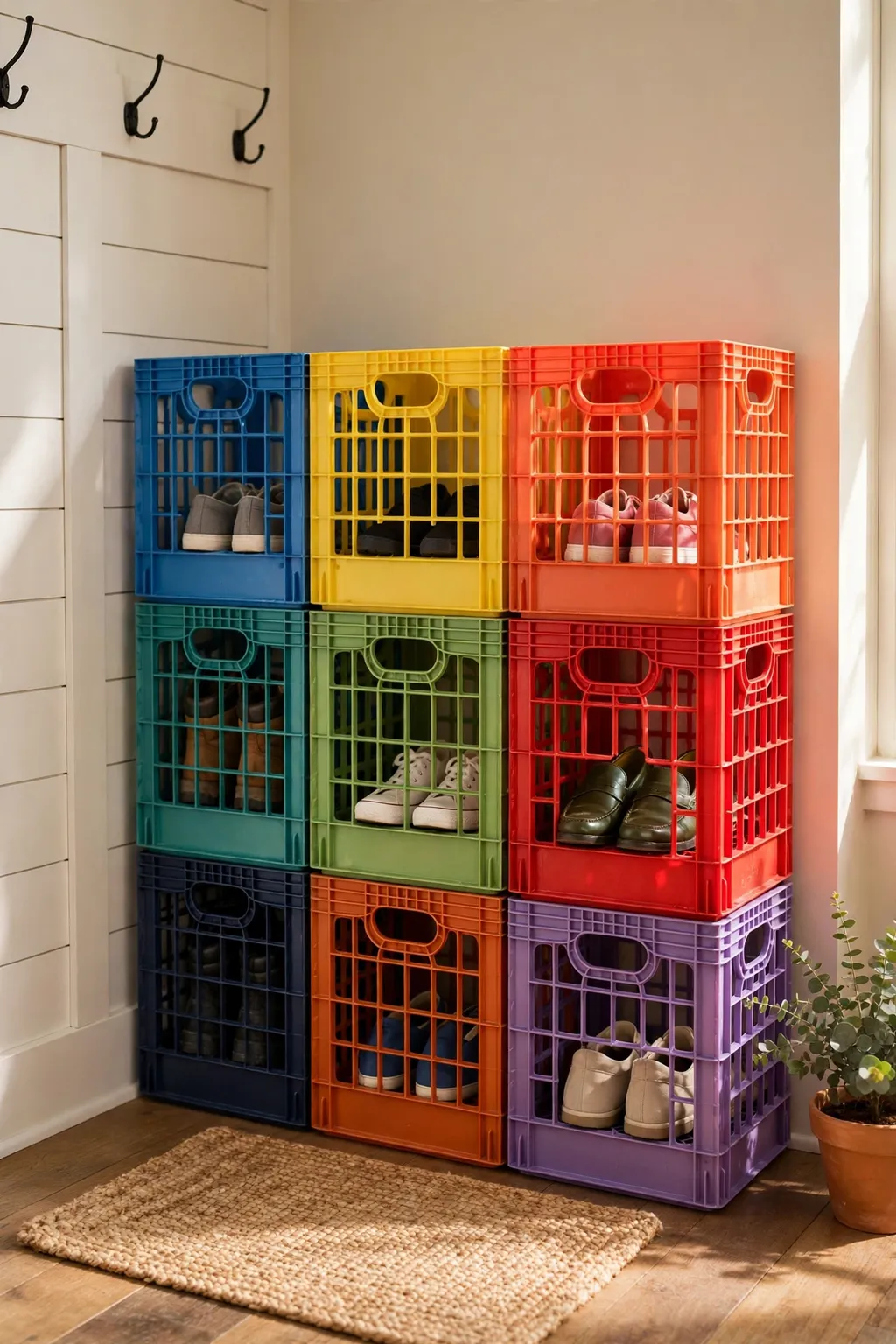
Milk Crates as Stackable Cubbies
Milk crates are one of the cheapest cubby systems you will ever find, and they stack into whatever shape your space needs. Line them up along a mudroom wall, stack them two or three high in a garage corner, or give each child their own crate by the door so the shoes stop migrating all over the house. Zip-tie them together so the tower never wobbles, and a coat of spray paint in one color makes mismatched crates look like a matching set.
A Cubby Bench to Sit and Store
A bench with cubbies underneath does two jobs in the space of one, and the seat is what makes people actually use it. Look for a bench 36 to 42 inches wide with cubbies around five and a half inches tall — that size holds eight to ten pairs and gives you a sitting height of 17 to 18 inches for pulling boots on. Solid wood or bamboo versions cost about $90 to $180, and a cushion on top makes it the spot everyone reaches for.

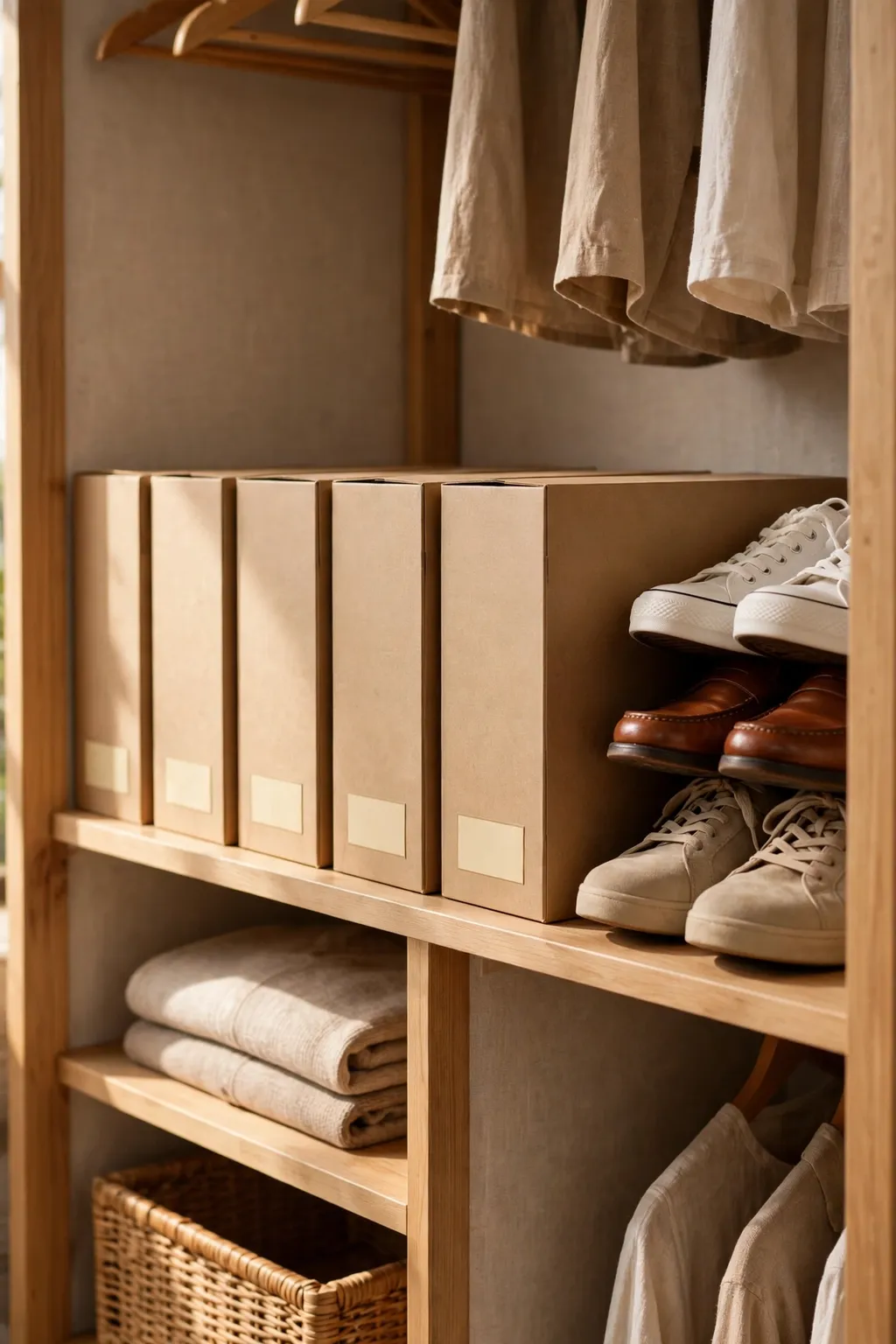
Labeled Shoe Boxes on a Closet Shelf
Old shoe boxes are one of the easiest and most affordable materials to repurpose for shoe storage, and a label is what turns a pile of boxes into a system. Keep the boxes your shoes came in, add a small photo of the pair inside or a simple written label on the end, and stack them on a closet shelf with the labels facing out. It costs nothing, it keeps dust off your good shoes, and you can finally find the pair you want without opening five boxes.
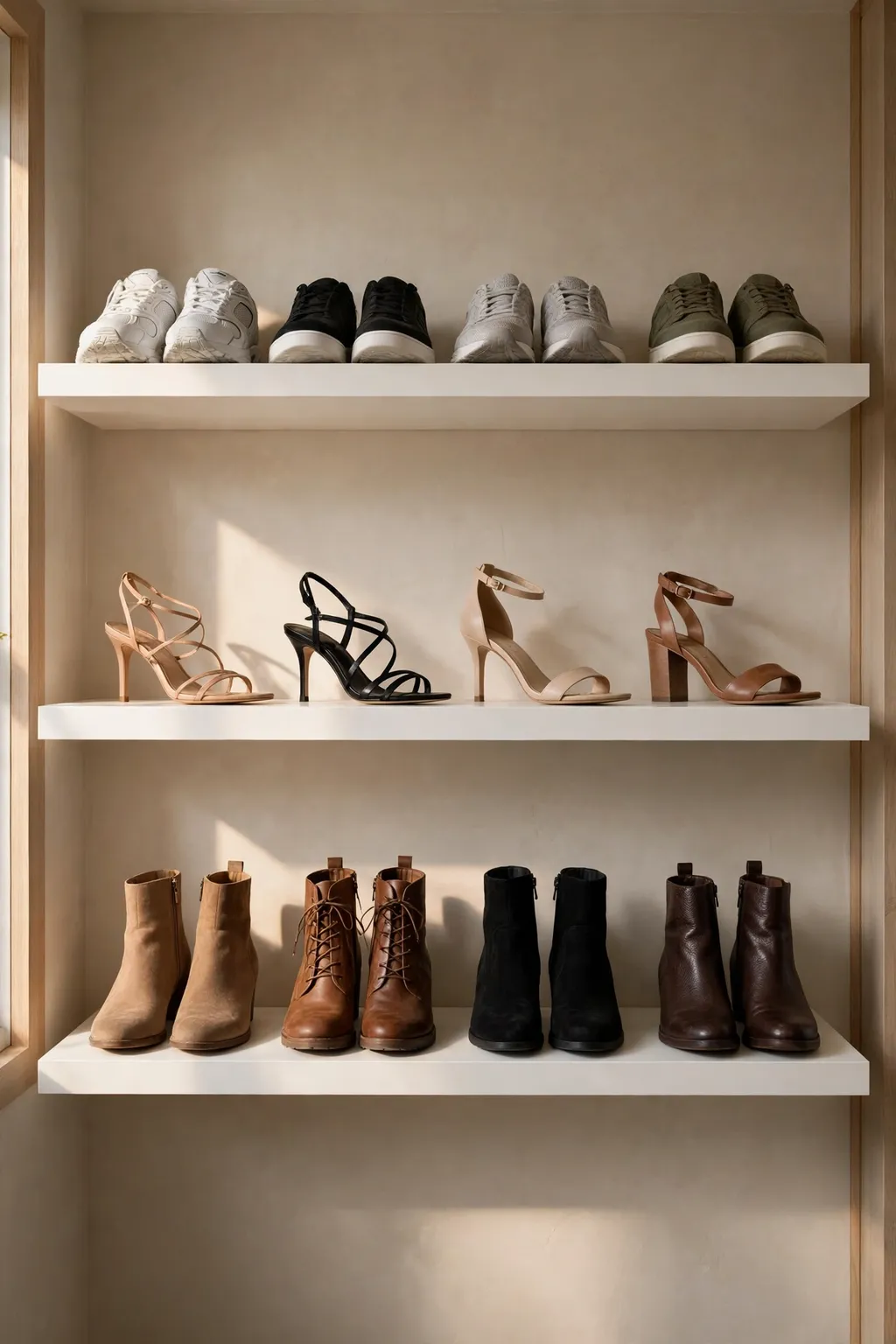
Floating Shelves for a Boutique Shoe Wall
Floating shelves are honestly the most versatile shoe wall solution out there, and they make even a modest collection look intentional. A 12-inch-deep shelf works well for most shoes, and they run about $15 to $40 each at IKEA, Amazon, or Home Depot. Three shelves plus basic wall anchors gets the job done beautifully for under $100, and a fresh coat of paint on the wall behind them makes the whole display feel like a boutique.
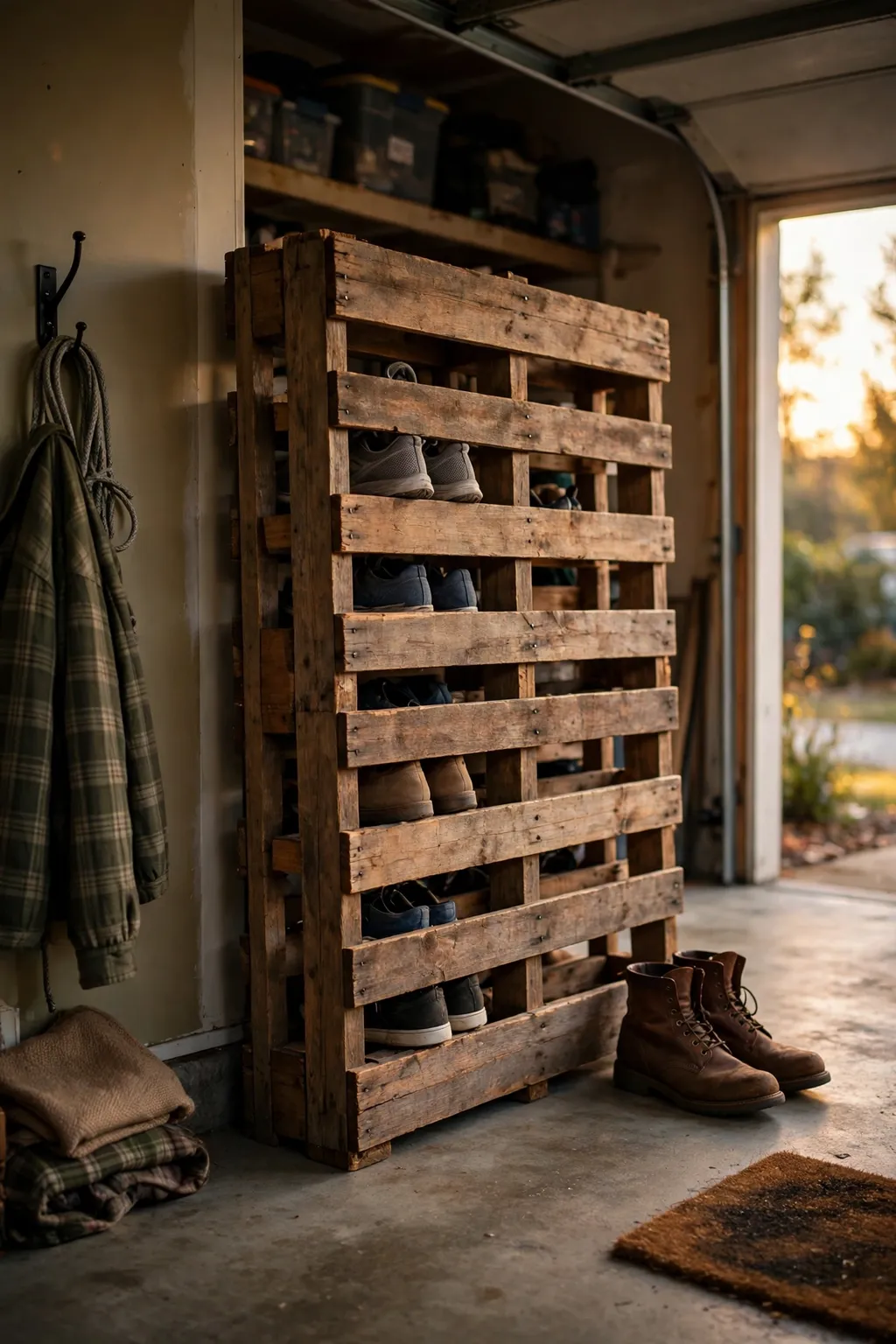
A Boot Rack from a Wood Pallet
Wooden pallets are a versatile and affordable material to repurpose into a rustic shoe rack, and they are often free. Stand a pallet upright against a garage or entryway wall, and the spaces between the slats hold shoes neatly in a row — sneakers and flats slide right in, and boots rest on the floor below. Sand it smooth, give it a coat of paint or stain, and it looks like a farmhouse find instead of a freebie.
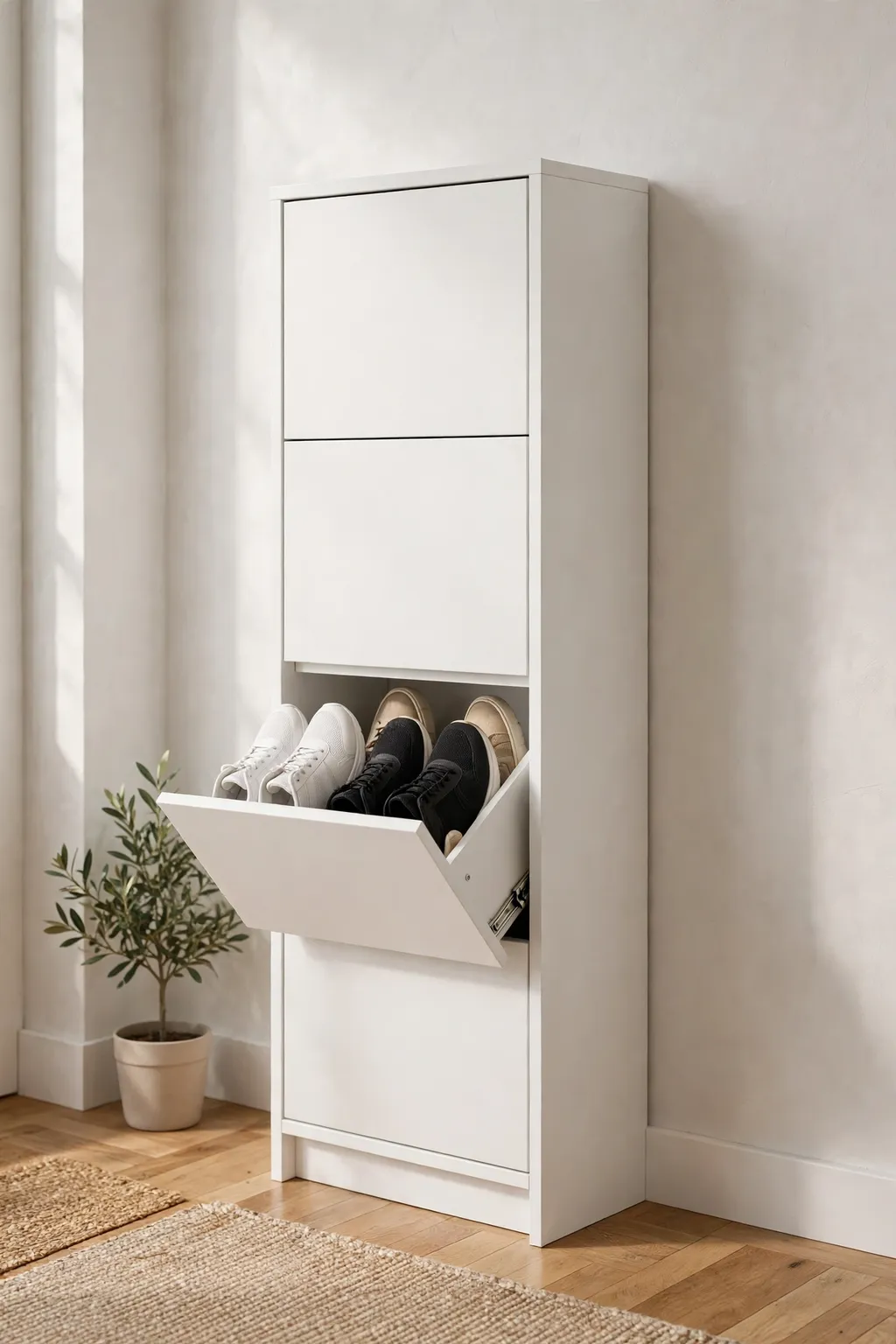
A Slim Flip-Drawer Cabinet That Hides Everything
A flip-drawer cabinet is the entryway fix I recommend most when you want the shoes completely out of sight, because it hides everything and takes almost no floor. A two or three drawer unit is only about nine and a half inches deep, 24 to 31 inches wide, and holds 12 to 18 pairs with the toes pointing down. Prices run about $70 to $140 — one honest limit is that chunky boots and most shoes over a men’s size 12 will not fit, so keep this one for everyday flats, trainers, and heels.
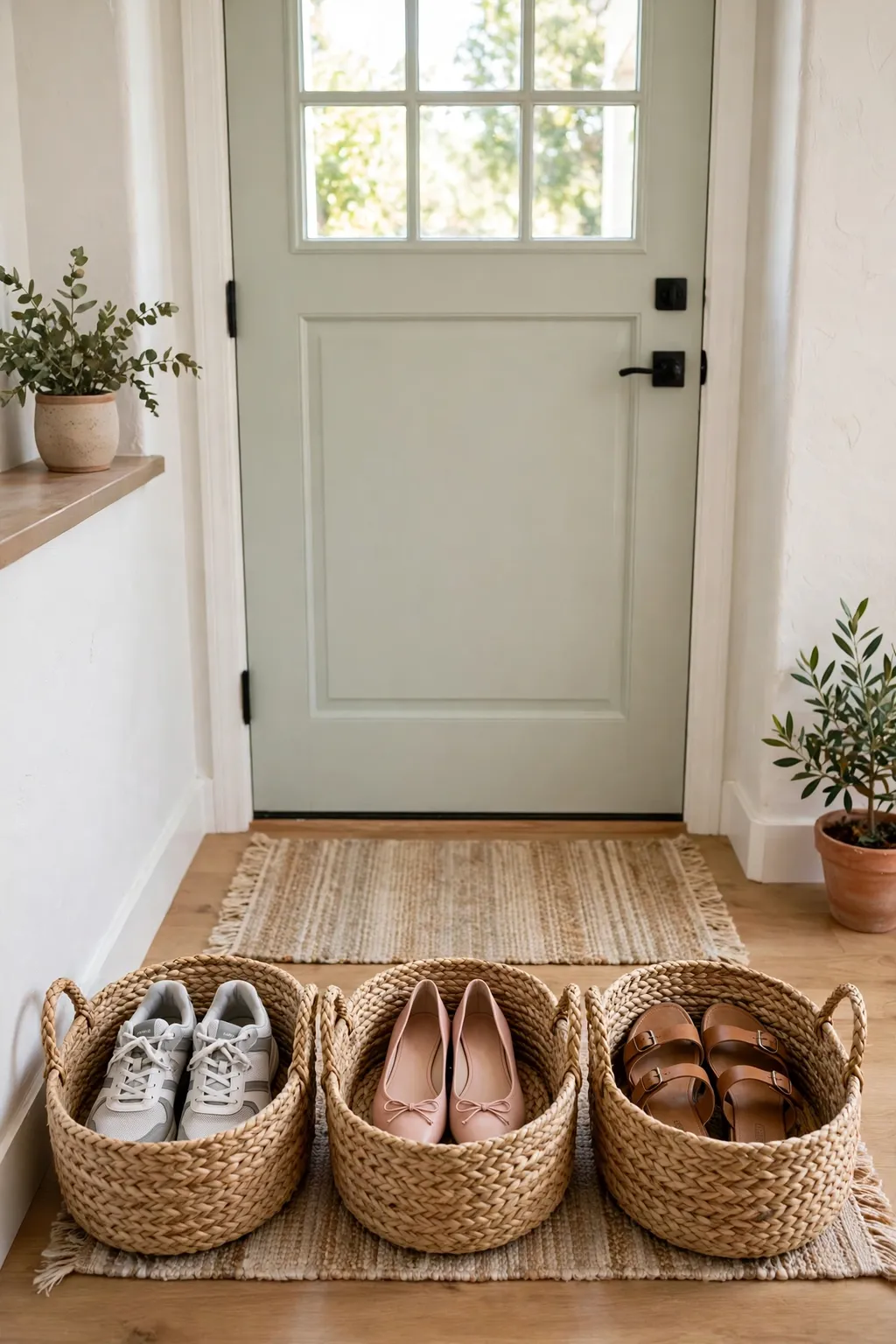
A Basket for Each Person by the Door
When every person in the house has their own basket, the pile by the door simply stops forming. Give each family member one woven basket by the door — one for your sneakers, one for the kids’ school shoes, one for your partner’s everyday pair — and the rule is simple: if your shoes are not on your feet, they are in your basket. Woven baskets cost about $15 to $35 each, they look warm and natural, and they hold just the daily pairs so the overflow never starts.
A Few Tips Before You Start
- Measure before you buy anything — a men’s size 12 trainer is about 12.5 inches long, so any shelf, cubby, or box needs a full 12 inches of depth to hold it without the toes pushing out.
- Start where the mess starts — for most homes that is the entryway pile, then the closet floor, then the boots that slump in a corner all winter.
- Keep only the daily pairs by the door — move off-season and special-occasion shoes to the closet or under the bed, and the entryway stays calm.
- Put a small mat or tray under every rack — it catches the dirt so your floors stay clean and the system looks finished.
- Do a quick shoe audit twice a year — if a pair has not been worn in a season, donate it and free the space for the shoes you actually wear.
Frequently Asked Questions
What is the cheapest way to organize shoes?
A three-tier bamboo rack for about $25 to $40 is the cheapest honest fix for the entryway, and tension rods, milk crates, and repurposed shoe boxes cost just a few dollars each. Start with one of those, add a boot tray for wet shoes, and you have solved most of the mess for under $50.
How do I organize shoes in a small entryway?
Use the wall and the door, not the floor — a slim flip-drawer cabinet only nine and a half inches deep, an over-the-door rack, or a narrow bamboo rack keeps the walkway clear. Give each person one basket for their daily pair, and move everything else to the closet or under the bed.
How many pairs of shoes should I keep by the door?
One daily pair per person is the rule that actually works — a basket or a cubby each, and nothing more. Everything else belongs in the closet, on a shelf, or under the bed, so the entryway never turns back into a pile.
How do I keep boots from slumping in storage?
Stand boots upright on a boot tray or a pallet rack, and slide a rolled magazine or a pool noodle inside each shaft to hold its shape. Store them where air can circulate, and they will keep their shape all season instead of flopping over in a corner.
WRAPPING UP
The Cozy Takeaway
Shoe organization does not have to mean a big bill — a bamboo rack, a boot tray, and one basket per person can calm the messiest entryway in a single afternoon. Pick one idea from this list, start with the pile by the front door, and enjoy a home that feels calmer the moment you walk in. For more entryway ideas, see my cozy mudroom ideas on a budget. Happy organizing, friend!