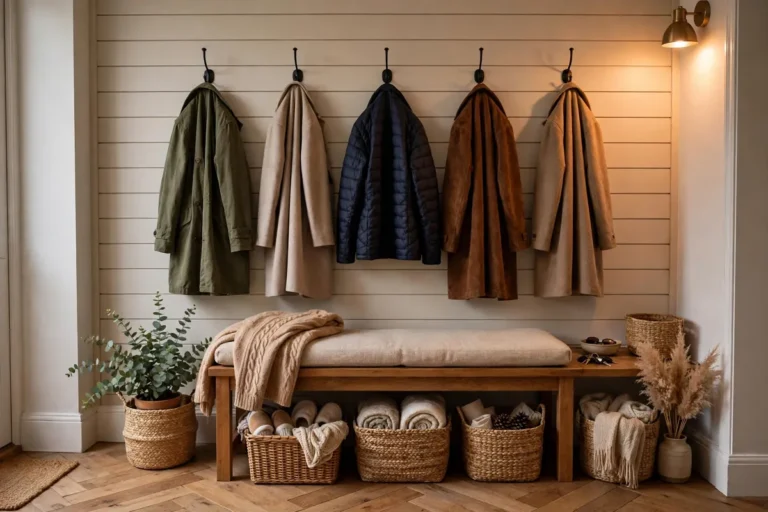

15 Pantry Organization Ideas on a Budget
My pantry used to be the one cupboard I dreaded opening — bags sliding off shelves, three half-empty boxes of the same pasta, and a can of tomatoes hiding at the very back like it was paying rent. Then I learned the secret nobody tells you: a tidy pantry is not about buying a whole matching set, it is about a few cheap moves done in the right order. These are the 15 pantry organization ideas on a budget that actually worked in my kitchen, most of them for just a few dollars each.
The best budget pantry organization starts with zones — group like with like, put everyday items at eye level, and use clear bins, jars, and a door rack so everything is visible. You do not need a remodel or expensive matching containers: dollar-store bins, a turntable, and simple labels will tidy almost any pantry for under $30. Shop your own cupboards first, measure your shelves, and only buy organizers once you know what needs containing.
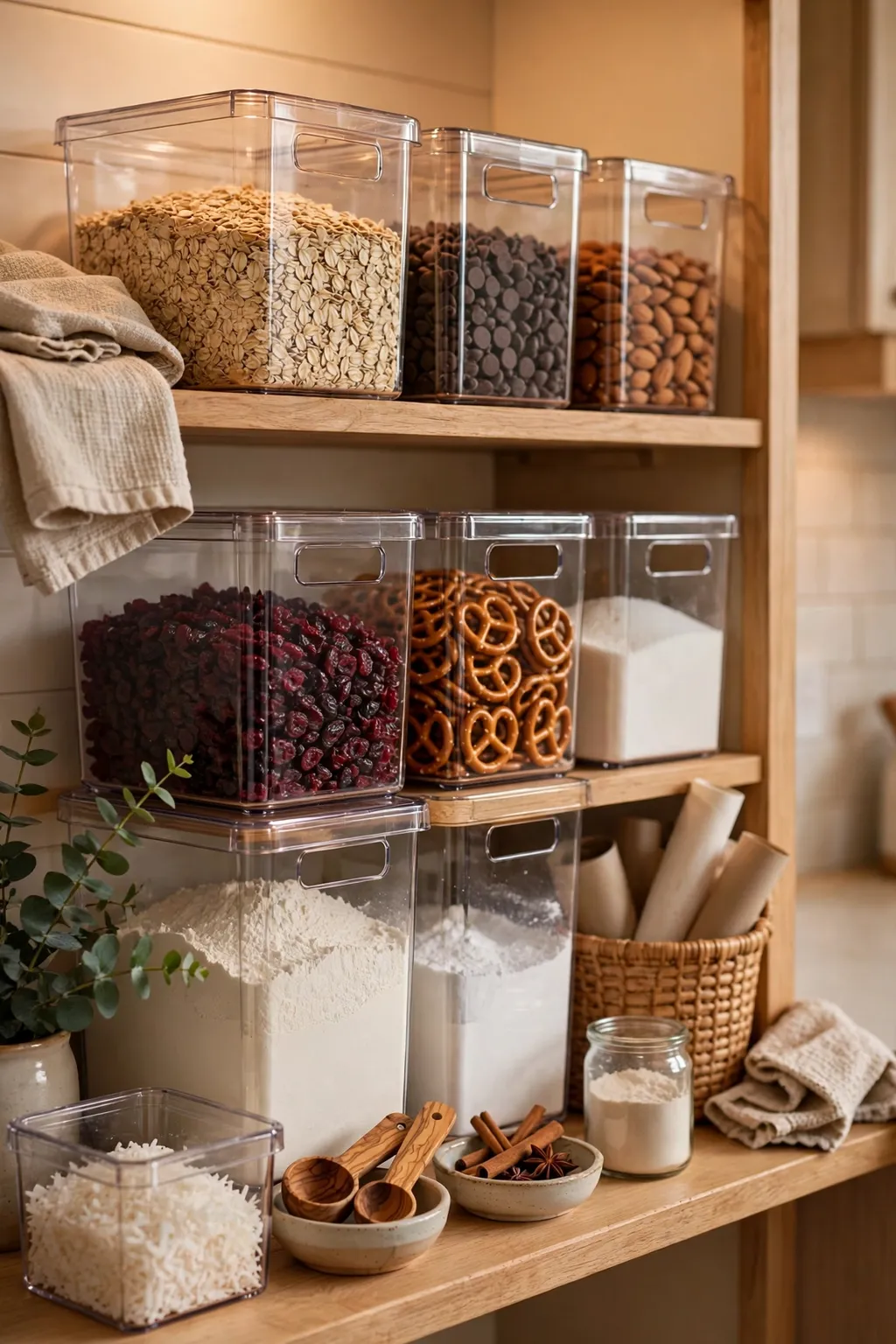
Start with Clear Bins You Already Own
Before you buy a single organizer, pull out every bin, basket, and container already hiding in your kitchen — a clear bin turns a messy shelf into a drawer you can slide out and see into. Group snacks in one, baking supplies in another, and suddenly the shelf stops swallowing things whole.
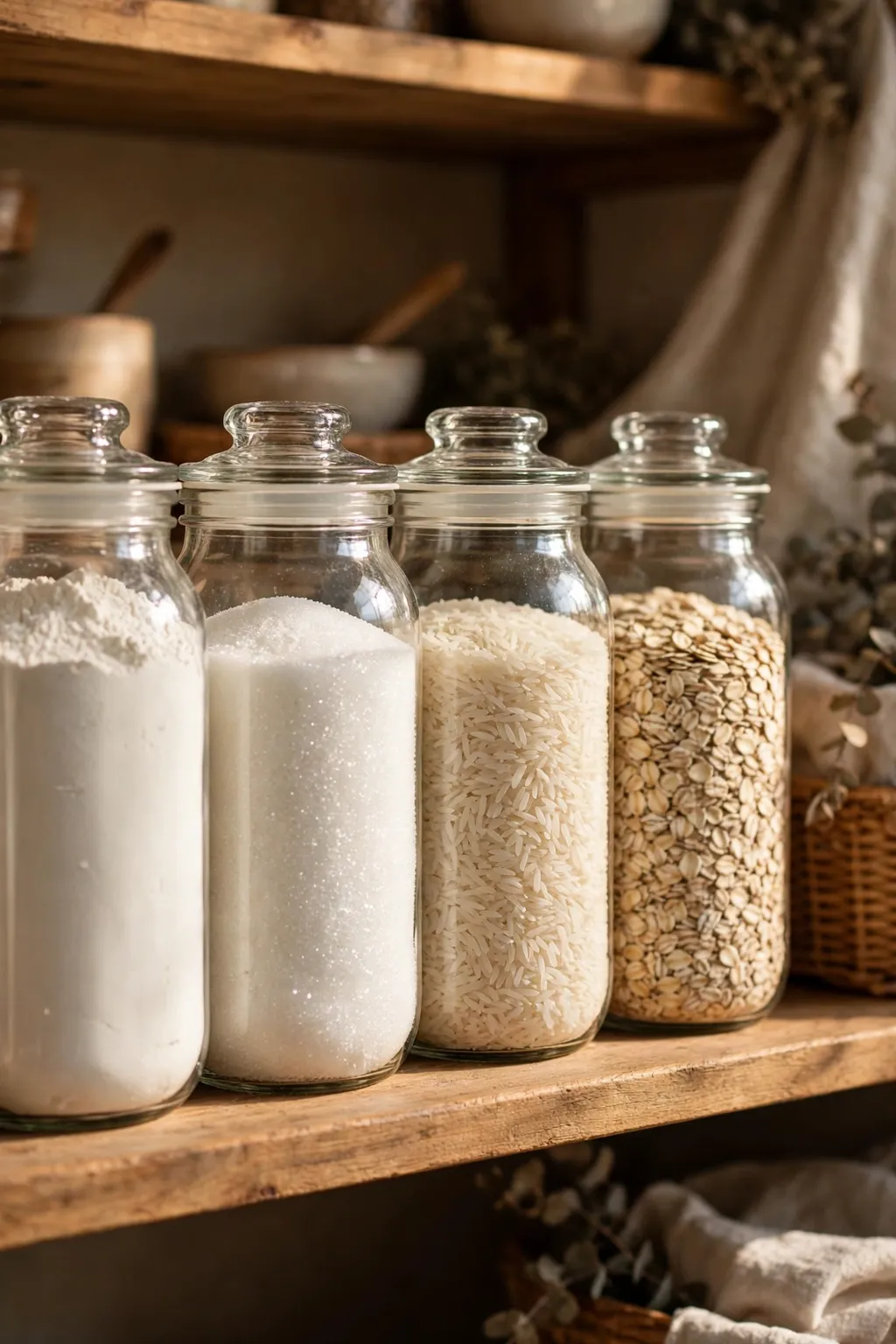
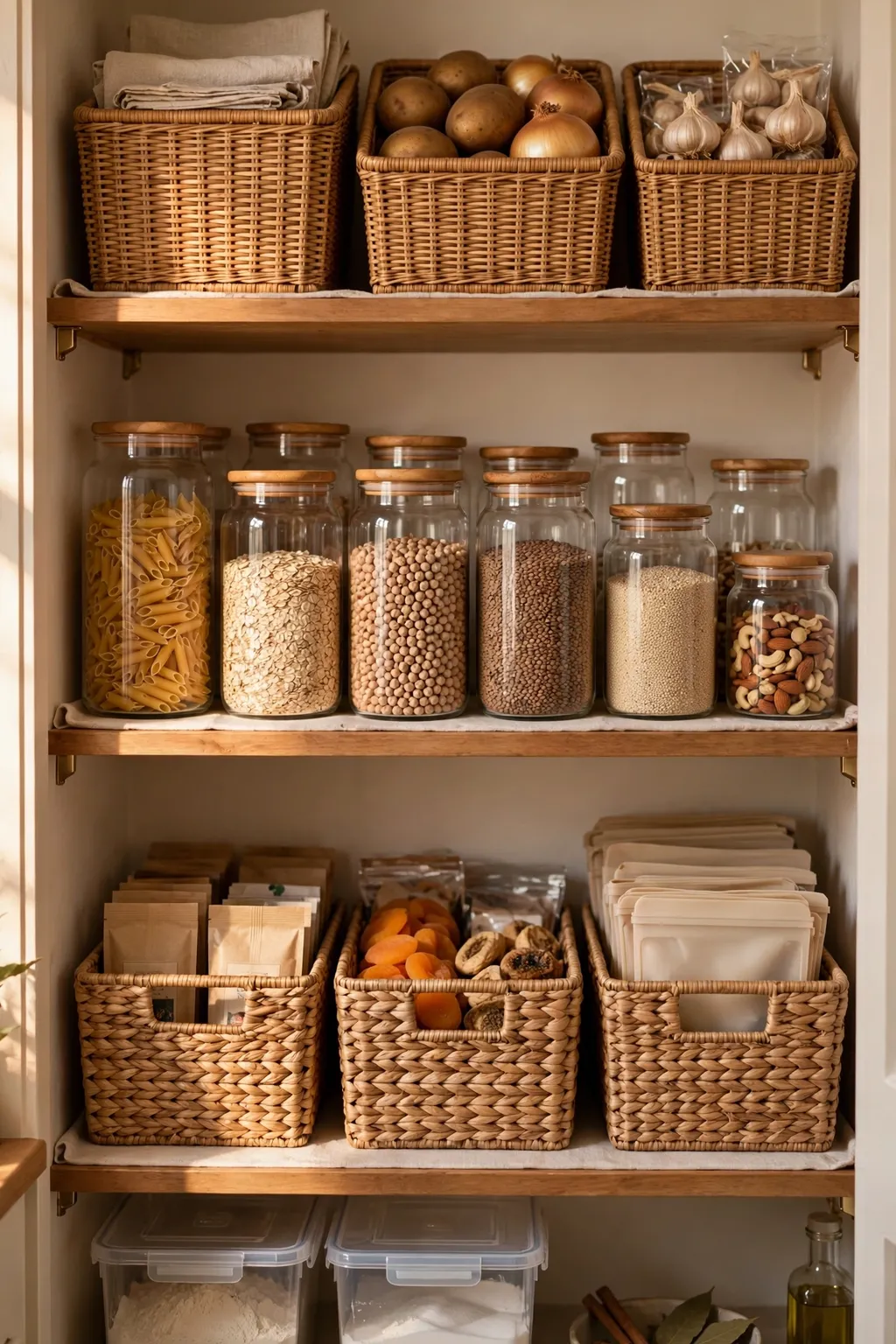
Decant Staples into Glass Jars
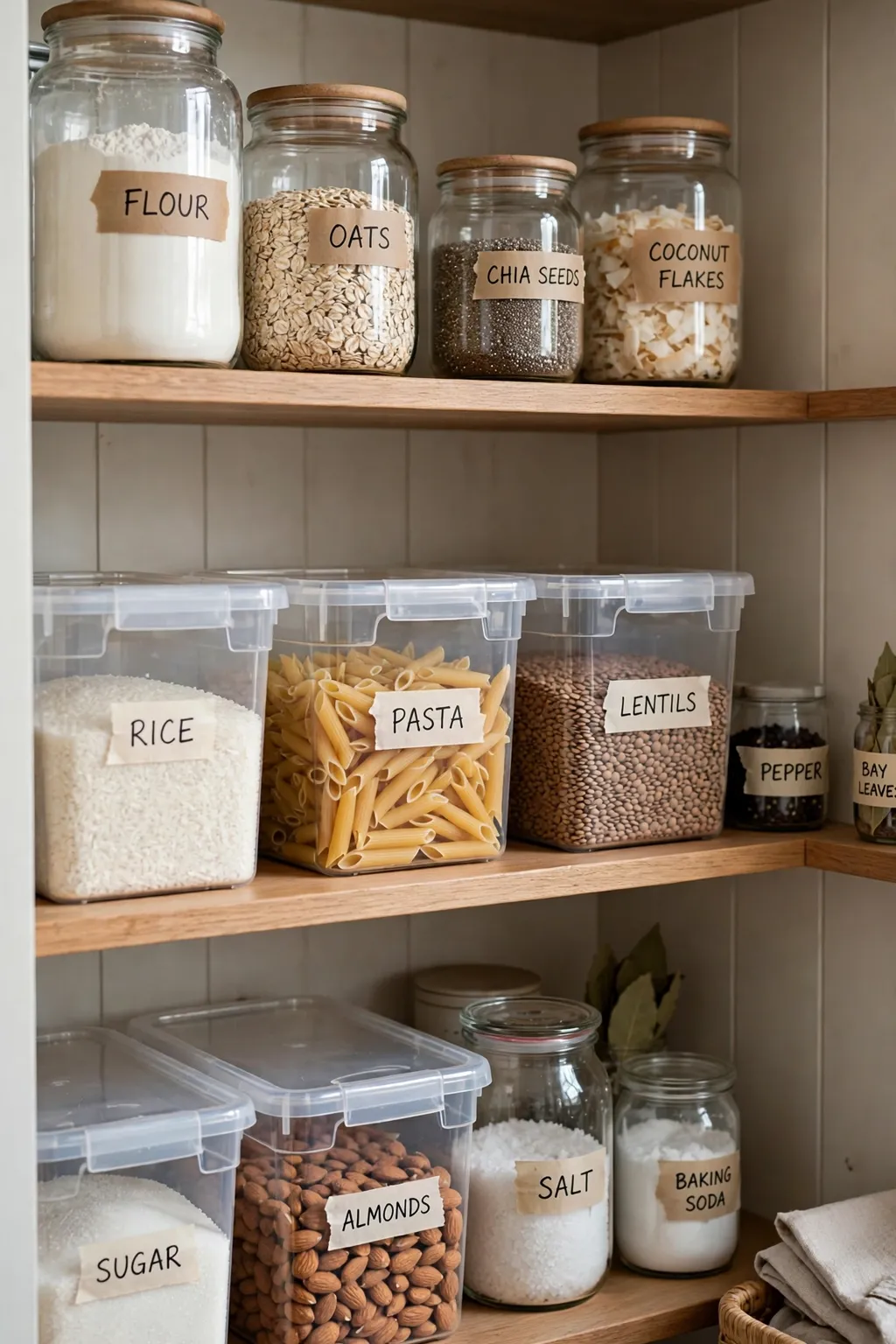
Flour, sugar, rice, and oats look instantly calmer in glass jars — and you can see at a glance when you are running low, so you stop buying duplicates. Save money by reusing large pasta sauce jars with a quick wash, and add a simple handwritten label.
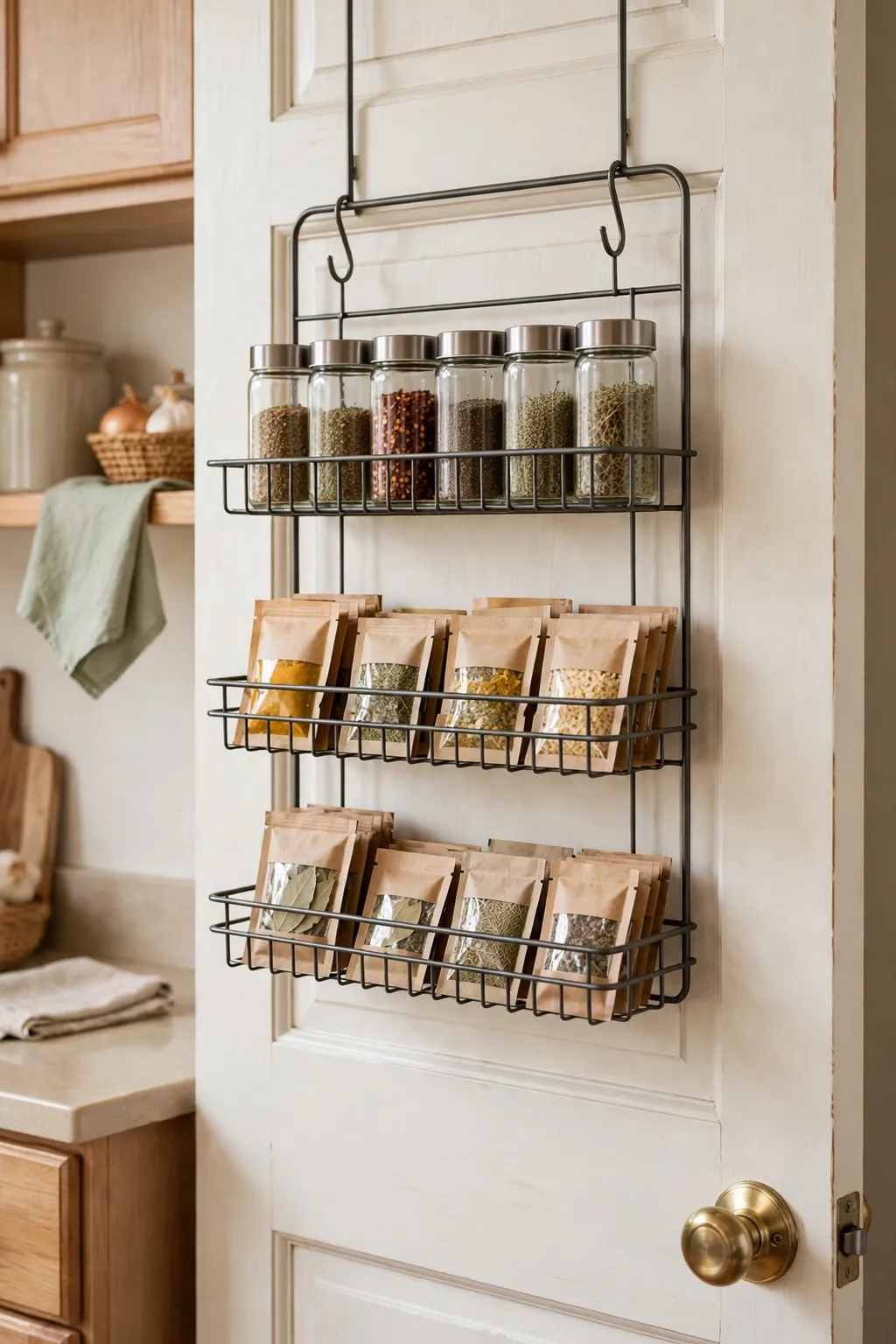
Hang a Rack on the Pantry Door
The back of the pantry door is free real estate: a simple over-the-door rack holds spices, small cans, and packets that would otherwise vanish into a corner. It costs very little, needs no drilling, and frees a whole shelf in one move.
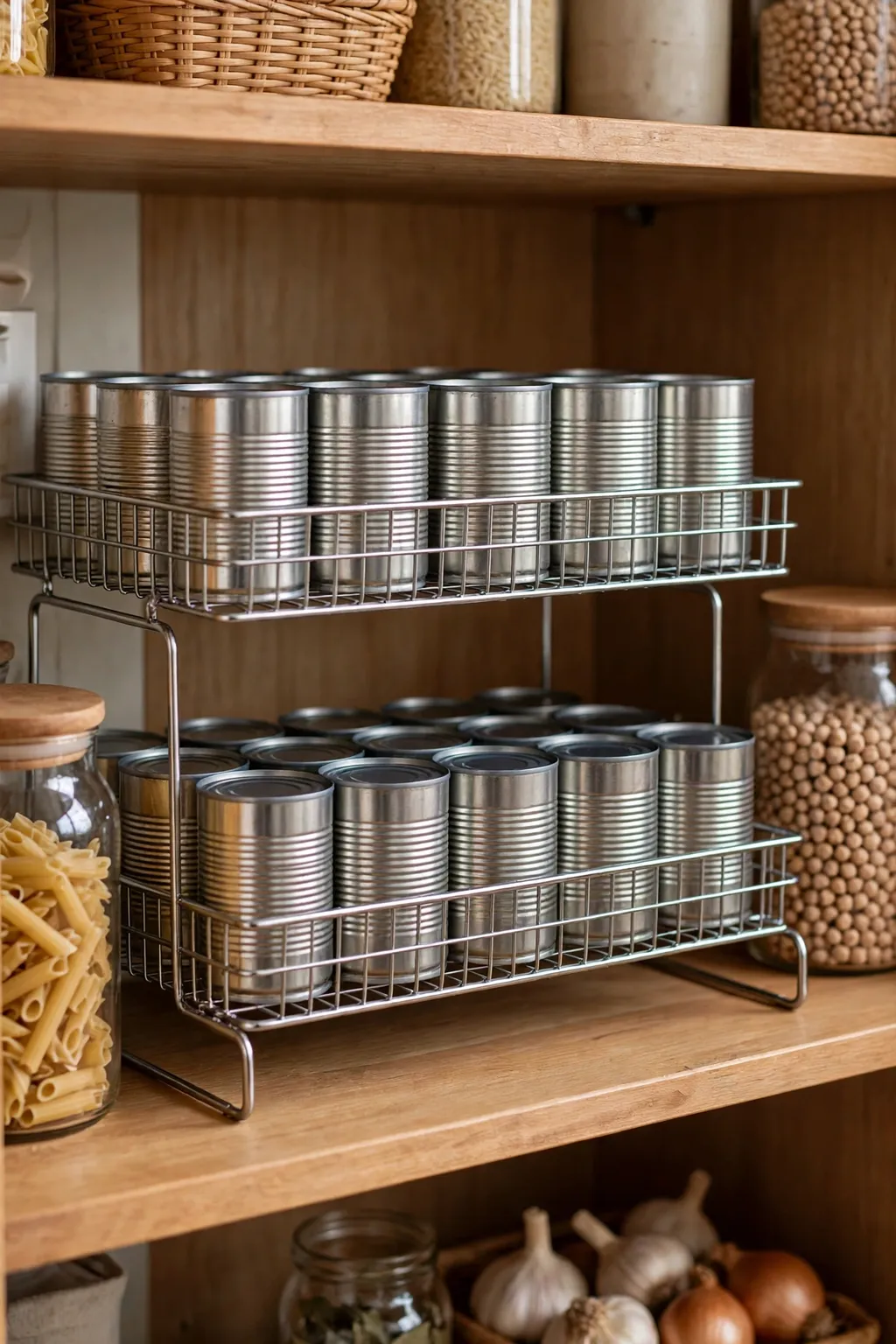
Add a Shelf Riser for Cans
Cans are the worst pantry offenders — they hide in rows and expire in the dark. A cheap wire or bamboo shelf riser lifts the back row into view, so you can read every label without moving a thing.
Spin It with a Turntable
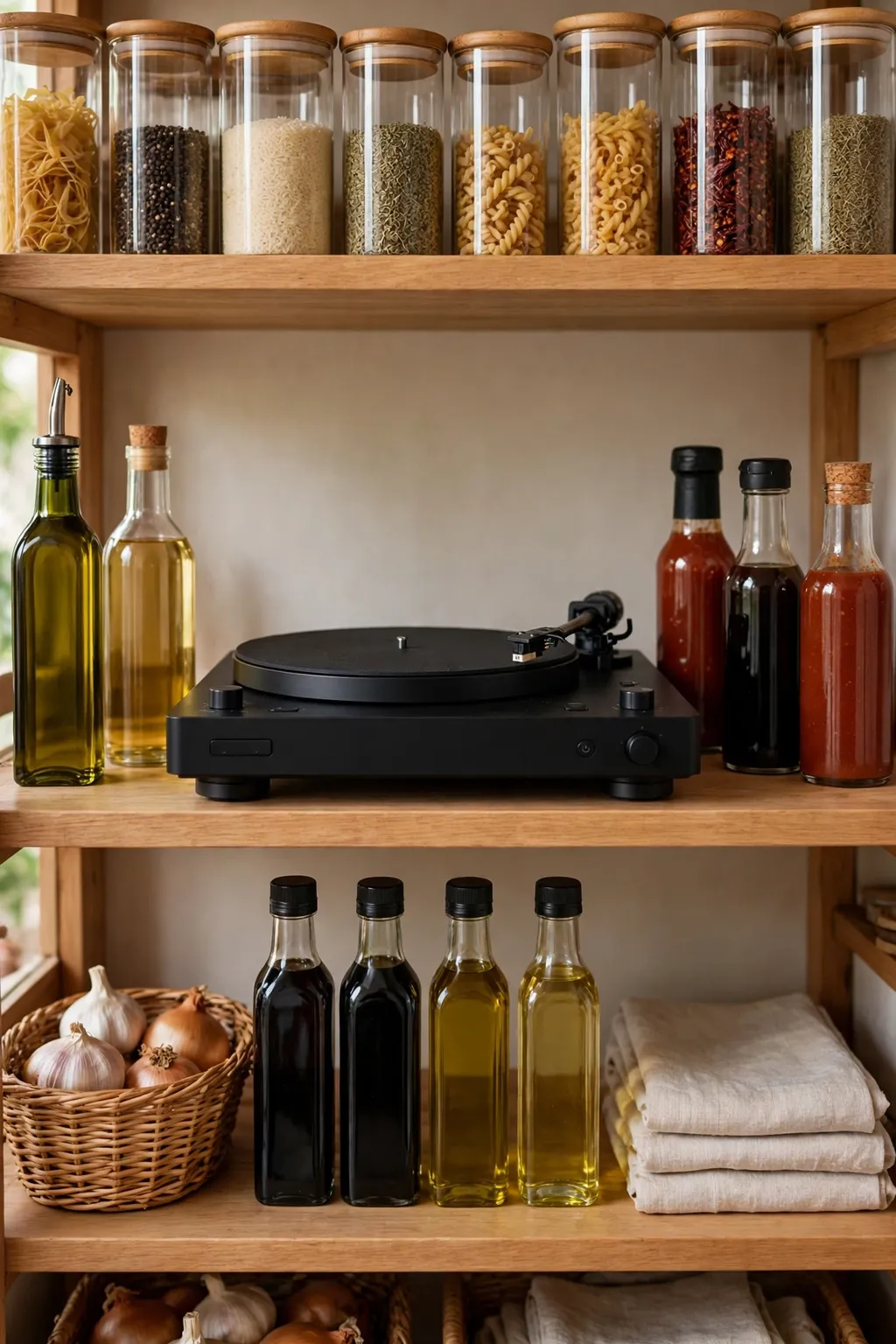
A turntable (the lazy Susan of pantry fame) is my favorite few-dollar fix for oils, vinegars, and sauces: one spin and the bottle you want is in your hand. Pick one with a low lip so tall bottles stay put.
Sort Your Pantry into Zones
Zones are free and they change everything: breakfast together, baking together, snacks together, dinner staples together. When every category has a home, putting groceries away takes minutes and finding things takes seconds.

Label Everything, Simply
Labels do not need a fancy machine — masking tape and a marker work beautifully, and they stop the whole family from putting things back in the wrong spot. Label the bin, not just the jar, so the system survives restocking day.
Corral Loose Packets in Small Baskets
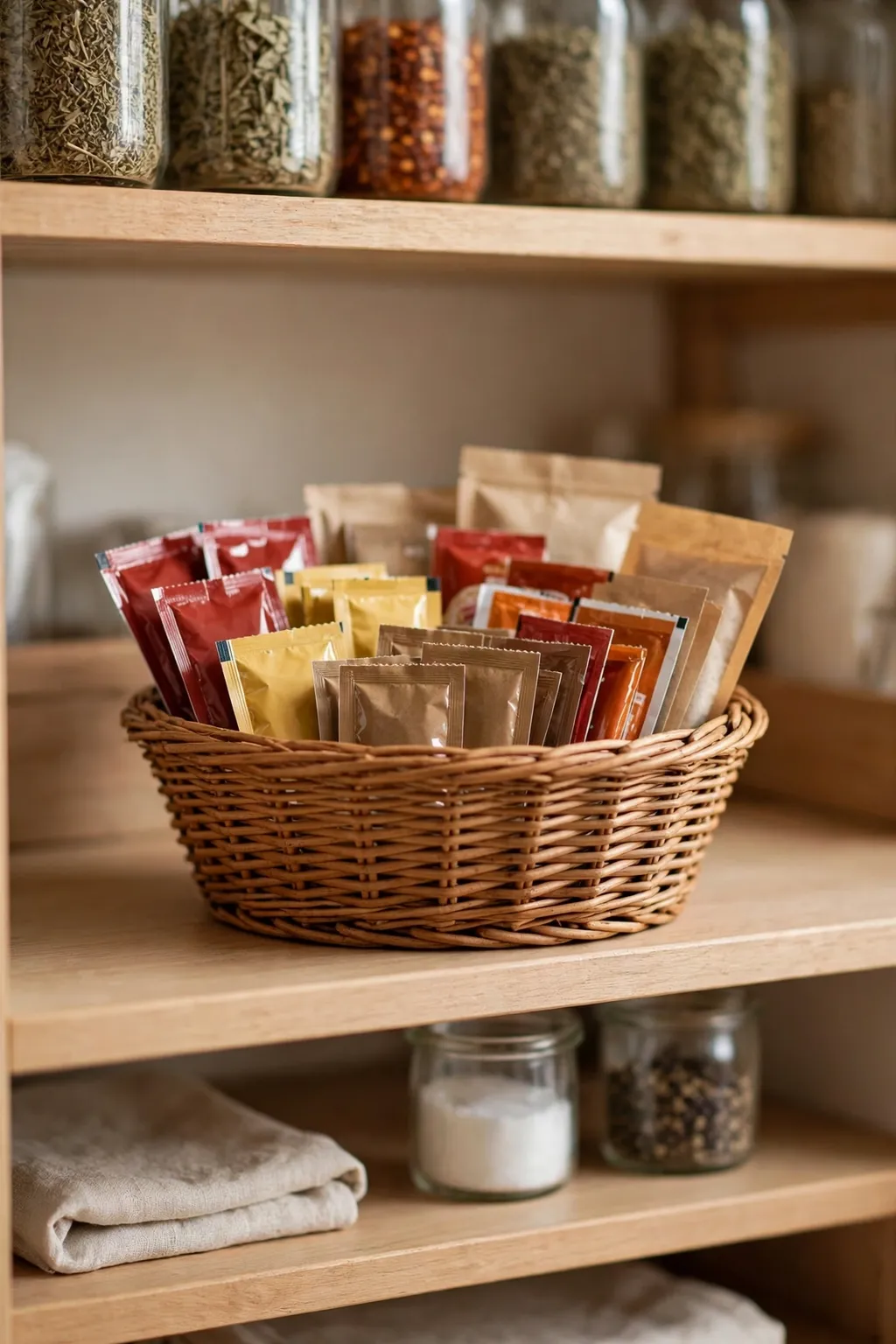
Sauce packets, seasoning mixes, and tea boxes are too small for a shelf and too many for a drawer — a small basket corrals them into one grab-and-go spot. Choose a basket that fits your shelf exactly, so no space is wasted on the sides.
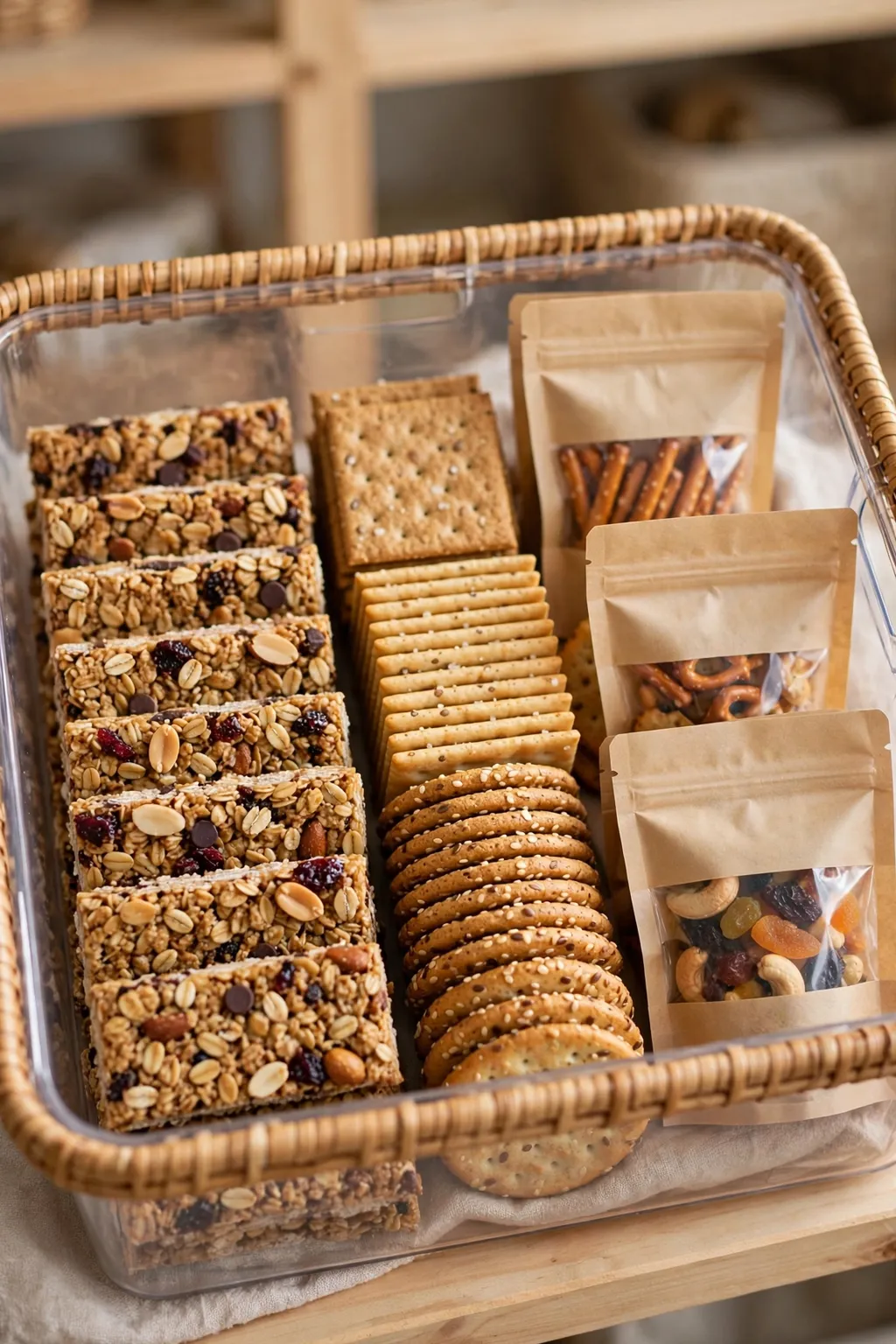
Give Snacks Their Own Grab Bin
One bin just for snacks ends the daily hunt through the pantry — kids and grown-ups alike know exactly where to look. Keep it at eye level or lower, and refill it once a week when you unpack groceries.
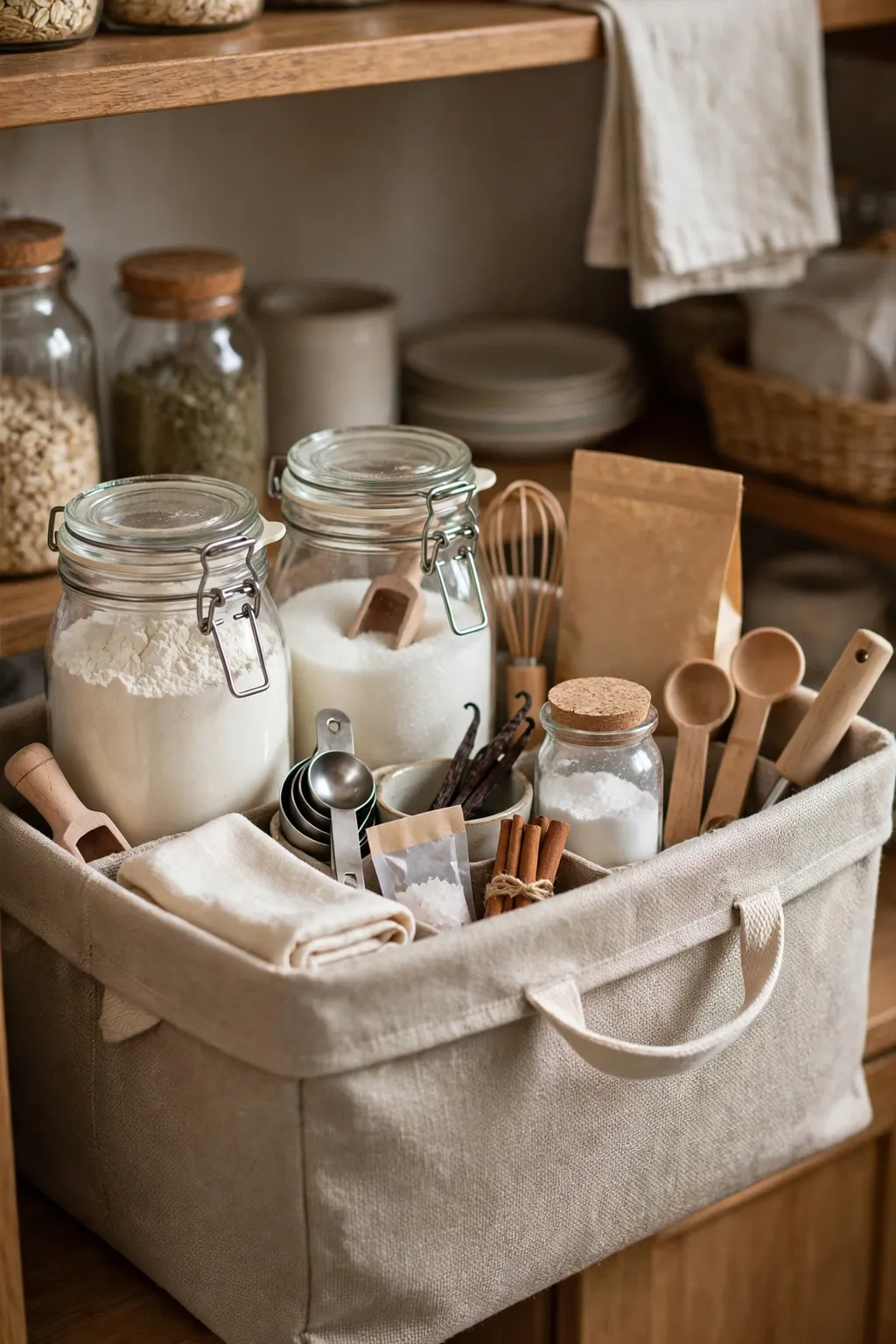
Build a Tiny Baking Station
Gather flour, sugar, baking powder, and vanilla in one bin and you have a baking station — no more hunting four shelves when the cookie craving hits. Keep measuring cups tucked inside the flour bin so they never wander off.
Line Up Spices on a Small Stepped Shelf
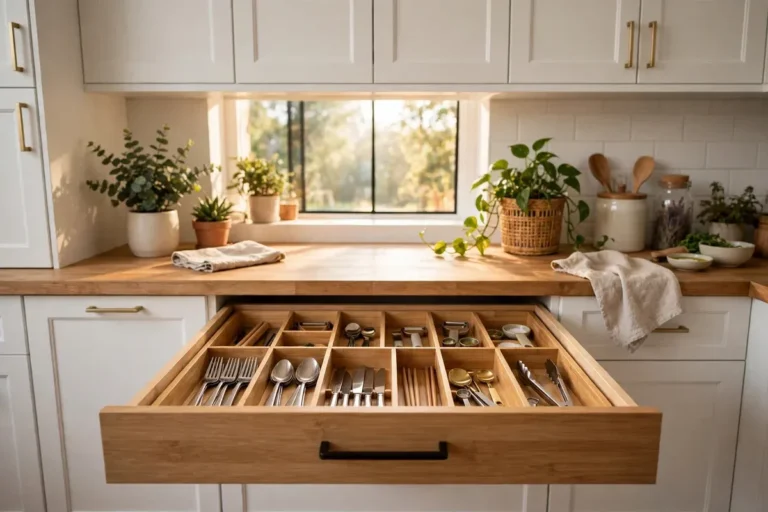
A stepped spice shelf costs a few dollars and saves endless digging: every jar is visible, lined up like a little staircase. If your spices live in a drawer instead, lay them label-up in a shallow tray for the same effect.

Hang Baskets Under a Shelf
Under-shelf baskets clip onto an existing shelf and create storage from thin air — perfect for flat packets, wraps, and sandwich bags. They cost almost nothing and are brilliant in a small pantry where every inch counts.

Make a Small Pantry Work Harder
A small pantry is not a lost cause: go vertical with stackable bins, use the door, and keep only what you actually cook with. If it has not been used in six months, it does not earn shelf space — donate it and enjoy the breathing room.

Tame Deep Shelves with Pull-Out Bins
Deep shelves are where food goes to be forgotten, but a long bin that pulls out like a drawer fixes that completely. One pull and you can see everything, right down to the back wall, with no more reaching and guessing.

Do a Five-Minute Weekly Reset
The cheapest organization idea of all is maintenance: once a week, spend five minutes putting strays back in their zones and tossing anything expired. A pantry that gets a tiny weekly reset never slides back into chaos, no matter how busy life gets.
A Few Tips Before You Start
- Measure your shelves before buying any organizer — a bin that does not fit is money wasted.
- Empty the pantry completely first; you cannot organize around clutter you cannot see.
- Shop your own cupboards for bins and baskets before spending a dollar.
- Keep everyday items at eye level and rarely used items up high or down low.
- Buy one organizer, test it for a week, and only then buy more of the same.
Frequently Asked Questions
How can I organize my pantry on a budget?
Start free: empty the pantry, group like items into zones, and reuse bins and jars you already own. Then add a few cheap helpers — a door rack, a turntable, and a shelf riser — which together usually cost under $30.
What are the cheapest pantry organizers that actually work?
Clear bins, over-the-door racks, turntables, and shelf risers give the most change for the least money. Reused glass jars and masking-tape labels cost almost nothing and make the biggest visual difference.
How do I organize a small pantry?
Go vertical with stackable bins, use the pantry door for a rack, and keep only ingredients you actually cook with. Pull-out bins stop deep shelves from hiding food at the back.
How often should I clean out my pantry?
Do a five-minute reset weekly to return strays to their zones, and a deeper clean-out every few months to toss expired food. The weekly habit is what keeps the system from sliding back into chaos.
WRAPPING UP
The Cozy Takeaway
A tidy pantry is not about spending a fortune — it is about giving every item a home it can actually stay in. Start with zones and the bins you already own, add one or two cheap helpers, and enjoy opening that cupboard door again. Happy organizing, friend!