13 Cozy Basement Ideas on a Budget
Hi, I’m Emma! A basement can feel like the coldest, darkest room in the house — or the coziest one. Mine spent years as a dumping ground for boxes and broken chairs, until I realized the fix was never a full renovation. It was warm paint, soft light, and a floor that didn’t feel like a garage. These are my 13 favorite cozy basement ideas on a budget, and most of them cost under $100.
The best cozy basement ideas on a budget start with a dry room, not a shopping list: seal the cracks, run a dehumidifier until the humidity stays below 60%, then paint the walls a warm light color and the ceiling joists white. Add an epoxy floor or click-lock vinyl plank, carpet tiles where feet actually land, and three layers of warm 2700K light. Curtains carve out cozy zones, a thrifted sofa does the sitting, and storage hides under the stairs. A simple hangout corner can come together for around $1,000 — and the first three ideas cost almost nothing at all.
Seal It and Dry It First
Nothing cozy survives a damp basement, so this is the unglamorous idea that makes all the others work. Check the walls for cracks and seal them, then run a dehumidifier for a couple of weeks before you buy a single cushion — a finished basement sitting above 60% humidity will smell musty and ruin flooring no matter how good it looks. A portable dehumidifier costs roughly $200 and up, and it is the cheapest insurance on this whole list. Once the room stays dry, everything else you add — the rug, the sofa, the curtains — stays fresh instead of slowly going damp.

Paint the Walls a Warm Light Color
Paint is the cheapest designer a basement has. Light, warm neutrals bounce what little light the room gets and make a low ceiling feel taller, while a cold white or a dark color only makes the room feel like a cellar. Warm white, soft greige, and pale oatmeal all work beautifully against wood tones, and a gallon of quality paint runs about $40 to $60 — two gallons covers most lower levels. Paint the walls before you do anything else, because every other idea on this list looks better against a warm, bright wall.

Paint the Ceiling Joists White — or Black
A finished ceiling is expensive, but a painted one is not. Leaving the joists exposed and spraying them flat white makes the ceiling disappear upward and bounces light back down into the room; flat black does the opposite trick, hiding pipes and wires in a cozy, theater-like dark. Either way it costs about $100 to $300 in paint, and it is a legitimate design choice now, not a shortcut. Keep the light fixtures simple — a couple of pendants or plug-in sconces — and let the painted joists do the talking.

Give the Concrete Floor an Epoxy Coat
If the budget stops at the floor, epoxy is the move. A two-part epoxy kit costs about $100 to $250 and turns a stained grey slab into a smooth, sealed, wipe-clean surface that looks intentional instead of unfinished. It is the cheapest floor that still feels finished — roughly $0.50 to $2 per square foot — and it seals the concrete against moisture at the same time. Prep matters more than the paint itself, so clean and etch the slab properly, then roll on two thin coats and let it cure before the rug goes down.
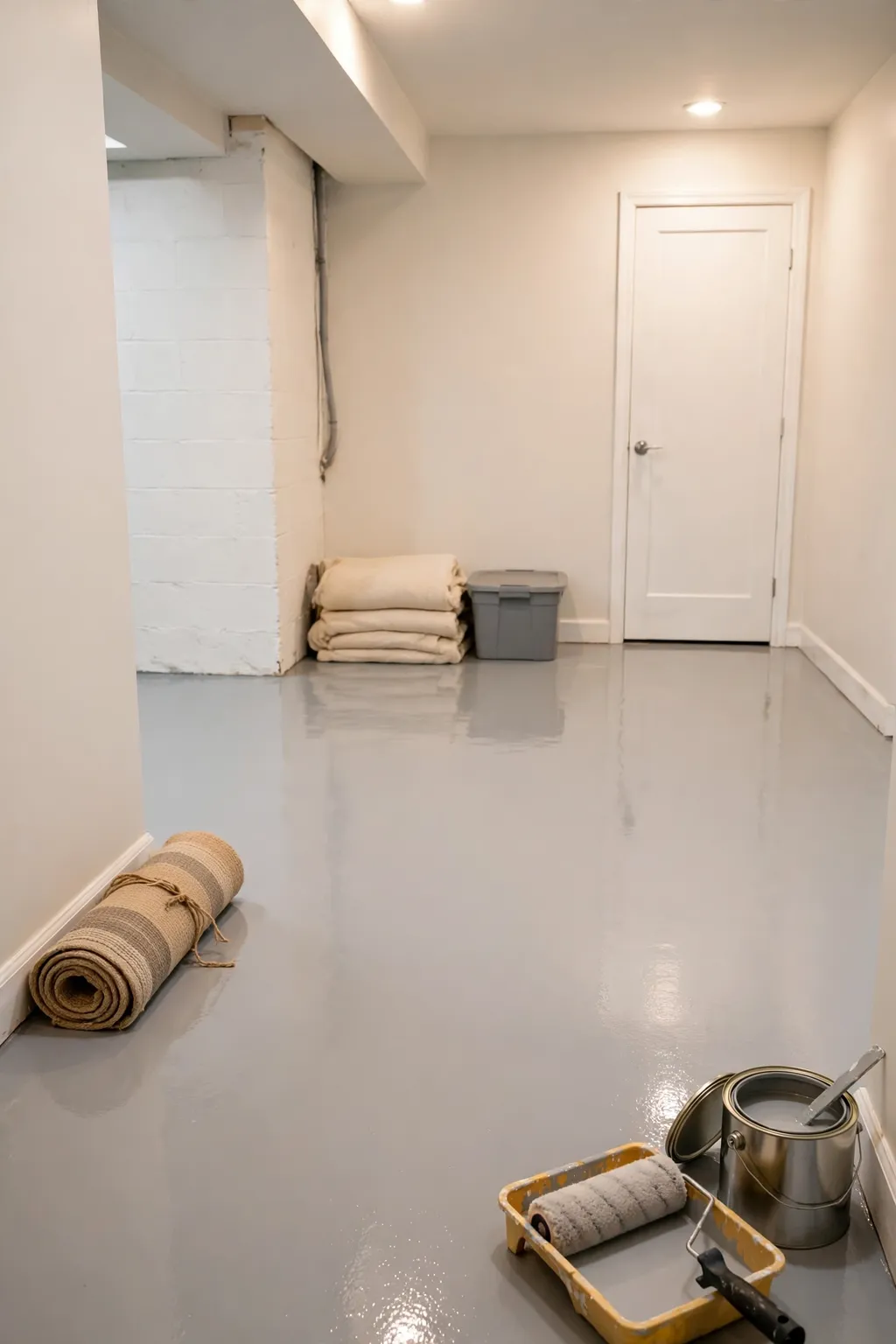
Lay Click-Lock Vinyl Plank in the Main Zone
When you want a floor that actually looks like wood, luxury vinyl plank is the workhorse. It is fully waterproof, it floats right over a clean slab with no glue, and the click-lock planks are a genuine weekend DIY job. Budget brands run about $2 to $4 per square foot, so a 600-square-foot floor lands around $1,200 to $2,400 before trim. Lay it in the main lounge zone first and leave the epoxy or carpet tiles for the edges — the room reads finished the moment the wood-look floor goes in.

Carpet Tiles Where Feet Actually Land
Carpet tiles are the only carpet I would ever put in a basement. Wall-to-wall broadloom traps moisture against the slab, but modular tiles at $1 to $3 per square foot solve that: when one gets soaked or stained, you pull that single square and replace it instead of the whole room. They are the warmest, softest option by a wide margin, and a confident DIYer can lay them in an afternoon. Put them where feet actually land — under the sofa, beside the bed, in the reading nook — and let the hard floor do the rest.

A Big Soft Rug to Warm It All Up
Even the prettiest hard floor feels cold under bare feet in a basement, and that is exactly what a rug is for. One big rug — large enough that the front legs of the sofa sit on it — anchors the whole seating area and instantly makes the room feel like a living room instead of a storage level. Layer it over vinyl plank or epoxy, choose a low pile in a warm pattern that hides crumbs, and wash it or shake it outside twice a year. A thrifted or sale-rack rug in the $60 to $120 range does this job beautifully.

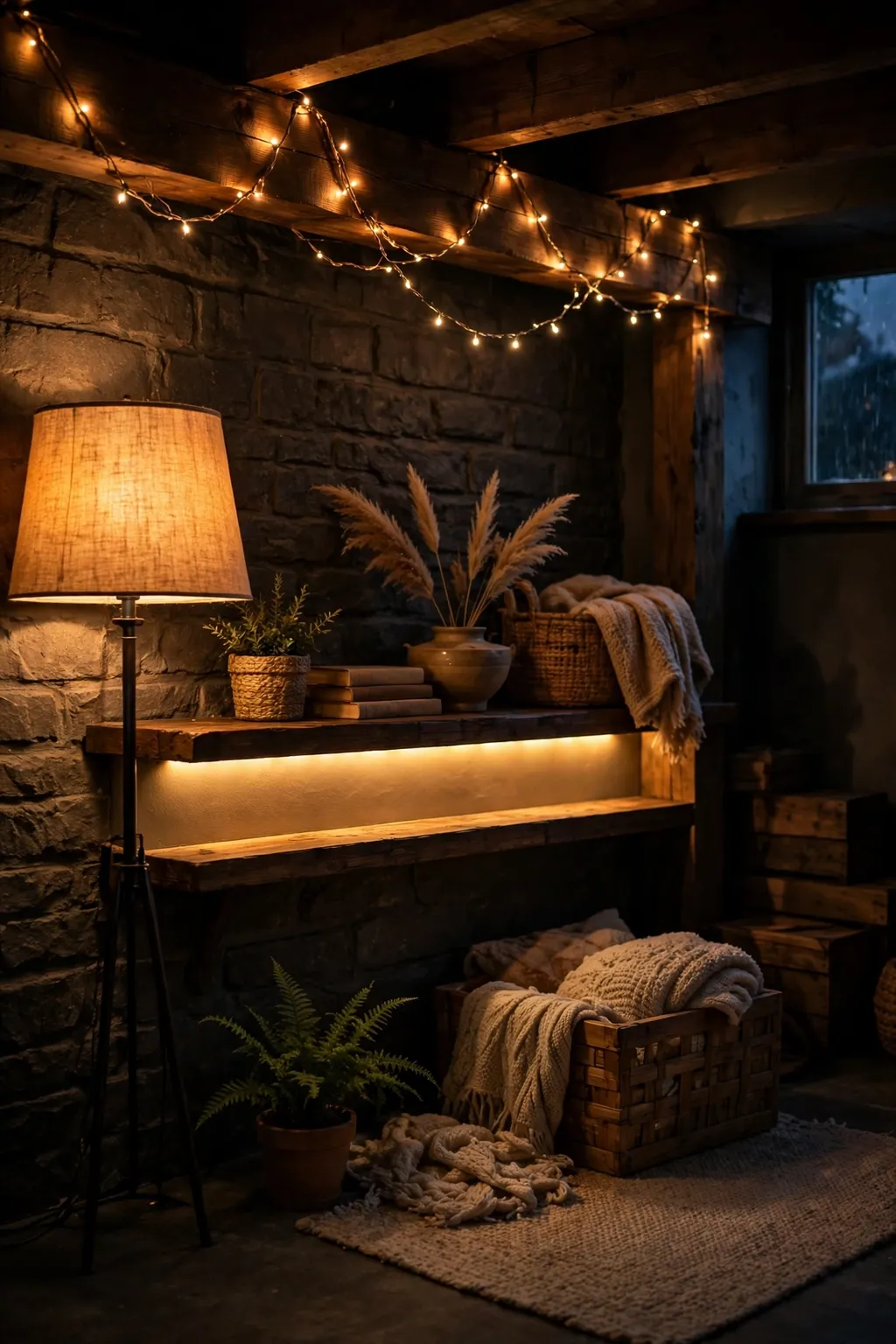
Layer Warm Light, Not Just Ceiling Lights
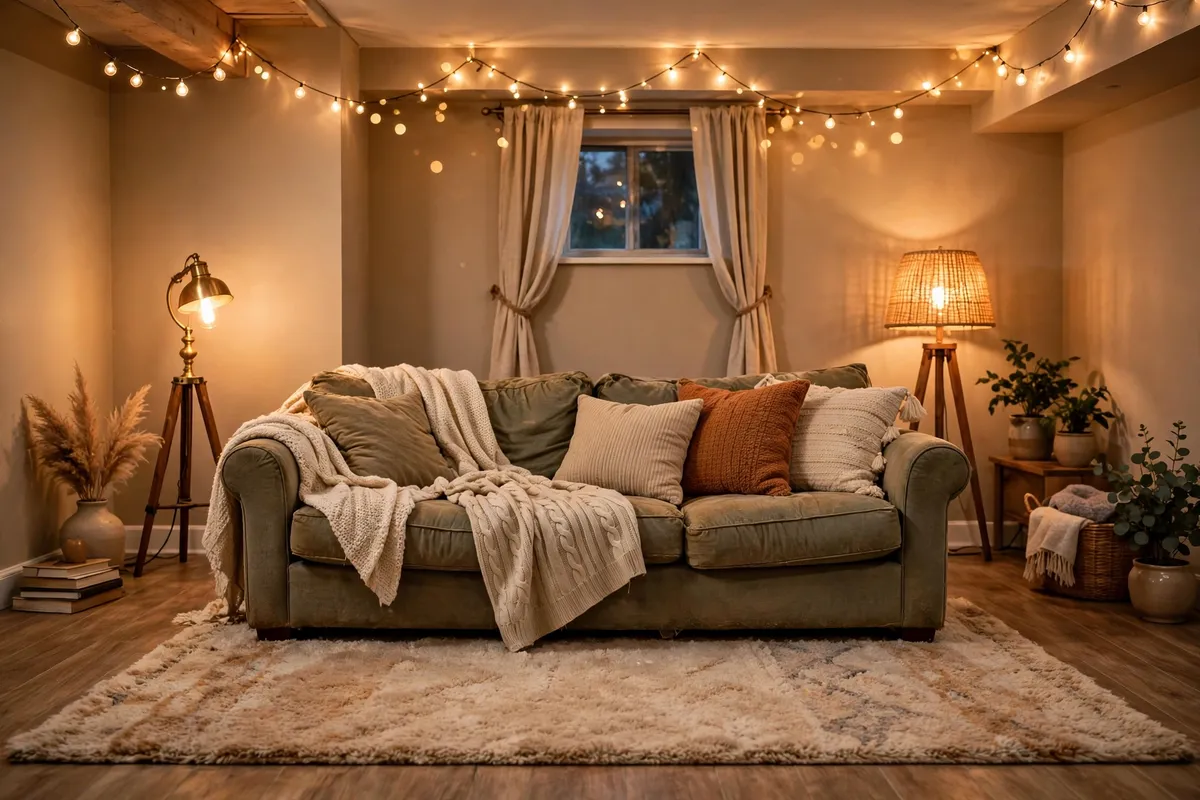
Basements usually get flooded with harsh overhead cans because that is what finishers default to — and it is the fastest way to make a room feel like an office. Layer instead: a floor lamp with a linen shade, a table lamp on a side table, and warm LED strip lighting tucked under a shelf. Stick to warm bulbs at 2700K to 3000K, and put the overheads on a dimmer, about $25, so the room can go soft at night. String lights along a beam cost about $10 to $15 and do more for the cozy factor than any single fixture. Canless LED lights run $15 to $40 each if you do add overheads — six to eight of them light a whole room for well under $300.
Curtains to Carve Out Cozy Zones
Walls are expensive; curtains are not. A ceiling track and a pair of heavy linen curtains in warm oatmeal can divide one big basement into a lounge and a reading corner, hide the laundry area, or soften the wall behind the sofa — all for the price of two curtain panels and a track. They add softness and sound absorption at the same time, which matters in a room full of hard surfaces. Hang them from the ceiling, not the window frame, so the fabric pools slightly and the zones feel like real rooms.

A Thrifted Sofa and Floor Cushions
The best basement sofa is almost never a new one. A thrifted sofa in a warm fabric — rust velvet, oatmeal linen, deep green — costs a fraction of retail, and a washable slipcover or a chunky knit throw makes it look intentional instead of secondhand. Add big floor cushions and a pouf or two, about $20 to $40 each, and suddenly the room seats six for movie night without a single matching chair. Check the frame and the springs before you buy, steam-clean it, and let the cushions do the decorating.

Storage Under the Stairs
The triangle under the stairs is the most wasted space in every basement, and the easiest to fix. Open cubbies with woven baskets hold blankets, board games, and spare chargers for about $10 to $20 a basket, and a small lamp on top makes the whole thing look built-in. If you are handy, a row of shallow drawers does the same job with cleaner lines. Either way, the clutter leaves the floor and the middle of the room stays clear for actually living in.

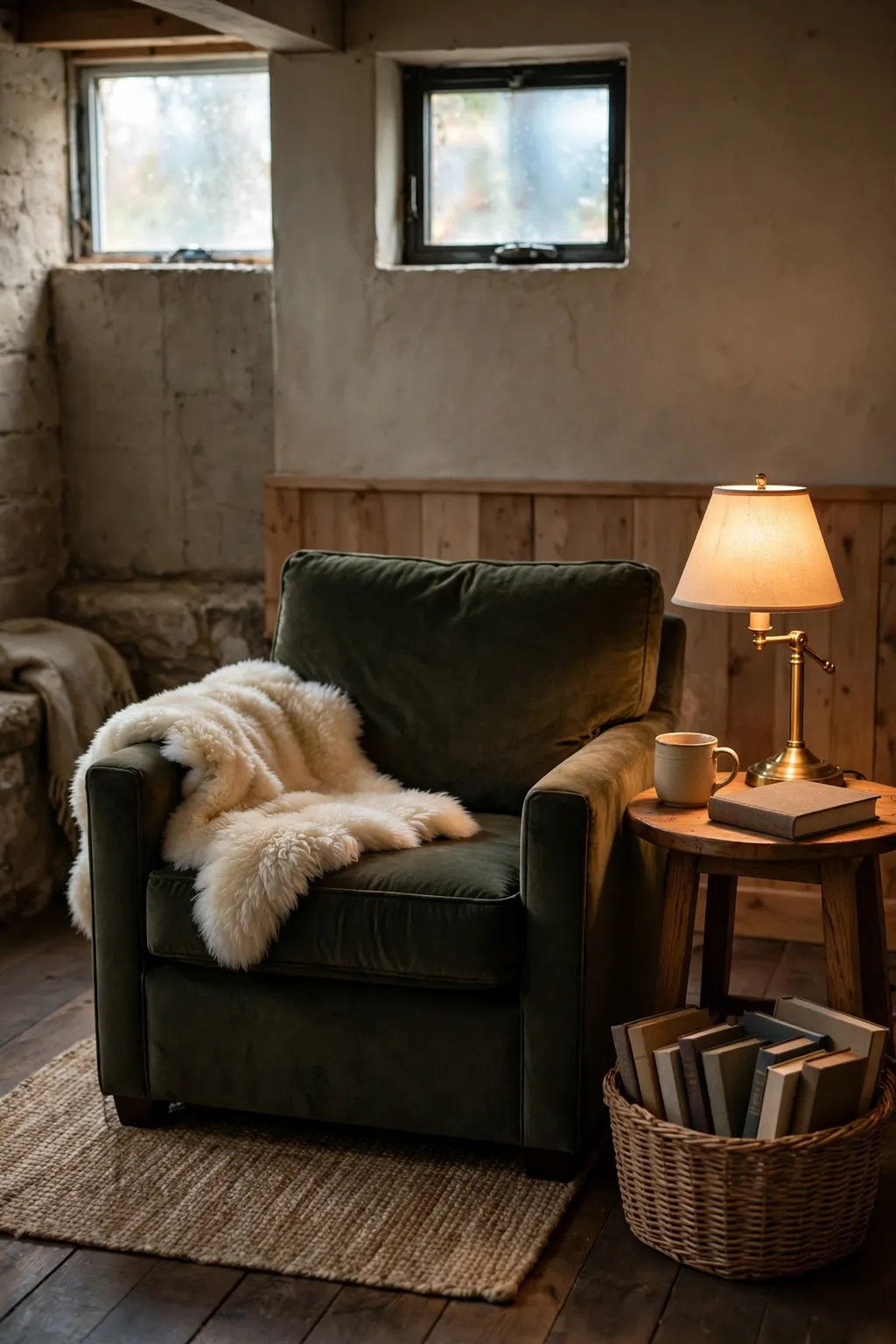
A Reading Nook by the Small Window
Basement windows are small, so give the one you have a job: put a deep armchair beside it, add a sheepskin throw, a small side table, and a warm reading lamp, and you have a nook that gets used every single day. A basket of books underneath keeps the pile from spreading across the room. If your window sits high on the wall, a low chair and a floor cushion work just as well — the point is a chair, a light, and a book within arm’s reach. See my cozy reading nook ideas for small spaces for more ways to tuck one in.
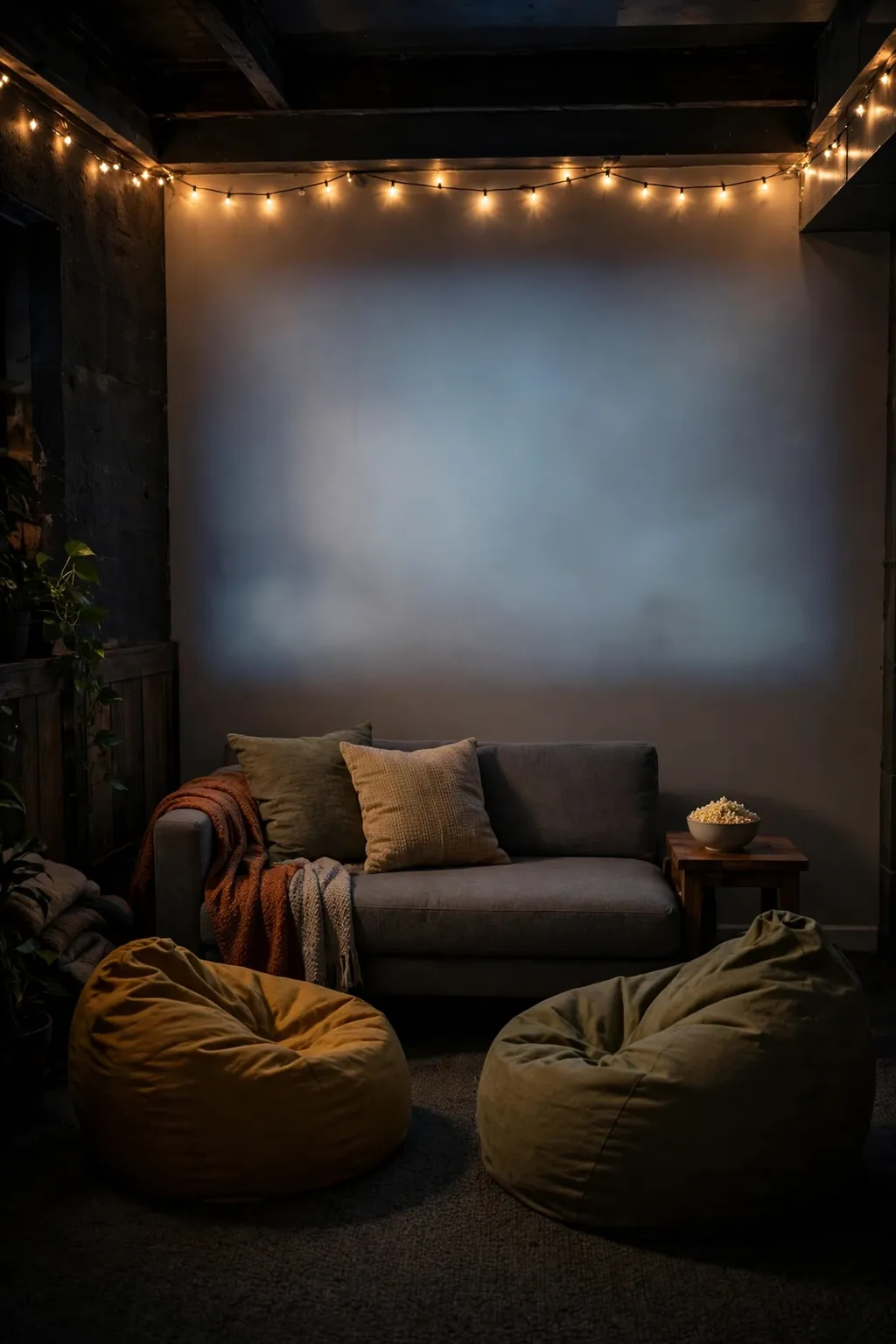
A Movie Corner for Family Nights
A basement is the one room in the house that is already dark, which makes it the perfect movie room. A budget projector and a blank painted wall beat a big television on price, and a low sofa with bean bags in front of it seats the whole family for less than one new armchair. Keep a little cocoa station on a cart beside it — see my DIY hot cocoa bar ideas on a budget — and string lights along the ceiling edge for the walk back upstairs. For the full setup, see my cozy media room ideas on a budget.
A Few Tips Before You Start
- Test for moisture before you decorate: tape a square of plastic to the wall and floor for a day — if it fogs up underneath, fix the water first.
- Keep the humidity below 60% with the dehumidifier running, especially through the summer, or the rug and sofa will slowly go musty.
- Choose washable everything down here — slipcovers, throw pillow covers, and a rug you can shake out — because basement dust and damp find everything.
- Add low-light plants like snake plants and pothos for life and color; they thrive in the soft light a basement window gives and forgive a missed watering.
- Keep the middle of the room clear and push storage to the edges and under the stairs, so the one open stretch of floor stays free for living.
Frequently Asked Questions
How much does it cost to decorate a basement on a budget?
Most of the room comes together for around $1,000. An epoxy kit runs about $100 to $250, vinyl plank about $2 to $4 per square foot, carpet tiles about $1 to $3, a gallon of paint about $40 to $60, string lights about $10 to $15, and a thrifted sofa with floor cushions often under $150. Start with the drying, the paint, and the warm light — those three changes carry the whole room.
How do I keep a basement from feeling damp?
Seal the cracks first, then run a dehumidifier for a couple of weeks and keep the humidity below 60%. A portable unit costs roughly $200 and up. Avoid wall-to-wall carpet on the slab — it traps moisture — and use carpet tiles or a rug over a sealed floor instead, so any single damp square can be lifted and replaced.
What is the cheapest basement flooring?
Painted or epoxy-coated concrete, at roughly $0.50 to $2 per square foot — a two-part epoxy kit costs about $100 to $250 and seals the slab at the same time. Carpet tiles are the cheapest soft option at $1 to $3 per square foot, and vinyl plank is the cheapest floor that looks like real wood, at $2 to $4 per square foot.
How do I make a basement feel warmer without a renovation?
Warm paint, layered warm light, and soft textiles. Paint the walls a warm light neutral, swap the overheads for floor lamps, string lights, and LED strips at 2700K to 3000K, add one big rug and curtains to divide the space, and finish with a thrifted sofa, knit throws, and floor cushions. None of it needs a contractor.
WRAPPING UP
The Cozy Takeaway
A cozy basement does not need a big renovation — just a dry room, one warm color on the walls, a floor that feels good underfoot, and low golden light to make the whole level glow. Pick one idea from this list, start with the drying and the paint, and let the rug and the string lights do the rest. For the full movie-night setup, see my cozy media room ideas on a budget. Happy nesting, friend!