
13 Cozy Attic Bedroom Ideas on a Budget
Hi, I’m Emma! An attic bedroom is the coziest room in the house once you stop fighting the roof and start working with it — the sloped ceilings, the little dormer window, the beams overhead. It feels like a hideaway, and it should. These are my 13 favorite cozy attic bedroom ideas on a budget, all built around one rule: let the shape of the room decide where things go.
The best cozy attic bedroom ideas on a budget start with placement, not purchases: put the bed under the low slope, paint the walls and the slopes the same soft color, and keep the furniture low. Then add under-eave drawers, three layers of warm 2700K light, fairy lights along the beams, and a reading nook in the dormer. Most of these ideas cost under $60, and several cost nothing at all, because the bed, the paint, and one good basket do almost all of the work.
Put the Bed Under the Low Slope
Putting the bed where the ceiling is lowest sounds backwards until you lie down in it. Lying down needs far less headroom than standing, so the low side of the roof becomes useful instead of wasted. Choose a low-profile frame, ideally 8 to 12 inches high before the mattress, and skip a tall headboard — a short upholstered headboard, a row of flat cushions, or no headboard at all keeps the sightline clean and stops the bed from looking squeezed under the slope. Pull the bed a few inches away from the lowest part of the wall so nobody bumps their head sitting up in the morning.

Paint the Slopes the Same Color as the Walls
Small rooms with awkward angles do best when the ceiling, the slopes, and the walls are all painted the same color. That single tone removes visual clutter, hides the jumble of angles, and makes the room feel bigger and calmer. Chalky off-whites, warm greys, oatmeal, and soft clay all work beautifully against white woodwork, and one accent — a deeper shade of the wall color on a cushion or a throw — is all the contrast the room needs. A gallon of paint runs about $30 to $40, and it is the cheapest square footage you will ever buy in an attic. Avoid strong patterns on the slopes; they only emphasize the awkward geometry.

A Low Dresser That Fits Under the Eaves
Low furniture is the easiest way to make a sloped room feel taller. A low bed, a low dresser, and a short armchair leave more wall visible above them, and your eye reads that empty wall as height. A dresser around 30 to 34 inches high fits under many slopes where a 48-inch wardrobe will not, and a thrifted one costs about $40 to $80 with a little sanding and a fresh coat of paint. Put the tallest piece you do own against the tallest wall — usually the gable end or the center ridge wall — and keep at least 24 inches of clear passage where you dress and move every day.

Drawers and Baskets in the Knee Walls
The low knee walls that make attic rooms awkward are also free storage. Knee walls are usually 3 to 4 feet high, and the space behind them is often empty — shallow drawers 14 to 18 inches deep suit folded clothes, bedding, and shoes, and one run of under-eave drawers adds roughly 8 to 12 cubic feet of storage. If built-ins are not in the budget, slide low woven baskets into the same dead space along the knee wall for about $10 to $20 each, and keep a blanket box or a low chest under the lowest slope, where nothing else can go. Hidden storage is what keeps a small attic bedroom feeling clean and relaxing instead of cramped.

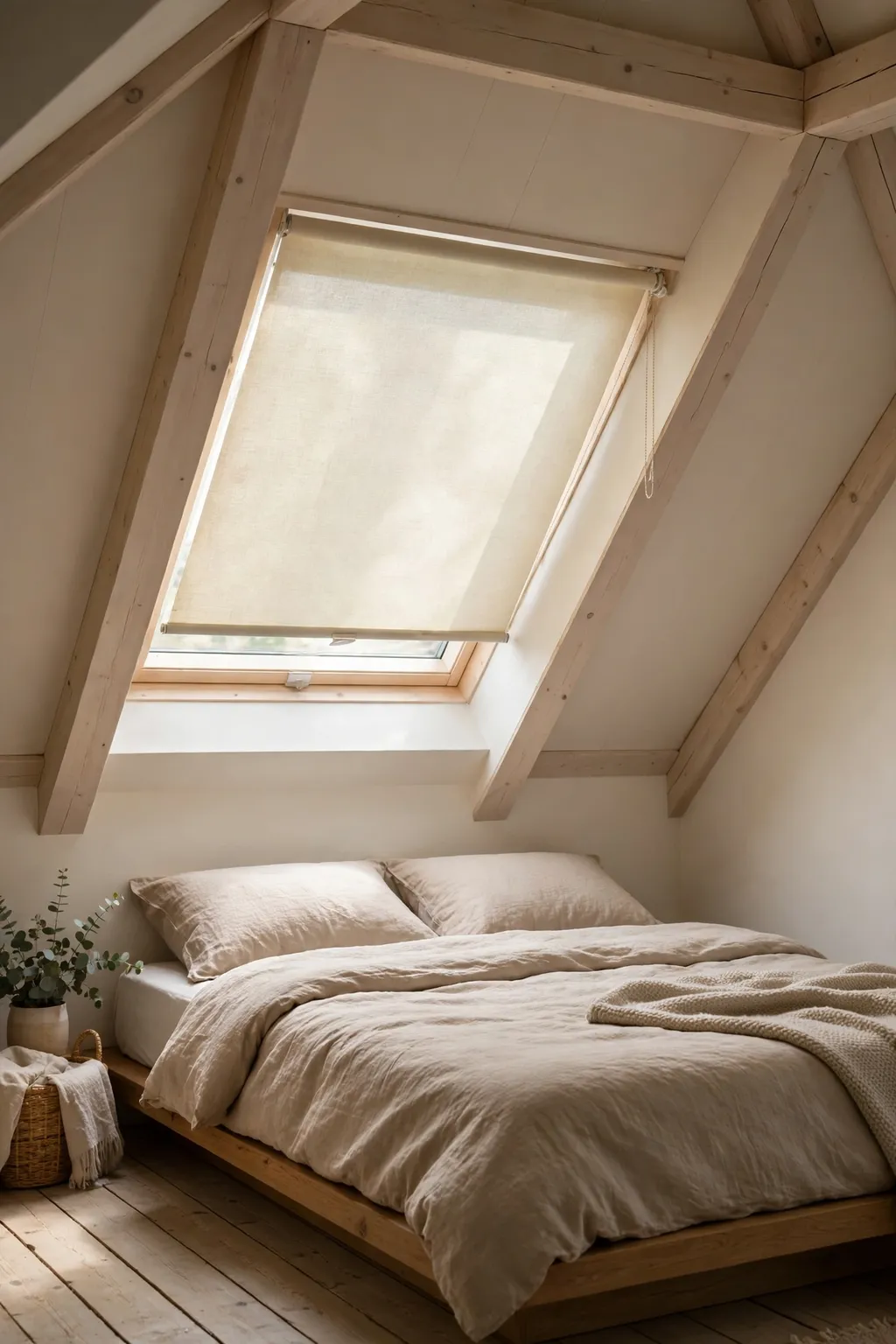
A Blackout Blind on the Skylight
Nothing changes an attic bedroom faster than a skylight — the window set into the slope brings in daylight that a vertical window cannot match. If your attic already has one, the budget move is not a new window but a blackout blind for it, about $30 to $60, so summer mornings do not wake you at dawn and winter nights stay properly dark. Budget for the blind when you budget for the room, because retrofitting one later often costs more. A sheer blind works too if you want soft light without the glare, and either one turns the skylight into a feature you actually use.
Three Layers of Warm Light, No Pendant
Most attic bedrooms cannot take a central pendant comfortably, and even where they can, a single bulb in the middle of the ceiling is the least restful option. Aim for at least three layers, all on warm white bulbs around 2700K: a small lamp on the dresser, wall sconces mounted 30 to 36 inches above the mattress so they free up the nightstand, and one low light near the floor or the reading corner. A pack of warm bulbs costs just a few dollars, and being able to drop the light to a low, honeyed glow is the single biggest thing you can do to make an attic bedroom feel restful. Put the sconces on a dimmer if you can — it costs little and changes everything at bedtime.

Fairy Lights Along the Beams
If your attic has exposed beams, they are the room’s best decoration already — all they need is a little light. Drape one strand of warm white battery fairy lights along the beams or the ridge, about $9 to $15 a strand, and the whole ceiling glows softly at dusk. Choose battery lights with a timer so they switch themselves on every evening, and keep them warm white, around 2700K, rather than cool white or multicolored. Stick to lightweight string lights and small hooks here — never hang anything heavy from sloped ceiling beams without proper structural support.

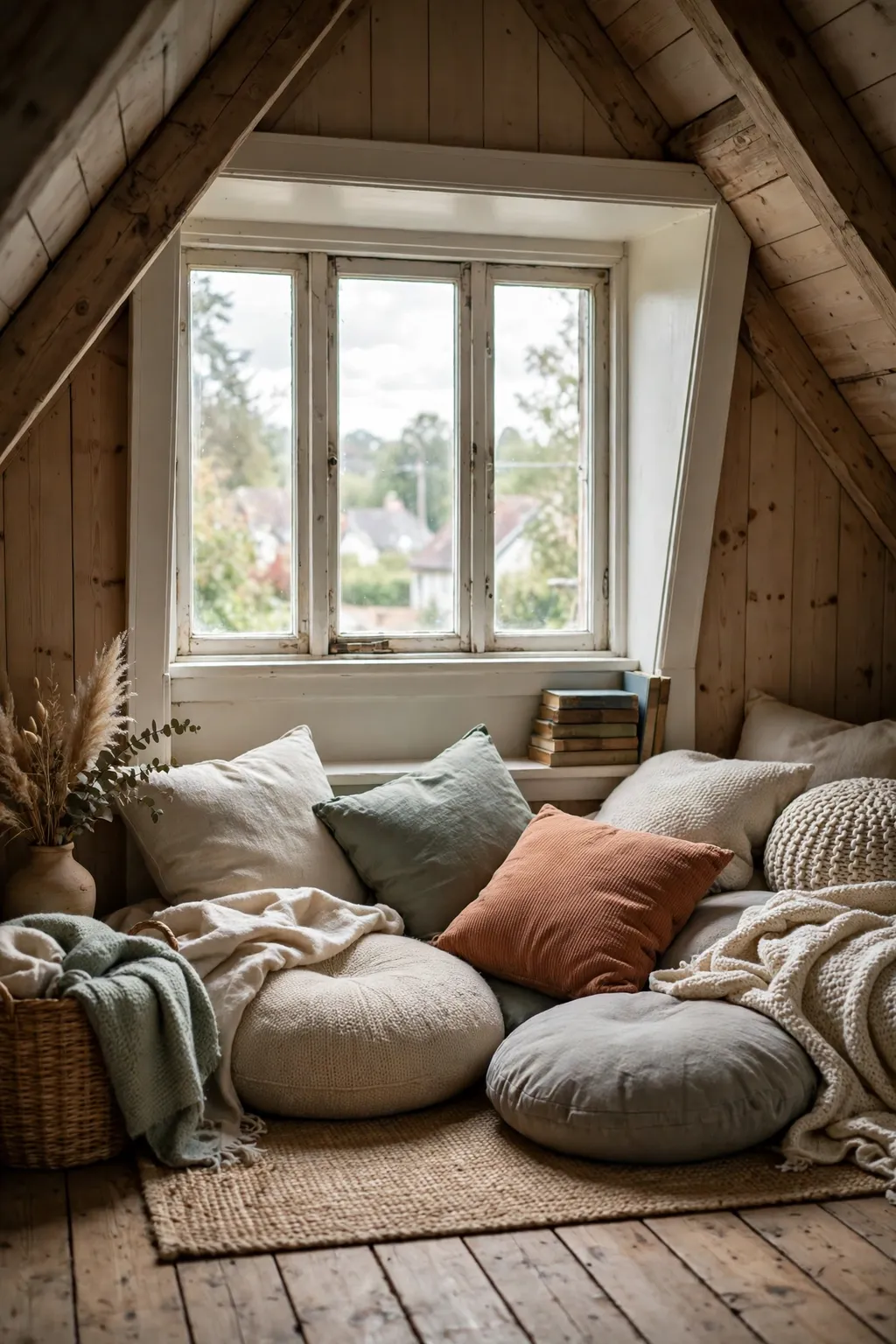
A Reading Nook in the Dormer
A dormer window is a reading nook waiting to happen. Tuck floor cushions and a small stack of books into the dormer, add a cushion on the sill or a low bench with built-in shelves underneath, and hang one small adjustable lamp for evening reading. Floor cushions run about $20 to $40, and the whole nook can come together for under $60 if you already own the books. It is the spot everyone in the house will fight over on a rainy afternoon — and if the attic doubles as a guest room, it is the detail guests remember. For more guest-room thinking, see my cozy Christmas guest bedroom decor ideas on a budget.
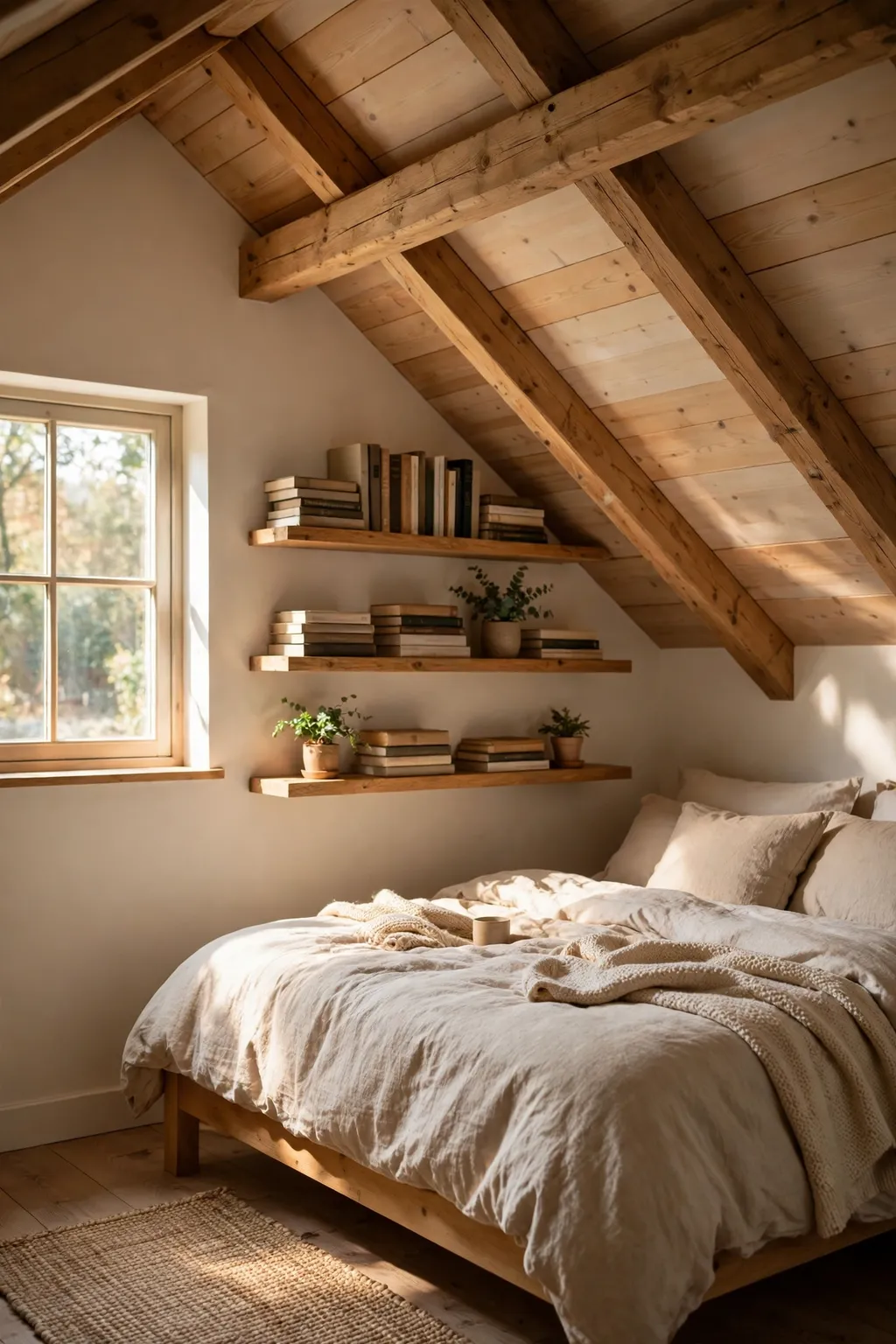
Floating Shelves Instead of Bedside Tables
Where floor space is tight, a bedside table is a luxury the attic cannot always afford. Mount small floating shelves on the wall beside the bed instead — deep enough for a book and a glass of water, about $15 to $30 for a pair — and the floor stays clear, the cords stay tidy, and the midnight path stays safe. A slim picture ledge above the bed works the same way, holding a few books and a small plant without eating any floor at all. Keep the shelves at mattress height so reaching for water in the dark is easy, and skip anything heavy or breakable up there.
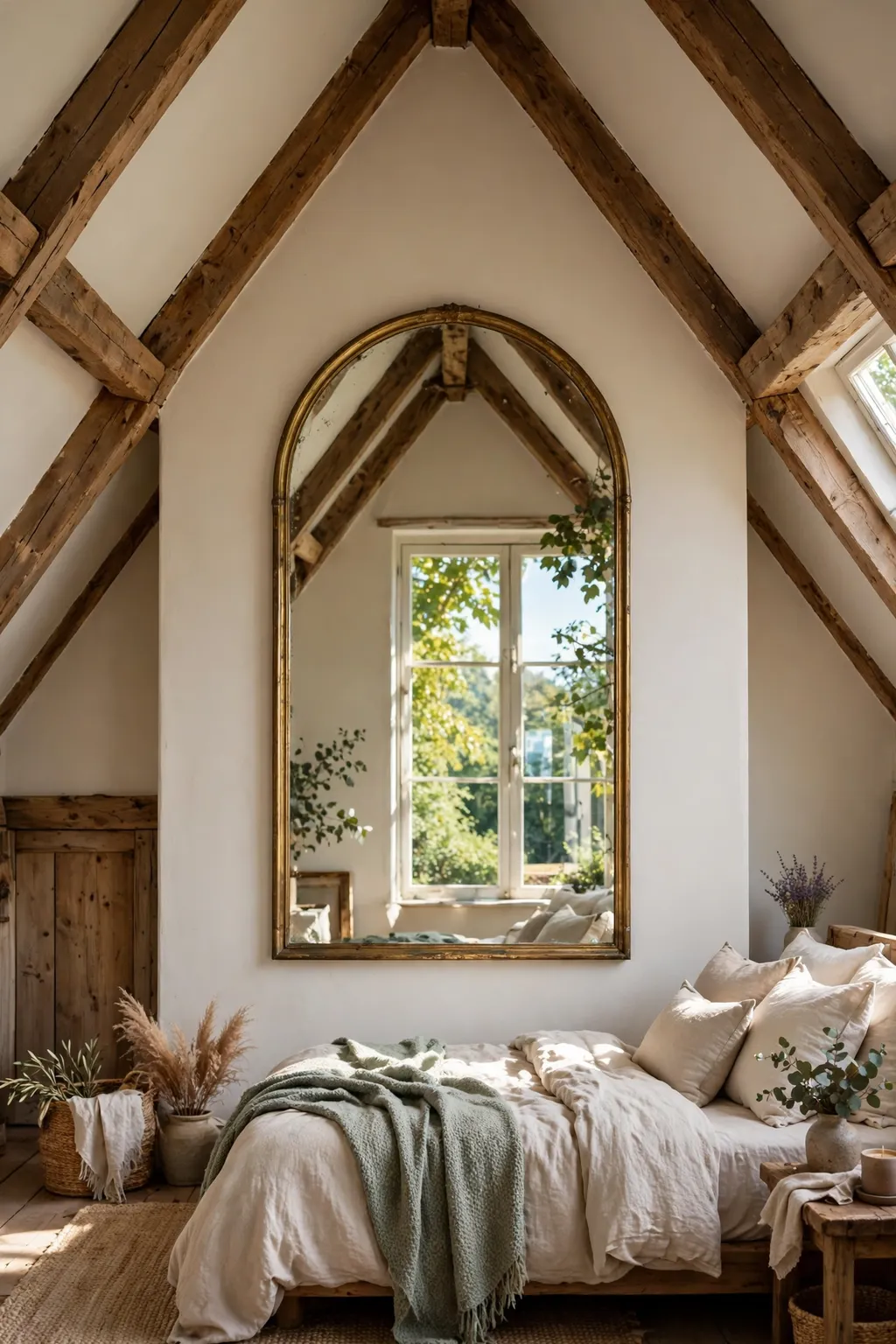
A Big Mirror on the Gable Wall
Attic bedrooms need every ray of sunshine they can get, and a mirror is the cheapest way to double what you have. Hang a large mirror on the tall gable-end wall, opposite the dormer or the skylight, and it bounces daylight deep into the darker eaves while making the room feel wider. A thrifted mirror costs about $30 to $60, and a plain wood or brass frame suits the beams better than anything ornate. Mirrored wardrobe doors do the same job if you are building storage into the slope — just choose low-iron glass so the reflection stays true and free of green tint.
Flannel Bedding and a Chunky Knit Throw
An attic bedroom runs cold in winter and warm in summer, so the bedding has to do real work. Flannel or plaid sheets — a set runs about $30 — make the bed feel warm the second you climb in, and a chunky knit throw folded across the foot of the bed, about $25 to $60, adds the layer everyone reaches for on cold nights. Keep the palette to one warm story — cream, oatmeal, soft clay, or muted sage — so the bed, the throw, and the painted slopes all read as one calm room. For the holiday version of this bed, see my cozy Christmas bedroom decor ideas on a budget.

A Soft Rug Beside the Bed
Nothing ruins a cozy attic morning like cold feet on a bare wood floor. Lay a soft rug beside the bed, where feet land first when someone stands up — a faux sheepskin costs about $20 to $50, and layering it over the rug or flooring you already have is the trick, because one plush layer changes how the whole floor feels. Cream or warm grey suits almost any palette, and a soft rug also quiets footsteps on the floor above the rest of the house. If the budget is tight, a single runner down the middle of the room does the same job for less.

A Storage Bench at the Foot of the Bed
A bench around 17 to 19 inches high at the foot of the bed does two jobs at once: it is seating for putting on shoes, and it hides the spare blankets, the out-of-season clothes, and the clutter that has nowhere else to go in a small attic. A storage bench costs about $60 to $120, or far less secondhand, and it works without blocking a window or a skylight the way a tall wardrobe would. Choose one with a lift-up lid rather than drawers, so it opens easily under the slope. If the attic hosts guests, it doubles as their luggage spot — see my guest bedroom makeover ideas on a budget for the rest of the guest-room setup.

A Few Tips Before You Start
- Measure first, buy second: mark where you can stand up straight and where you can only crouch, and let that line decide where the bed, the dresser, and the reading nook go.
- Keep the light low and warm — three low lights at 2700K beat one bright ceiling light every time — and put fairy lights and lamps on timers so the room lights itself at dusk.
- Keep the middle of the room clear and push storage into the eaves, so the one strip of full-height floor stays open for walking and dressing.
- Stick to one soft palette — cream, oatmeal, warm grey, soft clay — on the walls, the slopes, and the bedding, so the angles disappear instead of competing.
- Buy pieces that stay useful anywhere: a washable throw, a good basket, a low dresser, or a bench you actually need will earn their keep long after the attic is done.
Frequently Asked Questions
Where should the bed go in an attic bedroom?
Under the low slope, with the head against the tallest wall you can use — lying down needs far less headroom than standing, so the low side of the roof becomes useful instead of wasted. Choose a low-profile frame 8 to 12 inches high before the mattress, skip a tall headboard, and pull the bed a few inches away from the lowest part of the wall.
What color should I paint a sloped ceiling?
The same soft color as the walls. One tone across the walls, the slopes, and the ceiling removes visual clutter, hides the jumble of angles, and makes the room feel bigger and calmer. Chalky off-whites, warm greys, oatmeal, and soft clay all work, and a gallon runs about $30 to $40.
How do I add storage to an attic bedroom on a budget?
Use the knee walls: shallow drawers 14 to 18 inches deep fit folded clothes and bedding, and one run adds roughly 8 to 12 cubic feet of storage. If built-ins are not in the budget, slide low woven baskets at $10 to $20 each into the same dead space, and put a storage bench at the foot of the bed for the rest.
How much does it cost to decorate an attic bedroom on a budget?
Most of the room comes together for under $300. Paint runs about $30 to $40 a gallon, a thrifted low dresser about $40 to $80, a skylight blind about $30 to $60, fairy lights about $9 to $15, flannel sheets about $30, a knit throw $25 to $60, and a storage bench about $60 to $120. Start with the bed placement, the paint, and the warm light — those three changes carry the whole room.
WRAPPING UP
The Cozy Takeaway
A cozy attic bedroom does not need a big budget — just a bed that respects the slope, one soft color on every angle, and warm low light to make the hideaway glow. Pick one idea from this list, start with the bed placement and the paint, and let the fairy lights do the rest. For the holiday version of this bed, see my cozy Christmas bedroom decor ideas on a budget. Happy nesting, friend!