13 Cozy Media Room Ideas on a Budget
Hi, I’m Emma! A media room sounds like a luxury — the kind of thing that needs a basement, a four-figure projector, and rows of leather recliners. But mine started as a spare corner of the living room with a secondhand sofa, a $25 roll of blackout cloth, and a projector I found on sale. The truth is, a media room is mostly about light control, soft surfaces, and somewhere comfortable to sit. Get those three things right and the room feels like a cinema, whatever you spent.
The best cozy media room ideas on a budget start with going dark on the walls, then add a big screen — a budget projector or a TV you already own — plus blackout curtains, warm LED glow, and soft seating you can sink into. A budget projector gives you a 100-inch picture for about $259 to $299, a soundbar with a subwoofer runs under $150, and most of the cozy touches here cost under $30 each. A whole room can come together for well under $500 if you thrift the seating and build the screen yourself.
Go Dark on the Walls
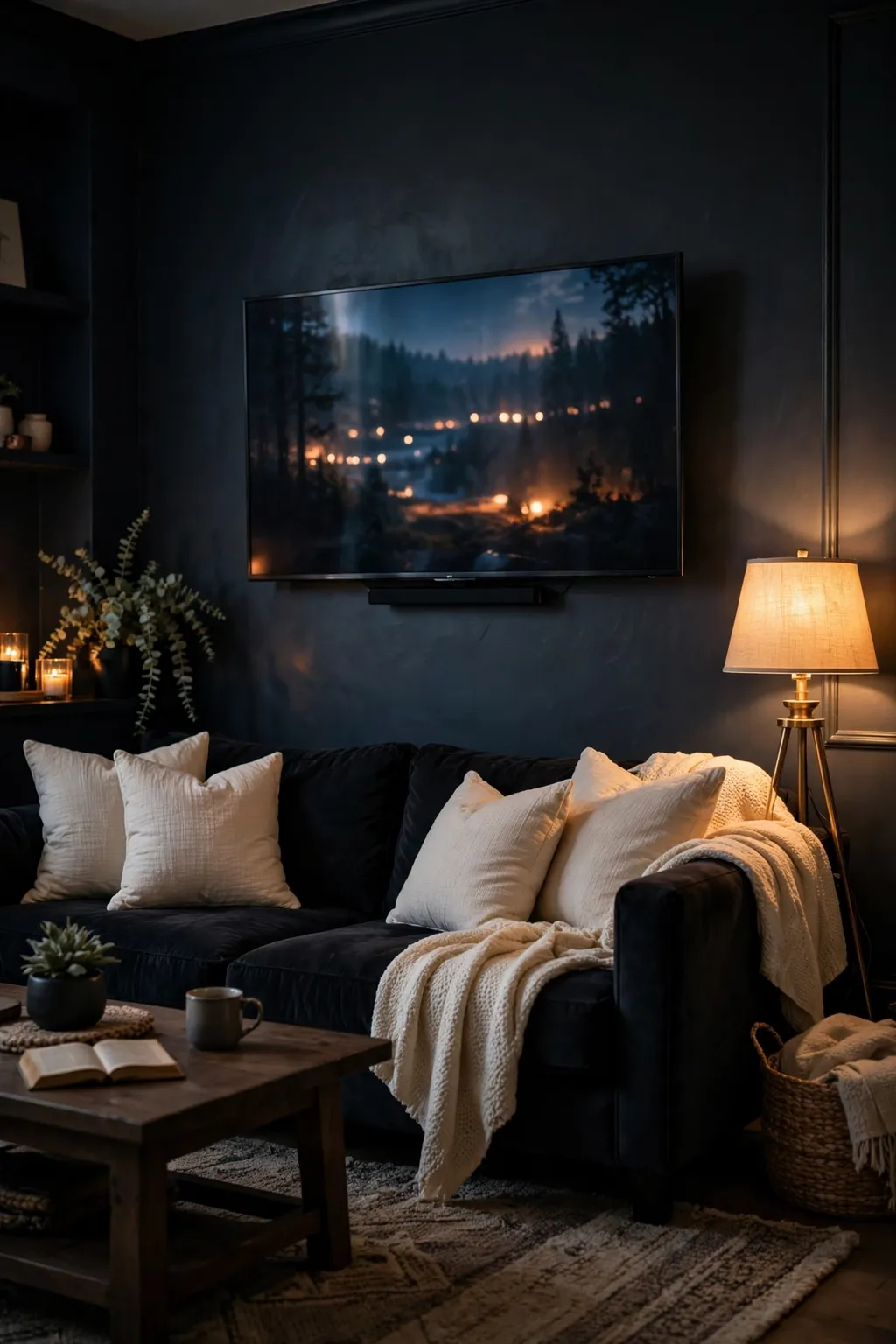
Dark walls are the single cheapest upgrade in this whole list, and they do the most work. A deep charcoal, navy, or espresso paint swallows stray light, makes the screen look brighter by contrast, and instantly gives the room that hushed cinema feeling — even in daylight. One accent wall behind the screen is enough if painting the whole room feels like too much, and a single gallon covers it for about $30 to $40. If you need help picking a shade, my navy blue paint colors for cozy living rooms are a great place to start.
A Budget Projector for the Big Screen
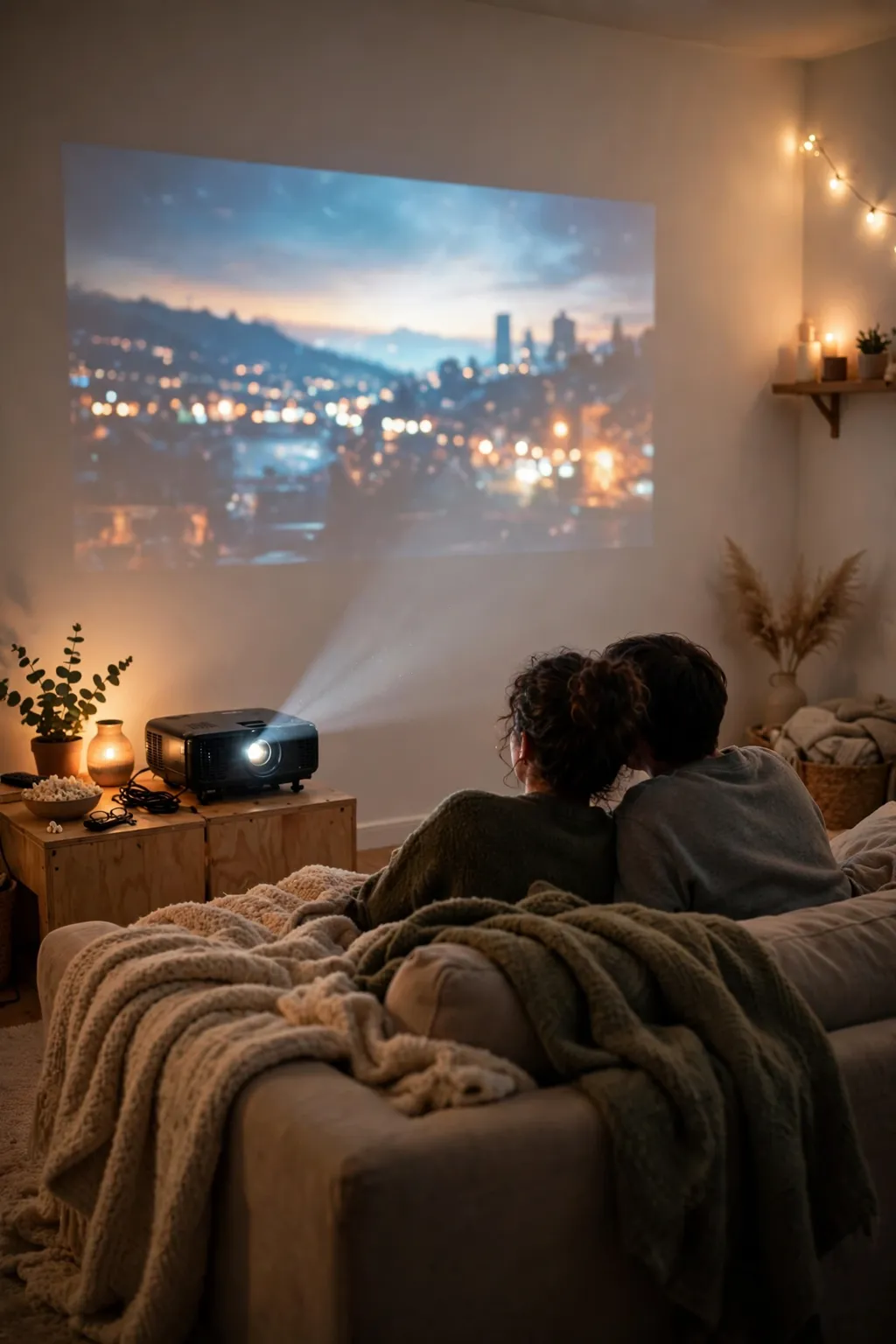
Nothing says movie night like a screen that fills the wall, and budget projectors have made that affordable. A solid 1080p model runs about $259 to $299, throws a picture over 100 inches wide, and sits on a side table or a small shelf about 10 to 15 feet from the wall. Keep the room dark — projectors love darkness — and sit so your eyes are roughly level with the middle of the screen. If you already own a good TV, skip this one entirely: the TV you have is the right screen.
A DIY Projector Screen from Blackout Cloth
If you go the projector route, you do not need to buy a screen. A length of white blackout cloth — about $20 to $30 — stretched smooth in a simple wooden frame or pulled taut with small hooks gives you a bright, even surface that beats a painted wall. Hang it dead center on the wall behind your seating, keep it wrinkle-free, and the picture will look far more expensive than the setup cost. It rolls up and stores flat if the room ever needs to be a guest room again.

A Soundbar with a Subwoofer
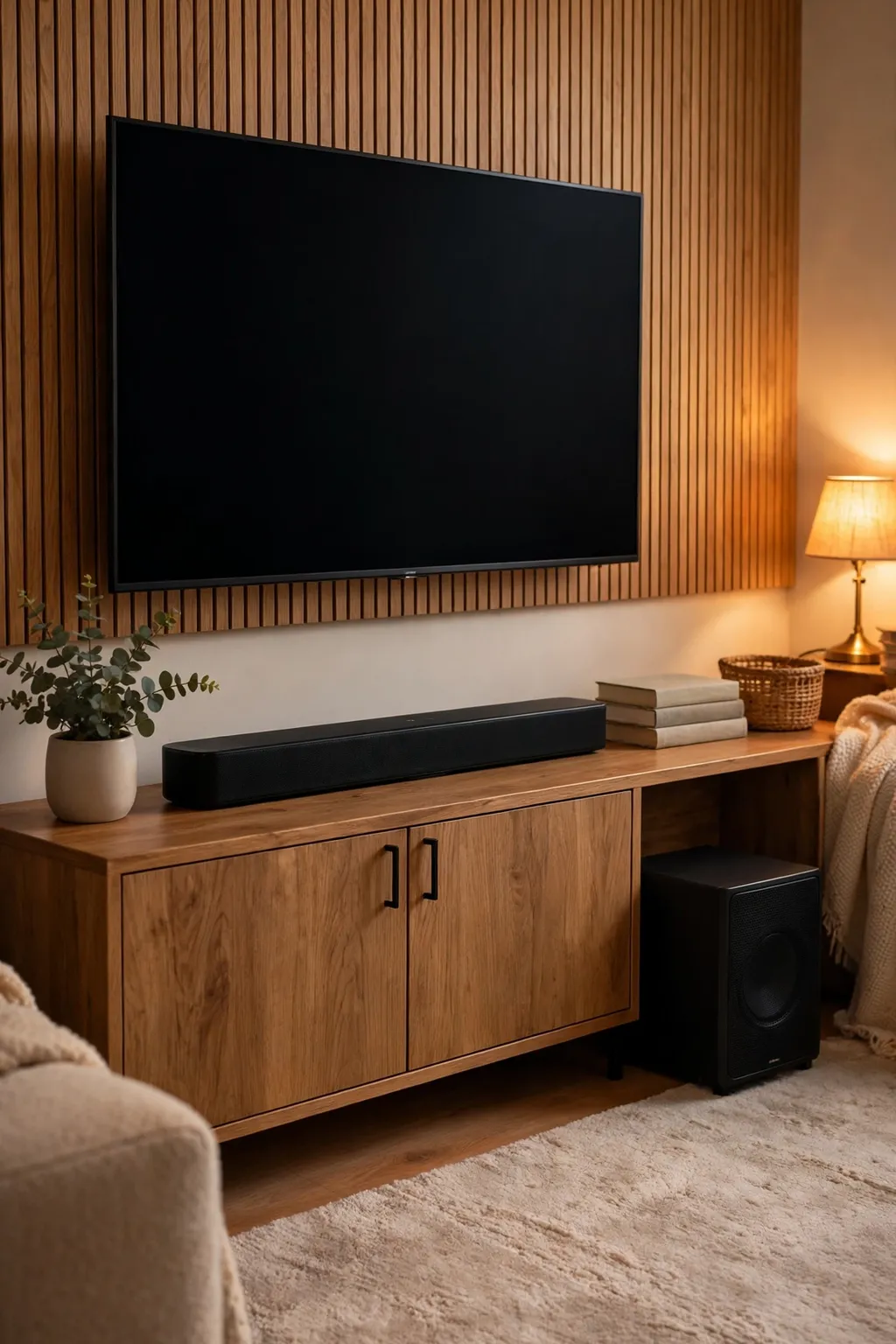
Good sound is half the cinema feeling, and a soundbar is the simplest way to get it. A soundbar with a small subwoofer is plug-and-play, usually costs under $150, and fills a small room in a way a TV’s built-in speakers never will. Place the bar centered under the screen and tuck the subwoofer in a corner — corners naturally boost the bass. Add the rug and curtains from later in this list and the sound gets warmer still, because soft surfaces soak up echo.
Blackout Curtains for Daytime Viewings
A media room that only works after dark is a room you will barely use. Heavy blackout curtains — from about $30 a panel — turn a bright afternoon into movie time, and they double as sound softening on the walls. Hang them high and wide so they cover the whole window plus a little extra, and choose a dark velvet or a thick thermal fabric in a color that matches your walls. They also keep the room cozy in winter, which is a bonus I did not expect when I hung mine.

LED Strip Bias Lighting
This is the trick that makes a budget setup look expensive. A 16-foot LED strip costs about $20 — stick it behind the screen or along the back of the media console so it washes the wall in a soft warm glow. It eases eye strain during long films, makes the screen look bigger by contrast, and turns an ordinary TV wall into a little theater. Warm white is the coziest choice; if your strip changes color, save the rainbow mode for the kids’ movie nights.

Thrifted Recliners and Bean Bags
Theater recliners are lovely, but they are not required. A solid secondhand recliner runs about $50 to $150 on local marketplaces, and a big bean bag chair costs around $55 new — both are cheaper than one night out at the cinema for a family of four. Mix one recliner with a couple of floor cushions or bean bags and the room works for adults and kids alike, and everything can be dragged aside when the room needs to be something else. A washable slipcover refreshes a thrifted find for under $30.

A Plush Rug to Soften the Sound
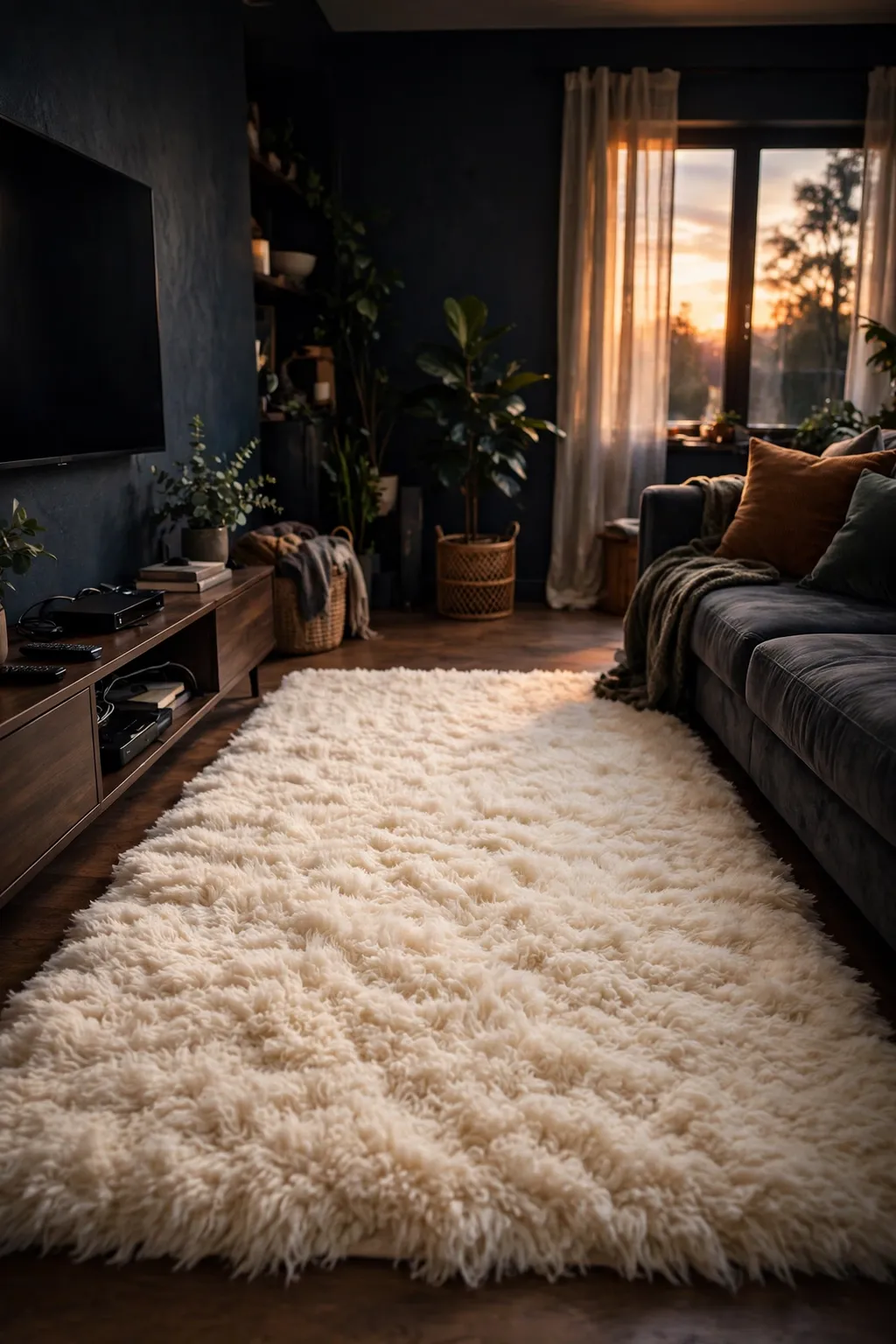
Hard floors bounce sound around the room and make dialogue muddy, so a thick rug is a sound upgrade disguised as decor. A plush shag or high-pile rug under the seating area absorbs echo, warms bare feet, and anchors the whole layout — the sofa, the screen, and the snack table all gather around it. Even a room that is already carpeted benefits from one more layer. Thrifted and discount rugs in a deep rust or charcoal pull the dark-wall palette together beautifully.
A DIY Riser for Stadium Seating
If your room has space for two rows, a riser gives the back row a real cinema view. Build a low platform from plywood and carpet scraps — sturdy, cheap, and an afternoon’s work — and run a small LED strip along its front edge so nobody trips in the dark. The back row suddenly feels like the best seats in the house, and the platform doubles as hidden storage for blankets and board games underneath. Keep it low, about six to eight inches, so the room still feels cozy rather than stepped.

Throw Blankets and Pillows Everywhere
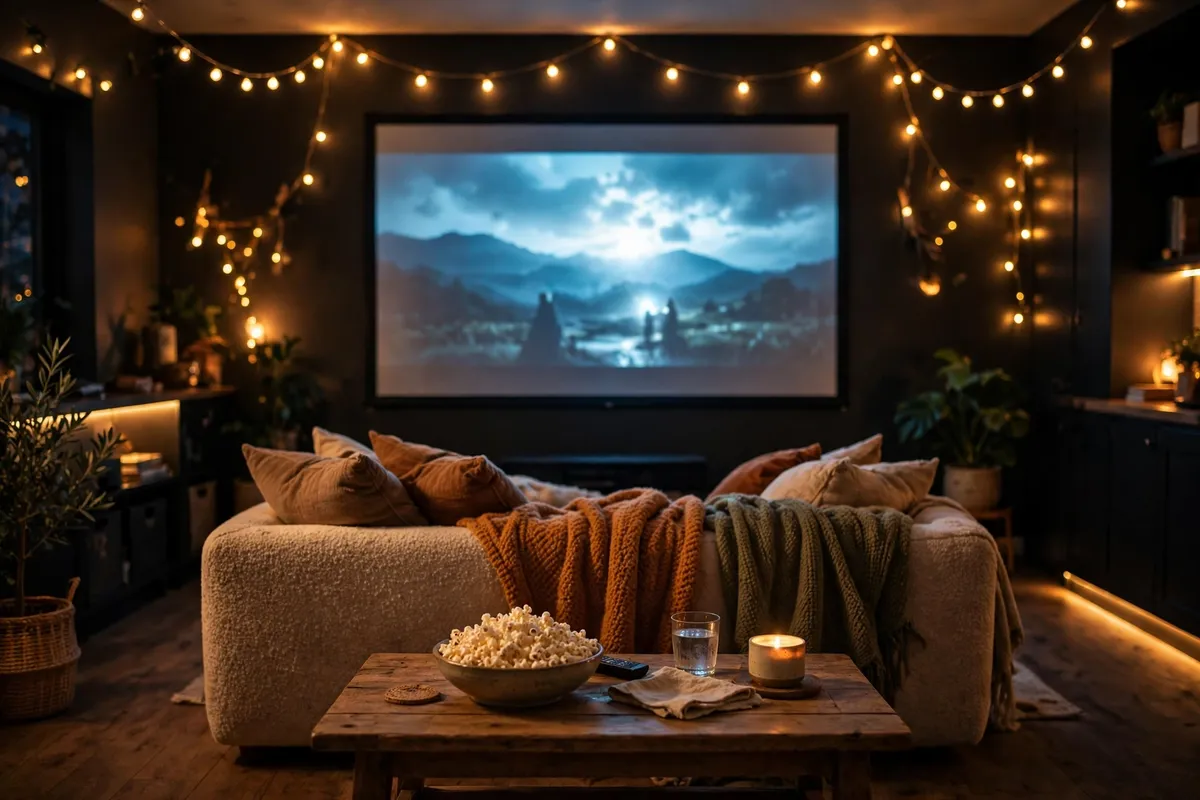
A media room lives or dies on how it feels at 9 p.m. on a cold night, and that is blankets and pillows. Pile chunky knit throws in cream, rust, and mustard over the sofa arms, stack a few oversized cushions on the floor, and keep a basket of extras by the door for guests. Soft furnishings do double duty: they make the room feel like a nest, and they absorb the echo that makes small rooms sound hollow. This is the cheapest idea on the list if you shop your linen closet first.

A Snack Station for Movie Nights
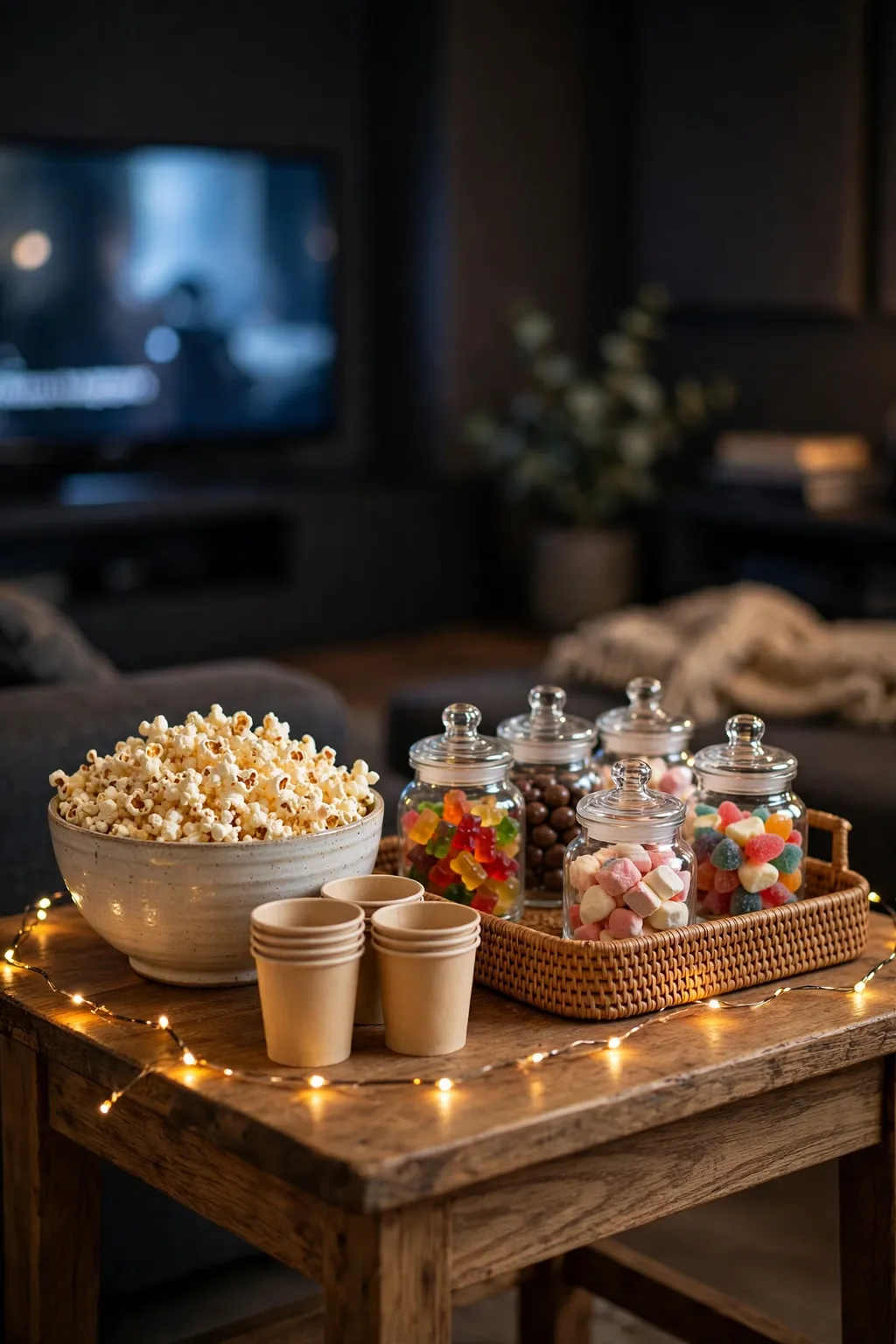
Every good cinema has a concession stand, and yours can be a side table. Set out a big popcorn bowl, a tray of candy jars, and a stack of small paper cups, then add a string of warm fairy lights or a battery candle so the corner glows. It costs almost nothing, it keeps everyone from wandering to the kitchen mid-film, and kids treat it like the best part of the night. A rolling bar cart works beautifully here if you have one — wheel it in for movie night, wheel it away after.
Movie Posters on the Wall
Bare dark walls can feel flat, so give them a story. A gallery wall of framed movie posters — your family’s favorites, vintage reprints, or prints you made yourself — turns the room into a place with personality. Thrifted frames painted one matching color look intentional and cost pennies, and warm picture lights or a small lamp nearby keep the wall from going dead black. Keep the frames tight and level, and leave the wall behind the screen bare so nothing competes with the picture.

A Media Console That Hides the Cables
Nothing ruins the cinema illusion faster than a tangle of black cables. A low wooden console with doors or woven baskets hides the streaming box, the game console, and every cord, and it gives the TV wall a finished, furniture look instead of a tech look. Run cables through a simple cord cover or behind the console, label the plugs once, and the wall stays clean. Thrifted consoles are everywhere for under $50, and a coat of dark paint ties one into the room in an afternoon.

A Few Tips Before You Start
- Spend in this order: light control first, then sound, then seating — a dark room with good sound beats an expensive screen in a bright, echoey one.
- A room around 10 by 12 feet is the sweet spot: small enough for good sound and easy darkness, big enough for a sofa and a second row.
- Keep the screen centered and sit about 10 to 15 feet back, with your eyes roughly level with the middle of the picture.
- Layer soft things everywhere — rug, curtains, blankets, cushions — because every soft surface is also a sound treatment.
- Hide one remote, one charger, and one snack bowl per person before the film starts, so nobody has to get up halfway through.
Frequently Asked Questions
How much does it cost to build a cozy media room on a budget?
A basic setup runs well under $500 if you thrift the seating: a budget projector ($259–$299) or the TV you already own, a soundbar with a subwoofer (under $150), blackout curtains (about $30 a panel), an LED strip (about $20), and a DIY screen from blackout cloth ($20–$30). The cozy touches — rug, blankets, posters, snack station — mostly cost under $30 each, and many cost nothing if you shop your own home first.
Is a projector or a TV better for a budget media room?
A projector wins on size — a budget 1080p model gives you a 100-inch picture for about $259 to $299 — but it needs a dark room to look its best. A TV wins on brightness and simplicity and works in any light. If your room has windows you cannot fully darken, keep the TV; if you can go properly dark with curtains and dark walls, a projector gives you the true cinema feeling for less money than a giant TV.
How do I make a media room sound better without acoustic panels?
Layer soft surfaces: a thick rug, heavy curtains, a fabric sofa, throw blankets, and cushions all absorb echo, and bookshelves along the walls double as sound diffusers. A soundbar with a subwoofer placed in a corner does the rest. You do not need a single foam panel — a room full of soft things already sounds warm and clear.
How do I keep a media room dark during the day?
Hang heavy blackout curtains high and wide so they cover the whole window plus a few extra inches on each side, and pair them with dark walls behind the screen. If light still leaks around the edges, a cheap tension rod with a second layer of dark fabric, or peel-and-stick window film, closes the gaps. Once the room is dark, the LED glow behind the screen keeps it from feeling like a cave.
WRAPPING UP
The Cozy Takeaway
A media room is not about the gear — it is about the feeling of the lights going down and everyone settling in with a blanket and a bowl of popcorn. Start with dark walls and blackout curtains, add the biggest screen you can afford, and let the soft things do the rest. And if your media corner lives inside your main living space, carry the same cozy, layered look through the rest of the room with my small living room makeover ideas on a budget. Happy movie night, friend!