
15 Junk Drawer Organization Ideas on a Budget
Hi, I’m Emma! Every home has one — the drawer that swallows batteries, rubber bands, stray screws, and a mystery key nobody can place. It is the messiest drawer in the house, and it is also the easiest one to fix. Every idea on this list costs under $10, most cost under $3, and several cost nothing at all if you shop your own kitchen and recycling bin first.
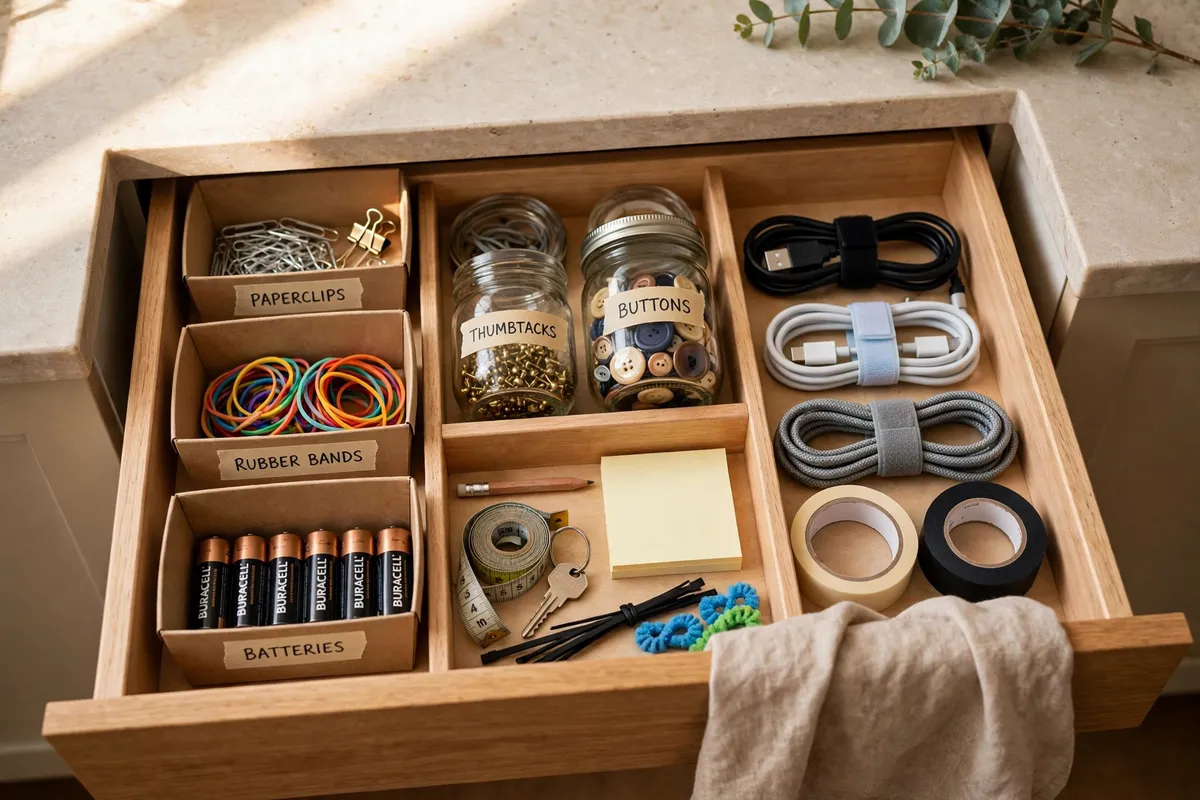
The best junk drawer organization ideas on a budget are dollar-store bins and trays, DIY cardboard dividers, a repurposed cutlery tray, small mason jars for bits and pieces, and labelled sections for batteries and cords. Most cost under $5, take an afternoon or less to set up, and turn the messiest drawer in the house into a tidy, find-it-fast spot.
Empty It Completely First
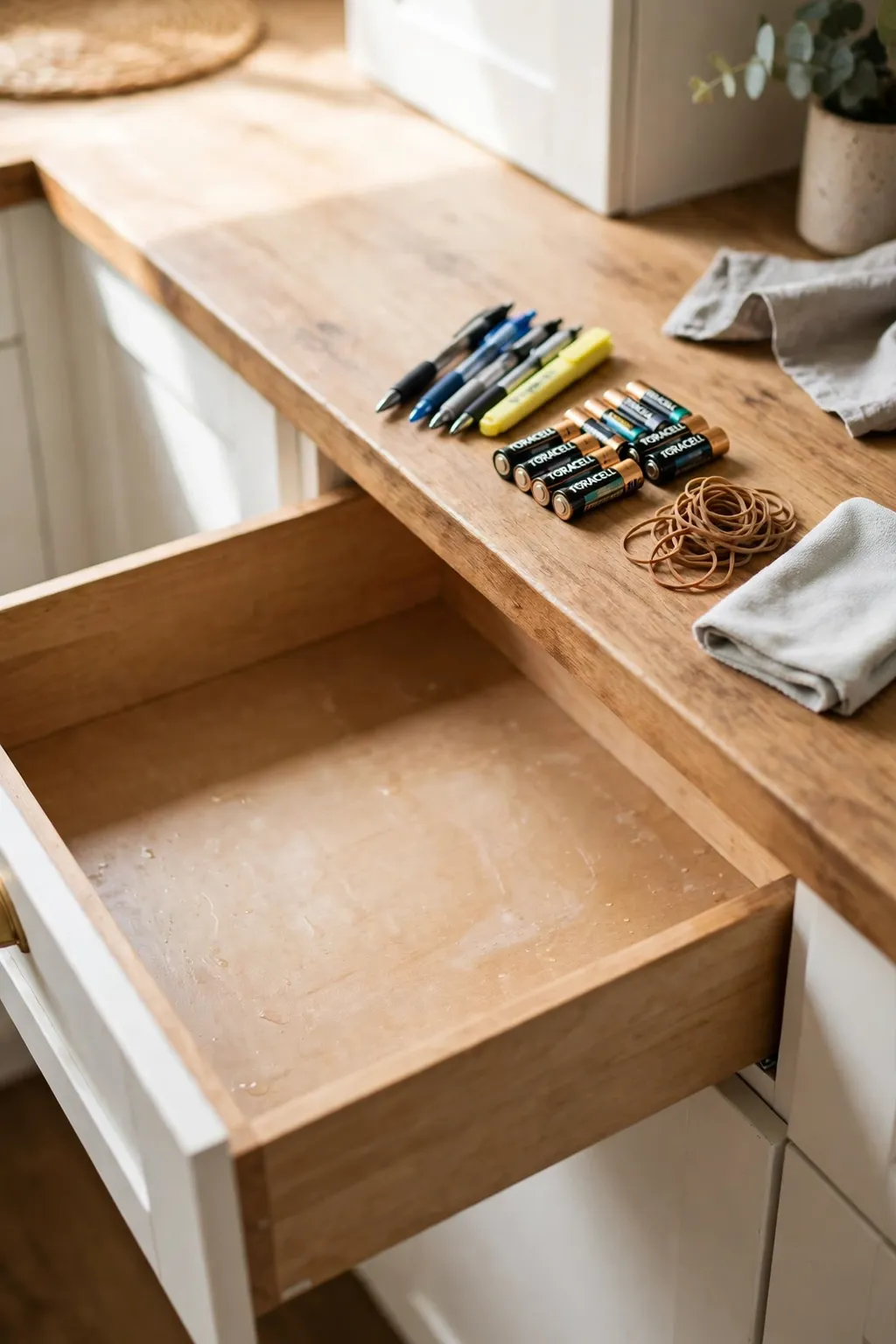
No organizer fixes a drawer that is still full of things you do not need. Pull everything out, wipe the drawer clean, and sort it into three piles: keep, toss, and relocate to its real home elsewhere in the house. Be ruthless with the dried-out pens, the dead batteries, and the takeaway menus from restaurants that closed years ago. What is left is usually half of what you started with — and that is the only stuff worth organizing. The same ruthless clear-out works in every drawer in the house, and my kitchen drawer organization ideas on a budget walk through the whole process room by room.
Dollar-Store Bins and Trays
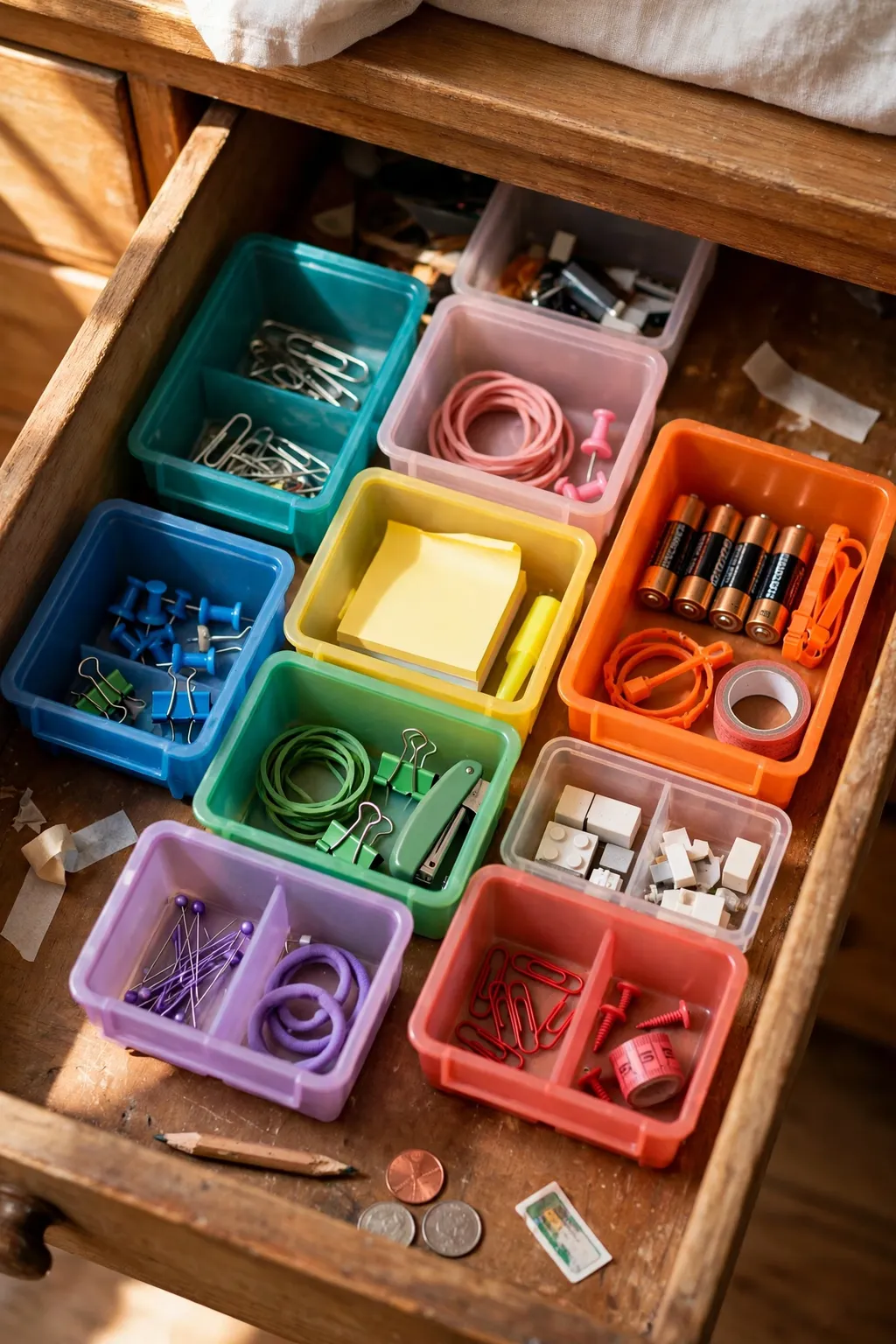
The cheapest fix is also the most effective: small plastic bins and trays from the dollar store. Buy a handful in different sizes, set them side by side in the drawer, and suddenly every category has its own little home. Pens in one, batteries in another, rubber bands and clips in a third — the drawer stops being a pile and starts being a system. Measure the drawer before you shop, and bring the measurements with you so the bins fit without a second trip.
DIY Cardboard Dividers
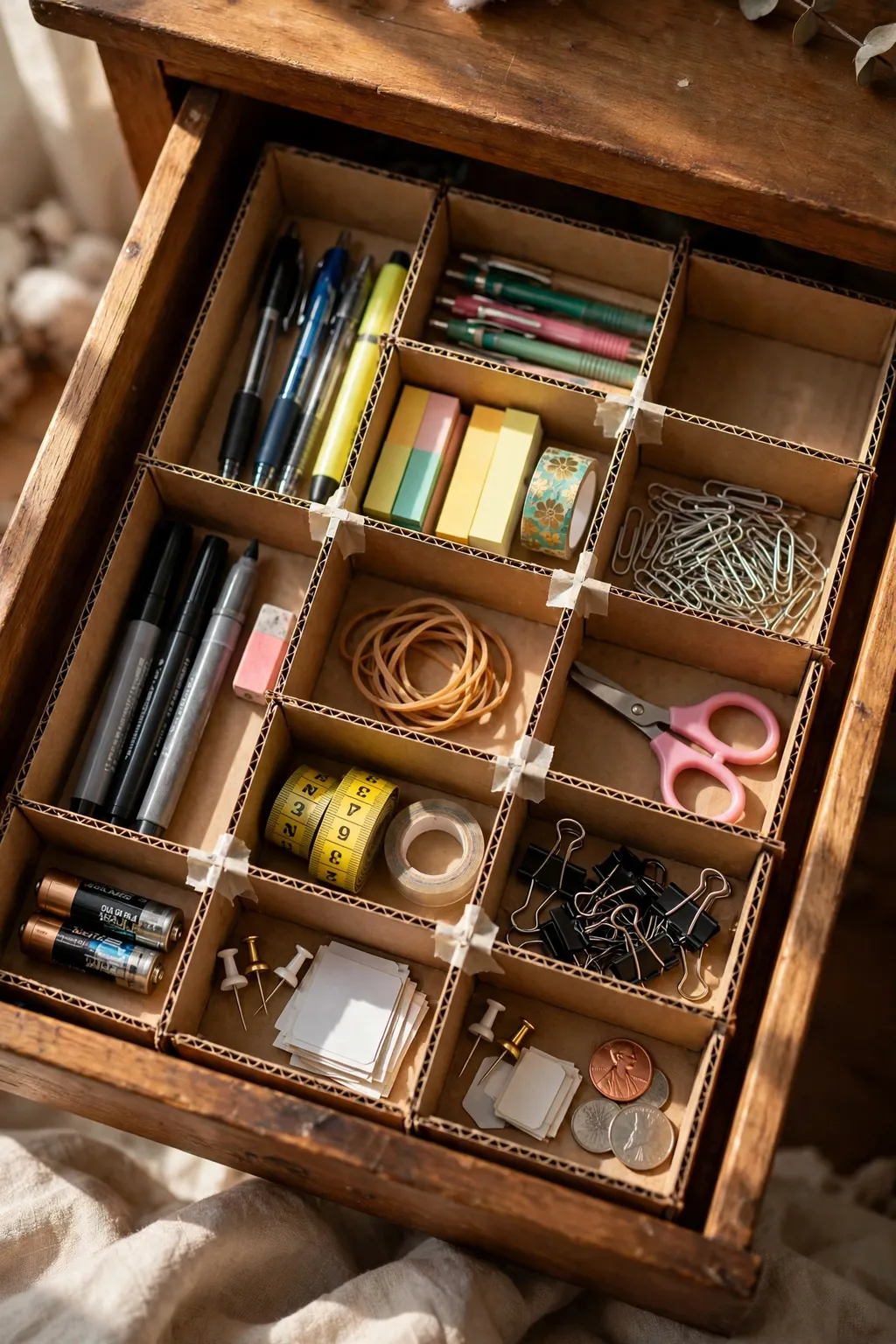
If you would rather spend nothing at all, cardboard dividers do the same job for free. Cut strips from a sturdy cereal box or shipping box, score them where they cross, and slot them together into a grid that fits your drawer exactly. Cover them in wrapping paper or washi tape if you want them pretty — or leave them plain, since nobody sees them but you. It takes twenty minutes, costs nothing, and the grid can be rebuilt any time your drawer changes shape.
A Repurposed Cutlery Tray
The humble cutlery tray is the junk drawer’s best friend, and you probably already own one. An old bamboo or plastic cutlery tray — the kind that used to live in the kitchen — drops straight into a junk drawer and gives you instant compartments in exactly the right sizes. The long slots hold scissors and rulers, the small squares take batteries and screws, and the whole tray lifts out when you need to clean underneath. If your kitchen has a spare, this one is free, and the same tray trick shows up in my bathroom drawer organization ideas on a budget too.

Small Mason Jars for Bits and Pieces
Tiny things are what make a junk drawer feel chaotic, and small jars are the answer. Short mason jars or baby-food jars stand upright in the drawer and hold screws, nails, buttons, safety pins, and the little bits that otherwise sink to the bottom. Leave the lids off so you can grab what you need with one hand, and line the jars up along the back of the drawer where they cannot roll. A set of four costs about $5, and they look far prettier than a zip bag of loose screws ever will.

Tension Rods as Drawer Dividers
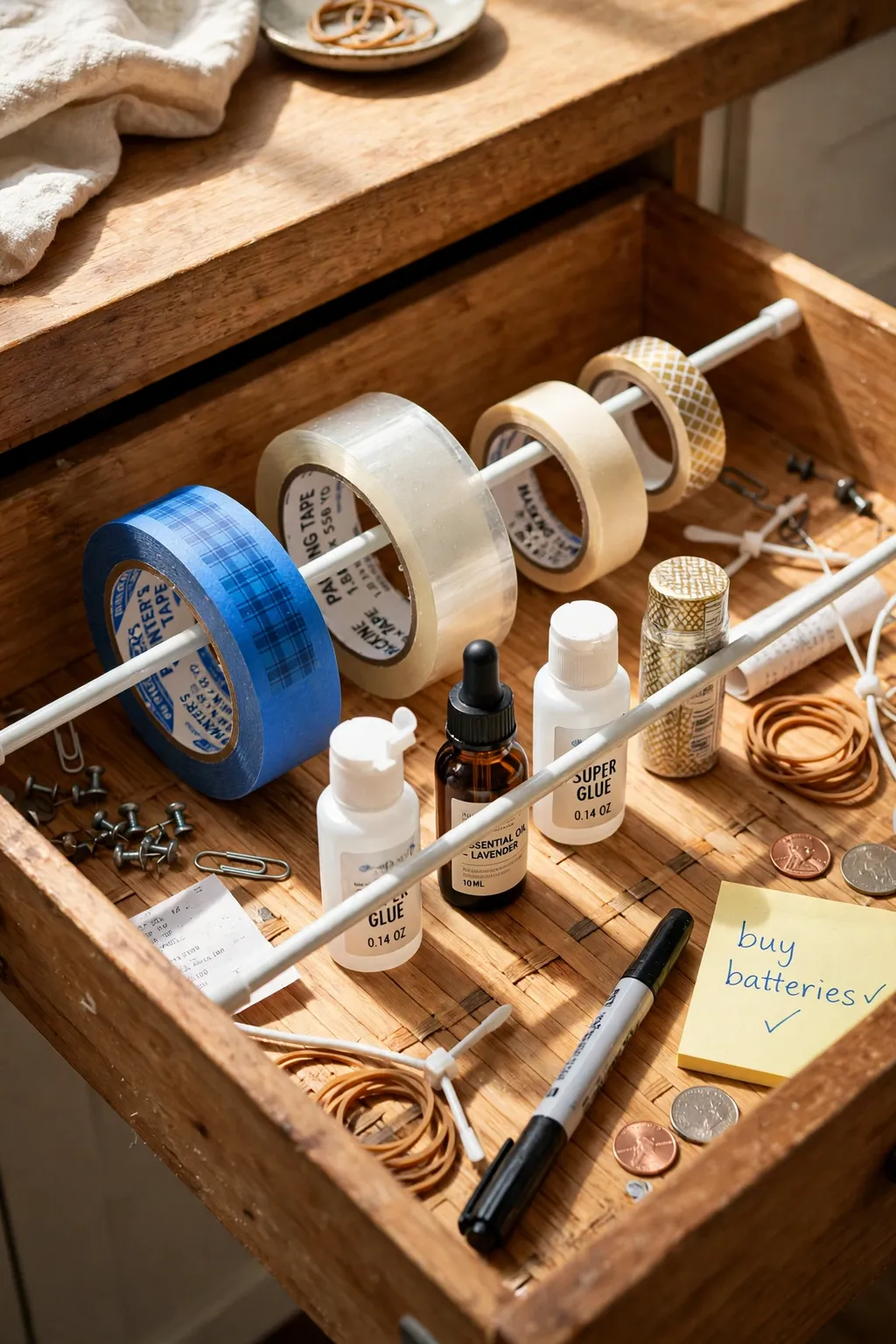
A spring tension rod — the kind made for curtain sheers — makes a brilliant drawer divider, and it costs about $3. Wedge one or two across the drawer and they hold rolls of tape, wrapping paper, or a row of bottles upright and in place. They need no screws, no glue, and no measuring, and they slide out in a second when you want to rearrange. They are especially good for the long, narrow drawers that bins never quite fit.
Ice Cube Trays for Tiny Things
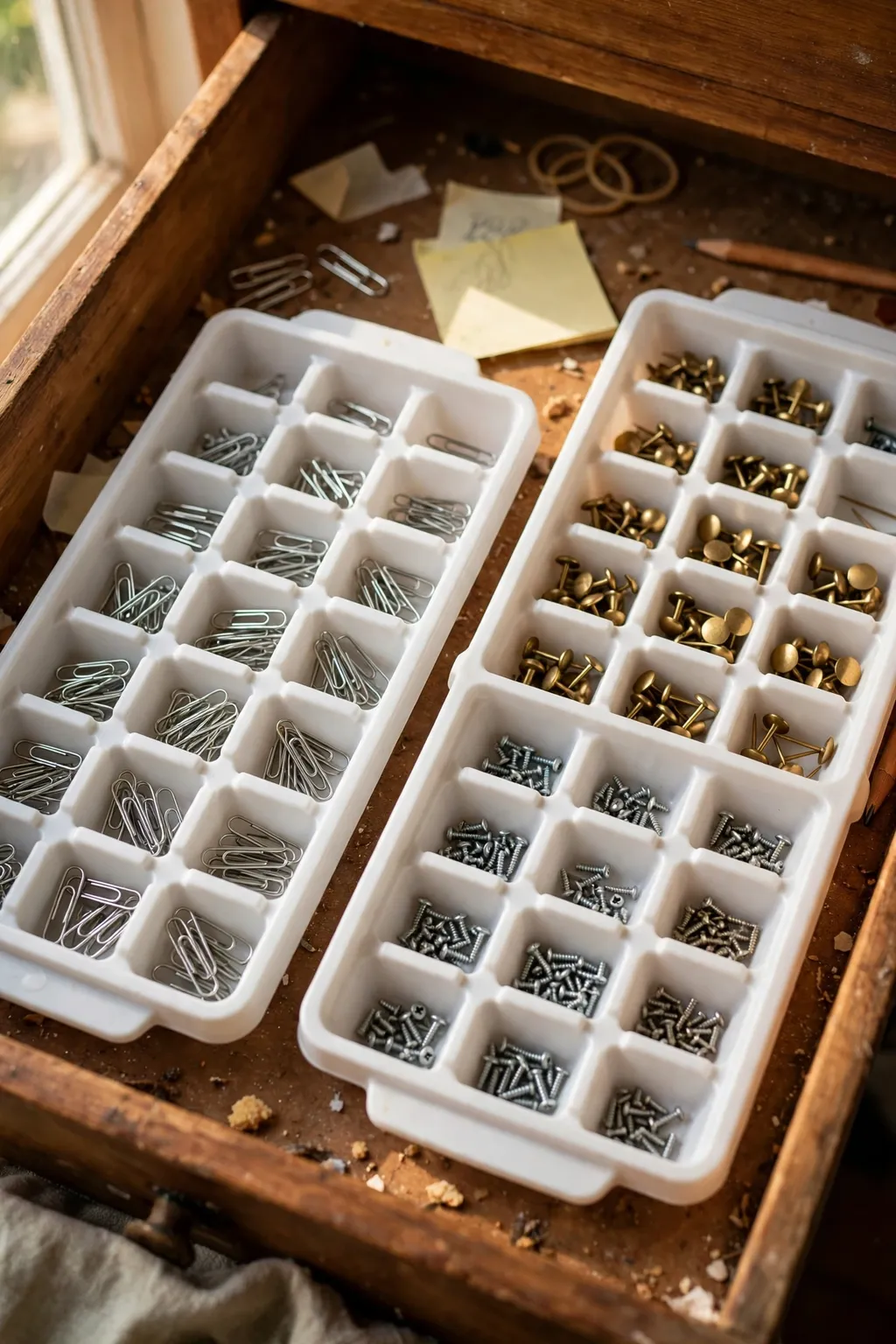
Ice cube trays are the smallest, cheapest organizers you will ever buy — a pack of two costs about $1. Each little square holds a different tiny thing: paper clips, thumbtacks, earring backs, SIM cards, the screws from a pair of glasses. Set one or two trays in the front of the drawer where your hand lands first, and the fiddly bits stop disappearing into the corners. Silicone trays work best, since they bend to release a single clip without tipping the rest.
Label Every Section
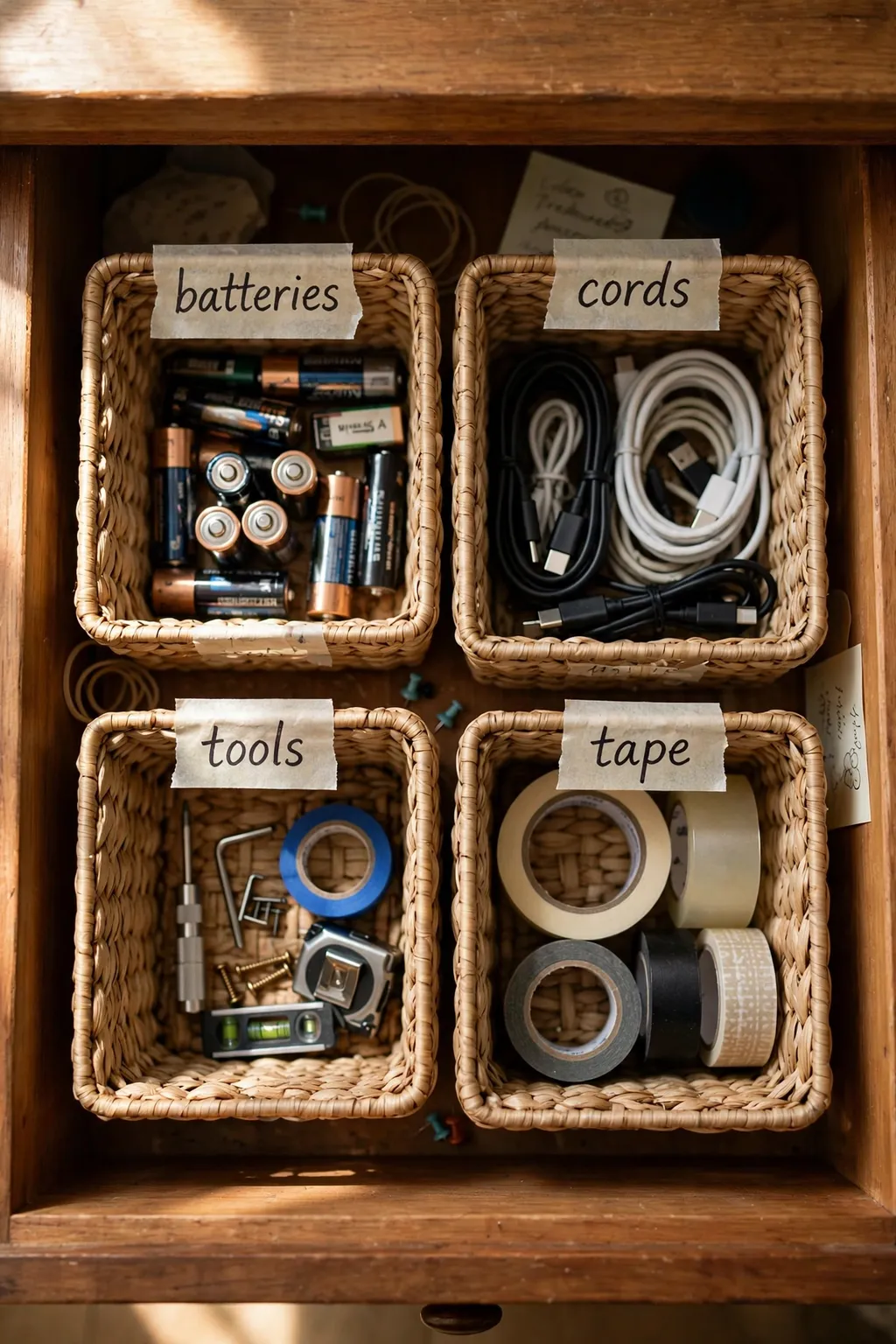
A drawer without labels is a drawer that drifts back to chaos in a week. A strip of masking tape and a marker is all you need — write BATTERIES, CORDS, TOOLS, TAPE on the front edge of each bin or section, and everyone in the house knows where things belong. Labels also make it obvious when something has wandered into the wrong spot, so the tidy-up takes seconds instead of an afternoon. For the same label-first approach in the workspace, see my desk organization ideas on a budget.
A Charging Cable Corner
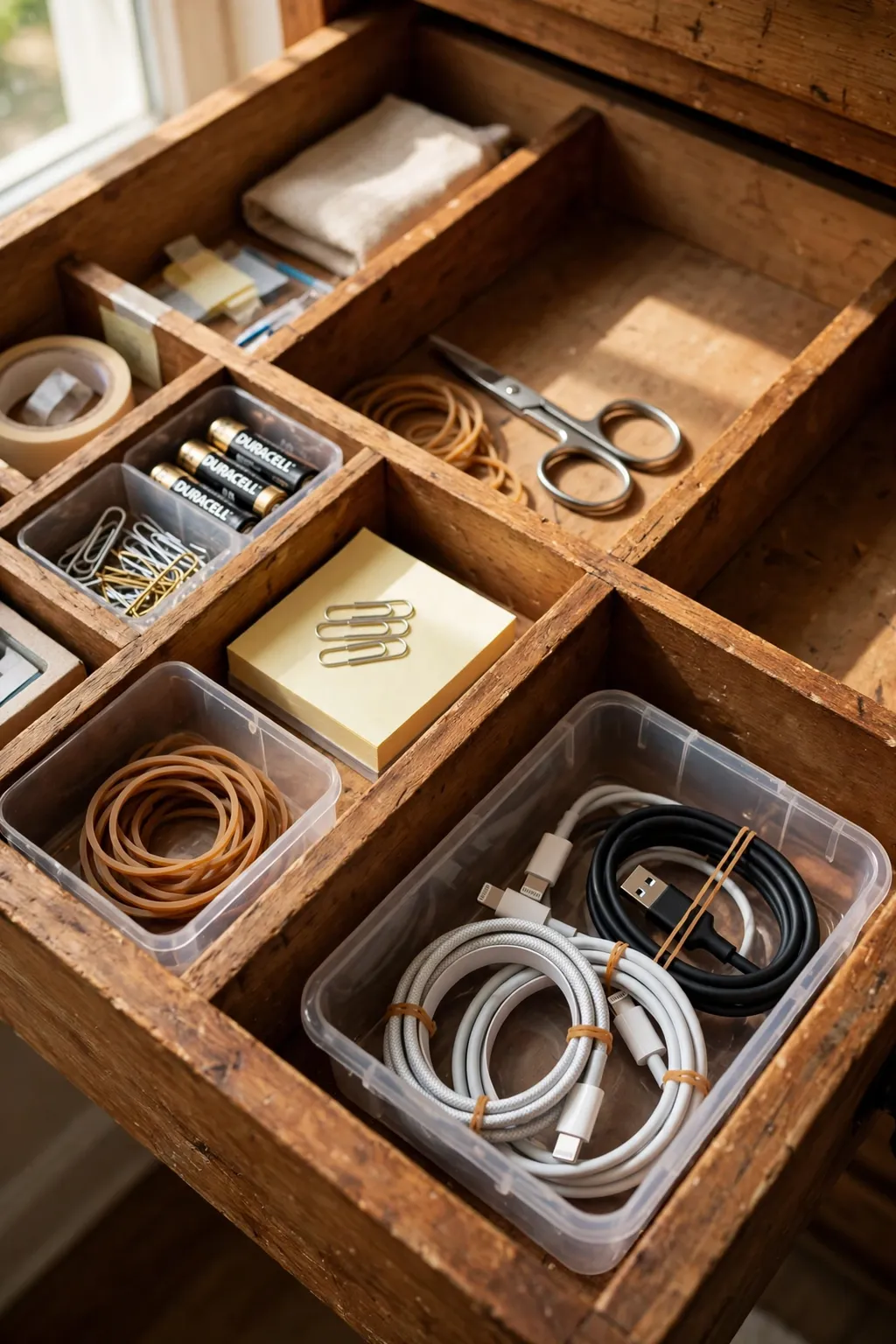
Cables are the junk drawer’s worst offenders — they tangle, they knot, and they hide the charger you actually need. Give them one corner of the drawer and nothing else: a small bin just for cables, each one coiled and held with a rubber band or a bread-bag twist tie. Keep only the cables you use every week, and move the rest to a labelled box in a closet. One corner, one bin, and the tangle is gone for good.
Binder Clips to Tame Cords
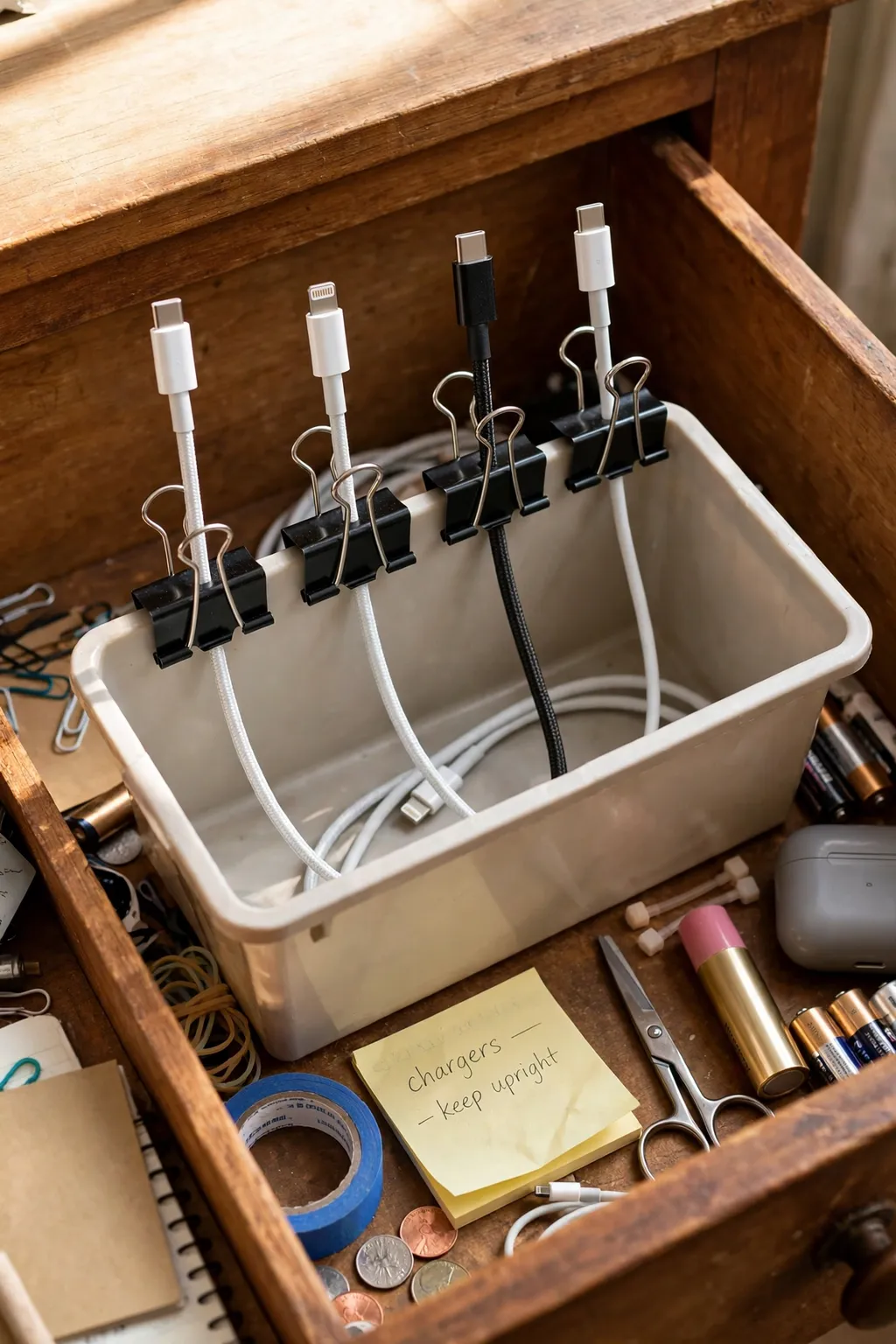
Binder clips cost pennies and do a job no fancy cable organizer can beat. Clip one to the edge of a small bin or to the side of the drawer itself, thread a cable end through the metal arms, and the plug stays put instead of sliding to the back. A row of three clips holds three cables side by side, each one grabbable in a second. It is the cheapest cable management in the house, and it works just as well on the desk — my home office organization ideas on a budget use the same trick.
A Battery Home That Actually Works
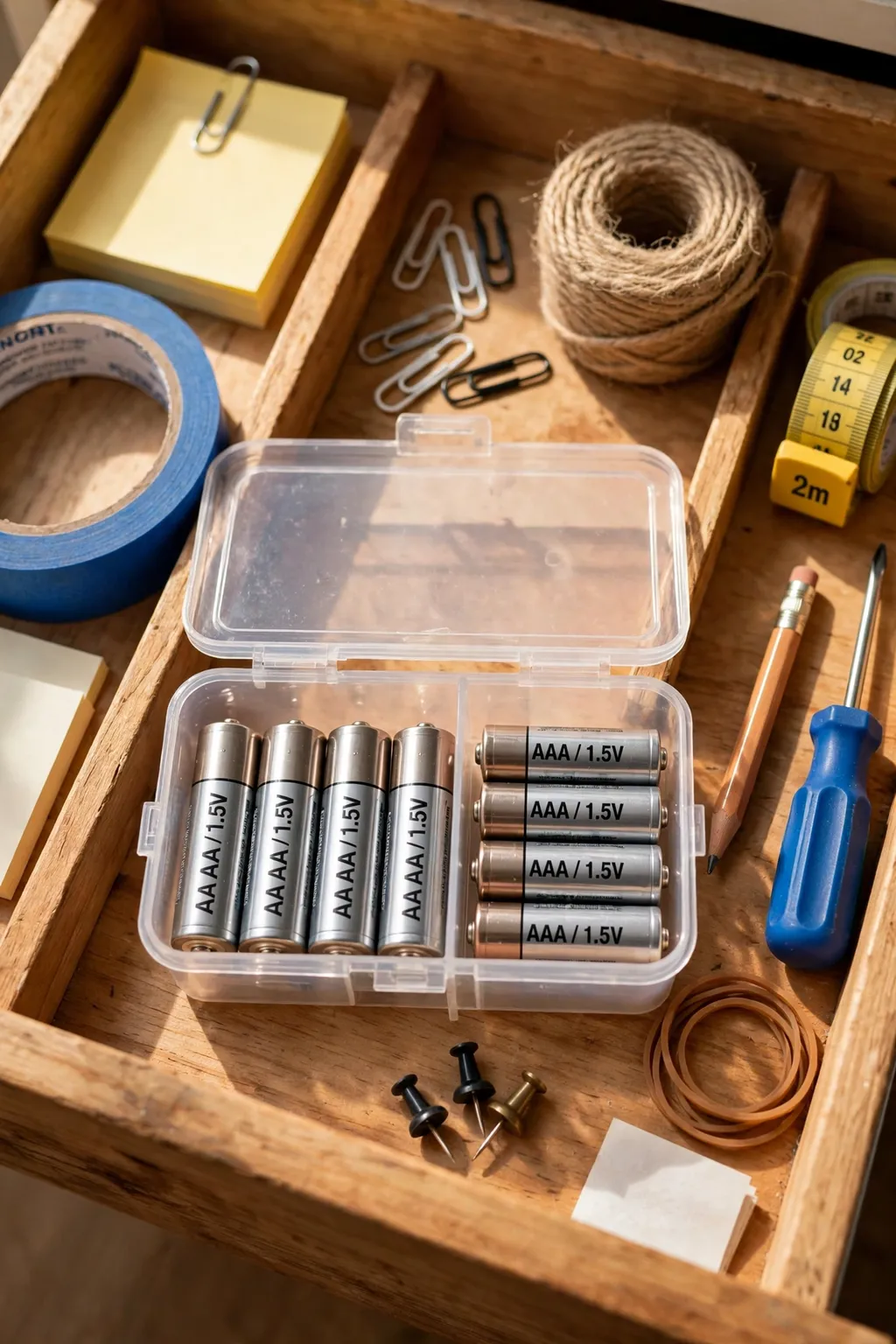
Batteries are the item every junk drawer fails at: loose ones roll everywhere, dead ones mix with fresh ones, and you can never find the size you need. Fix it with one small lidded container and two simple rules — fresh batteries go in one side, dead ones go in the other (or straight to the recycling bag). A quick test with a cheap battery tester once a month keeps the dead ones from piling up. Label the box BATTERIES in big letters, and the whole household will use it.
Repurposed Food Containers
Before you buy a single organizer, look in the recycling: small food containers are free drawer bins waiting to happen. Yoghurt pots hold rubber bands, a butter tub holds the tape measure and the spare keys, a jam jar holds the coins, and a takeaway container is the perfect size for the scissors and the screwdriver. Wash them, dry them, and line them up — mismatched containers look charming in a drawer nobody else sees, and they cost exactly nothing. The same shop-your-home-first habit runs through my bookshelf organization ideas on a budget as well.

A Notepad and Pen Zone
Every junk drawer ends up holding the household notepad and the one pen that works — so give them a proper home instead of letting them float. A slim notepad and two good pens get their own narrow section at the front of the drawer, where you can grab them without digging. Keep a small pencil sharpener there too, and the grocery list never again ends up written on the back of an envelope. It is a tiny zone, but it is the one you will use every single day.

A Weekly Five-Minute Reset
Even the best-organized junk drawer needs a little upkeep, and five minutes a week is all it takes. Pick one evening — Sunday works for most households — open the drawer, toss the receipts and wrappers that crept in, return anything that belongs elsewhere, and straighten the bins. Five minutes keeps the system alive, and it is far easier than the two-hour purge the drawer needed the first time. Set a phone reminder if it helps; the habit is the organizer that never wears out. The same five-minute reset keeps my nightstand organization ideas on a budget working too.

One In, One Out
The rule that keeps a junk drawer organized forever is the simplest one: every time something new goes in, something old comes out. A new pen means an old dried-out one goes in the bin; a new charger means the broken one gets recycled. The rule takes ten seconds, it stops the drawer from slowly refilling, and it works on every storage spot in the house — my medicine cabinet organization ideas on a budget and under-bed storage ideas on a budget both lean on it. Teach it to the whole household, and the junk drawer stays a junk drawer in name only.

A Few Tips Before You Organize Your Junk Drawer
- Measure the drawer before you buy anything — bins that do not fit are money wasted, so take the width, depth, and height with you to the store, and remember to leave room for the drawer to close.
- Keep only what you use weekly — the junk drawer is for everyday things, not for storage, so anything you reach for less than once a month belongs in a labelled box in a closet instead. For a full room-by-room version of this rule, see my spice rack organization ideas on a budget.
- Put the most-used items at the front — pens, scissors, and the tape measure belong where your hand lands first, and the rarely-needed bits can live at the back.
- Use one system for the whole house — the same bins, labels, and five-minute reset work in every drawer, so once the junk drawer is done, the rest of the house is easy. My cozy home library ideas on a budget use the same basket-and-label habit to keep a reading corner tidy.
- Do it in one sitting — a junk drawer takes less than an hour from empty to organized, and stopping halfway leaves a bigger mess than you started with, so clear your afternoon and finish it.
Frequently Asked Questions
How do you organize a junk drawer on a budget?
Empty the drawer completely, toss what you do not need, then divide what is left with dollar-store bins, DIY cardboard dividers, or repurposed food containers. Label each section, give cables and batteries their own homes, and finish with a weekly five-minute reset. The whole job costs under $10 and takes less than an hour.
What should you keep in a junk drawer?
Only the small everyday things you reach for weekly: pens, scissors, tape, batteries, a screwdriver, rubber bands, a notepad, and charging cables. Anything you use less than once a month — spare keys, old chargers, mystery screws — belongs in a labelled box in a closet instead. If it has no category and no use, it does not earn a spot in the drawer.
What is the cheapest way to organize a drawer?
Repurposed containers cost nothing: yoghurt pots, jam jars, butter tubs, and ice cube trays make excellent free organizers, and cardboard from a cereal box becomes a custom divider grid in twenty minutes. If you do buy, dollar-store bins at about $1 each are the best value — a full drawer costs under $5 to organize.
How do I stop my junk drawer from getting messy again?
Use the one-in-one-out rule — every new item in means an old one out — and do a five-minute reset once a week to return strays and toss the wrappers. Labelled sections make it obvious when something is in the wrong place, so the tidy-up takes seconds. A drawer with a system and a habit stays organized; a drawer with only bins drifts back to chaos.
WRAPPING UP
The Cozy Takeaway
A junk drawer does not need expensive organizers or a full weekend — it needs one honest clear-out, a few dollar-store bins or free repurposed containers, labels everyone can read, and a five-minute reset each week. Start with the empty drawer this weekend, add the bins you already own, and enjoy the small daily pleasure of opening a drawer and finding exactly what you need, right where it belongs.