13 Coat Closet Organization Ideas on a Budget
Hi, I’m Emma! If your coat closet is the place where jackets go in and never quite come out again, you are in good company — ours used to be a jumble of coats, one lonely glove, and a pile of shoes that swallowed the floor every single winter. I love how a few cheap fixes can turn that cramped closet into a calm little drop zone without a custom closet bill. These are the 13 coat closet organization ideas I actually use in our entryway.
The best coat closet organization ideas on a budget start with a second hanging rod, slim velvet hangers, and a basket for each person’s accessories, then add shelf dividers, wall hooks, and a boot tray for the floor. Most of these projects cost under $40 each and take less than an hour, and a whole-closet refresh often lands between $20 and $50 if you start with the basics. A second rod, a tray for wet boots, and one coat per person are enough to end the entryway pile for good.
A Second Rod That Doubles Your Hanging Space
The most underused trick in a small coat closet is the double hang — a second rod below your existing one. Short coats, kids’ jackets, and bags hung by their handles all fit perfectly on that lower rod, and a hanging rod doubler that clips onto your existing rod costs about $15 to $30 with no tools and no drilling. The usual setup puts the top rod at 70 to 84 inches and the bottom rod at about 40 to 42 inches, and it works in closets as narrow as 24 inches wide and as shallow as 20 inches deep.
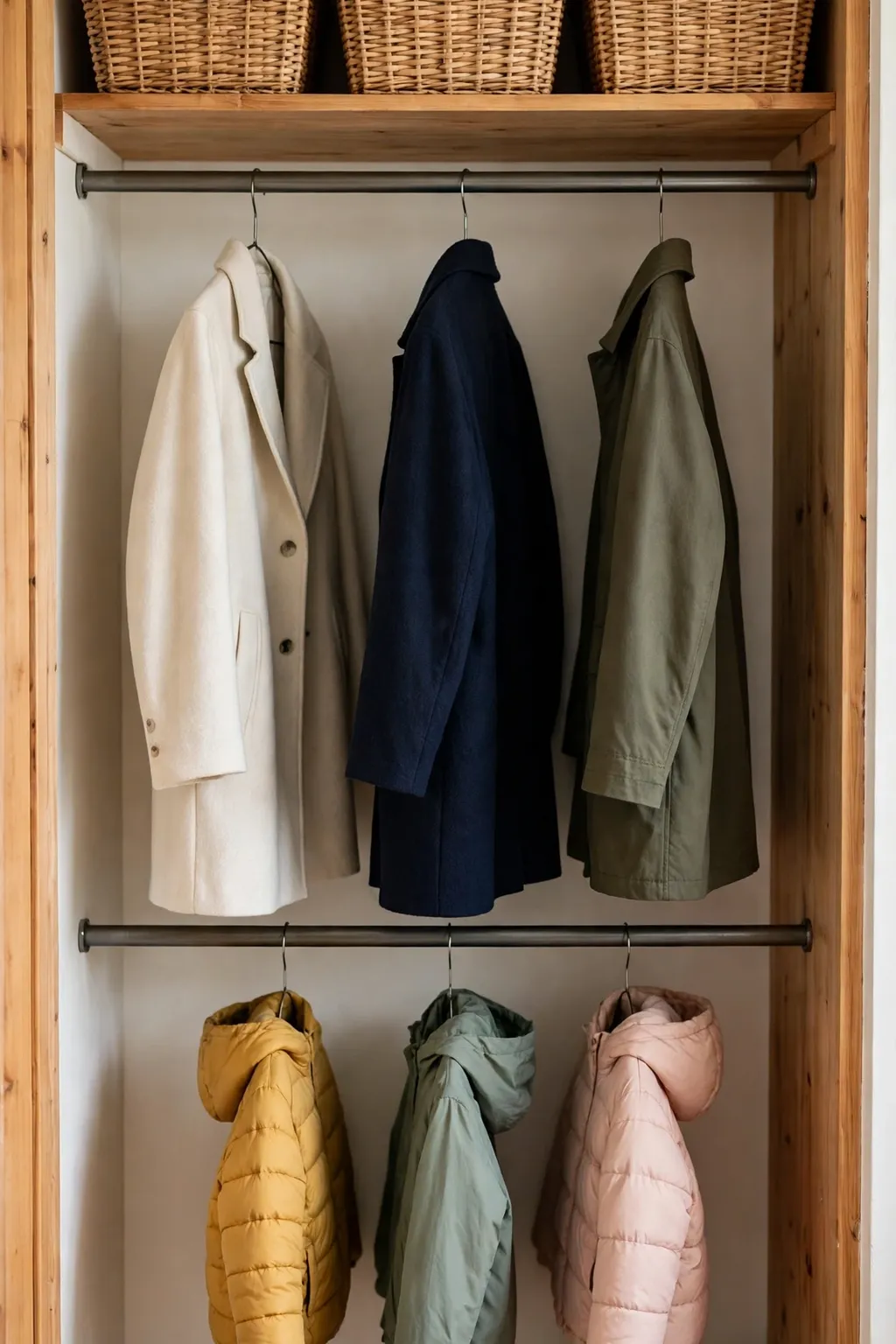
Slim Velvet Hangers That Win Back Rod Space
Switching to matching slim hangers is the cheapest space you will ever buy for this closet. A set of 50 slim velvet hangers costs about $12 to $20, and they recover roughly 30 percent more rod space than bulky plastic hangers because every coat hangs at the same thin width. Keep a few sturdy wooden hangers for your heaviest winter coats, which can stretch and slide on slim ones, and let the velvet ones carry everything else.

Shelf Dividers on the Top Shelf
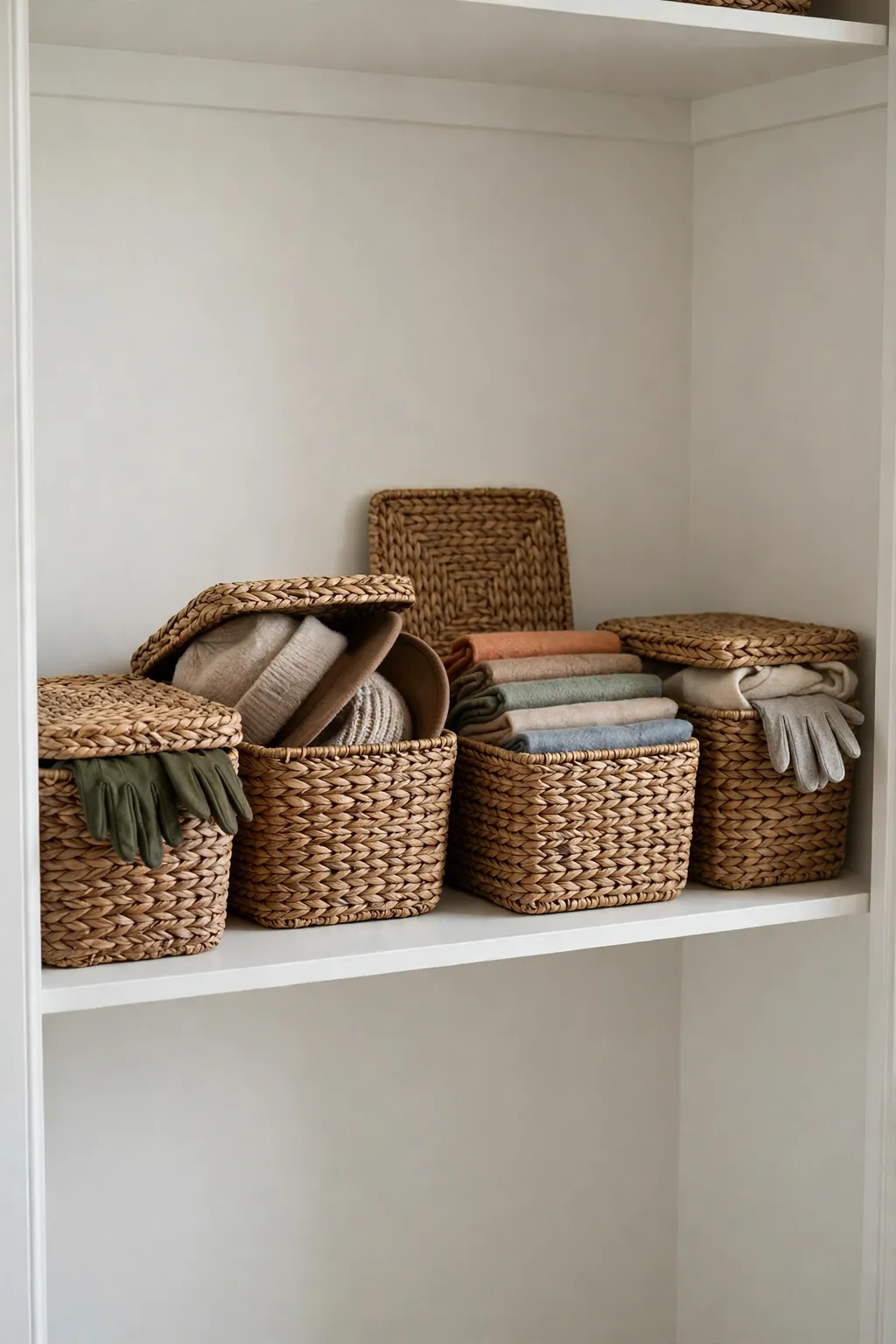
The shelf above the rod is usually deep and high, which is exactly why piles of hats and scarves slump into each other and collapse. Clip-on acrylic or wire shelf dividers cost about $10 to $40 and turn that one long shelf into separate zones — one for knit hats, one for folded scarves, one for gloves — so every stack stays upright. They need no screws, so they are completely renter-friendly.

A Basket for Each Season’s Accessories
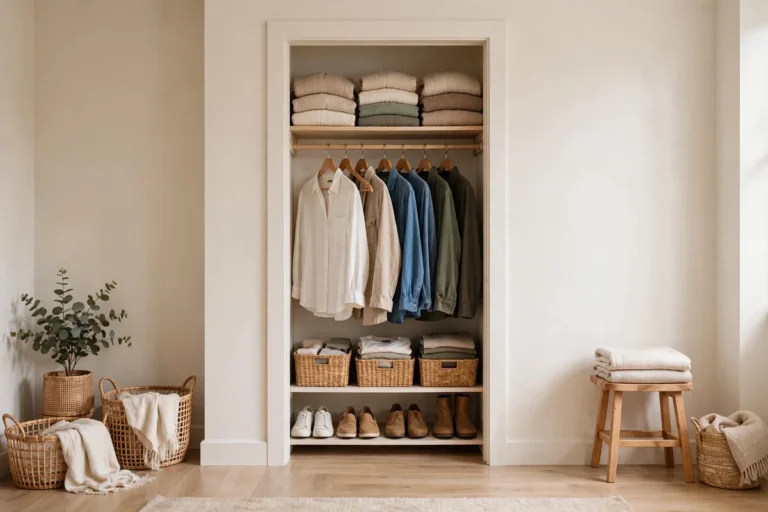
Woven baskets are the simplest way to hide the little things that make a closet feel messy. Give each category its own basket — one for gloves, one for scarves, one for hats, one for dog-walking gear — and label it so everyone in the house puts things back in the right home. Woven baskets cost about $15 to $35 each, they look warm and natural on an open shelf, and a lid on the top basket keeps the rarely used bits out of sight.
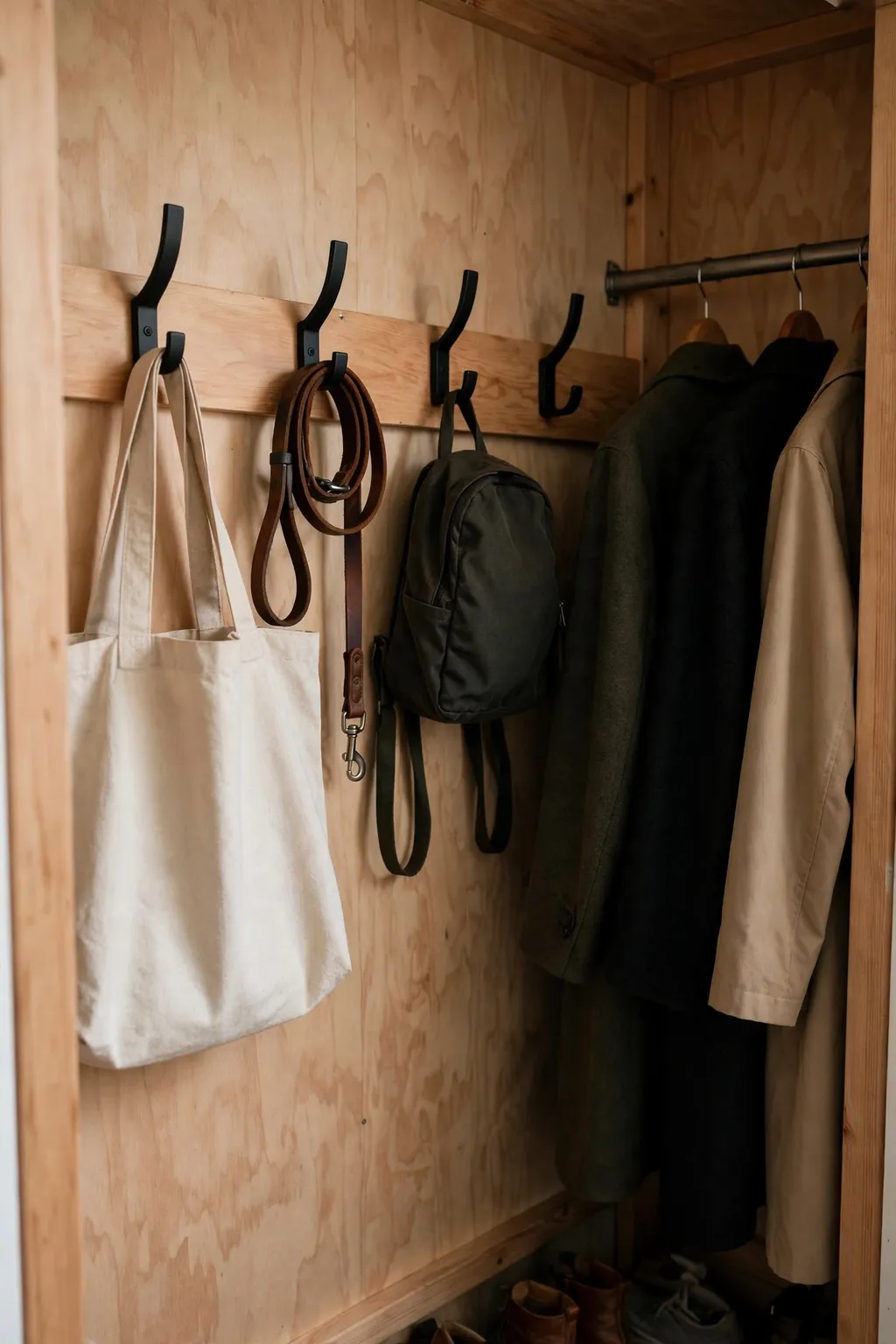
Hooks on the Inside Walls for Bags and Leashes
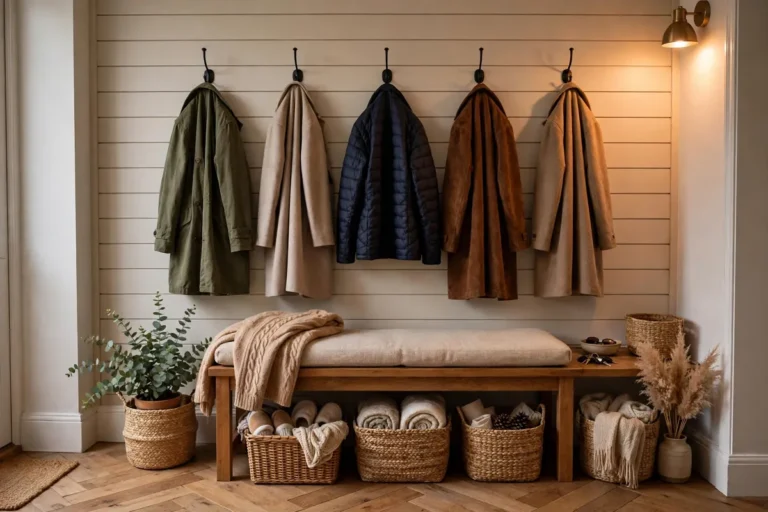
Not every item needs a hanger, and the inside walls of a coat closet are free real estate most people never use. A row of sturdy wall hooks costs about $10 to $20 and holds tote bags, backpacks, raincoats, and the dog leash right where you grab them on the way out. Removable adhesive hooks work just as well for lighter things and leave no holes, which makes this one of the best renter-friendly fixes in the whole closet.
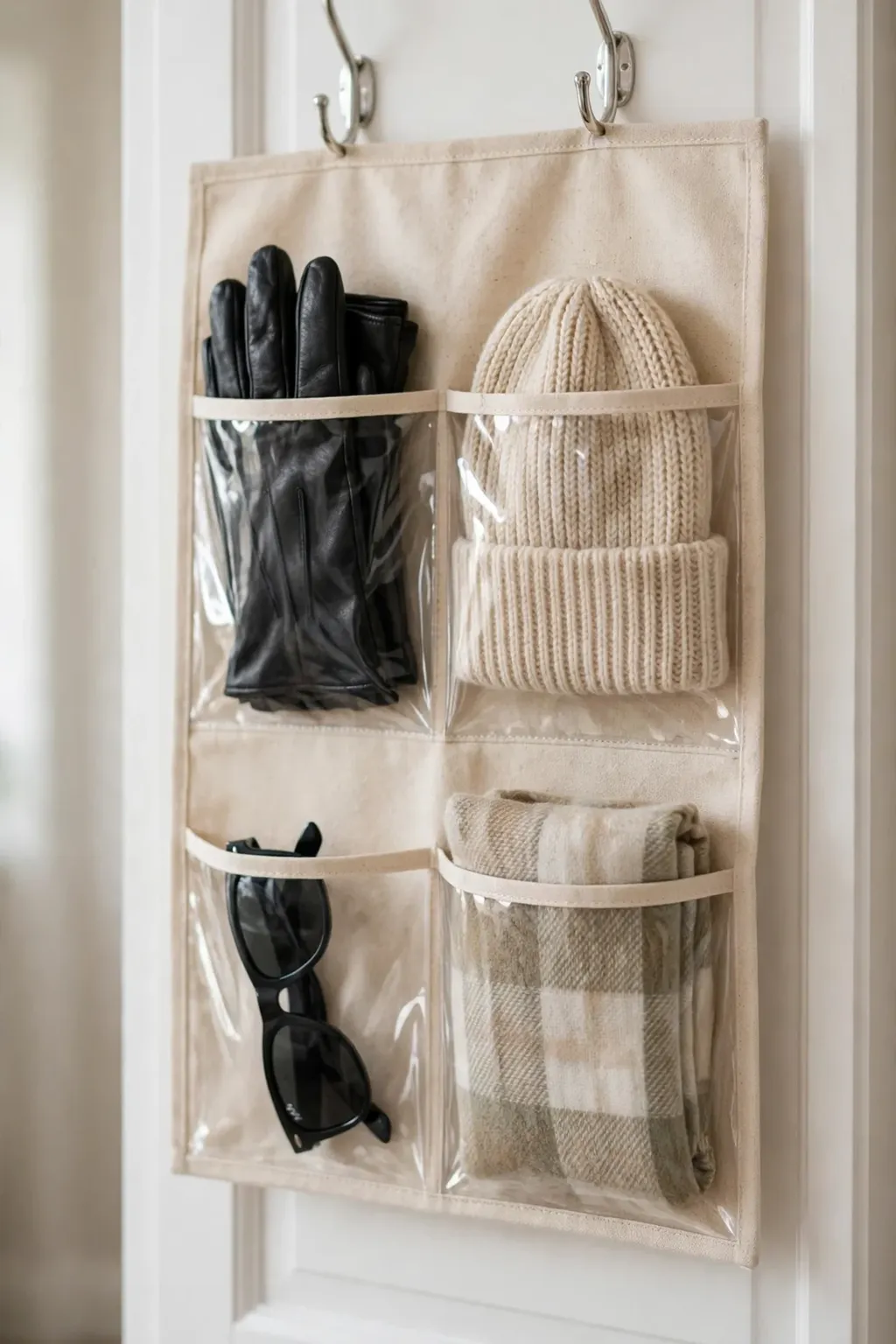
An Over-the-Door Organizer for Gloves and Hats
The back of the closet door is prime real estate that usually goes completely unused. An over-the-door fabric pocket organizer costs about $20 to $35, hangs in seconds with no tools, and corrals all the small grab-and-go items — gloves, hats, sunglasses, sunscreen — into clear pockets you can see at a glance. A full door setup with a hook rack runs about $35 to $70 in total, and it keeps the little things from ever landing on the closet floor again.
A Slim Shoe Rack and Boot Tray on the Floor
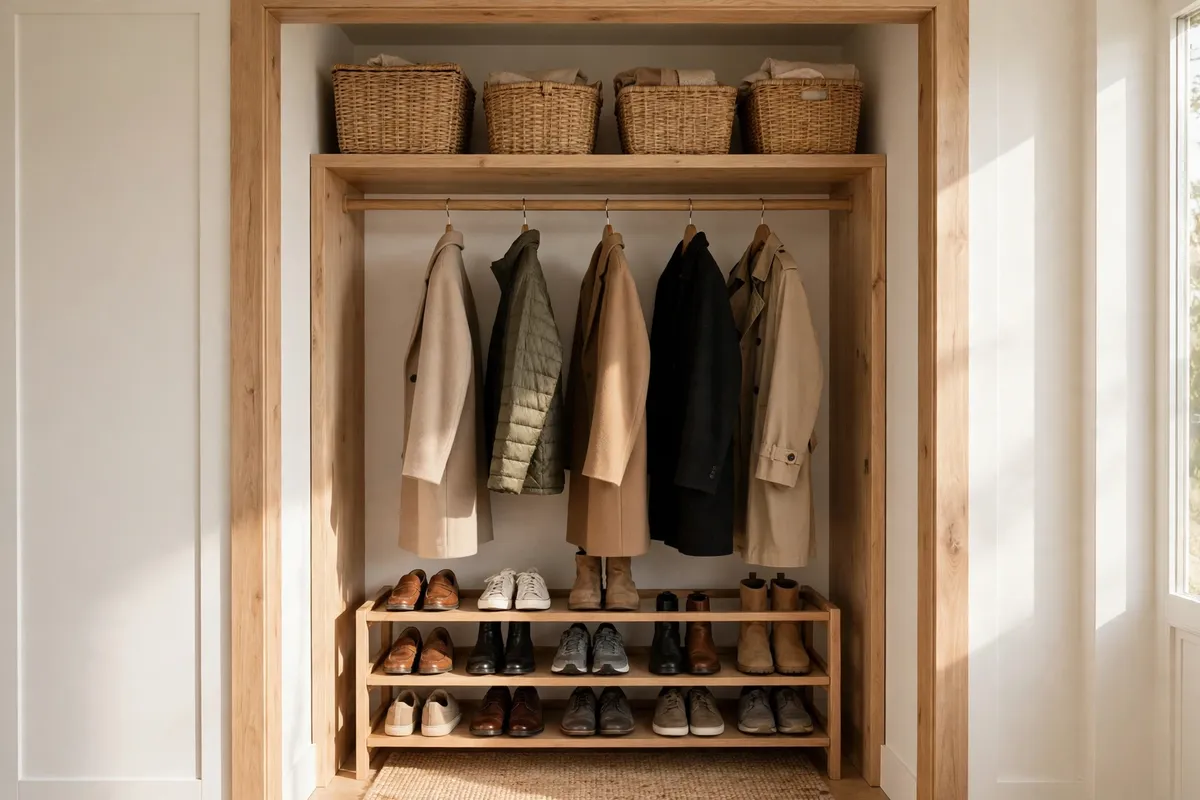
Shoes are usually the first thing to take over a coat closet floor, so give them a home before they take it. A slim three-tier metal shoe rack costs about $18 to $30 and holds nine to twelve pairs in the same floor space where those shoes used to pile up, and a rubber or galvanized boot tray for $12 to $25 catches melt water, salt, and mud from wet boots. Limit the closet to two pairs per person at most — for more shoe ideas, see my shoe organization ideas on a budget — and the floor stays clear enough to sweep.

A Hanging Shelf Organizer That Clips to the Rod
A hanging shelf organizer is the fastest way to carve extra compartments into a closet without a single tool. It clips straight onto the main rod and gives you four to six cubbies for folded sweaters, shoes, and small bags, and basic six-shelf versions cost as little as $9, with sturdier fabric ones running $15 to $30. Hang it at the end of the rod so the coats still slide freely, and keep the heaviest items on the bottom cubby so it never swings.

Labeled Bins on the Top Shelf
Matching bins are what make a top shelf look finished instead of just full. Pick narrow, deep bins with handles — they fit a shallow closet better than wide ones — and give each one a simple label facing out so you can find the winter gloves without pulling every bin down. A set of four to six matching bins plus labels usually runs $40 to $80, and keeping the same color across all of them is the trick that makes the whole closet look calm.

A Rolling Cart for the Awkward Extras
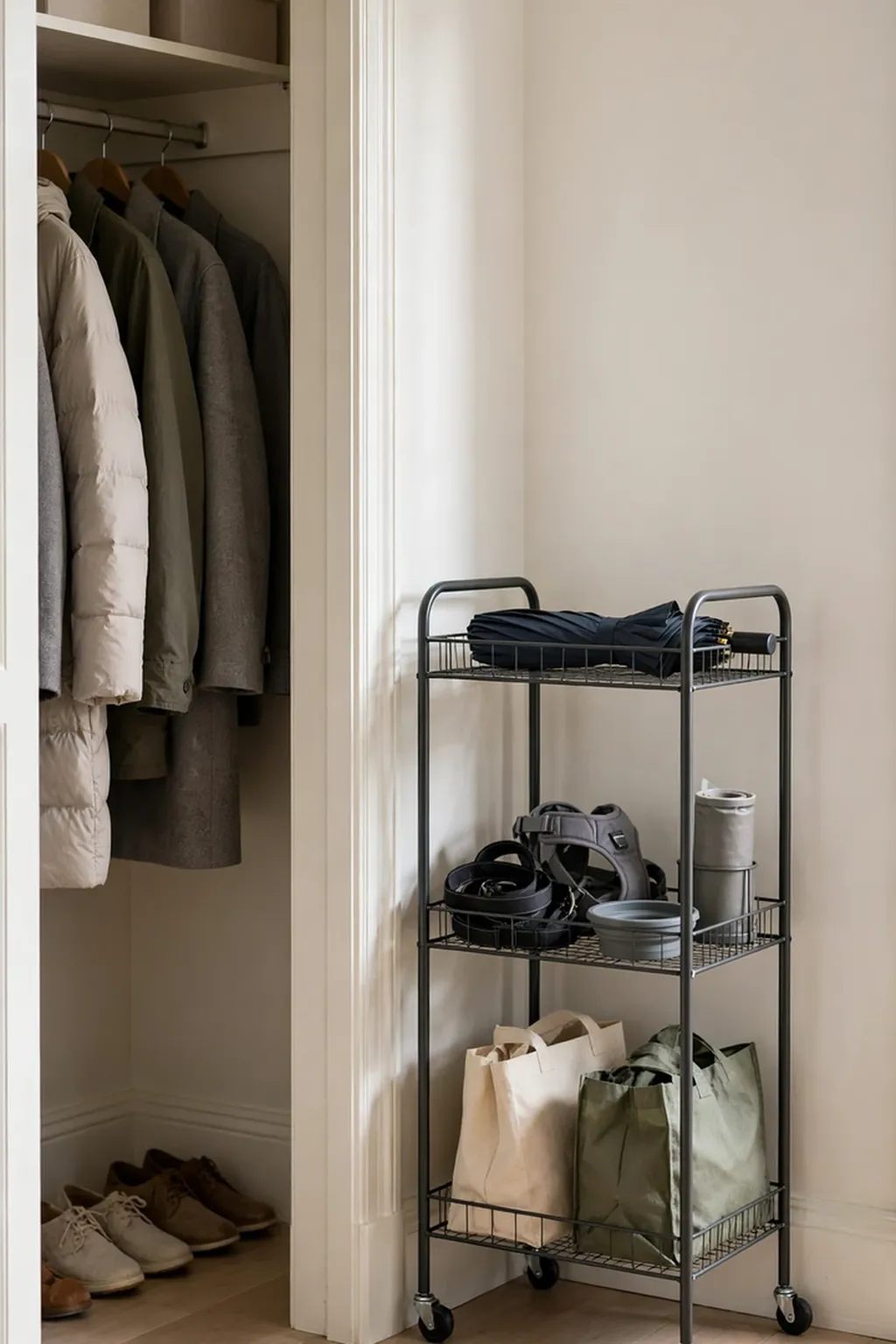
Some things never fit neatly on a shelf or a hook — the umbrella, the reusable bags, the dog towels, the sports gear that lives by the door. A slim three-tier rolling cart costs about $25 to $45, tucks into the gap beside the closet or just inside the door, and rolls out when you need it and back when you don’t. Give each tier a job — umbrellas on top, bags in the middle, dog gear at the bottom — and the awkward extras finally have a home.
A Drop Zone Tray for Keys and Sunglasses
Every coat closet needs one small landing pad for the things that otherwise end up on the kitchen counter. A shallow tray or basket on a waist-high shelf holds keys, wallets, transit cards, and sunglasses, and it costs just a few dollars if you repurpose a tray you already own. The rule is simple: if it fits in the tray, it lives in the closet, and if it doesn’t fit, it doesn’t belong there.

Vertical Dividers for Umbrellas and Reusable Bags
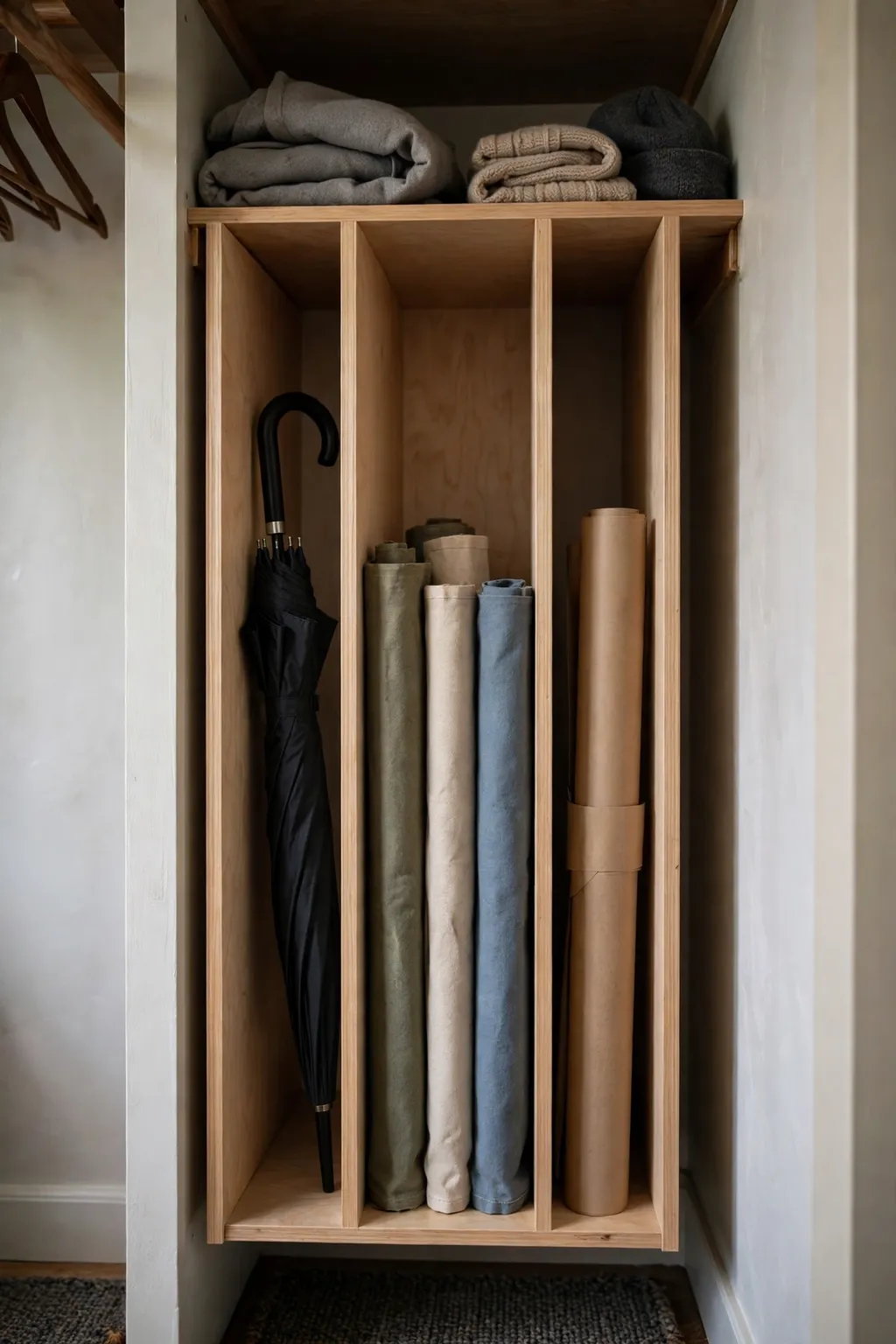
Tall, thin things are the hardest to store in a closet because they topple into everything else. Vertical dividers solve that brilliantly by creating individual upright slots — one for the umbrella, one for rolled reusable bags, one for wrapping paper — so nothing can lean on its neighbor. A few bookend-style dividers or a tension rod across a corner costs just a few dollars, and it turns the most awkward corner of the closet into the tidiest one.
A Stick-On Light So You Can See What You Own
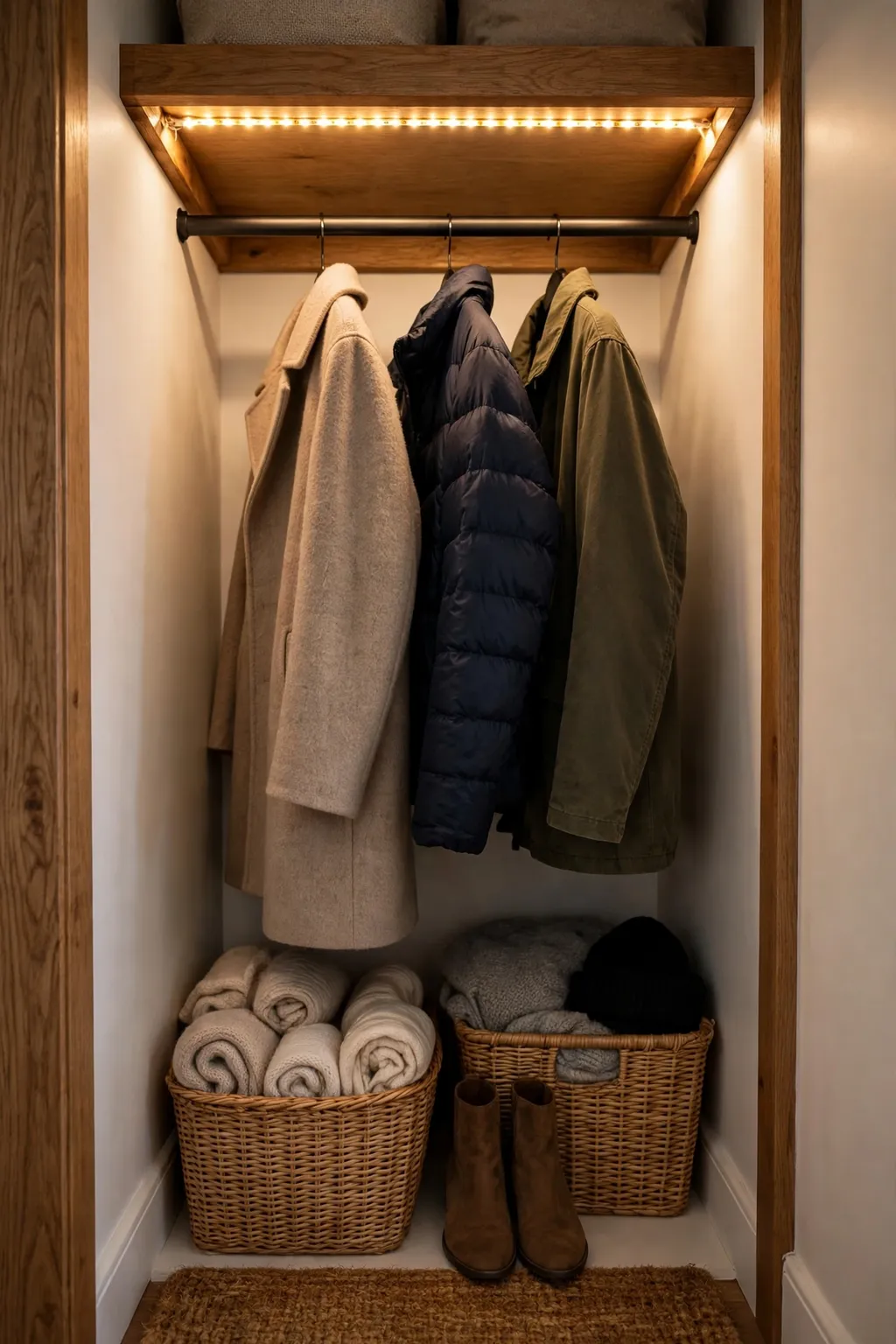
A dark entry closet makes it far too easy to lose track of what you own, and a stick-on light is the quickest fix. Battery-operated LED strips or motion-sensor lights cost about $10 to $20, stick under the top shelf in minutes, and turn on the moment the door opens. Once you can actually see the back of the closet, the coats you forgot about stop hiding there — and off-season coats can move out to the bedroom closet or my under bed storage ideas on a budget instead of crowding the rod.
A Few Tips Before You Start
- Empty the closet first — pull absolutely everything out and sort it into keep here, keep elsewhere, donate, and toss before you buy a single bin or hook.
- Measure before you buy anything — a standard reach-in closet is about 24 inches deep, and the top rod usually sits at 70 to 84 inches with a second rod at about 40 to 42 inches, so check your numbers first.
- Keep only this season’s coats in the closet — one daily coat per person plus a rain jacket is plenty in a small closet, and the rest belongs in a bedroom closet.
- Start where the mess starts — for most homes that is the shoe pile on the floor, then the top shelf, then the gloves that migrate to every surface.
- Do a quick closet audit twice a year — if a coat has not been worn in a season, donate it and free the rod for the coats you actually wear.
Frequently Asked Questions
What is the cheapest way to organize a coat closet?
Start by emptying the closet and sorting everything — that step costs nothing. Then add a hanging rod doubler for about $15 to $30 and a set of slim velvet hangers for $12 to $20, and you have doubled your hanging space for under $40. A boot tray and a few repurposed baskets finish most of the mess for under $50 in total.
How do I organize a very small coat closet?
Use the walls and the door, not just the rod — wall hooks, an over-the-door organizer, and shelf dividers add storage without taking any floor space. Switch to slim hangers, keep one daily coat per person, and remember the double-rod trick works in closets as narrow as 24 inches wide and as shallow as 20 inches deep.
How many coats should stay in the entry closet?
One daily coat per person plus one rain jacket is the rule that actually works in a small closet. Everything else — off-season coats, formal coats, the ones you wear twice a year — belongs in a bedroom closet or under the bed, so the entry closet never turns back into a pile.
How do I keep the coat closet from getting messy again?
Give every category one labeled home — a basket for gloves, a hook for the leash, a tray for keys — and run a one-in, one-out rule so a new coat means an old one leaves. A quick audit twice a year, when the seasons change, keeps the closet honest without a big clean-out.
WRAPPING UP
The Cozy Takeaway
Coat closet organization does not have to mean a big bill — a second rod, slim hangers, and one basket per category can calm the messiest entry closet in a single afternoon. Pick one idea from this list, start with the shoe pile on the floor, and enjoy a home that feels calmer the moment you walk in. For more entryway ideas, see my cozy mudroom ideas on a budget. Happy organizing, friend!