15 Kids Closet Organization Ideas on a Budget
Hi, I’m Emma! A kids closet is the one closet in the house that has to work for someone who cannot reach the top shelf, cannot read the labels, and grows out of everything in about six months. I rounded up my 15 favorite kids closet organization ideas that cost next to nothing, most of them under $20, and every single one is simple enough that your kids can actually keep it tidy themselves.
The best kids closet organization ideas on a budget are a low clothing rod at kid height, picture-label bins pre-readers can follow, a weekday outfit organizer, and a low shoe cubby row. Most cost under $20 using dollar-store bins, thrifted baskets, and DIY hooks — and they work in the smallest closet, no renovation needed.
Low Clothing Rod at Kid Height
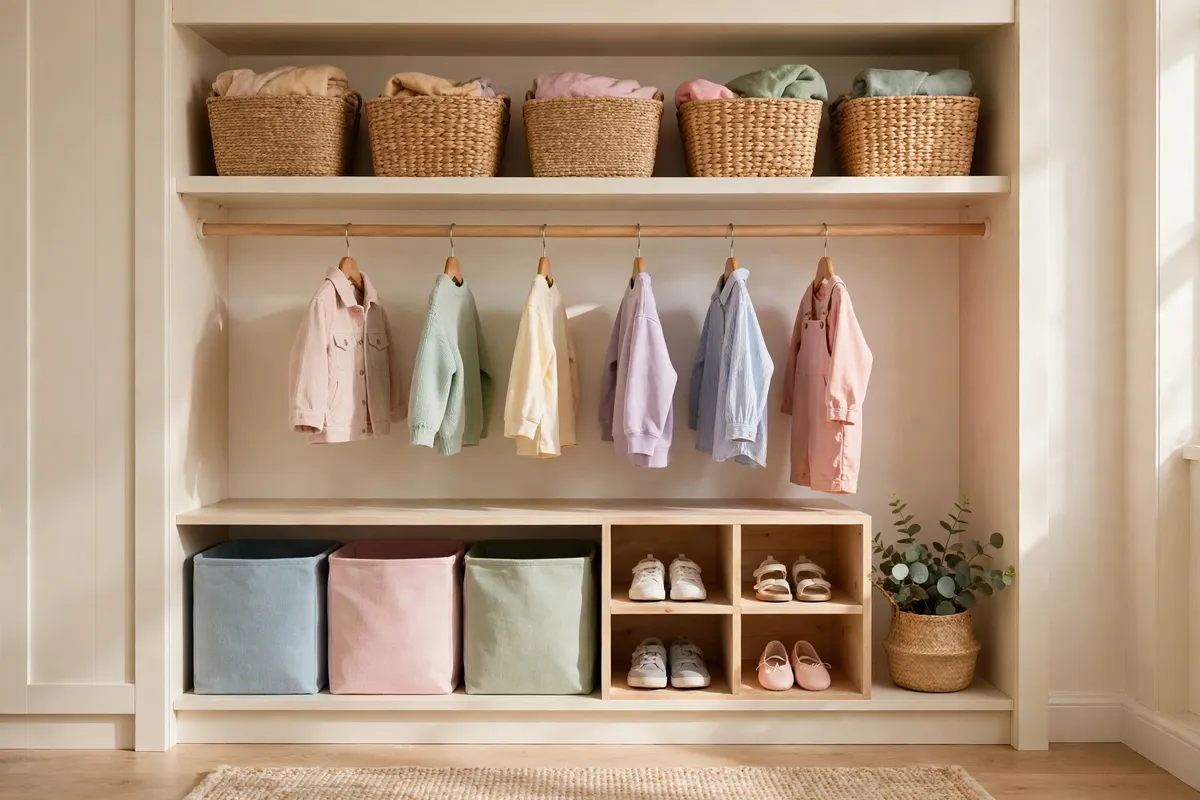
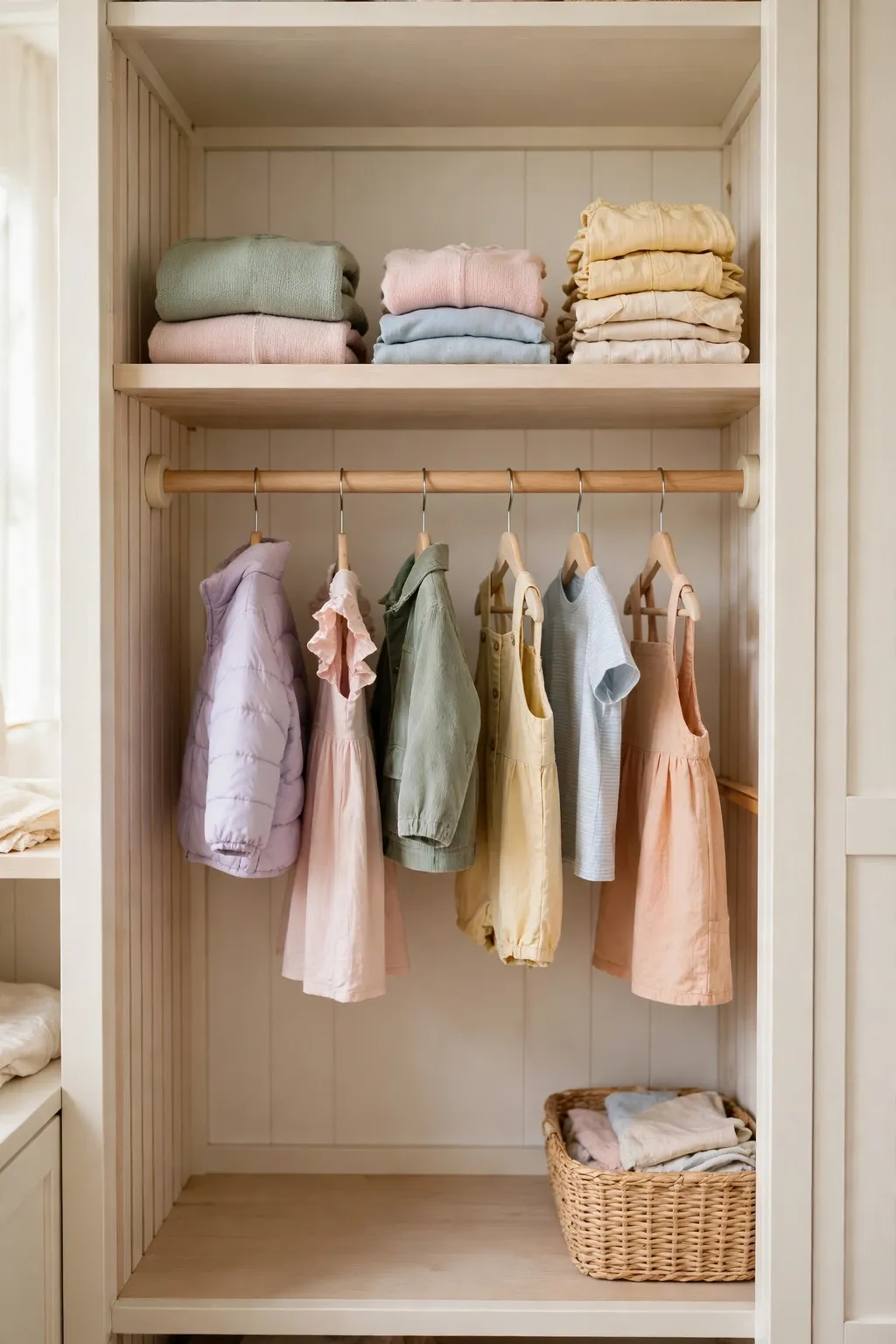
A second rod hung about three feet off the floor is the single best change you can make to a kids closet, because it puts choosing clothes — and putting them away — in your child’s hands. Hang a simple wooden dowel or a tension rod under the main one, add slim kid-size hangers, and let your child pick their own outfit each morning. A dowel and two brackets cost under $10, and the independence it buys is worth far more. Keep the rod low enough that your child can reach every hanger without a step stool. My 13 cozy kids bedroom ideas on a budget shows how the rest of the room can match the same easy, kid-height setup.
Picture-Label Storage Bins
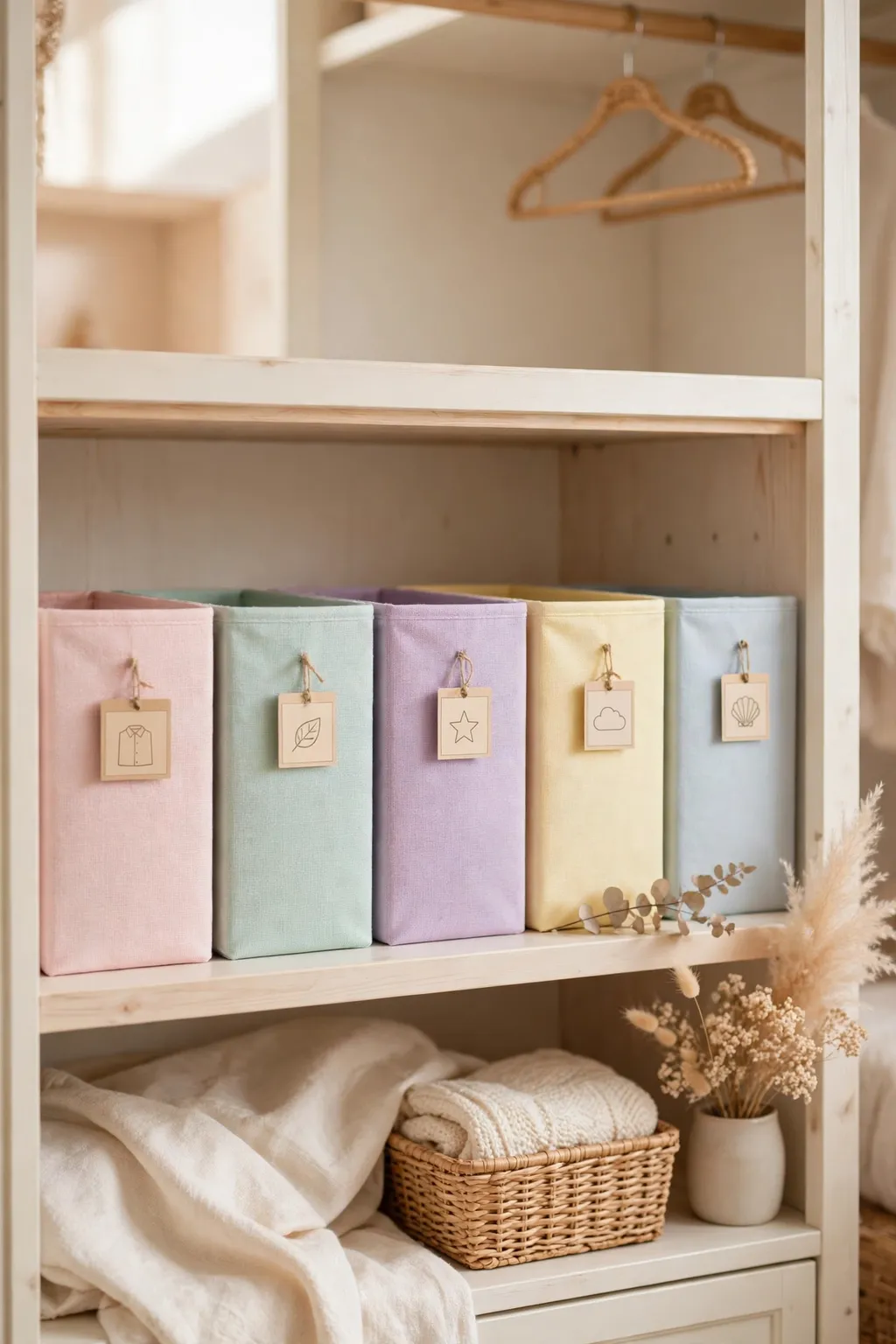
Little kids cannot read “socks” on a label, but they can absolutely read a picture of socks. Stick a simple drawing or a printed photo on the front of every bin — shirts, pants, pajamas, socks — and cleanup turns into a matching game instead of a chore. Fabric bins cost a few dollars each at the dollar store, and a strip of tape holds the picture label in place. Keep the pictures big and the bins low, so even a three-year-old can put things back in the right spot. Use the same picture labels on the dresser drawers so the system works across the whole room.
Weekday Outfit Organizer
Five little hooks or five small cubbies, one for each school day, end the morning outfit argument before it starts. Lay out the week’s outfits on Sunday night — Monday through Friday, top to bottom — and your child just grabs the next one down each morning. A five-hook rail costs about $10, or a hanging five-cubby organizer does the same job for about the same price. Let your child help choose the outfits on Sunday so they still feel like theirs. My 13 cozy toddler bedroom ideas on a budget has more morning-friendly ideas for the littlest kids.

Low Shoe Cubby Row
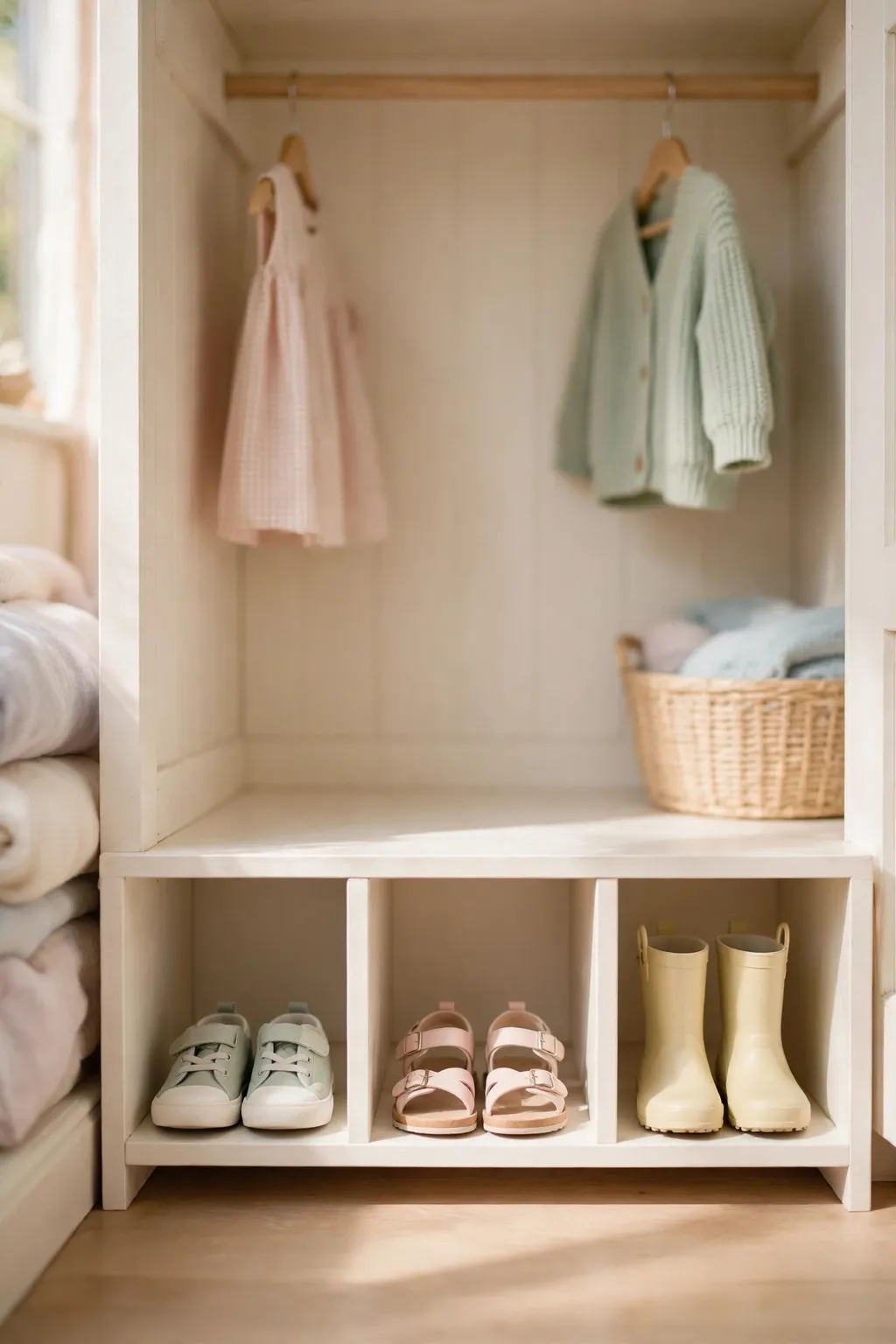
A low cubby shelf at floor level gives every pair of shoes a home kids can actually reach — sneakers, sandals, rain boots, and dress shoes each get their own square. A three-by-two cubby unit costs about $20, or stack two small wooden crates on their sides for under $10. Put the everyday shoes at the bottom where little hands reach them, and the out-of-season pairs up high. Add a small picture label to each cubby for the pre-readers, and the shoes stop living in a pile by the door.
Drawer Dividers for Tiny Clothes
Kids clothes are small, which means they vanish into the corners of deep drawers — fabric drawer dividers fix that for a few dollars a set. One shallow drawer becomes neat squares for socks, underwear, t-shirts, and leggings, and your child can see everything at a glance instead of digging. Small cardboard boxes cut to size work just as well and cost nothing at all. Roll the clothes instead of folding them so each little square shows its colors. Keep the dividers in the lowest drawer so your child can reach them without climbing.

Hanging Shelf Organizer for Folded Clothes
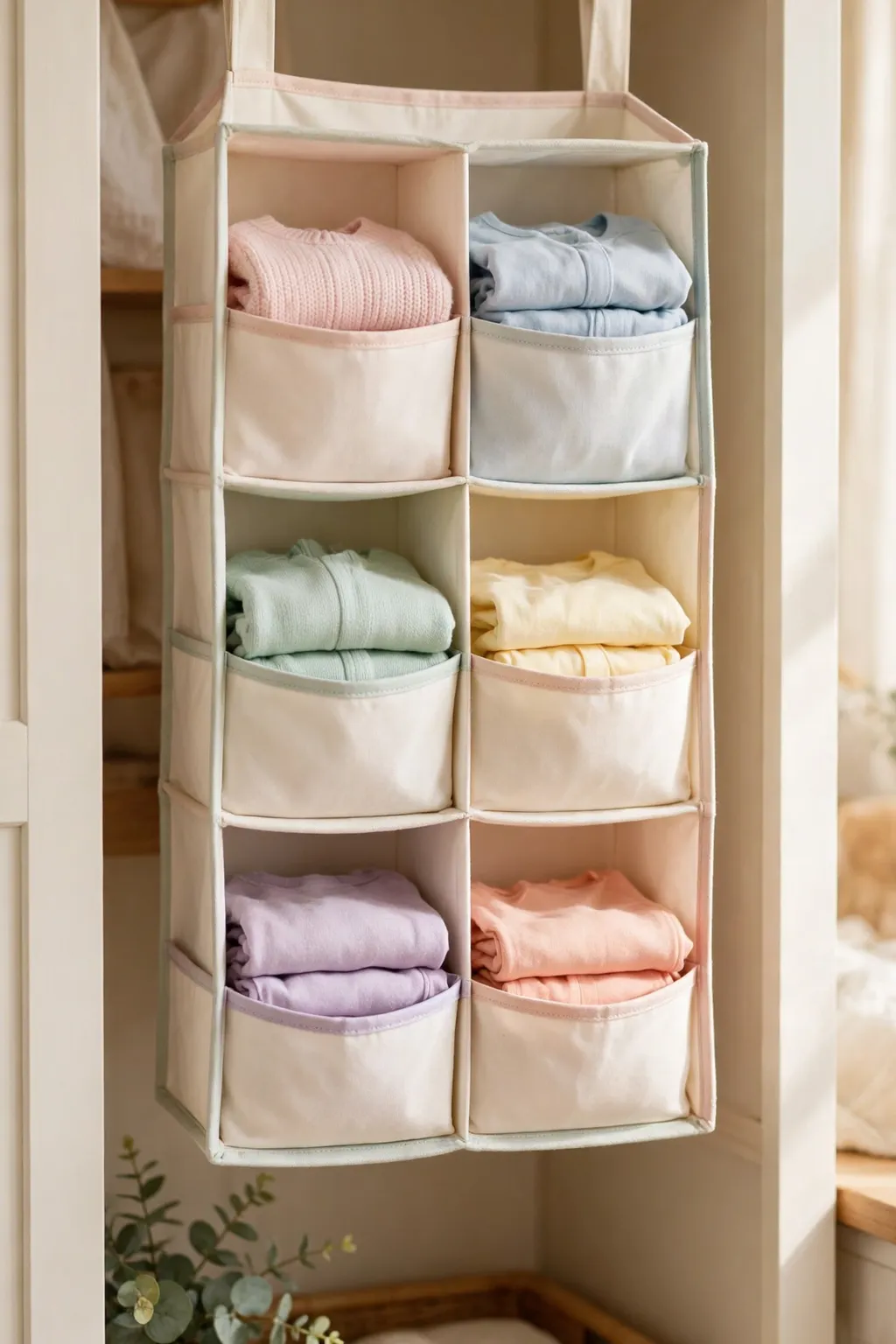
A six-shelf fabric organizer hangs from the closet rod and turns empty hanging space into a whole dresser — folded tees, pants, and pajamas each get their own shelf, right where your child can reach them. It costs about $12, folds flat when you do not need it, and it is the fastest way to add storage to a closet with no drawers at all. Sort by type on the lower shelves and by season on the upper ones. This is the one buy I would pick first for a rental closet you cannot drill into.
Outgrown-Clothes Hand-Me-Down Bin
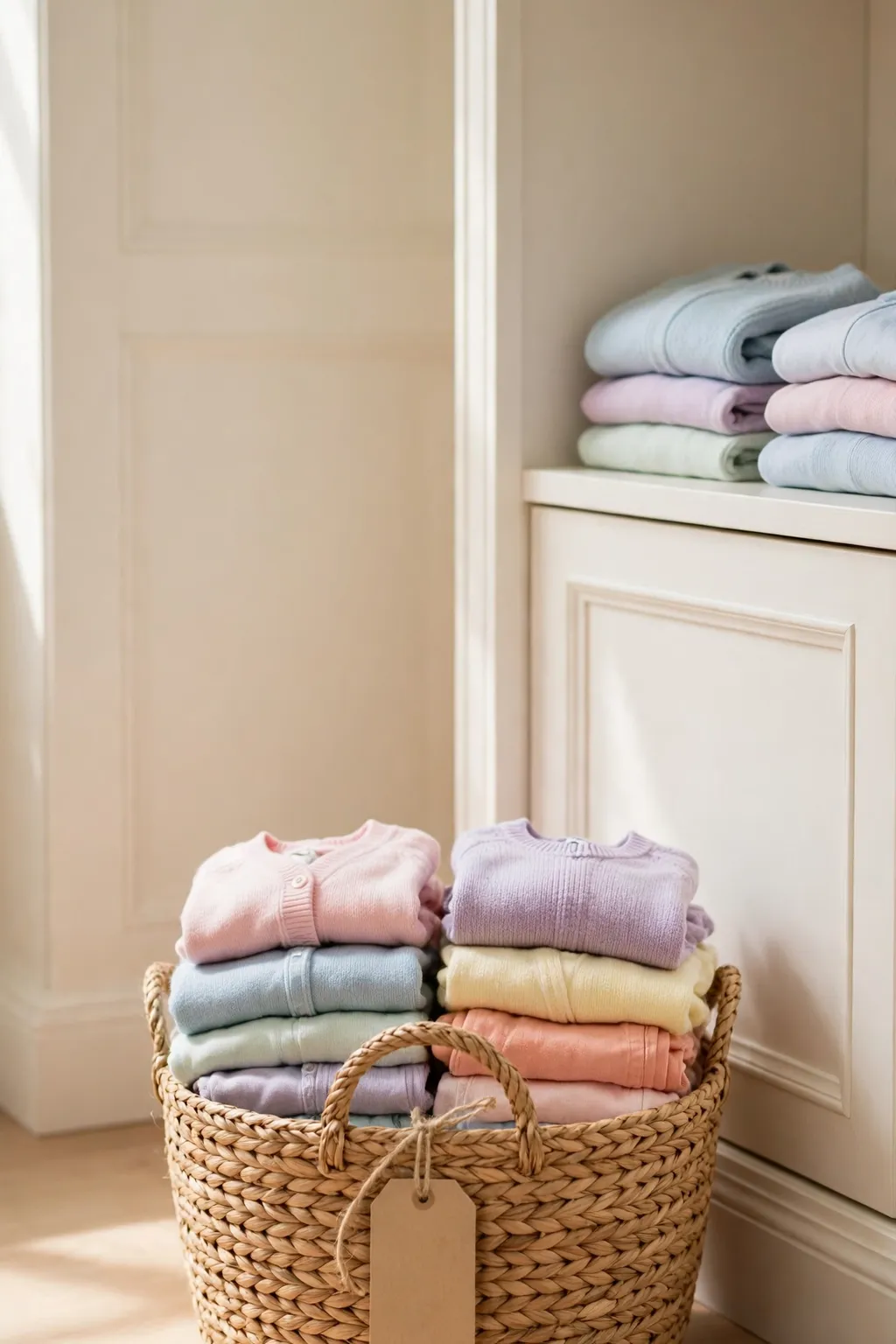
Every kids closet needs a “too small” bin, because children outgrow clothes mid-season and the too-small ones pile up in the drawers if there is nowhere else for them to go. A labeled basket on the closet floor collects the outgrown pieces as soon as you spot them, and when it is full you sort it once — hand-me-downs to a sibling, a bag for donation, a few keepsakes to save. A thrifted basket costs a few dollars, and it saves the whole closet from slowly filling up with clothes nobody can wear. My 13 cozy nursery ideas on a budget uses the same hand-me-down trick for the fastest-growing clothes of all.
Low Hook Rail for Dress-Up and Jackets
A low wooden hook rail at child height holds jackets, dress-up costumes, and tomorrow’s backpack, so the closet floor stops being the coat rack. Five pegs cost about $8 and a strip of wood, and your child can hang their own coat up after school instead of dropping it on the floor. Dress-up clothes live on the same rail, ready for playtime without a grown-up reaching into the closet. Mount the rail just above your child’s shoulder height so the hooks are easy to reach but the coats still hang clear of the floor. My 13 cozy playroom ideas on a budget has more dress-up storage that works the same way.

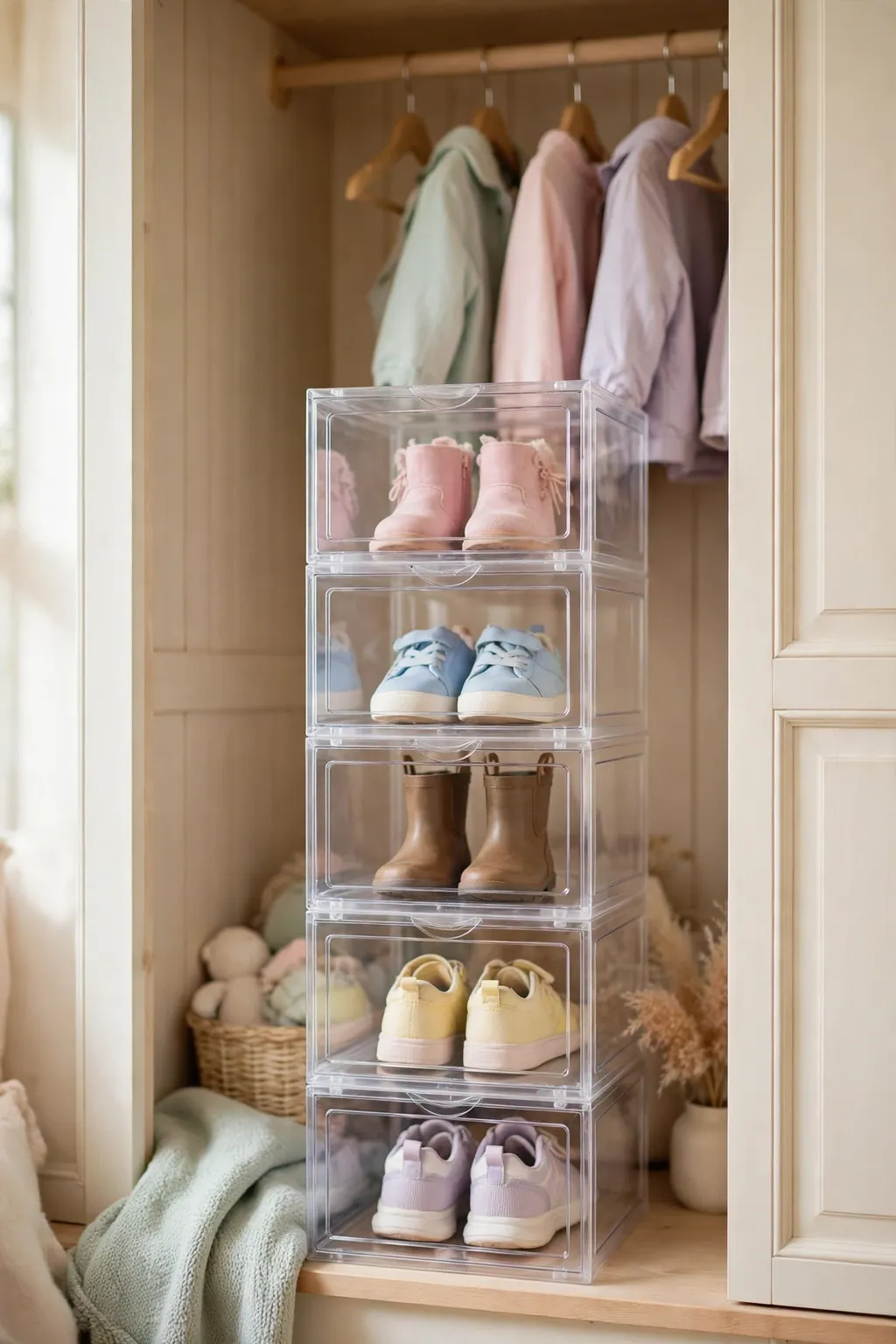
Clear Boxes for Special Shoes
Rain boots, dress shoes, and cleats are the shoes that get lost most, because they are only worn once a week and they sink to the bottom of the shoe pile. Clear stackable shoe boxes keep them visible and paired up, and a child can spot the boots they need without emptying the whole shelf. A set of small clear boxes costs about $10, and they stack neatly on the closet floor or the top of the cubby row. Label the end with a little picture if your child cannot read yet, and keep the everyday sneakers out of the boxes so they stay grab-and-go.
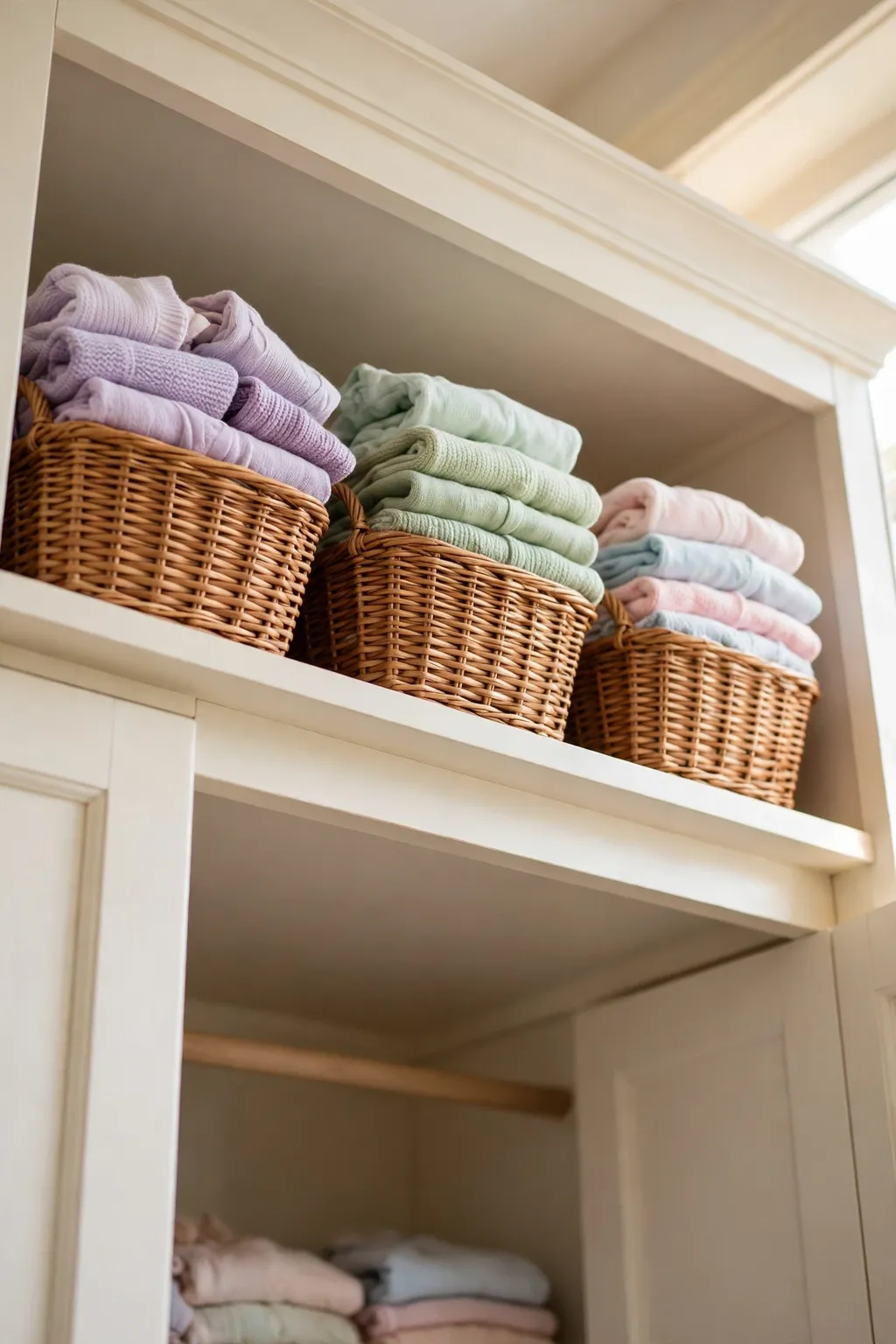
Seasonal Swap Baskets on the Top Shelf
The top shelf of a kids closet is the one place little hands never reach, which makes it the perfect spot for off-season clothes — winter coats in July, swimsuits in January. A couple of woven baskets up high hold the next season’s clothes, and twice a year you swap the baskets down and the current season up. Thrifted baskets cost a few dollars each, and a picture label on the front tells you at a glance which season is inside. Do the swap together on the first weekend of the season, and it doubles as the outgrown-clothes sort. My under-bed storage ideas on a budget has more seasonal-swap storage for the rest of the room.
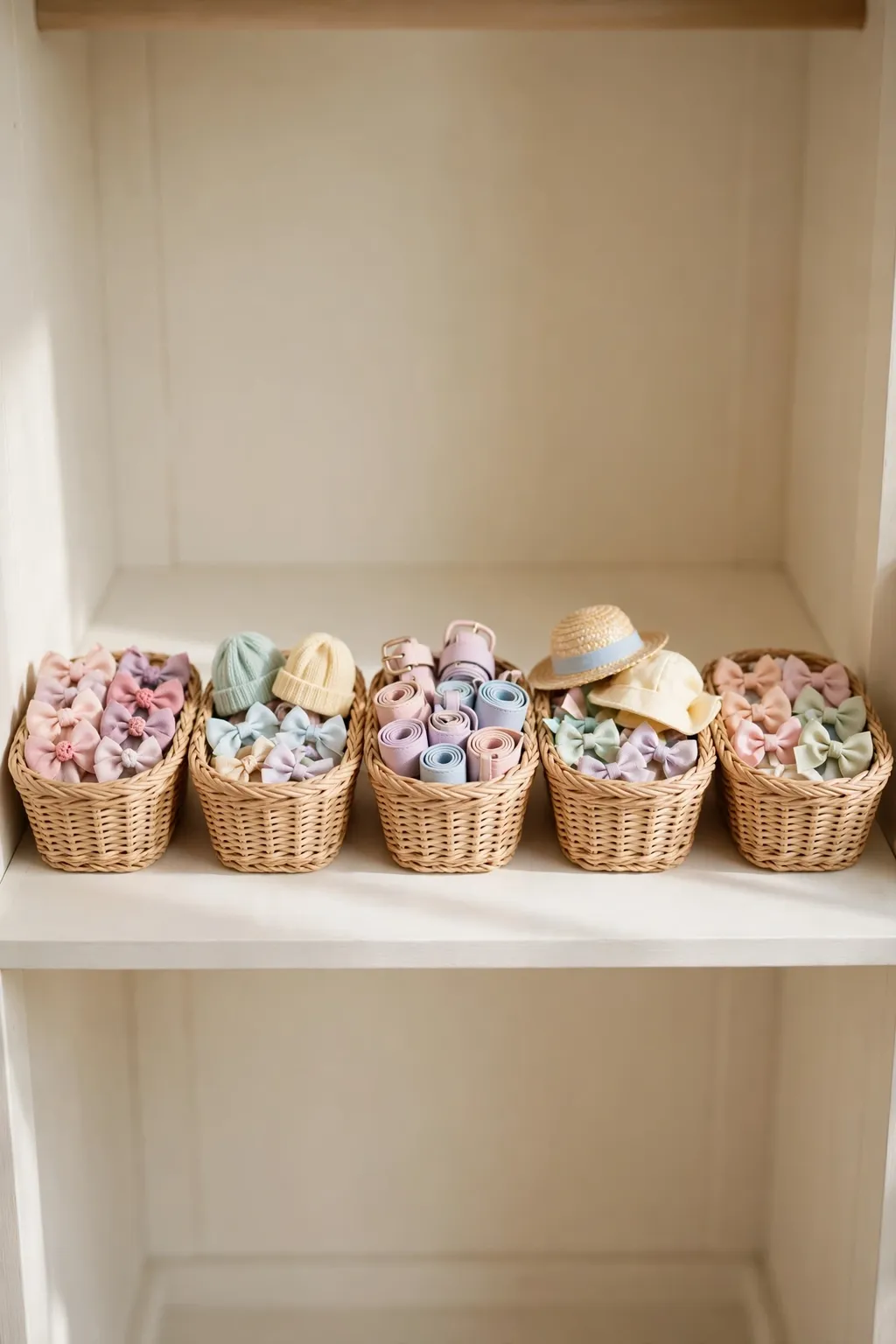
Small Baskets for Accessories
Hair bows, hats, belts, and sunglasses are tiny, which is exactly why they end up scattered across every surface in the house. A row of small baskets on one closet shelf — one for bows, one for hats, one for belts — gives every little thing a home your child can find and reach. Small baskets cost a dollar or two each, and a thrifted mug or a jam jar holds the bows just as well. Keep the basket row at your child’s eye level so putting accessories away is as easy as taking them out. My 13 cozy nursery ideas on a budget uses the same tiny-basket trick for the smallest accessories of all.
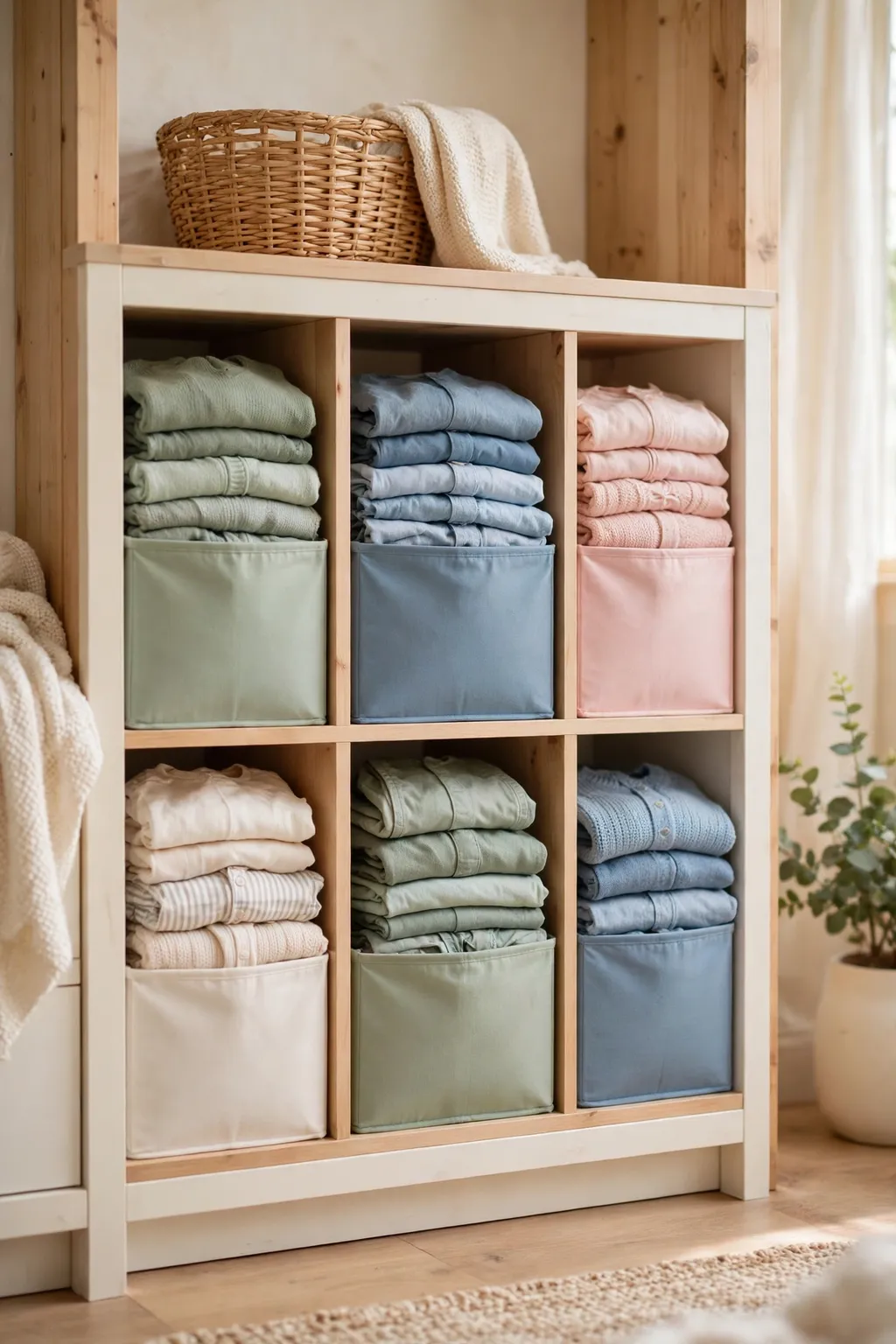
Colorful Fabric Storage Cubes
Bright fabric cubes in a cubby unit are the storage kids actually like using, because they pull out like drawers and the colors make cleanup feel like a game. One cube for pajamas, one for play clothes, one for school clothes, and the closet suddenly has a dresser that fits a rental and a budget. A set of four cubes costs about $15, and they slide into any standard cubby shelf. Let your child pick the cube colors so the system feels like theirs, and keep the heaviest cube on the bottom so the unit never tips. My toy storage ideas for small living rooms uses the same cube system for the toys that escape the closet.
Over-the-Door Pocket Organizer
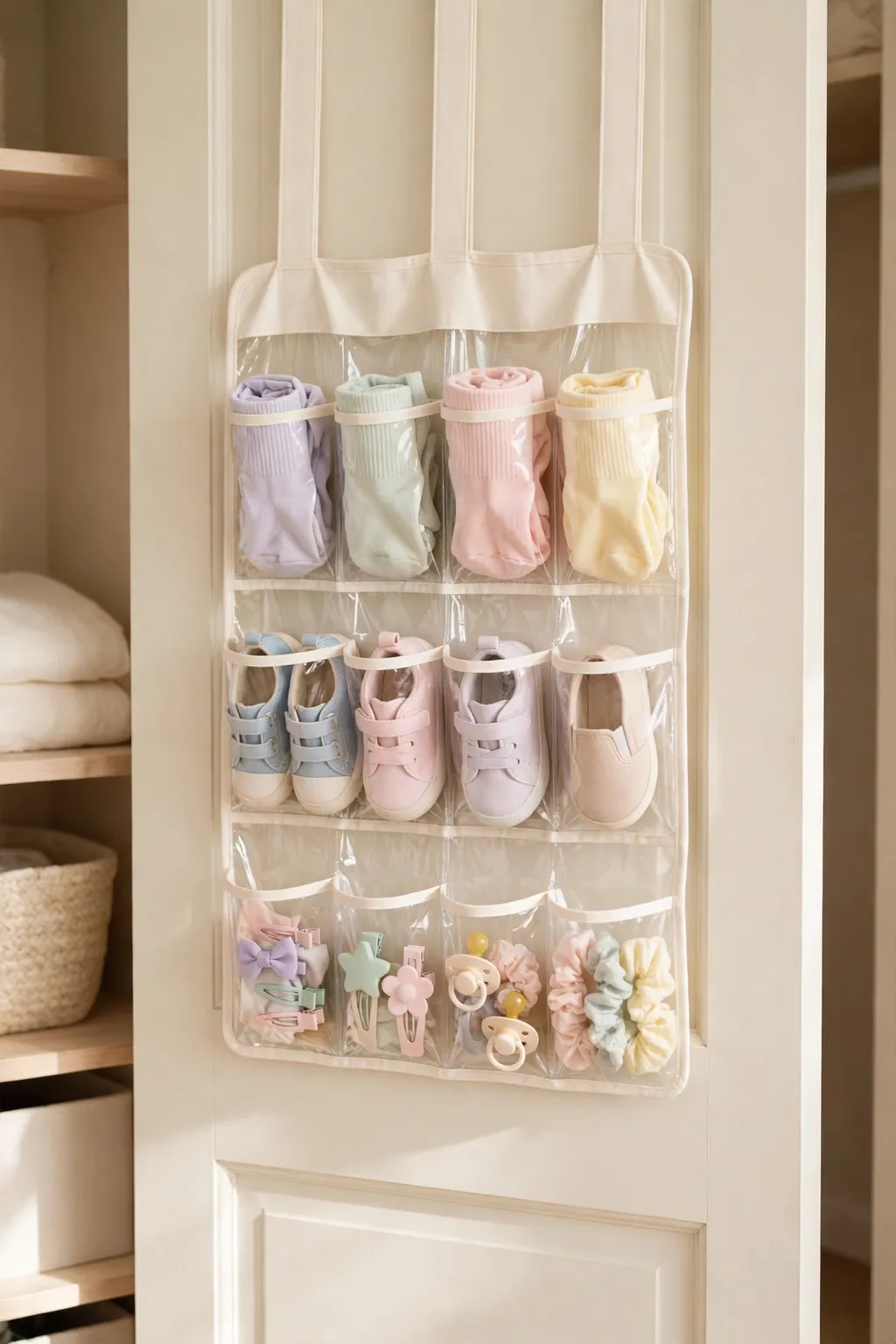
The back of the closet door is free storage, and a clear over-the-door pocket organizer turns it into a whole supply wall for socks, shoes, and small items — no drilling, no shelf space used at all. Socks and underwear go in the top pockets, shoes in the bottom ones, and everything stays visible through the clear plastic so your child can find it alone. A pocket organizer costs about $10, hangs in seconds, and it is the best fix for a closet with no drawer space. Keep the pockets your child uses most at their own eye level and the rest up high. My small closet organization ideas on a budget has more door-and-wall tricks for the tiniest closets.
Slim Kid-Size Hangers That Don’t Slip
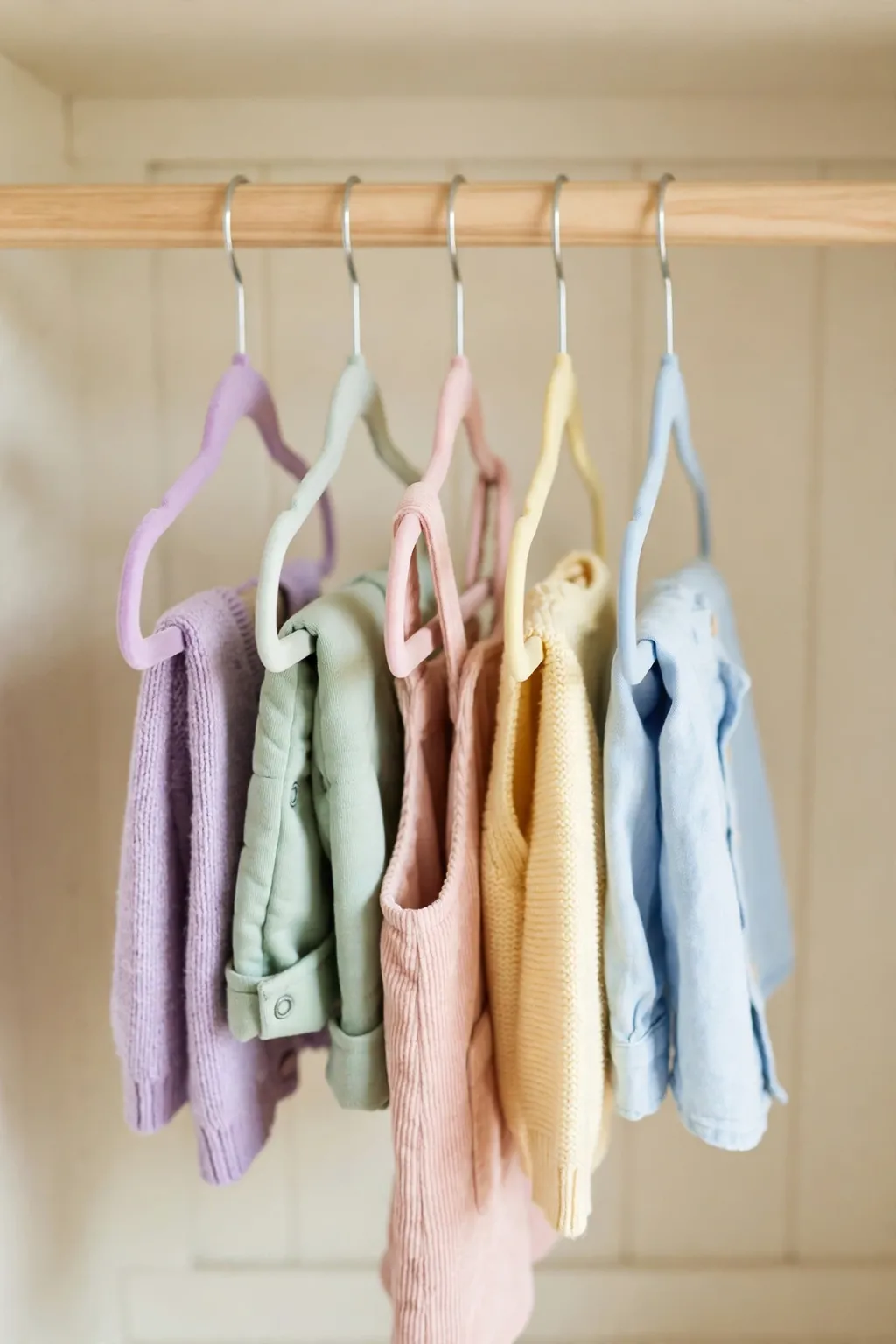
Adult hangers are too wide for kids clothes, so little shirts slide off and end up in a wrinkled pile on the closet floor. Slim velvet kid-size hangers hold the clothes in place, take up half the rod space of plastic ones, and cost about $10 for a pack of thirty. Swap the whole rod over in one go and the closet instantly looks tidier — and stays that way, because nothing slides off anymore. Pick one soft color for the whole rod so the closet looks calm instead of chaotic. Keep a few spare hangers on the end of the rod for the laundry that comes back folded.
Outfit Choice Chart
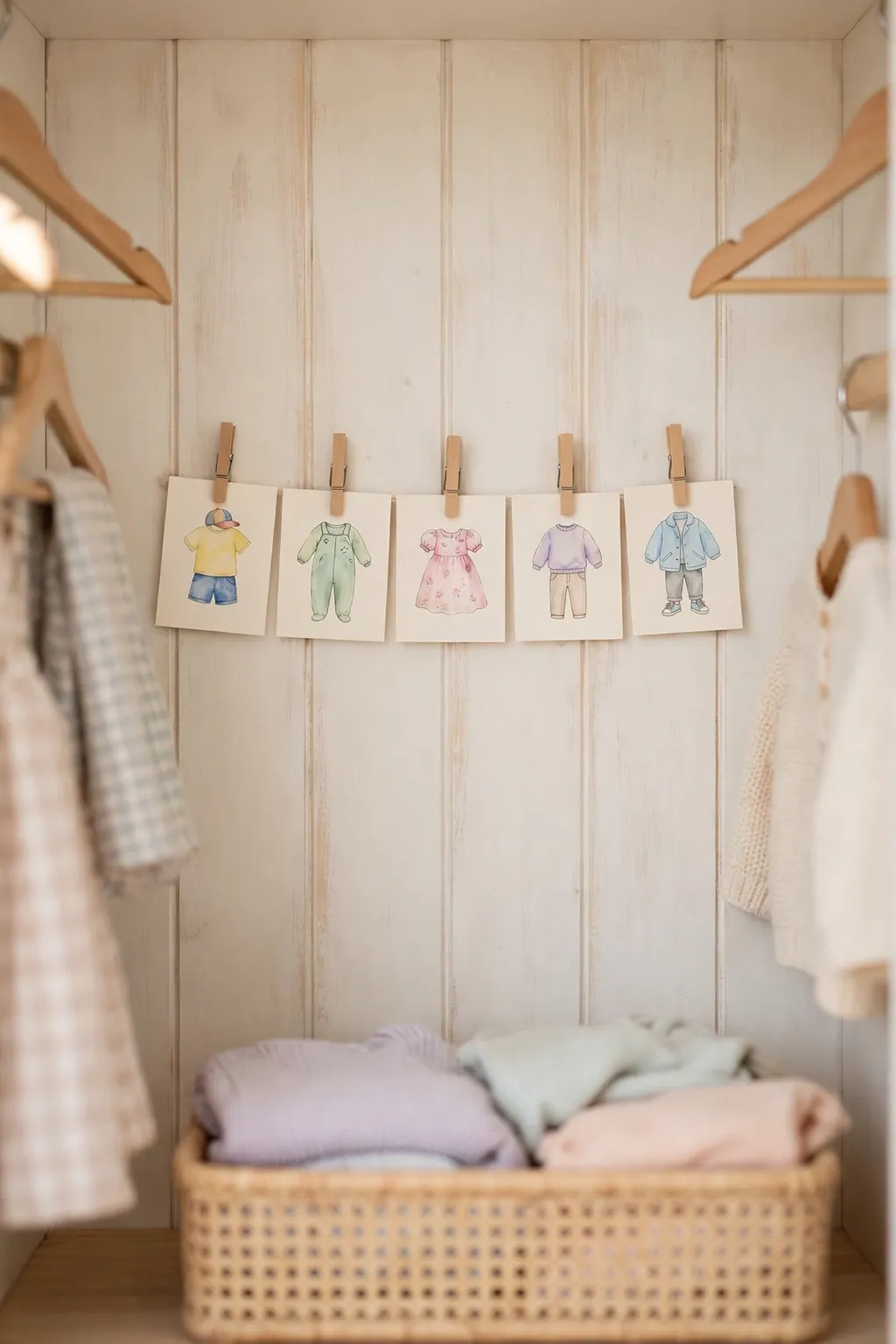
A small picture chart on the closet wall — five little squares with a drawing of each day’s outfit — lets even a pre-reader “read” the week’s plan and pick their own clothes without asking. A piece of poster board, five clothespins, and five tiny outfit drawings cost almost nothing, and the chart doubles as the morning routine your child can follow alone. Update it every Sunday night together, and let your child draw the outfits themselves so they own the plan. Hang the chart at your child’s eye level inside the closet door, where they see it first thing in the morning.
Tips for Kids Closet Organization on a Budget
- Start at the Dollar Tree — bins, baskets, hooks, and picture labels all cost a dollar, and one trip covers half this list. My 15 Dollar Tree organization hacks on a budget shows what else you can find there.
- Keep everything at kid height — a low rod, low bins, and low hooks mean your child can reach it, use it, and put it back without you, which is the whole point of organizing a kids closet.
- Use pictures, not words — picture labels on every bin and basket work for pre-readers and make cleanup a matching game instead of a chore.
- Sort by outgrown first — the “too small” bin keeps the closet from slowly filling with clothes nobody can wear, and a seasonal swap twice a year keeps the rest current.
- Give every single thing a home — my 13 cozy kids bedroom ideas on a budget follows the same rule, and it is the one habit that keeps a small closet tidy for good.
Frequently Asked Questions
How do I organize a kids closet so they can keep it tidy?
Put everything at kid height — a low rod, low bins, and low hooks — and label every bin with a picture instead of a word, so even a pre-reader can put things back in the right spot. Give every item one home, keep the everyday clothes on the lowest shelves, and let your child help choose the system so they want to use it.
What is the cheapest way to organize a kids closet?
Picture-label bins and a low hook rail cost a few dollars each at the dollar store, and a tension rod plus thrifted baskets cover the rest for under $20. Cardboard boxes cut to size work as drawer dividers for free, and a poster-board outfit chart costs almost nothing.
How do I organize a small kids closet with no space?
Use the walls and the door — a hanging shelf organizer on the rod, an over-the-door pocket organizer, and seasonal baskets on the top shelf add storage without taking a single inch of floor space. For a full tiny-closet plan, pair it with my small closet organization ideas on a budget.
How often should I clean out a kids closet?
Do a quick outgrown-clothes sort every season, when you swap the seasonal baskets — about four times a year. Toss anything too small into the hand-me-down bin as soon as you spot it, and check the shoe cubbies at the same time, since kids outgrow shoes even faster than shirts.
WRAPPING UP
The Cozy Takeaway
A kids closet does not need a renovation — or a big budget. Start with a low rod your child can actually reach, add picture-label bins and a shoe cubby row at floor level, and let the rest of the closet follow. The tidiest kids closets are the ones built for the kid who uses them, and the best part is watching your child pick their own outfit — and put it away — all by themselves.