
15 Kitchen Cabinet Organization Ideas on a Budget
Hi, I’m Emma! There is nothing I love more than a kitchen where cooking feels easy — and for me, that starts with the cabinets. No more digging past the pasta to find the baking tray, no more avalanche of lids every time you open the door. A tidy cabinet is one of the quickest, cheapest kitchen wins there is. Most of these ideas cost under $10, and the whole collection can be sorted for under $60. These are the 15 kitchen cabinet organization ideas on a budget I love most, all simple, all cheap, and all actually doable in an afternoon.
A well-organized kitchen cabinet is one where every shelf has a single job, the things you reach for daily sit at eye level, and nothing is stacked so deep you forget it exists. Start by emptying one cabinet completely, toss anything chipped, broken, or never used, then give what is left a home that fits how you cook: a shelf riser for plates, a turntable for the deep corner, or clear jars for the dry goods. Add labels so everyone in the house can keep the system going, and keep one shelf a little bit empty on purpose. Most of the ideas below cost under $10, and the whole project comes together for under $60.
Clear Everything Out First
Every good cabinet makeover starts with an empty cabinet. Pull everything out onto the counter, wipe the shelves down, and sort what is left into three piles: keep, donate, and toss. Most kitchens hold a second potato peeler nobody remembers buying, three chipped mugs, and a lid with no pot. The reset costs nothing, it takes twenty minutes, and it is the step that makes every idea below actually work — you cannot organize what you have not seen.
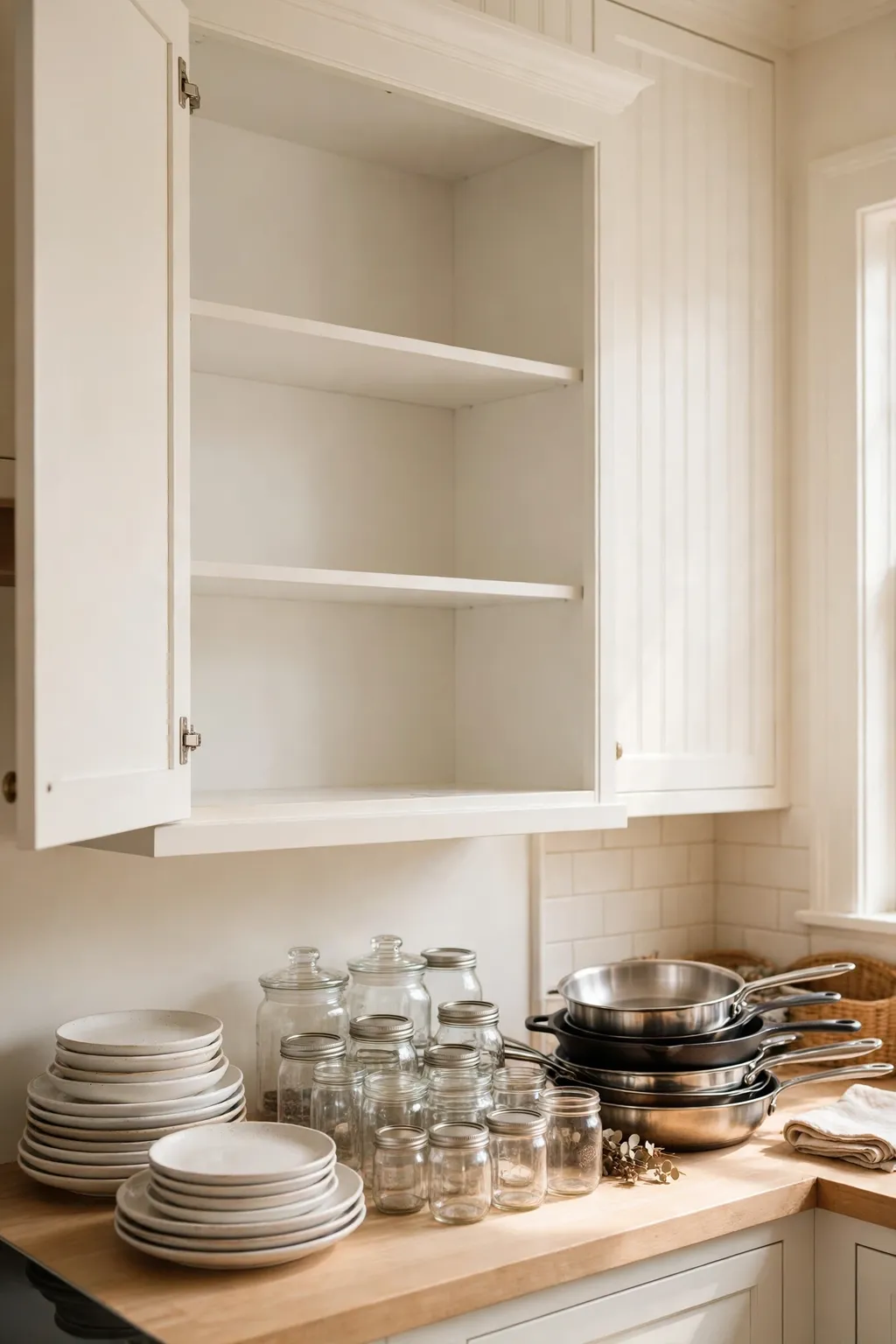
Adjustable Shelf Risers That Double the Space
A shelf riser is the single best first buy for a messy cabinet — it adds a whole extra layer inside the shelf you already have, so plates sit on top and bowls slide underneath. A riser costs $8 to $12, it needs no tools, and it turns one crowded shelf into two calm ones. Measure the cabinet height first, slide the riser in, and the shelf that never closed properly suddenly has room to breathe.
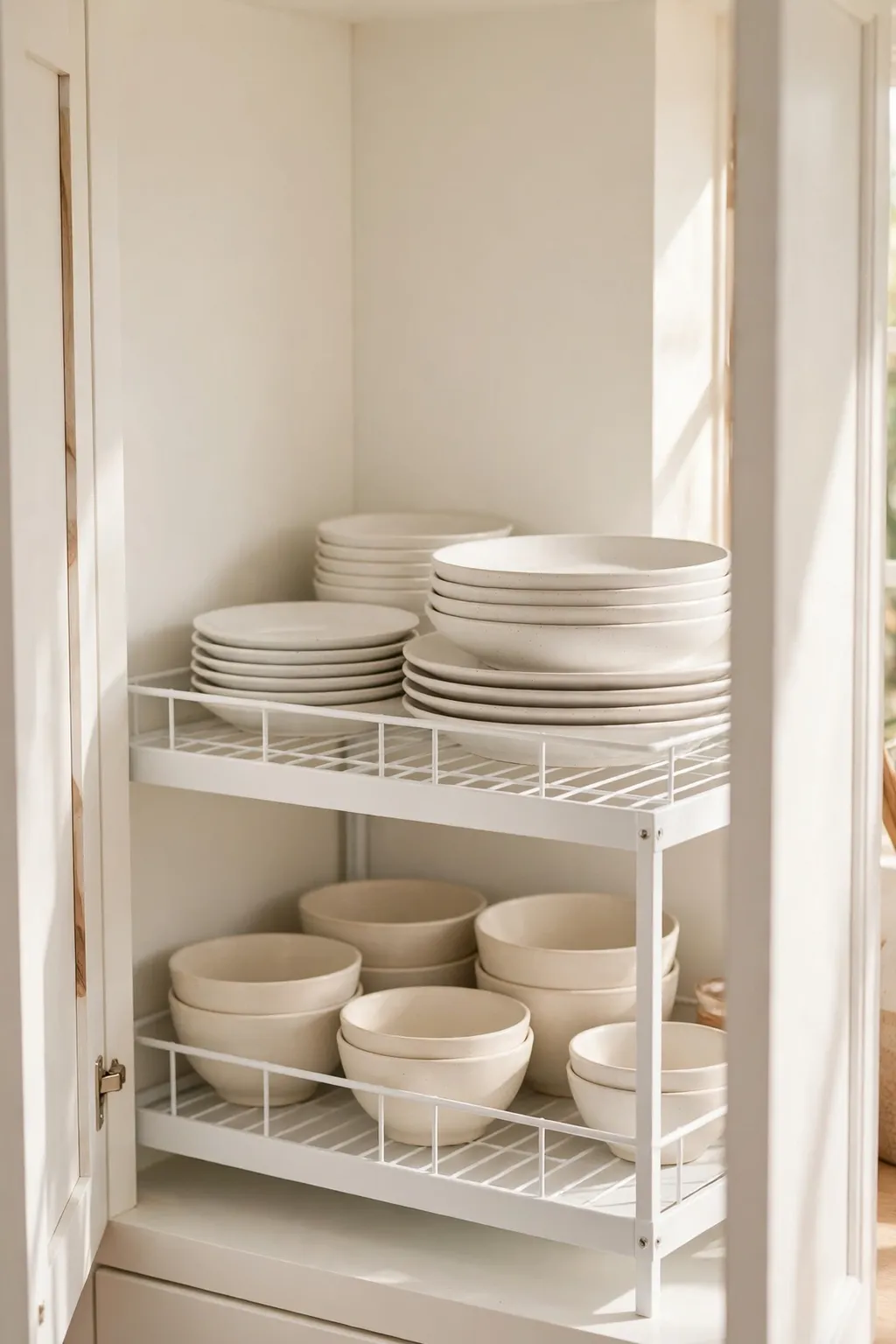
A Lazy Susan Turntable for Deep Corner Cabinets
Deep corner cabinets are where sauces go to be forgotten — unless a turntable lives there. A lazy Susan spins everything within reach, so the soy sauce stops hiding behind the olive oil. A wooden or bamboo turntable costs $10 to $15, it drops straight onto the shelf, and it is the cheapest fix for the most annoying cabinet in the kitchen. If your drawers need the same treatment, see my kitchen drawer organization ideas.

Stackable Bins for Canned Goods
Cans are the worst cabinet offenders — heavy, round, and always rolling to the back. Stackable bins hold them in neat rows, one flavour per bin, so you can see at a glance whether you are out of tomatoes. A set of two stackable bins costs $8 to $12, and they work in the pantry too. Stand the cans with their labels facing out, and the weekly shop stops including a fourth tin of chickpeas you already own.
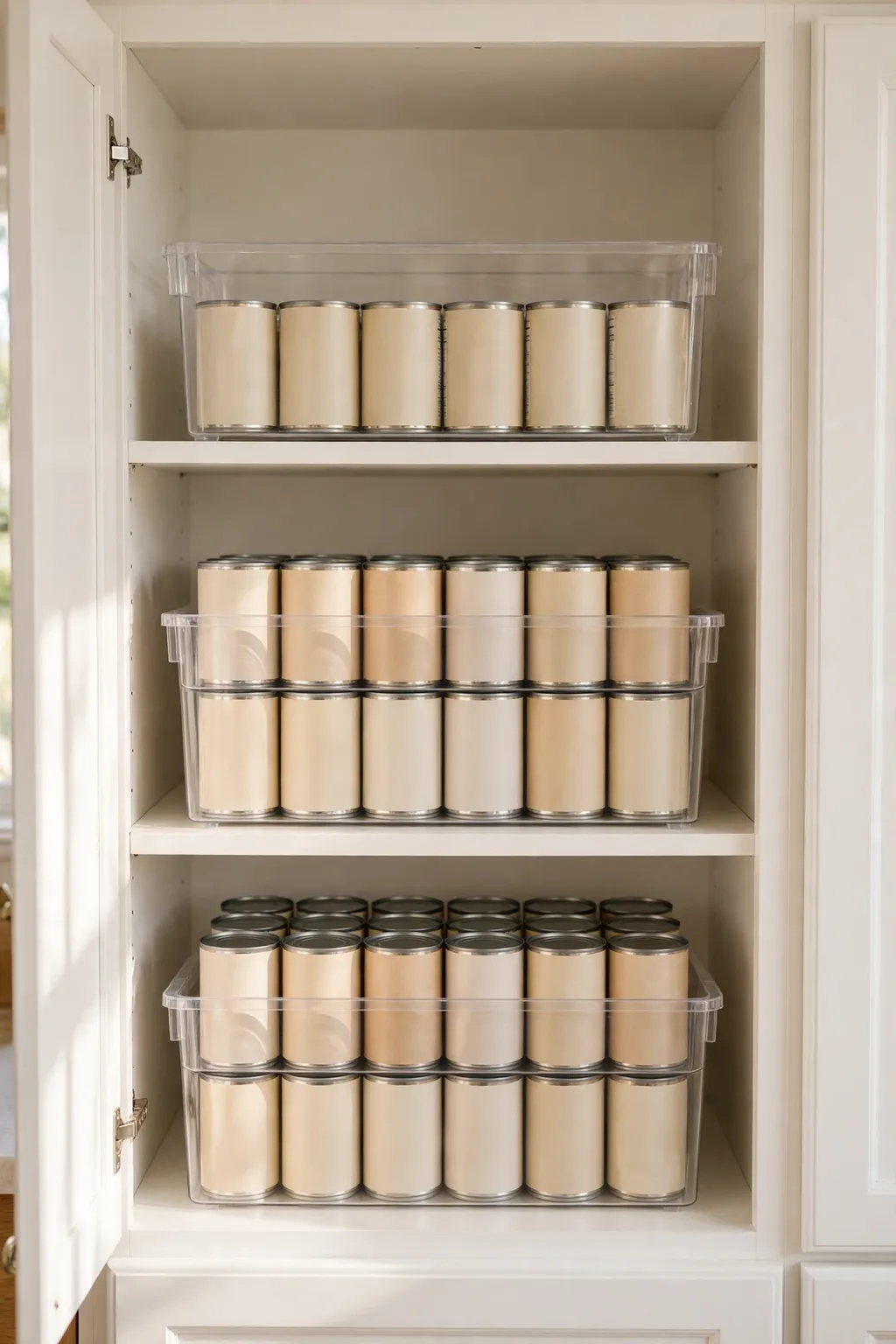
Clear Labeled Jars for Dry Goods
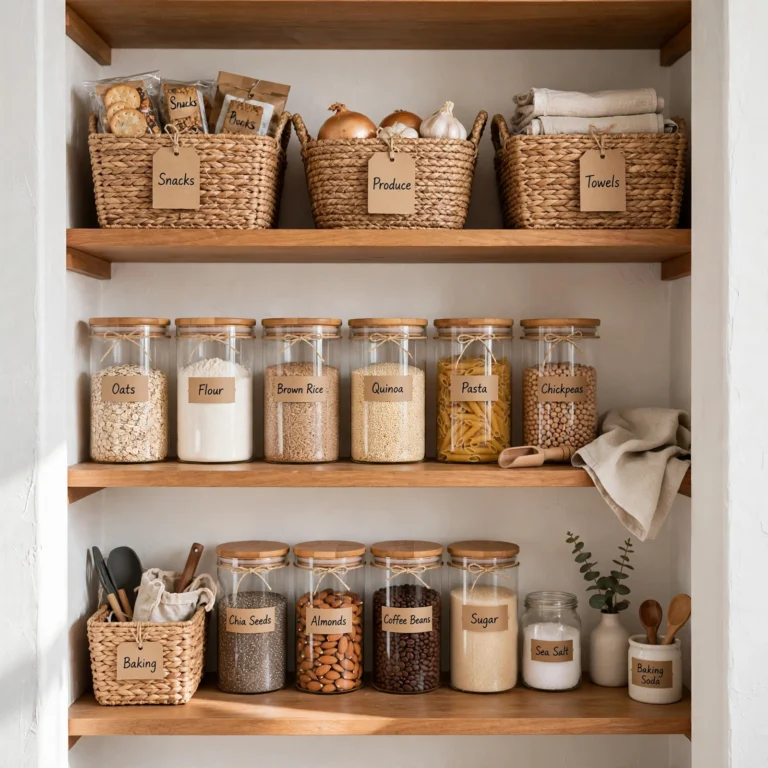
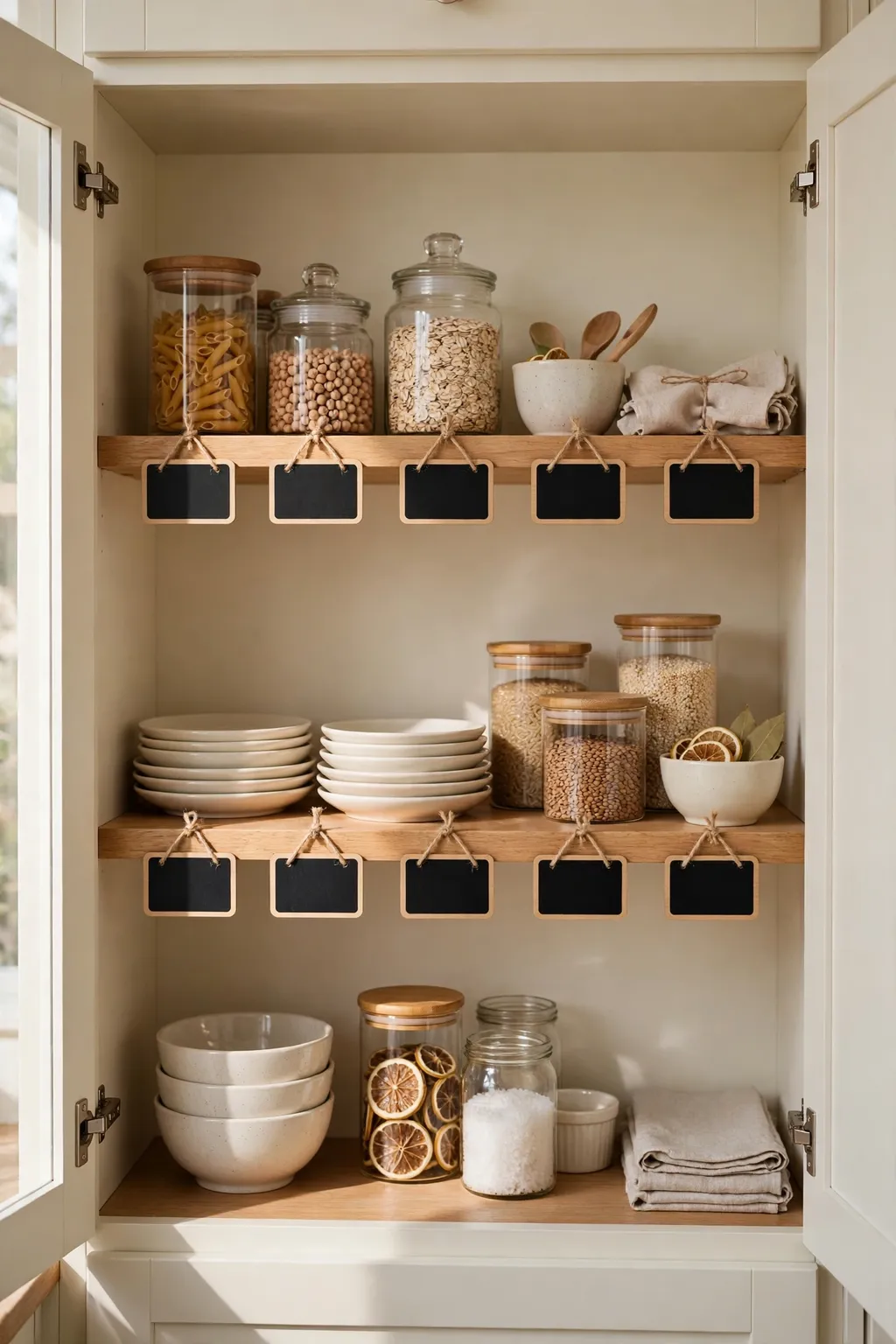
Half-empty bags of rice and pasta are how cabinets turn into clutter. Decant the dry goods into clear glass jars with a label on each one, and the shelf suddenly looks like a little shop — and you can see exactly what needs buying. A set of jars costs $12 to $18, and the same jars work beautifully in the pantry; see my pantry organization ideas for the full shelf-by-shelf version. Keep the jars at eye level, heaviest at the bottom.

Tension Rods as Lid and Tray Dividers
Baking trays and pot lids stacked flat are a clattering avalanche waiting to happen. Stand them upright instead: two cheap tension rods fitted across the cabinet make perfect dividers, holding each tray and lid in its own slot. A pair of rods costs $5 to $8, they need no screws, and the cabinet goes from a noisy pile to a quiet filing system. It is one of the cleverest five-dollar fixes in the whole kitchen.
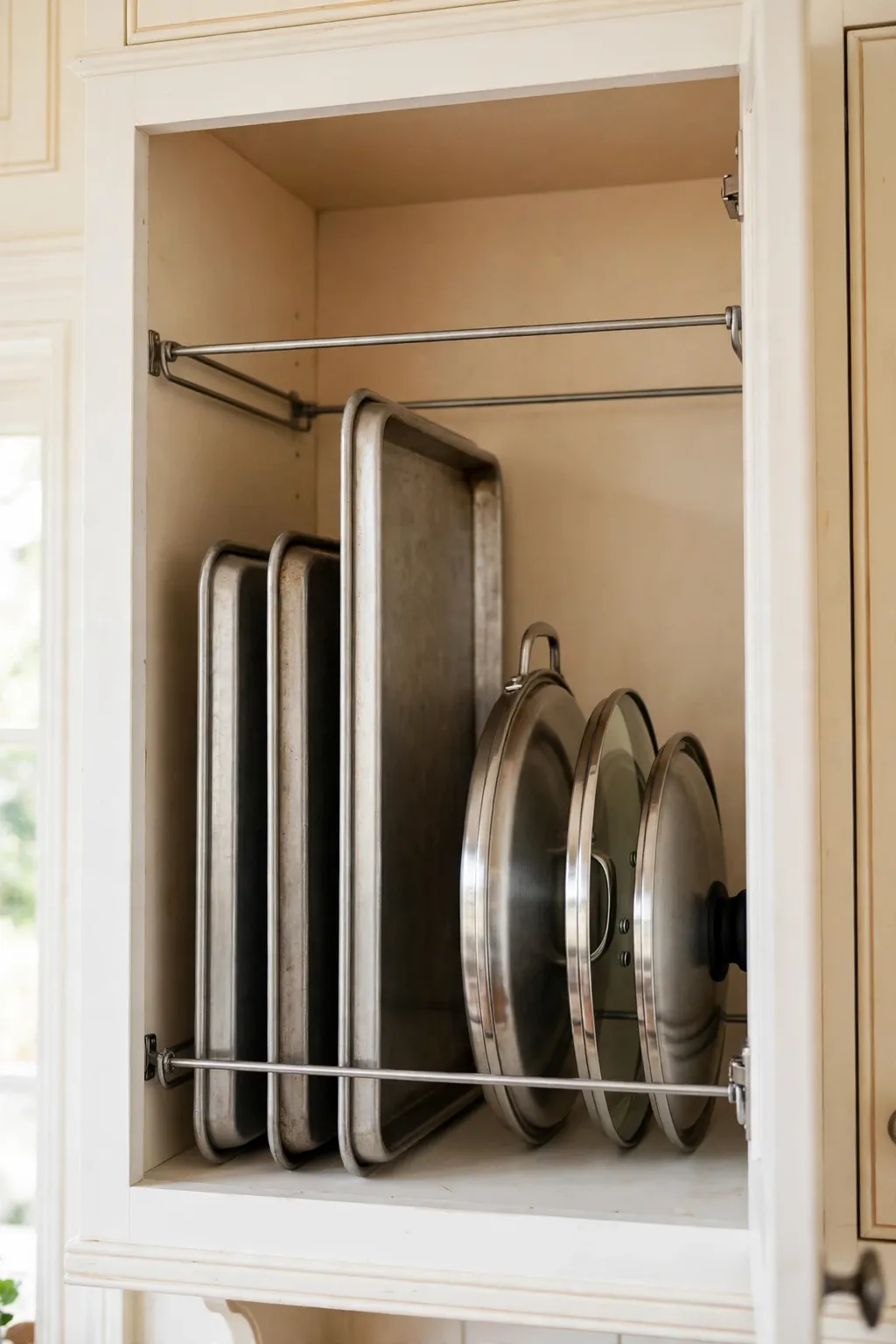
Over-the-Door Organizers for Lids and Cutting Boards
The inside of a cabinet door is free storage hiding in plain sight. A slim wire rack hung over the door holds pot lids and cutting boards upright, right where you reach for them, and it costs $8 to $12. No drilling, no damage, and it frees a whole shelf for the things that actually need one. Keep the heaviest boards low so the door still closes easily.

Pull-Out Baskets for Lower Cabinets
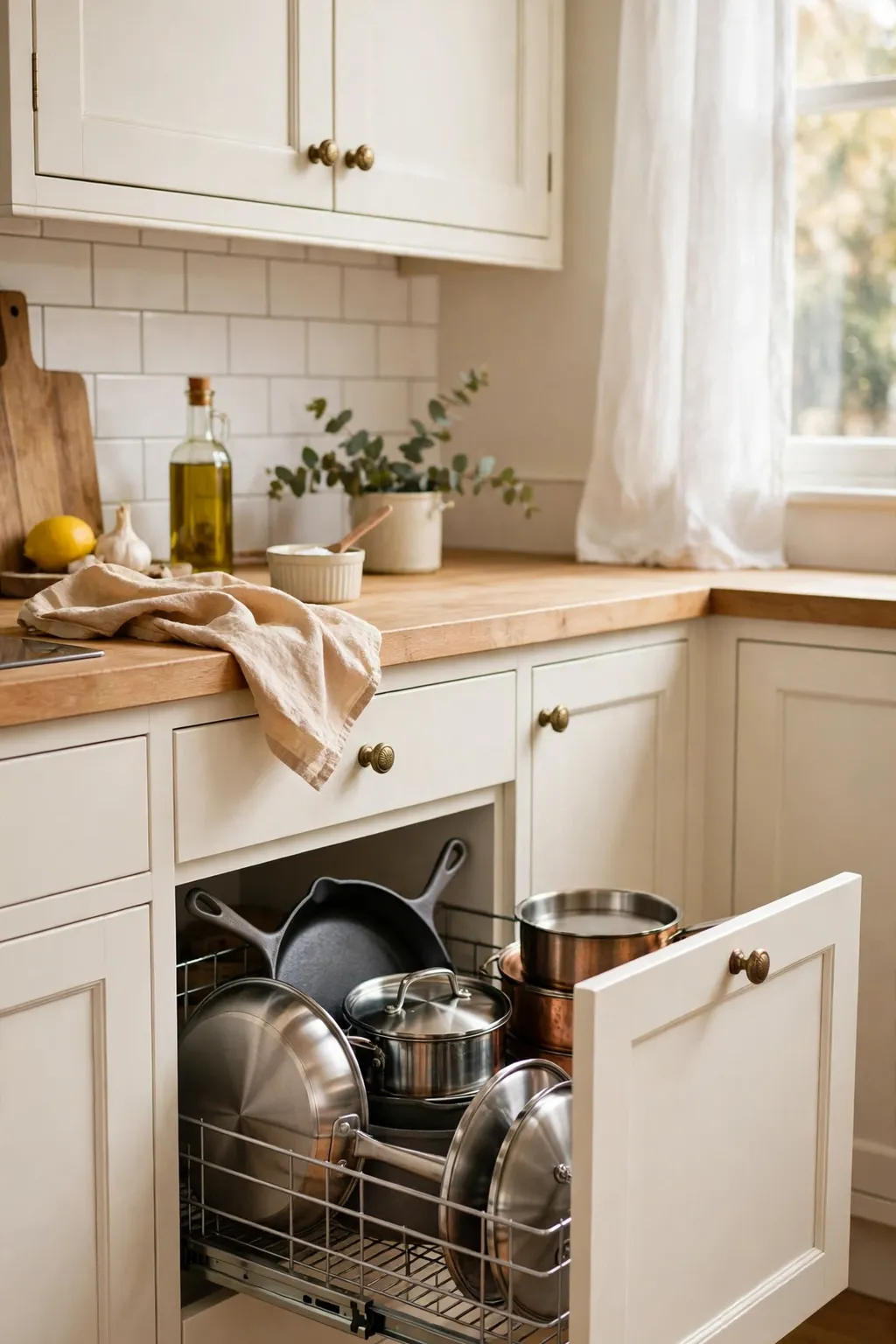
Lower cabinets are where pots go to hide — unless the shelf slides out to meet you. A pull-out wire basket turns a deep, dark cabinet into a drawer, so the heavy Dutch oven glides out instead of demanding a crawl. A basket costs $15 to $25, it screws into the cabinet base in minutes, and it saves your knees every single dinner. Group the pots by size and keep the lids beside them, not on top.
Small Bins for Snack Packets and Lunch Supplies
Snack packets and lunch supplies multiply fast, so give them one small bin each — granola bars in one, fruit pouches in another, sandwich bags in a third. A handful of small bins costs $3 to $5, and the morning lunch-packing rush stops being a dig through a bag of crinkly packets. Keep the bin at a height little hands can reach, and restock it once a week.

A Spice Rack on the Inside of the Cabinet Door
Spices belong near the stove, but they do not belong in a jumbled pile. A slim rack mounted on the inside of the cabinet door keeps every jar visible and within reach, and it costs $10 to $15. Label the lids, keep the everyday spices — salt, pepper, paprika — at the top, and the cabinet shelf stays free for the bigger things. For more spice storage that costs almost nothing, see my spice rack organization ideas.

Stacking Shelves for Mugs and Glasses
Mugs and glasses eat shelf space because they only use the bottom half of it. A stacking shelf adds a second layer, so the everyday mugs sit below and the pretty glasses live above — no more towers of cups that wobble when you pull one out. A stacking shelf costs $8 to $12, and it is the same trick that works in the bathroom and the bedroom. Keep the daily mugs at the front and the occasion glasses at the back.

Hooks Under the Shelf for Mugs
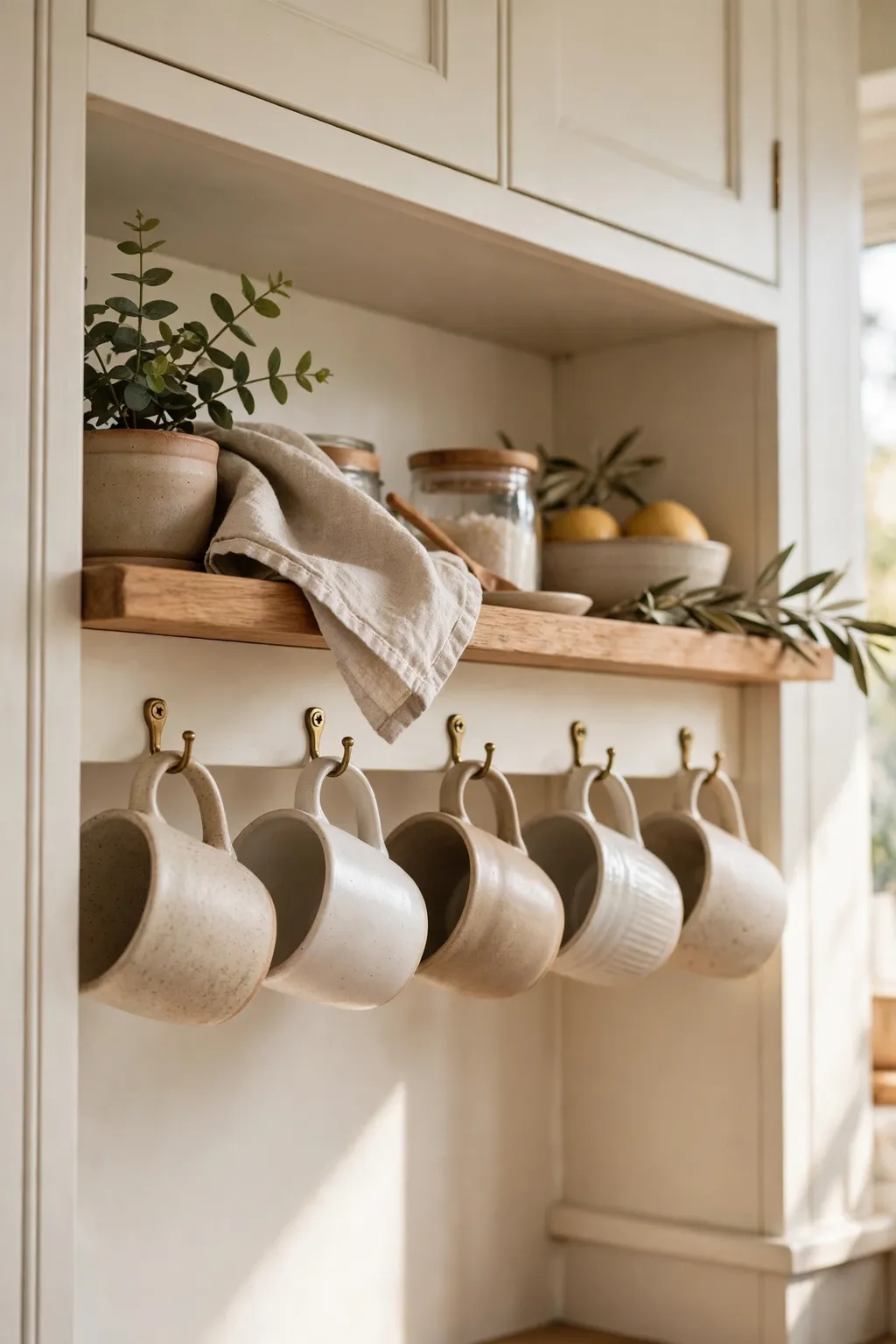
The underside of a shelf is another free bit of storage. A row of small cup hooks screwed under the shelf holds the mugs by their handles, freeing the shelf below for plates and bowls. A pack of hooks costs $3 to $5, they take five minutes to fit, and the mugs hang like a little display. Just leave a finger-width between mugs so they do not clink when the cabinet door closes.
Dollar-Store Bins for the Odds and Ends
Every cabinet has its odds and ends — the spare batteries, the twist ties, the little packets of sauce. Small dollar-store bins, about $1 each, give each tiny category its own home, and suddenly the junk shelf is a tidy grid. A handful of bins costs $3 to $5, and the same trick works all over the house; see my Dollar Tree organization hacks for the full dollar-store tour. Pick bins in two or three sizes and line them up like a little grid.

Label Every Shelf So the System Sticks
A tidy cabinet only stays tidy if everyone in the house knows where things live. Small labels on the shelf edges — chalkboard labels, a label maker, or neat handwriting on kraft tags — tell the whole family at a glance. A pack of labels costs about $5, and it is the difference between a system that lasts a week and one that lasts all year. Label the inside of the door too, if you want the shelves to stay clean-looking.
A Five-Minute Weekly Cabinet Reset
The last idea costs nothing at all: a five-minute reset, once a week. Open each cabinet, pull anything that wandered to the front back to its home, wipe the shelf, and toss the one thing that expired. Five minutes a week is what keeps all fourteen ideas above working — without it, even the prettiest system slides back to chaos in a month. Set a timer, put on a favourite song, and the kitchen stays calm all week long.

A Few Tips Before You Organize
- Start by emptying one cabinet completely — then toss anything chipped, broken, or never used. Most kitchens hold a second potato peeler nobody remembers buying.
- Measure before you buy — cabinet width, depth, and height decide which riser or basket actually fits, not the prettiest photo.
- Put the everyday things at eye level and the rarely used things up high — the top shelf is for the holiday dishes, not the cereal.
- Label everything, even the obvious shelves — it is what keeps the system working when the whole family uses the kitchen.
- If the rest of the kitchen needs the same treatment, see my 15 Kitchen Organization Ideas on a Budget for the whole room, shelf by shelf.
Frequently Asked Questions
What is the cheapest way to organize kitchen cabinets?
Start with the free reset — empty one cabinet, toss what is broken or never used — then add a tension rod or two for $5 to $8 and a handful of dollar-store bins at about $1 each. A shelf riser at $8 to $12 is the single best first buy after that. Most cabinets can be fully sorted for under $60, and the biggest win is simply giving every item its own home.
How do I organize deep kitchen cabinets?
Use a lazy Susan turntable for the deep corners — $10 to $15 and everything spins within reach — and pull-out baskets for the lower cabinets so nothing hides at the back. Keep the everyday things at the front and the rarely used things behind them. For the shelves around the cabinets, see my cozy winter kitchen decor ideas.
How do I keep pots and lids from clattering?
Stand lids upright with tension rods or an over-the-door rack, and store pots with a paper towel or a pan protector between them so they do not scratch. Pull-out baskets keep the heavy pots from sliding, and a shelf liner underneath stops the whole lot from shifting when the door closes.
What colour should I paint my kitchen cabinets?
White and warm cream stay the most popular because they make a small kitchen feel bigger and brighter, and they suit almost any hardware. If you want a little more character, soft sage or dusty blue both look lovely with wooden worktops. For the full shade-by-shade guide, see my best paint colors for white kitchen cabinets and trim.
WRAPPING UP
The Cozy Takeaway
A kitchen cabinet does not need a big budget — it needs every shelf to have a single job, the everyday things at eye level, and a label that keeps the system going. Pick one cabinet, start with the free reset or the shelf riser, and let the rest follow. Dinner is about to get a whole lot easier. Stay cozy, friend!