
15 Spice Rack Organization Ideas on a Budget
Hi, I’m Emma! There is nothing I love more than a kitchen where cooking feels easy — and for me, that starts with the spices. No more digging past the cumin to find the paprika, no more buying a third jar of something you already own. A tidy spice rack is one of the quickest, cheapest kitchen wins there is. Most of these ideas cost under $20, and the whole collection can be sorted for under $60. These are the 15 spice rack organization ideas on a budget I love most, all simple, all cheap, and all actually doable in an afternoon.
A well-organized spice rack is one where every jar is visible, reachable, and labeled — so you can find what you need in seconds and never buy a duplicate. Start by gathering every spice you own, toss anything stale or past its best, then pick a home that fits your kitchen: a tiered riser in the cabinet, a turntable for deep shelves, or a drawer insert if you have a spare drawer. Decant into matching jars, label them clearly, and keep the five spices you reach for daily closest to the stove. Most of the ideas below cost under $20, and the whole project comes together for under $60.
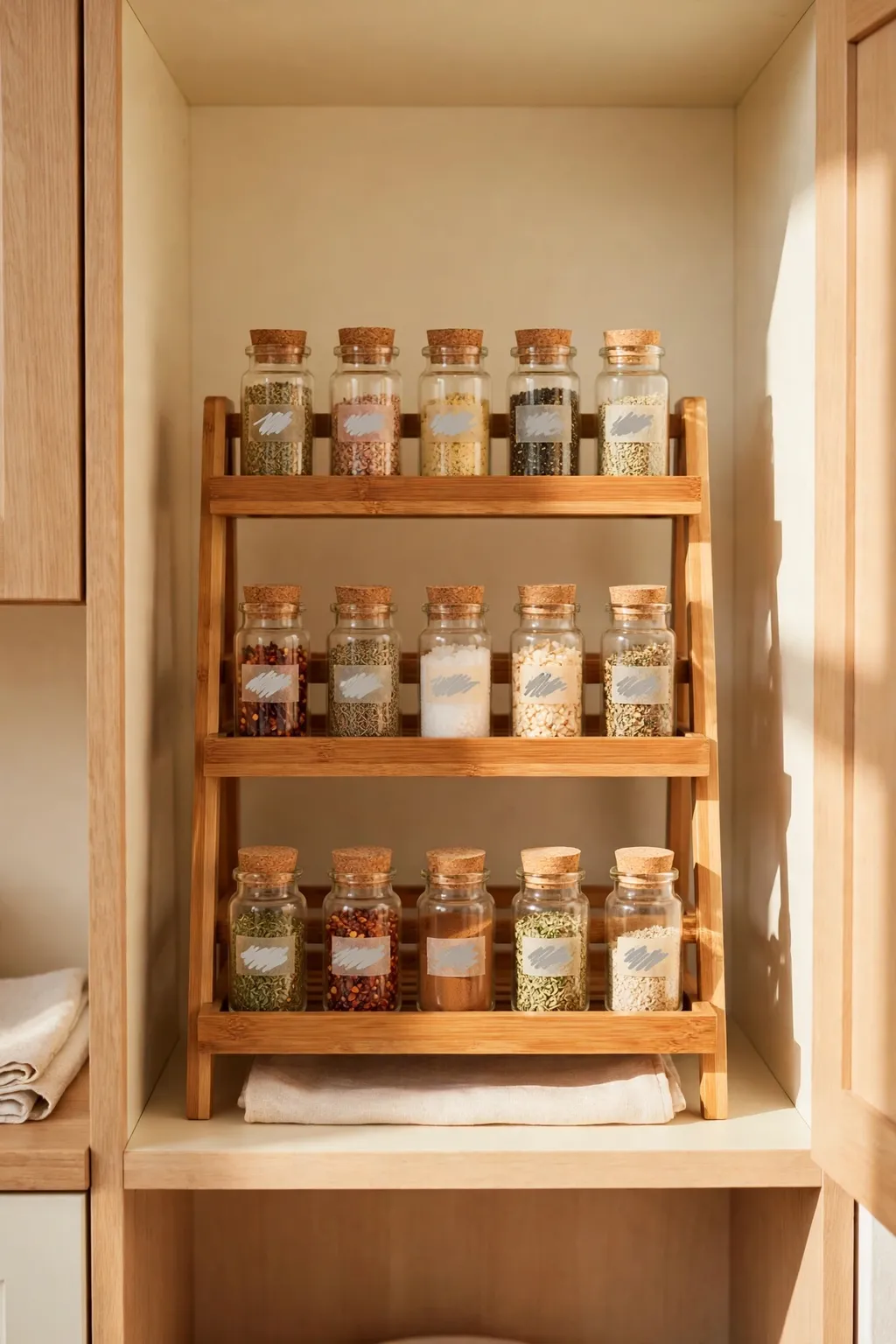
A Tiered Shelf Riser Inside the Cabinet
A tiered shelf riser is stadium seating for your spices — the back row sits higher, so every jar is visible at a glance and nothing hides behind anything else. A three-step bamboo or plastic riser costs $10 to $20 and fits most cabinets at least 10 inches deep. Put the tallest jars at the back, the everyday spices at the front, and the cabinet stops being a dark cave where spices go to be forgotten.
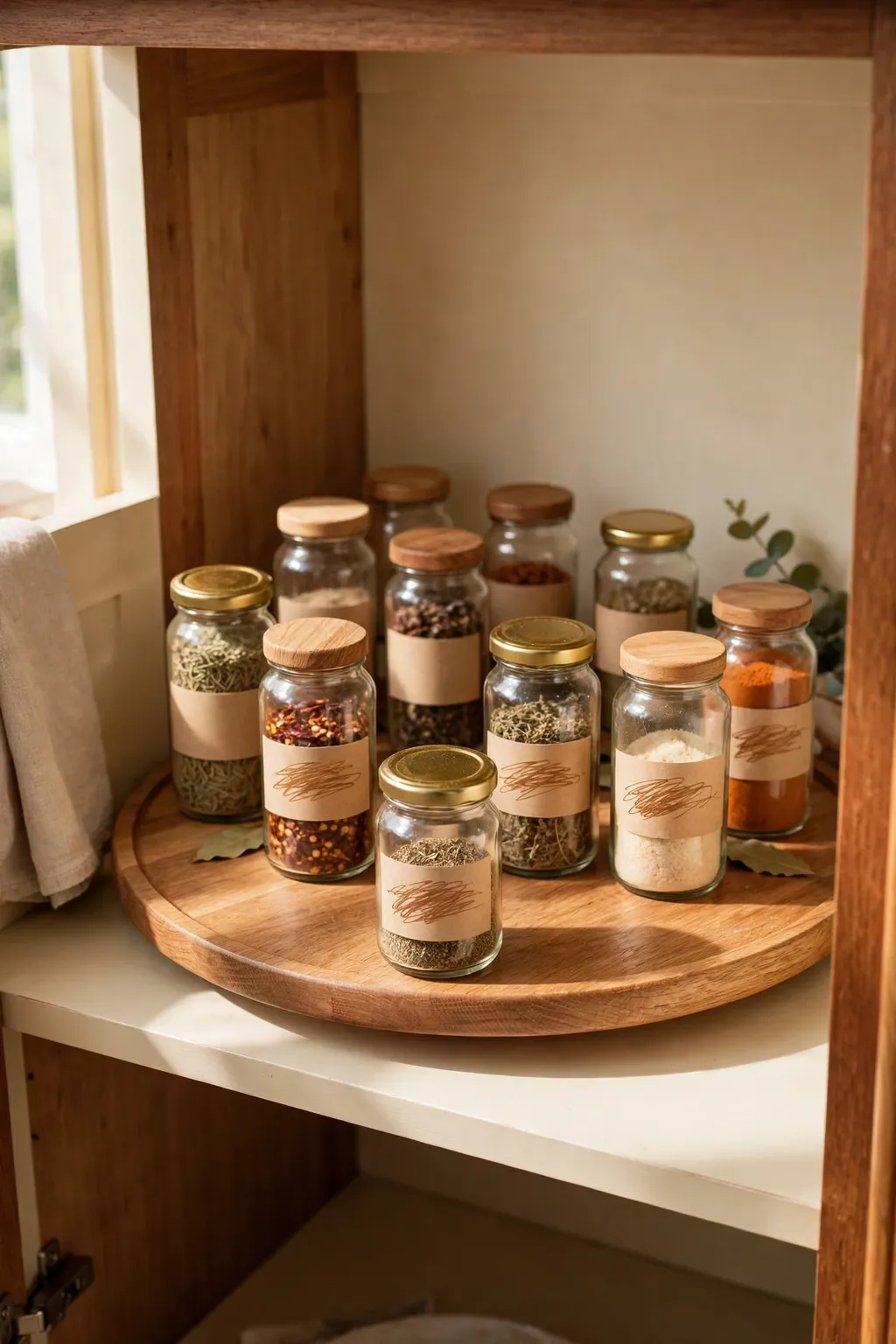
A Lazy Susan Turntable for Deep Cabinets
A lazy Susan turntable is perfect for deep corner cabinets where jars disappear into the back. One spin and the back becomes the front — no more pulling out ten jars to reach the oregano. A 10-inch turntable costs $8 to $15, holds about 12 standard jars, and works in a cabinet or on the counter. Pick one with a low rim so the jars stay put while it spins.
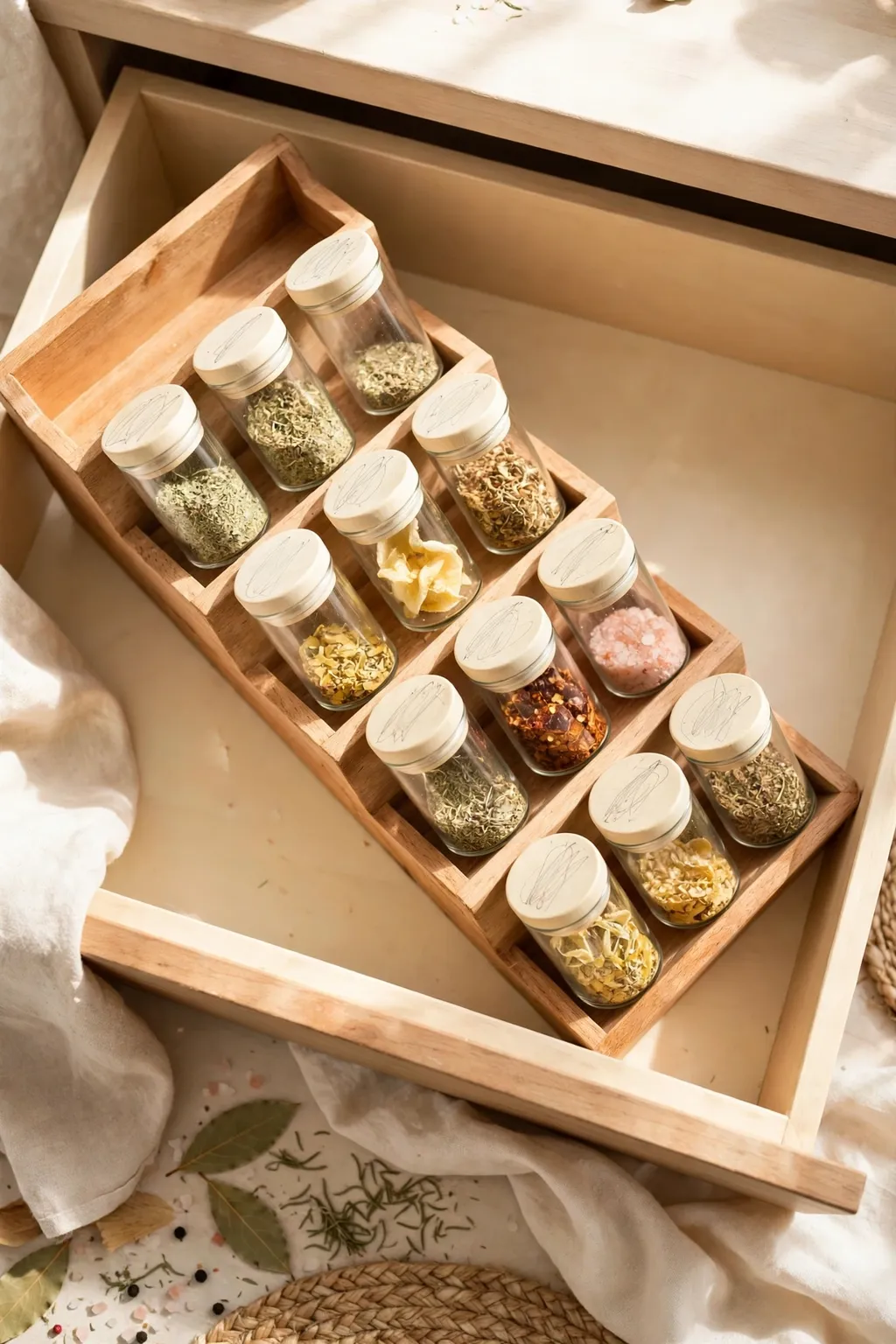
An Angled Drawer Insert with Stepped Tiers
If you have one spare drawer near the stove, an angled drawer insert is the idea I would choose first. Jars lie at a slight angle in stepped rows, so you read every lid at a glance and nothing ever hides behind anything else. A three- or four-step insert costs $15 to $25 and usually holds 20 to 30 standard jars. Label the lids, and the drawer becomes the fastest spice station in the kitchen.
Matching Jars, Decanted and Labeled
Matching jars are the single change that makes a spice collection look intentional instead of chaotic. Decant your spices into identical small glass jars — a set of 12 costs $12 to $20 — and the shelf suddenly looks calm and tidy, whatever is inside. Add simple labels on the front or the lid, and you will never again shake chili flakes into a dish that needed cinnamon. Keep the original jars for refills in the pantry.

Magnetic Jars on the Fridge
The side of the fridge is free storage, and small magnetic spice tins turn it into a spice wall. A set of six magnetic tins costs $10 to $15, and they stick right where you cook — no cabinet space used at all. Keep the everyday spices here and the rarely used ones in the cabinet. Just keep the tins away from the stove side, where heat and steam can fade the spices inside.

A Wall-Mounted Wooden Rack Beside the Stove
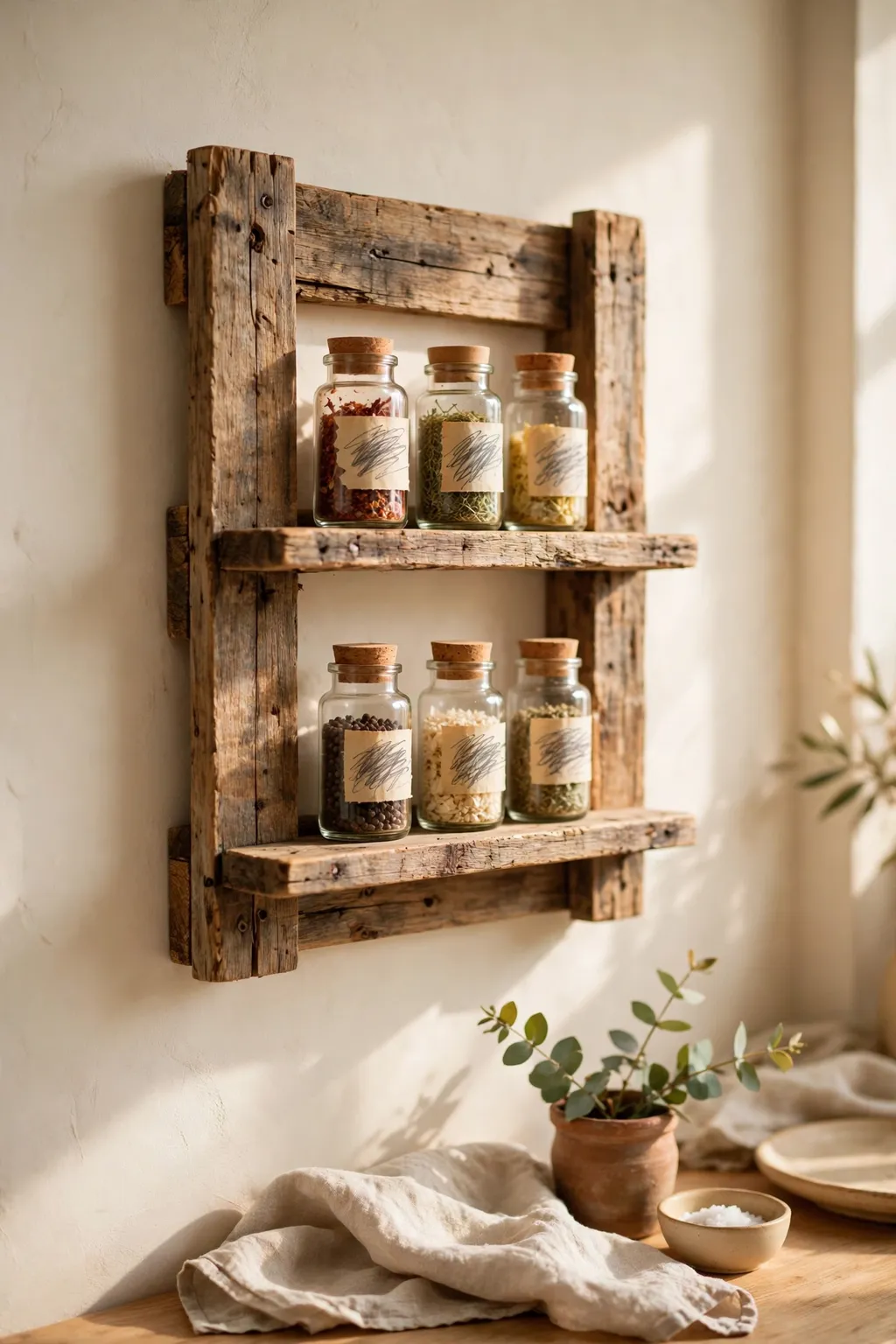
A slim wall-mounted wooden rack keeps your most-used spices right where you cook, and a two-tier rack costs $15 to $25. Hang it beside the stove rather than directly above it — spices hate heat, light, and steam, and a rack above the hob quietly fades them and makes them clump. A rack on the side wall looks lovely, costs little, and keeps the paprika within arm’s reach.

An Over-the-Door Rack on the Pantry Door
The inside of a pantry or cabinet door is the most overlooked storage in a small kitchen. A slim over-the-door rack costs $12 to $20, needs no drilling, and turns empty space into a full spice wall — freeing up an entire shelf for other things. Keep the heavy glass jars on the lower shelves so the door does not feel weighed down, and the lighter jars higher up.

A Pull-Out Rack for a Narrow Cabinet
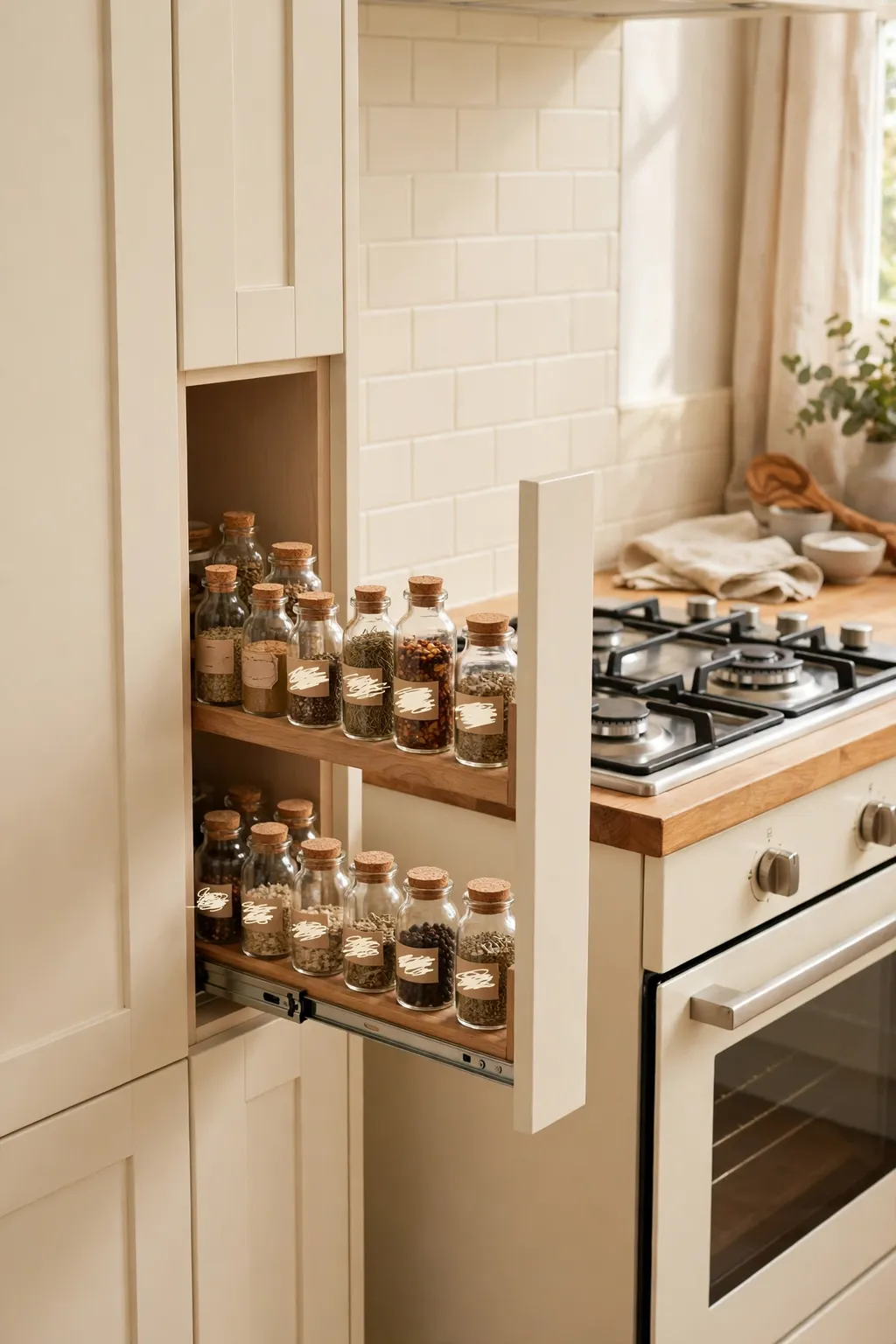
That skinny cabinet beside the stove — too narrow for plates, too awkward for pans — is the perfect home for a pull-out spice rack. A two-tier sliding rack in a 4-inch-wide format costs $20 to $35, and it brings every jar out to you instead of making you reach into the dark. Measure the cabinet first, leave a little room to spare, and the narrowest gap in the kitchen becomes the most useful one.
Chalkboard Labels on Every Jar
Chalkboard labels are the cheapest finishing touch in this whole list — a pack of 48 labels and a chalk marker costs about $5 — and they make every jar readable at a glance. Stick one on the front of each jar, or on the lid if the jars live in a drawer, and write the name in your neatest handwriting. When a jar gets refilled with something new, wipe the label clean and write again. No printer, no fuss, and the whole shelf looks like it came from a farmhouse shop.
Stackable Spice Tins for a Tiny Kitchen
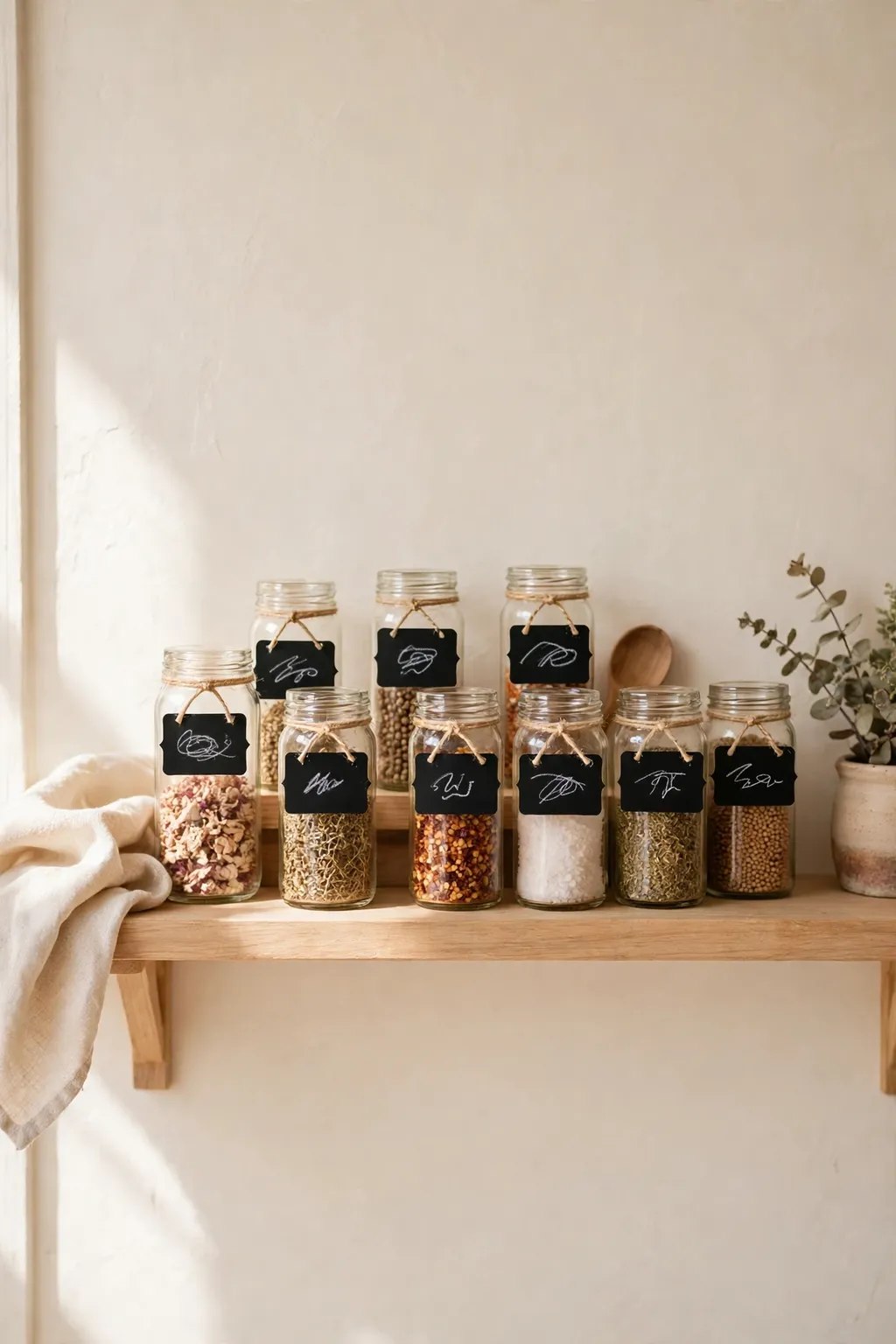
When counter and cabinet space are both gone, stackable spice tins save the day. Small square tins stack neatly in twos and threes, use every inch of a shallow shelf, and cost about $10 to $15 for a set of eight. Clear lids or a label on top mean you still know what is inside without unstacking the whole pile. They are the best answer for a tiny kitchen, a rental, or a spice collection that keeps growing.
A Hanging Rail with S-Hooks and Small Jars
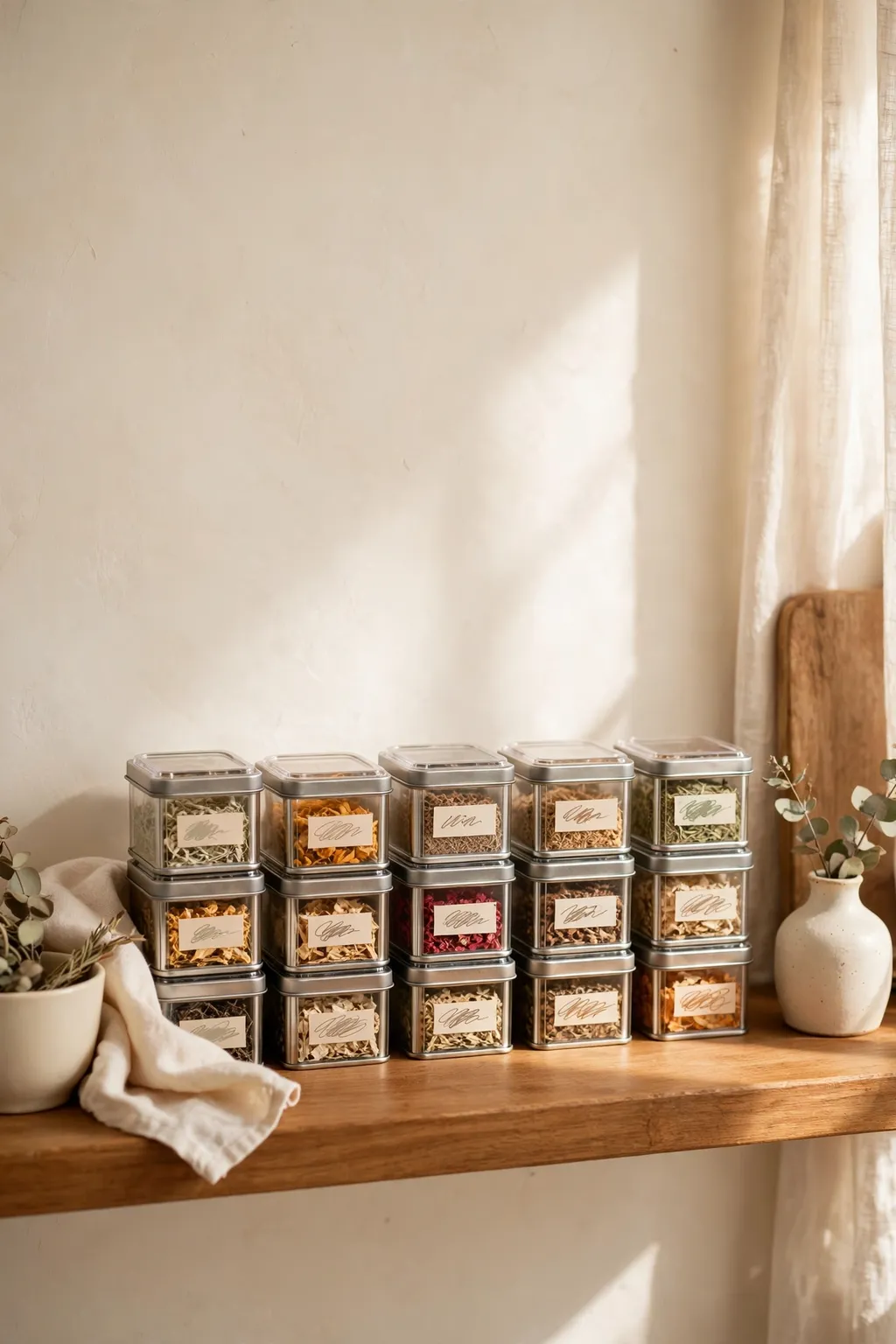
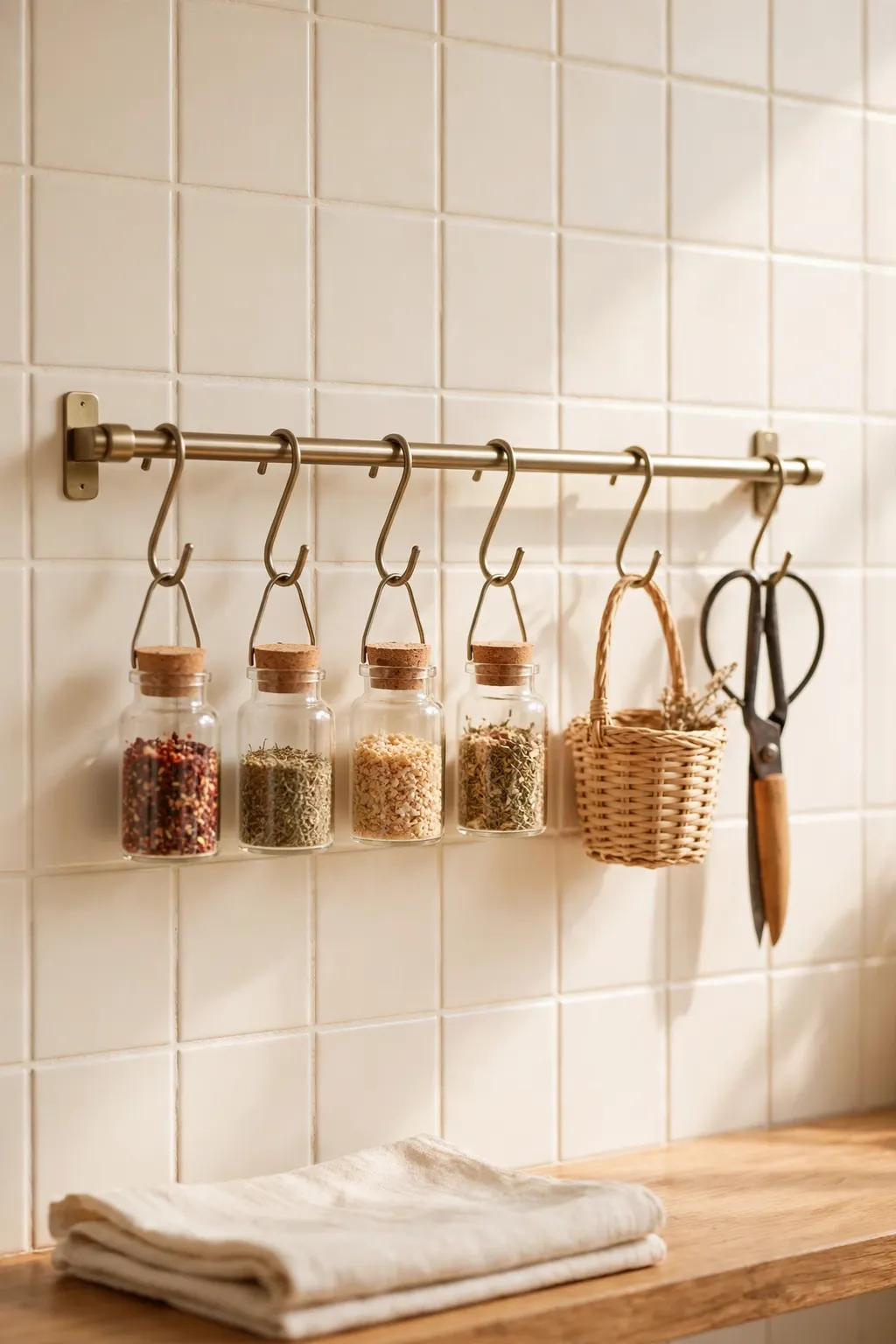
A simple hanging rail with S-hooks turns a blank stretch of kitchen wall into spice storage for about $12 to $18. Hang small jars, a tiny basket for spice packets, and a pair of kitchen scissors from the hooks, and everything you need while cooking dangles within reach. It looks like a little market stall, it needs only two screws, and it works beautifully in a rental if you use a tension-mounted rail instead.
A Two-Tier Countertop Carousel
A two-tier countertop carousel is the lazy Susan’s taller cousin — two spinning levels that hold 20 or more jars on a footprint smaller than a chopping board. It costs $15 to $25, sits right by the stove, and one spin brings any spice to the front. Keep the everyday five on the top tier and the rest below, and the countertop stays tidy because the spices finally have one home instead of five.

A DIY Pallet-Wood Rack for Almost Nothing
A spice rack made from a scrap of pallet wood or an old shelf board costs almost nothing — just a few screws and an afternoon. Cut two short shelves, fix them to the wall with small brackets, and add a thin lip along the front so the jars cannot slide off. Sand it smooth, leave the wood natural or paint it cream to match the kitchen, and you have a rack that looks handmade because it is — for under $10 in materials.
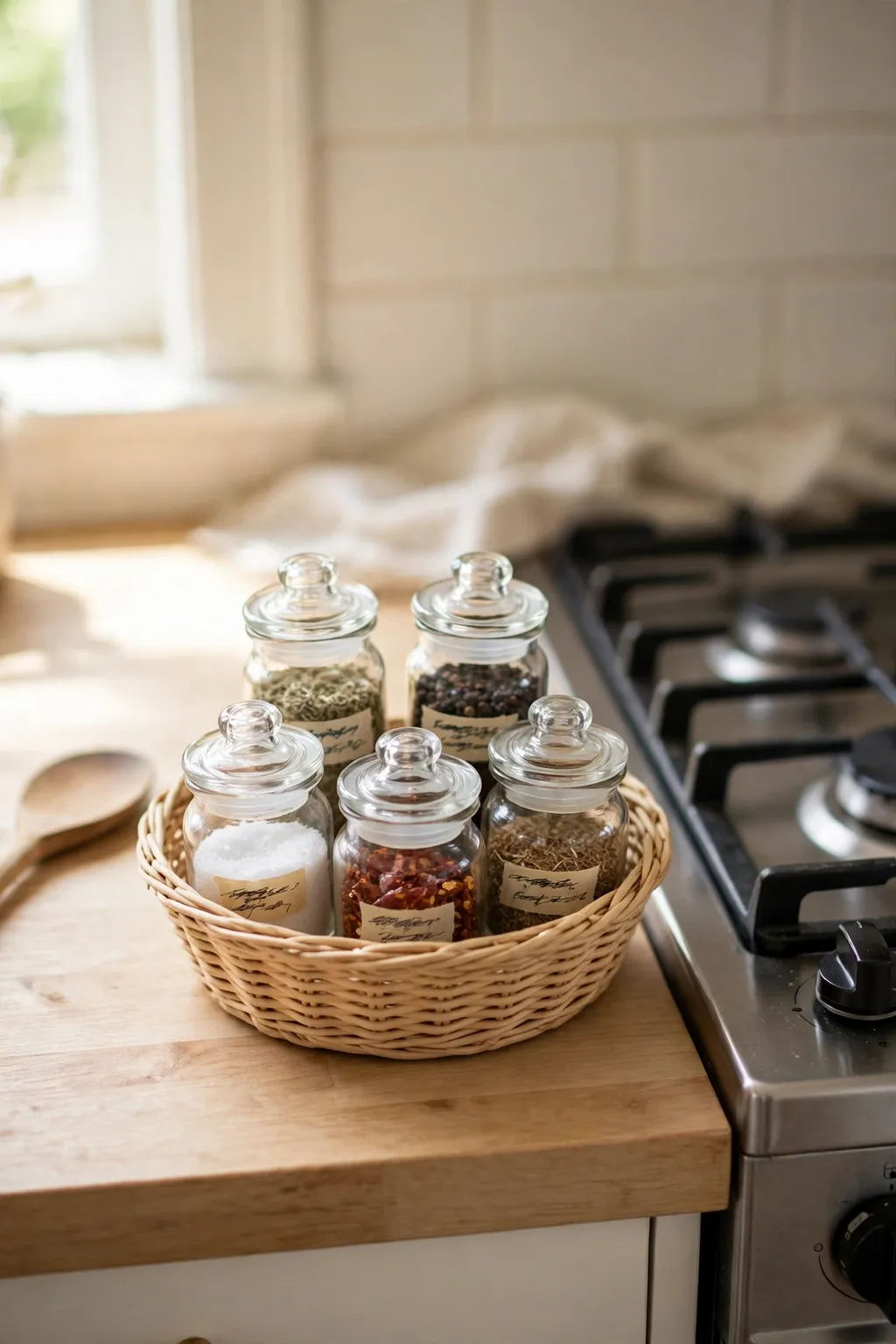
A Basket for the Everyday Five
Most of us reach for the same five spices every day — salt, pepper, paprika, cumin, and garlic powder, say — while the other twenty sit quietly in the cabinet. Keep those five in a small woven basket right by the stove, and weeknight cooking gets faster overnight. A basket costs $5 to $10, the jars inside are the only ones you touch daily, and the rest of the collection stays tidy because it is only opened when it is actually needed.
Sort by Cuisine and Keep a Little List
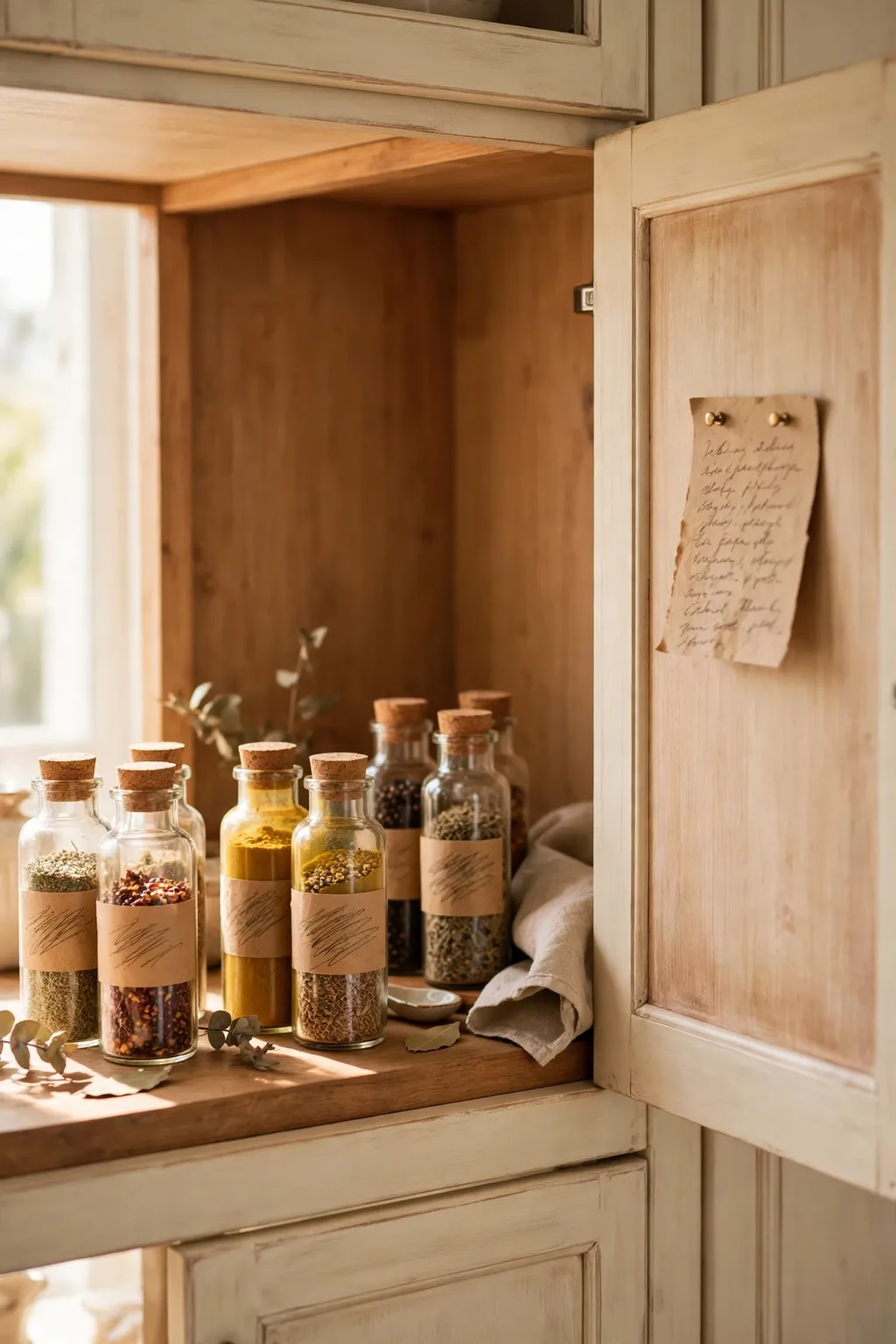
The last idea costs nothing at all: sort your spices by the food you cook with them. Keep the Italian herbs together, the curry spices together, and the baking spices together, and you will stop hunting through the whole rack for one jar. Stick a little list inside the cabinet door — what you have, and what is running low — and you will never buy a third jar of cumin again. It takes ten minutes, it costs nothing, and it is the habit that keeps all fourteen ideas above working.
A Few Tips Before You Organize
- Start by gathering every spice you own — then toss anything stale, faded, or past its best. Most kitchens hold a third jar of something already owned twice.
- Keep spices away from heat, light, air, and moisture — never directly above the stove, where steam makes them clump and fade.
- Measure before you buy — cabinet depth, drawer width, and door clearance decide which rack actually fits, not the prettiest photo.
- Label everything, even the obvious jars — paprika and chili powder look identical in a hurry, and the lids are where your eyes land first.
- If the rest of the kitchen needs the same treatment, see my 15 Kitchen Organization Ideas on a Budget for the whole room, shelf by shelf.
Frequently Asked Questions
What is the best way to organize spices on a budget?
Start with a tiered shelf riser or a lazy Susan turntable inside the cabinet — $10 to $20 — then decant into matching jars and label them all. Add a magnetic rack or a door rack if you are short on shelf space. Most kitchens can be fully sorted for under $60, and the single biggest win is simply being able to see every jar at a glance.
Where should you not store spices?
Never directly above the stove, where heat and steam fade spices and make them clump, and never on a sunny windowsill, where light dulls their colour and flavour. A cool, dark cabinet, a drawer, or the side of the fridge away from the hob all work well. For the rest of the pantry, see my Pantry Organization Ideas on a Budget.
Should spice jars match?
They do not have to, but matching jars make a shelf look calm and make it much easier to spot what you need — identical jars in a neat row read as one system instead of a jumble. Small glass jars cost $12 to $20 for a set of 12, and chalkboard labels at about $5 finish the look. If the jars are mismatched, matching labels alone still bring a lot of order.
How do I organize spices in a tiny kitchen?
Use the walls and the doors: a magnetic rack on the fridge, a slim rack inside the pantry door, or a hanging rail with S-hooks all add storage without taking a single shelf. Stackable tins and a small basket for the everyday five keep the counter clear. For more tiny-space tricks that cost almost nothing, see my 15 Dollar Tree Organization Hacks on a Budget.
WRAPPING UP
The Cozy Takeaway
A spice rack does not need a big budget — it needs every jar visible, labeled, and within reach, and a home that fits your kitchen instead of fighting it. Pick one idea from this list, start with the riser or the turntable, and let the rest follow. Dinner is about to get a whole lot easier. Stay cozy, friend!