13 Cozy Playroom Ideas on a Budget
Hi, I’m Emma! A playroom sounds like it needs a big spare room and a small fortune in matching furniture — but ours started as one corner of the living room, a secondhand cube shelf, and a basket of blocks that lived under the stairs. The truth is, a playroom is mostly about storage kids can reach, one cozy corner to curl up in, and a floor that forgives mess. Get those three things right and the room works, whatever you spent.
The best cozy playroom ideas on a budget start with low cube storage kids can reach themselves, then add a reading nook, a chalkboard wall for drawing, and a soft rug to define the play zone. Cube storage runs about $35 to $80, fabric bins $8 to $20 each, a chalkboard wall about $20 to $30, and string lights $10 to $25 — and toy rotation costs nothing at all. A whole calm, tidy playroom can come together for under $300 if you thrift the big pieces and build the small ones yourself.
Cube Storage Shelves at Kid Height
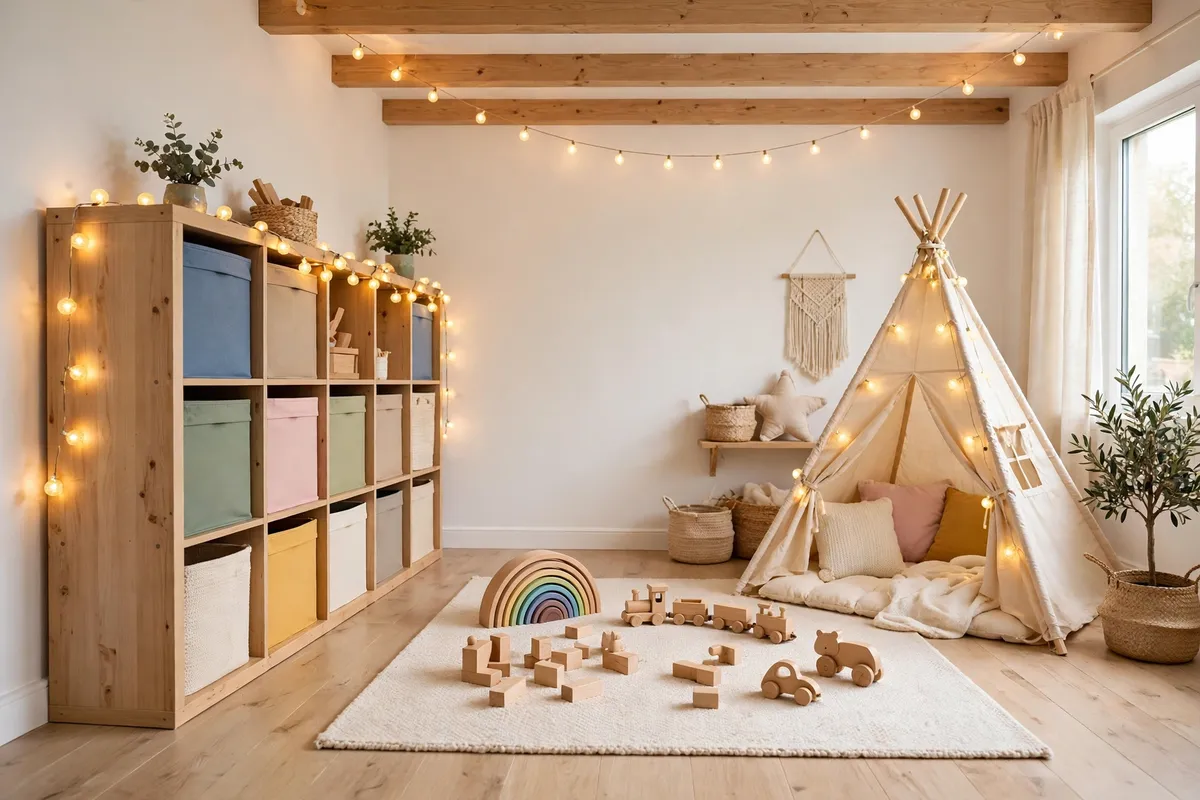
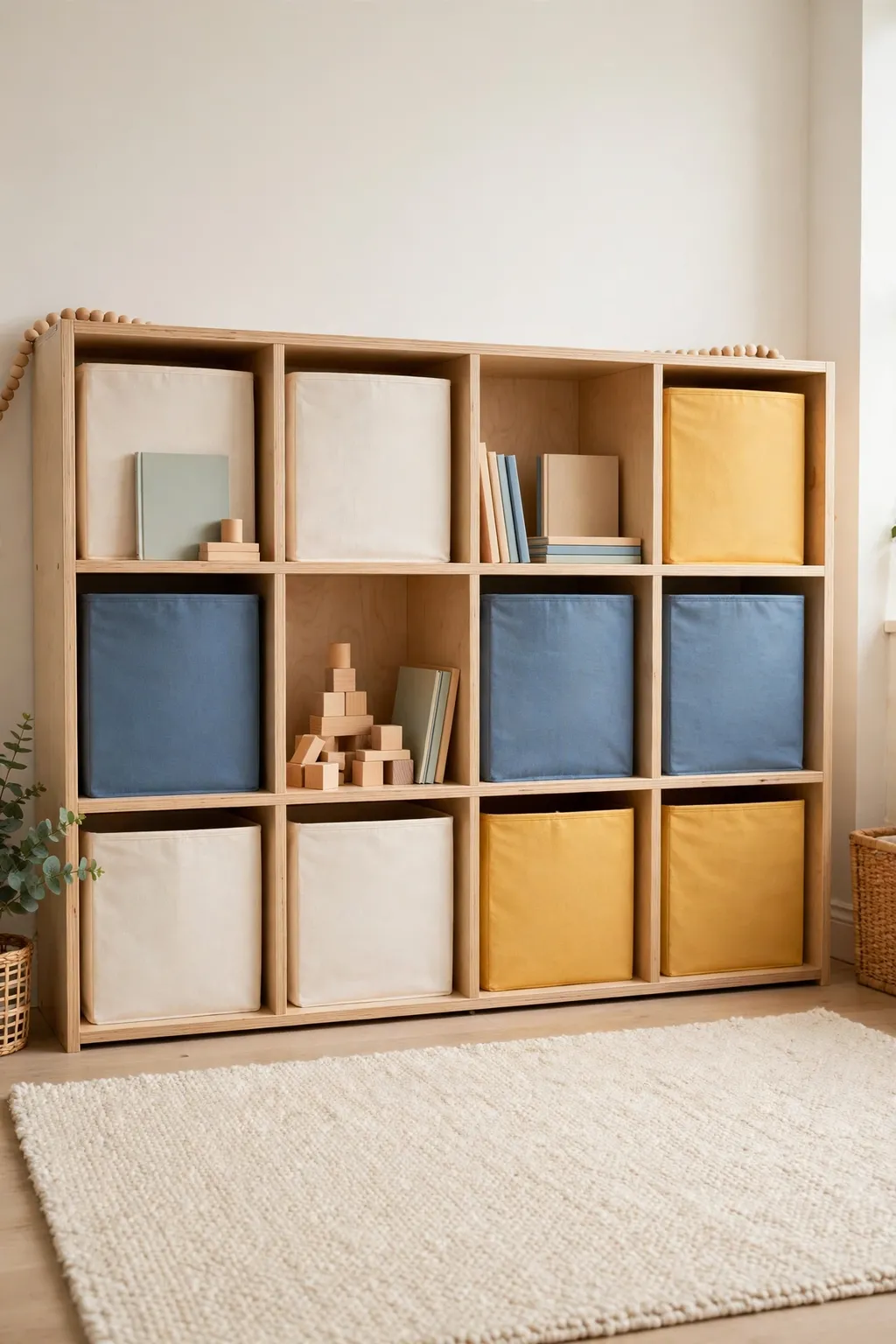
This is the single most useful thing in any playroom: low cube shelves your kids can actually reach. A basic 6- or 9-cube unit runs about $35 to $80, and fabric bins at $8 to $20 each turn each cube into a home for one kind of toy — blocks here, dolls there, cars in the next. Keep the shelves low and the bins labeled with pictures, and cleanup becomes a game kids can win on their own. Put the shelves along one wall and leave the middle of the room empty for play, because an empty floor is the best toy of all.
A Cozy Reading Nook in the Corner
Every playroom needs one quiet pocket — a corner that feels like it belongs to the kids alone. Tuck a small teepee or a bean bag into the corner, add floor cushions and a soft rug, and set a crate of books within arm’s reach. A play teepee runs about $40 to $120, battery fairy lights about $10 to $20, and the whole nook can come in under $100 if you thrift the cushions. String the lights inside the tent’s peak and it glows like a little hideaway. If you are setting up the room next door too, my cozy kids bedroom ideas on a budget use the same calm, layered trick.

A Chalkboard Wall for Endless Drawing
A chalkboard wall is the cheapest art station you will ever buy — about $20 to $30 for chalkboard paint and basic supplies — and it never runs out of paper. Paint one wall, or just the lower half so little arms can reach it, and keep a small table nearby with chalk and a cloth for wiping. Kids draw, erase, and start again a dozen times a day, and the wall becomes a rotating gallery of whatever they are obsessed with this week. Dark green or soft black paint looks surprisingly grown-up next to the shelves, too.

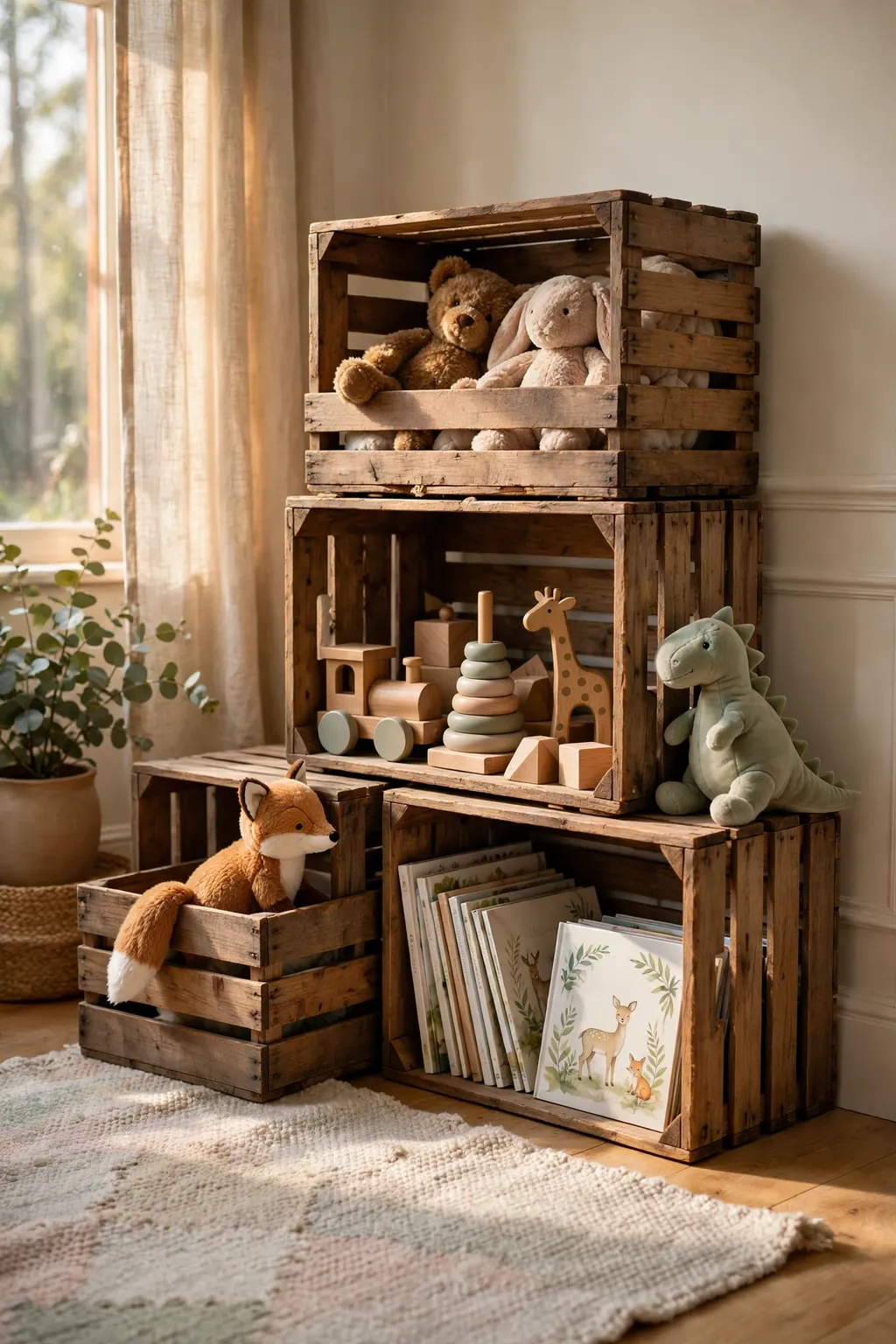
Wooden Crates as Open Storage
Wooden crates are the playroom’s best friend: about $5 to $15 each at craft or discount stores, light enough for kids to carry, and easy to stack, slide under a table, or line up along a wall. Fill one with stuffed animals, one with books, one with dress-up clothes, and let the kids see everything at a glance — open storage means they play with more of what they own. A coat of paint in your room’s colors turns plain crates into furniture, and they move with you when the room changes purpose.
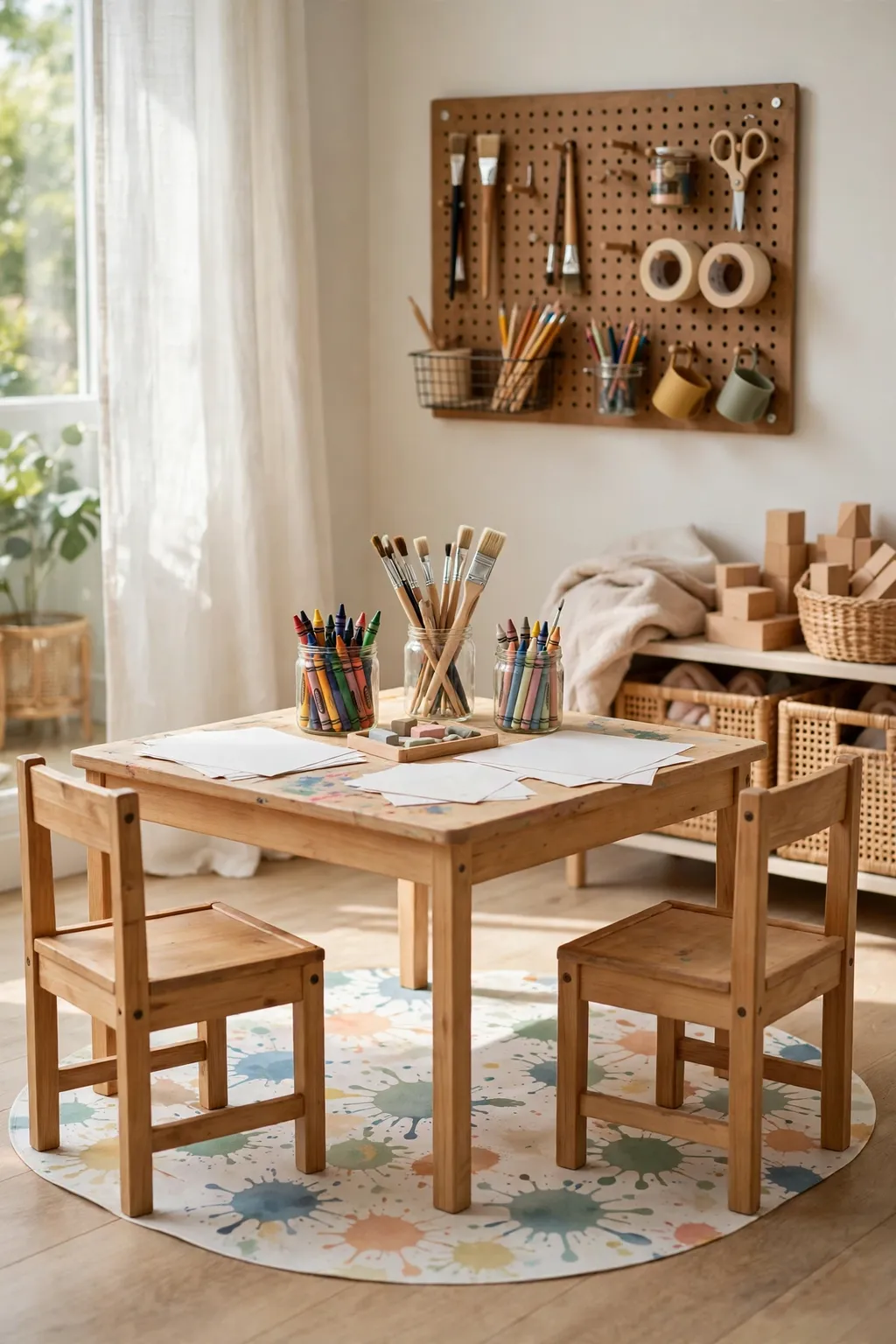
A Low Art Table with a Splat Mat
Art only happens in a playroom if the table is always ready. A secondhand kids’ table and chairs — often around $30 — plus a washable splat mat underneath (an old shower curtain works perfectly) means paint and glue never touch the floor. Add a pegboard on the wall above it, made from hardware-store scrap for about $8, to hang brushes, scissors, and jars of crayons where little hands can grab them. For the bigger craft setup, my craft room organization ideas on a budget use the same pegboard-and-bins system.
Clear Bins with Picture Labels
Clear bins are the cleanup cheat code: kids can see what is inside without dumping everything out, and small toys stop getting mixed together into one mystery pile. Clear bins run about $5 to $20 each depending on size, and picture labels — a photo or a simple drawing of a car, a block, a doll — let even toddlers put things back in the right place. Keep one bin per toy type on the lowest shelves, and keep the fiddly sets, like beads and tiny figures, up higher where only you can reach them.

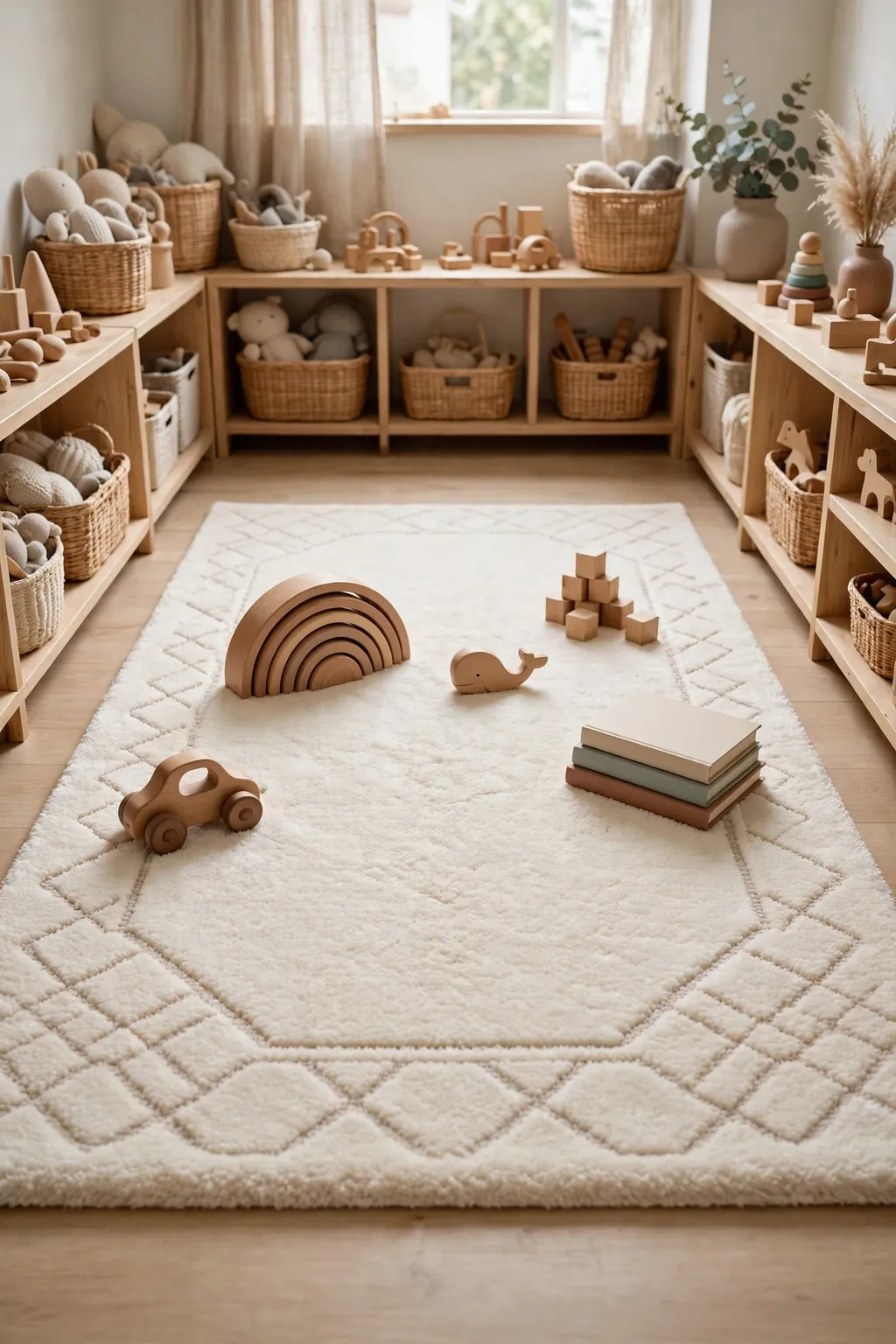
A Soft Rug to Define the Play Zone
A rug does more than warm the floor — it tells everyone where the play happens. Lay a soft, low-pile rug in the middle of the room and the toys naturally gather there, the seating gathers around it, and the rest of the room stays walkable. A low-pile area rug runs about $50 to $200, and a washable one is worth every penny in a room full of paint and juice boxes. Choose a cream or muted pattern so the toys bring the color, and make it big enough for two kids to build a block city without elbowing each other.
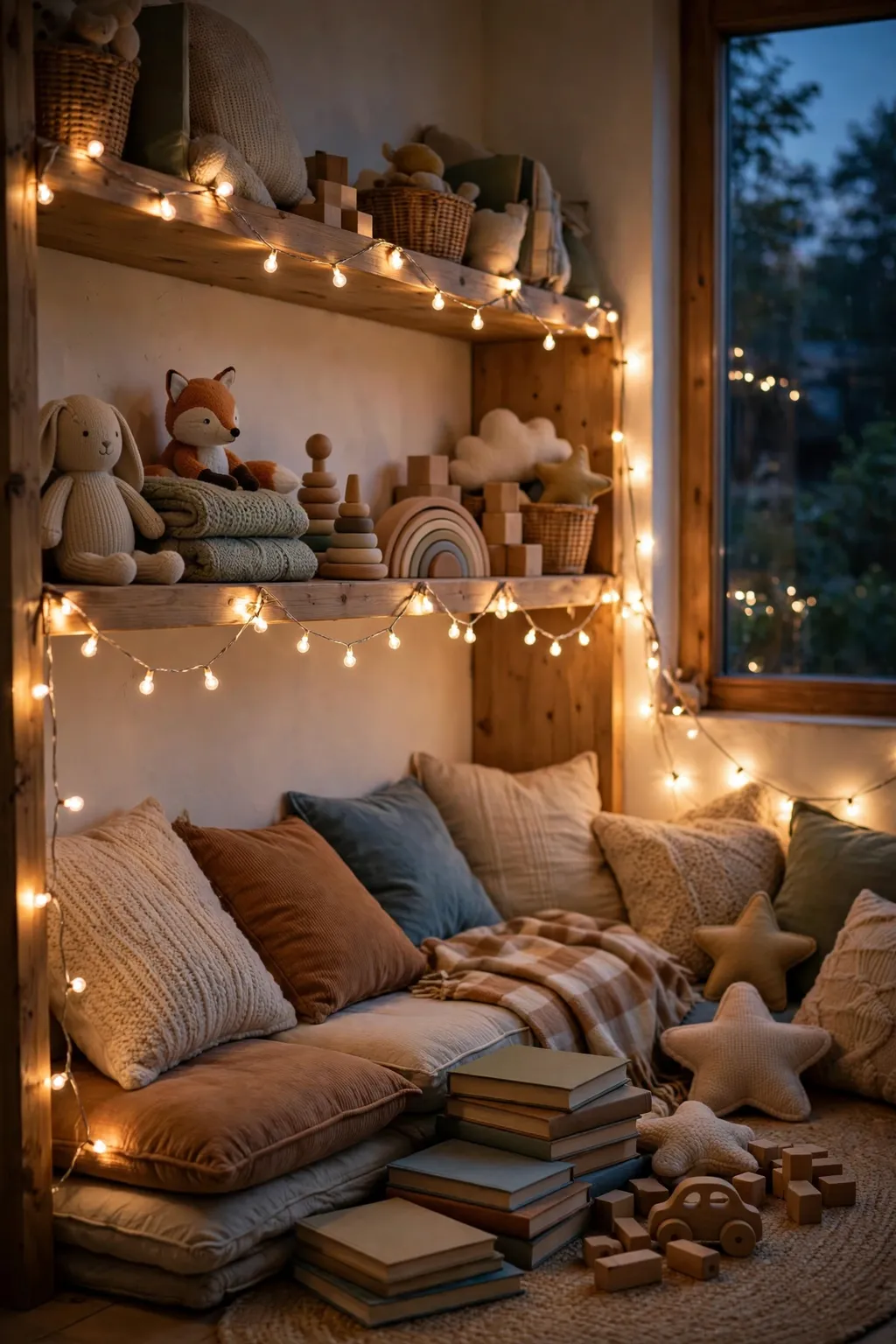
String Lights for a Warm Glow
Soft string lights make a playroom feel magical without a single new piece of furniture. A strand costs about $10 to $25 — drape it along the shelves, around the reading nook, or across the top of the chalkboard wall — and the room glows warm in the evening instead of glaring under the ceiling light. Battery-operated lights are the safe choice here: no cords to trip over, no plugs in reach, and you can tuck them anywhere. They also make the wind-down hour before bed noticeably calmer, which is a gift in itself.
A Toy Rotation System
The best playroom idea on this list costs nothing: toy rotation. Keep some toys in storage — a closet shelf or a couple of labeled bins up high — and bring a fresh set out every few weeks while the old set goes away. Kids play longer and more imaginatively with fewer toys in front of them, and the “new” toys feel like a present every time they reappear. It also makes birthdays and holidays easier, because there is always somewhere for the new arrivals to live.

Floating Shelves for Books
Picture books deserve to be seen, not stacked spine-out where nobody can find them. A few light-wood floating shelves mounted at kid height turn the books into a little library: covers facing forward, favorites on display, and a stuffed elephant keeping watch on the end. Kids choose by the picture, which is exactly how they should choose, and the shelves double as wall decor that costs less than a single framed print. Keep the shelves low enough for small hands and sturdy enough for a leaning reader.

A Dress-Up Corner with a Rail and Mirror
Imaginative play needs a stage, and a dress-up corner is the cheapest one you can build. A small low clothing rail — thrifted, or a tension rod between two shelves — holds capes, crowns, tutus, and superhero masks at kid height, with a basket of accessories below and a child-size mirror leaning on the wall. Everything they need to become someone else is right there, and everything goes back on the rail when the show is over. Keep it to one rail and one basket, or the costumes will take over the whole room.

A Quiet Corner for Calm-Down Time
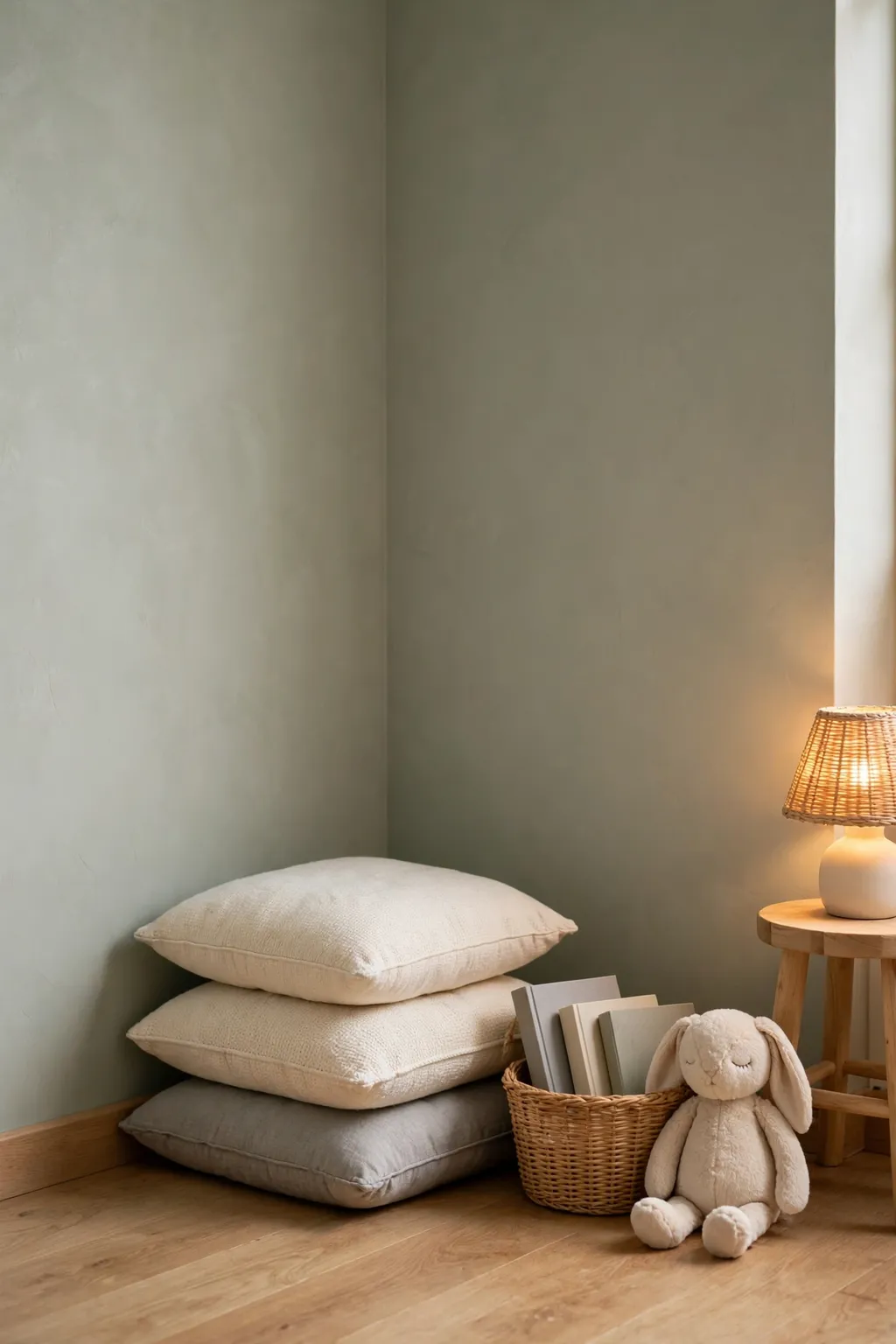
Even the wildest playroom needs a soft landing spot. A quiet corner — a stack of floor cushions in cream and soft gray, a small basket with three books, a stuffed bunny, and a warm little lamp — gives big feelings somewhere gentle to go. Floor cushions run about $30 to $80 for two or three, and a thrifted lamp with a warm bulb does the rest. This is not a time-out corner; it is a cozy corner, a place kids choose when they need a minute, and the calmer the colors, the better it works.
A Puppet Theater from a Cardboard Box
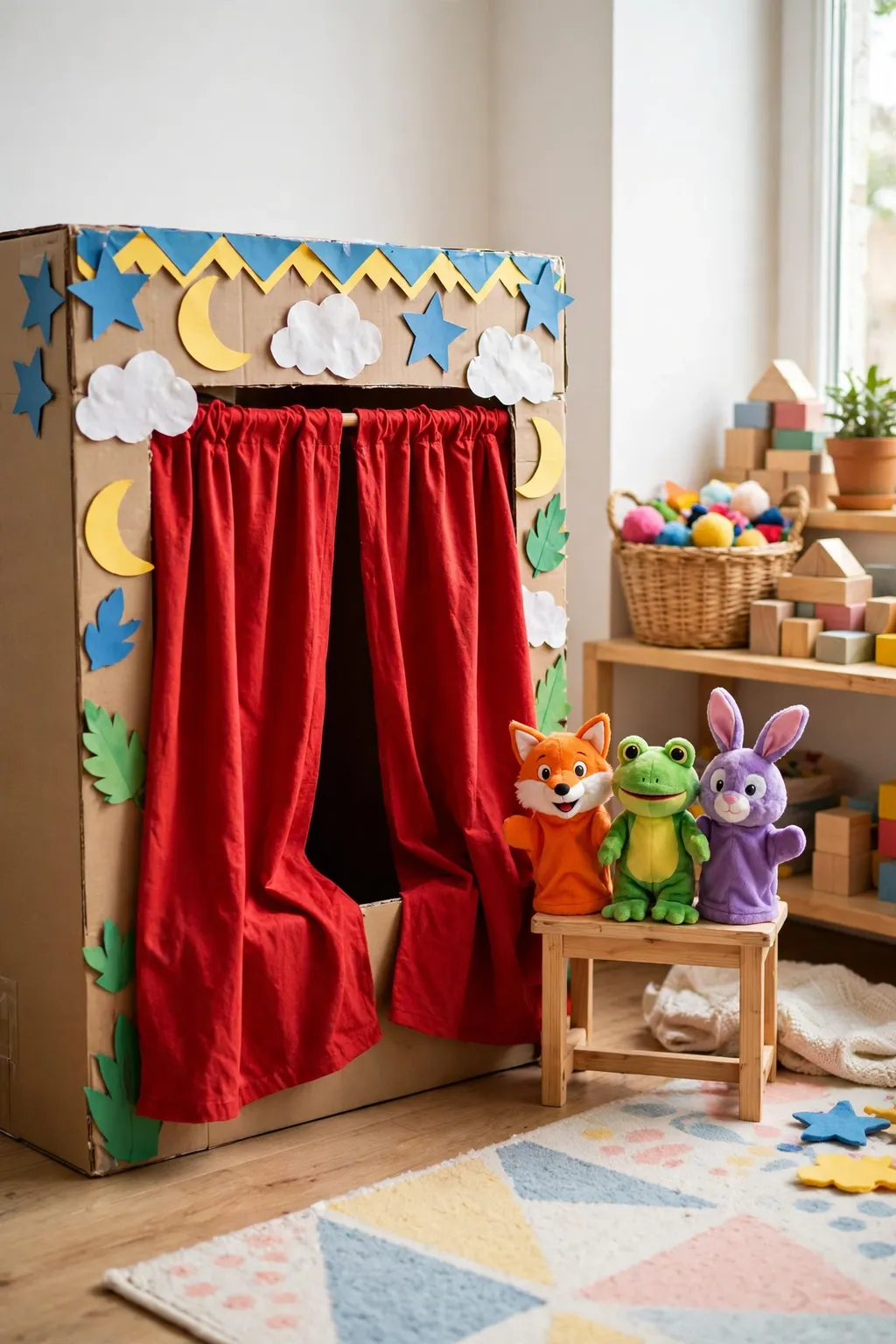
The most-loved toy in our playroom cost nothing at all: a puppet theater made from a large cardboard box. Cut a window in the front, hang a scrap of red fabric as a curtain, decorate the outside with paper stars and zigzag trim, and set a few hand puppets on a stand beside it. Kids will perform entire shows for an audience of stuffed animals, and when the box finally gives out, the next delivery brings a brand-new theater. Keep the puppets in a basket right beside it so the show can start the second the curtain goes up.
A Few Tips Before You Start
- Spend in this order: storage first, then one cozy corner, then the fun extras — a room kids can tidy is a room they will actually play in.
- Keep everything at kid height and labeled with pictures, so cleanup is a game they can win without asking for help.
- Rotate toys every few weeks and keep the middle of the floor empty — fewer toys out means longer, calmer play.
- Choose washable everything: washable rug, washable paint, washable bins and cushions, because this room will be tested daily.
- Leave one wall mostly bare for art and growth charts, so the room can change as fast as the kids do.
Frequently Asked Questions
How much does it cost to set up a cozy playroom on a budget?
A calm, tidy playroom can come together for under $300: cube storage runs about $35 to $80, fabric bins $8 to $20 each, a chalkboard wall about $20 to $30, string lights $10 to $25, and a low-pile rug $50 to $200. Thrift the big pieces — the table, the rail, the cushions — and build the small ones yourself, and the cheapest ideas on this list, toy rotation and the cardboard puppet theater, cost nothing at all.
How do I keep a playroom tidy?
Give every toy one home at kid height — a cube, a bin, or a crate — and label it with a picture so even toddlers can put things back. Rotate toys so only a few are out at a time, keep the middle of the floor empty, and make cleanup a five-minute game before dinner. Rooms stay tidy when kids can reach everything and see where it belongs, not when there are more shelves.
What age is a playroom best for?
Playrooms shine from toddlerhood through about age eight. Low shelves, picture labels, and a reading nook work for the youngest kids, while the chalkboard wall, art table, and puppet theater grow with them into school age. The layout here is deliberately flexible — swap the dress-up rail for a Lego table or a homework corner as they grow, and the storage stays useful for years.
How do I make a small playroom work?
Use the walls, not the floor: floating shelves, a pegboard, and a chalkboard wall store and display without taking a single square foot. Define one play zone with a rug, fold the tent away when it is not in use, and rotate toys so only a few are out at a time. A small room feels bigger when everything has a place and the middle of the floor stays clear for play.
WRAPPING UP
The Cozy Takeaway
A playroom is not about the toys — it is about a room where kids can reach everything, make a glorious mess, and put it all back again. Start with low storage and a soft rug, add one cozy corner to curl up in, and let the cardboard box do the rest. And if your littlest one is still in the nursery stage, my cozy nursery ideas on a budget will help you set up their first room the same calm way. Happy playing, friend!