11 Toy Storage Ideas for Small Living Rooms
Our living room used to tell on us the second anyone walked in — a trail of toy cars across the rug, blocks under the sofa, and a stuffed bunny holding court on the armchair. I did not want a playroom look, and I did not want to banish the toys to another room either. These are the 11 toy storage ideas that finally let our small living room stay calm, cozy, and still very much a place where children play.
The best toy storage ideas for small living rooms are lidded baskets under the coffee table, a storage ottoman, and cube shelves with labelled bins, because they hide clutter in seconds, keep favourite toys within easy reach, and use furniture you already need. Choose one closed home for each toy group, keep the most-loved toys at child height, and leave one clear surface in the room so it still feels like a living room, not a playroom.
Woven Baskets Under the Coffee Table
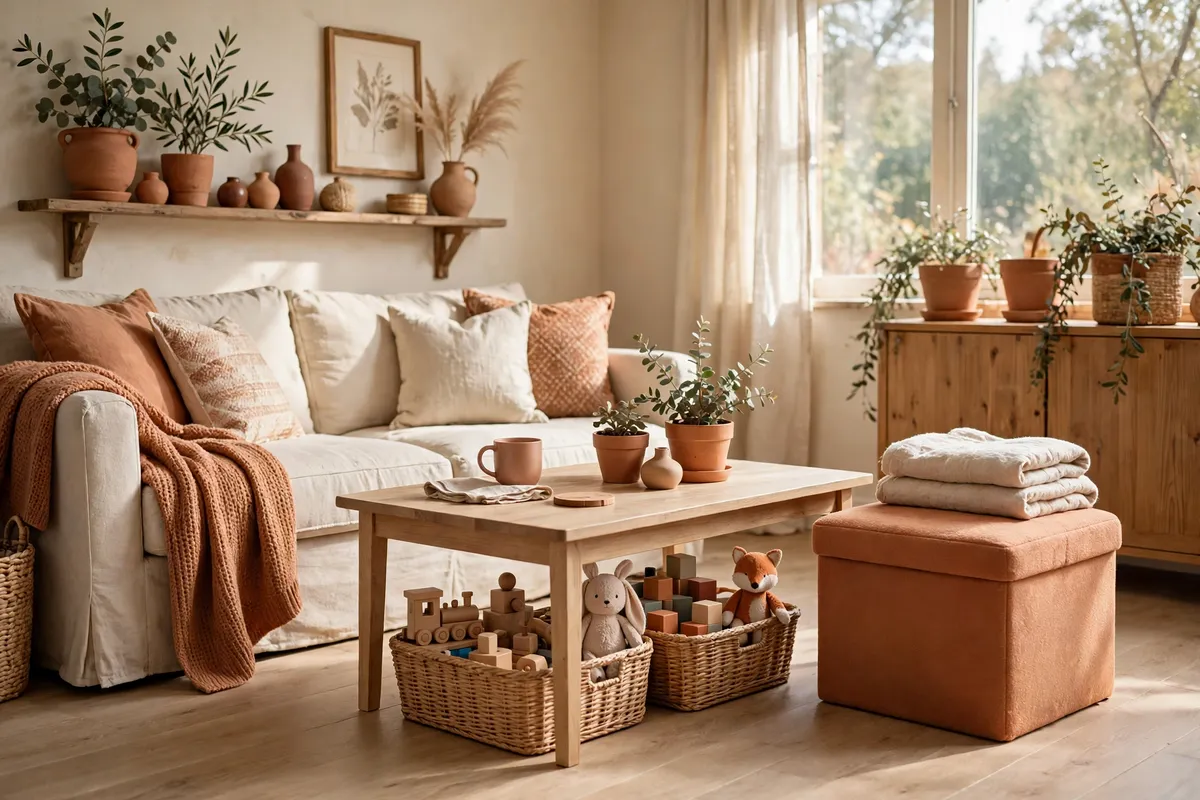
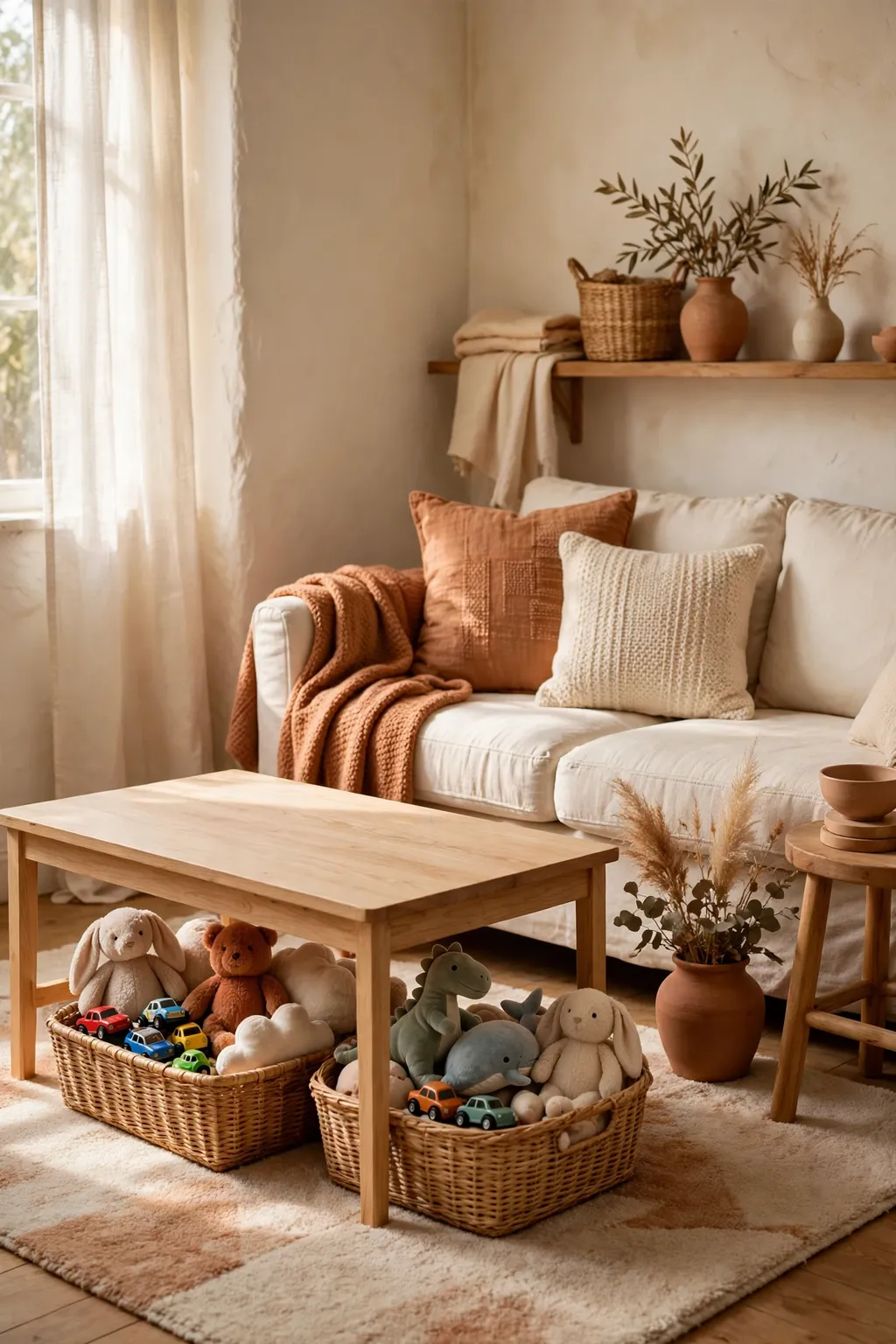
Low woven baskets tucked under the coffee table are the fastest tidy-up I know — everything sweeps in, the lids or the low sides hide it, and the room looks calm again. In a small living room, choose baskets that slide fully underneath so they never block knees or feet, and give each basket one job: cars in one, soft toys in another.
How a Storage Ottoman Hides the Toy Clutter
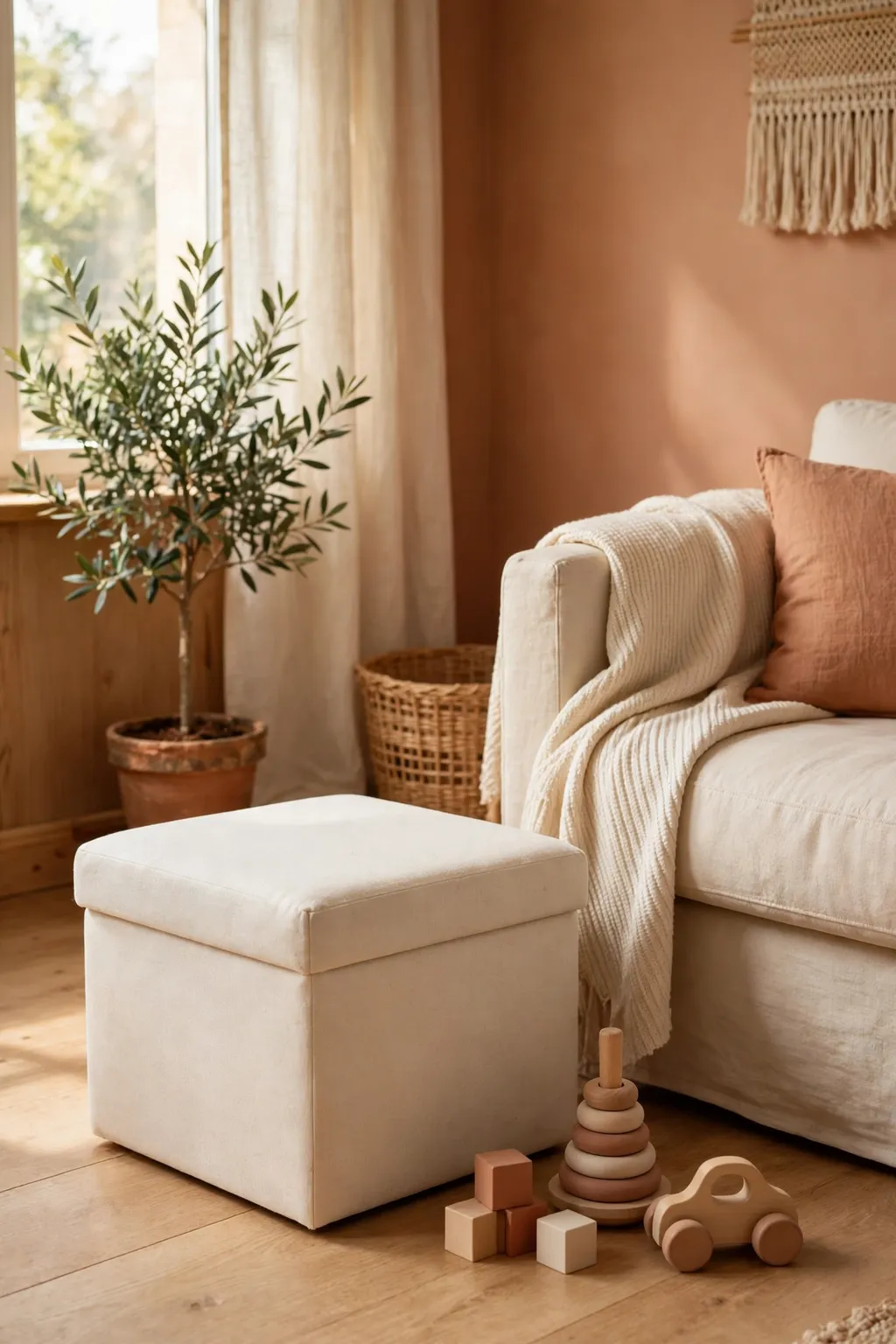
A storage ottoman is a seat, a footrest, and a toy chest in one, which is exactly what a small living room needs. Lift the lid, drop the blocks and books inside, and close it — the clutter is gone and you have somewhere to sit. Pick a firm, flat-topped ottoman in a washable fabric so it doubles as a coffee table for grown-ups after bedtime.
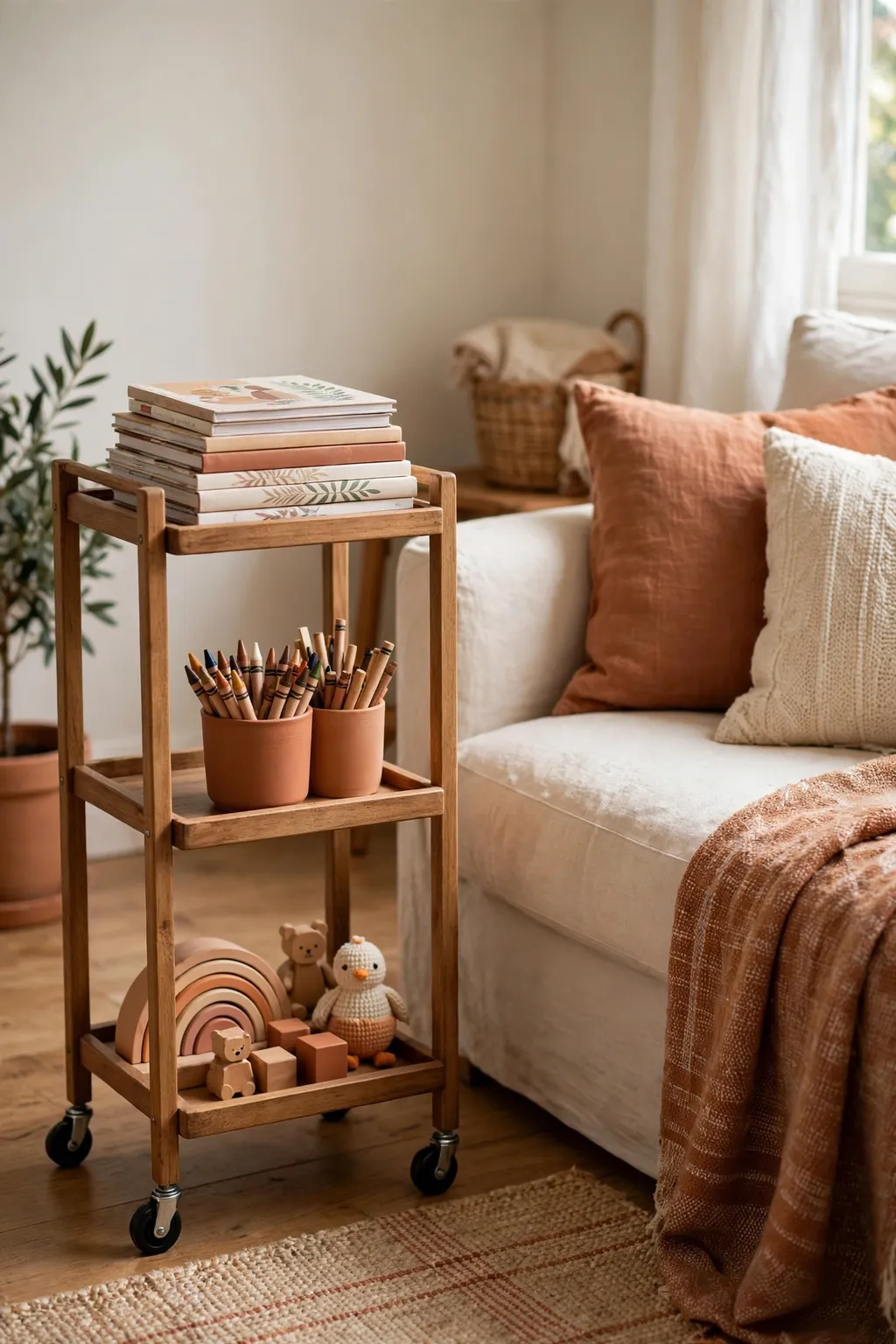
What Is the Best Slim Rolling Cart for Toys Beside the Sofa?
A slim rolling cart parked beside the sofa is the best small-space toy station, because it holds colouring books, crayons, and small toys in one narrow footprint and rolls away when you need the floor. Choose a three-tier cart with a lip on each tray so nothing slides off, and keep the top tier for the toys in daily use and the bottom tier for spares.
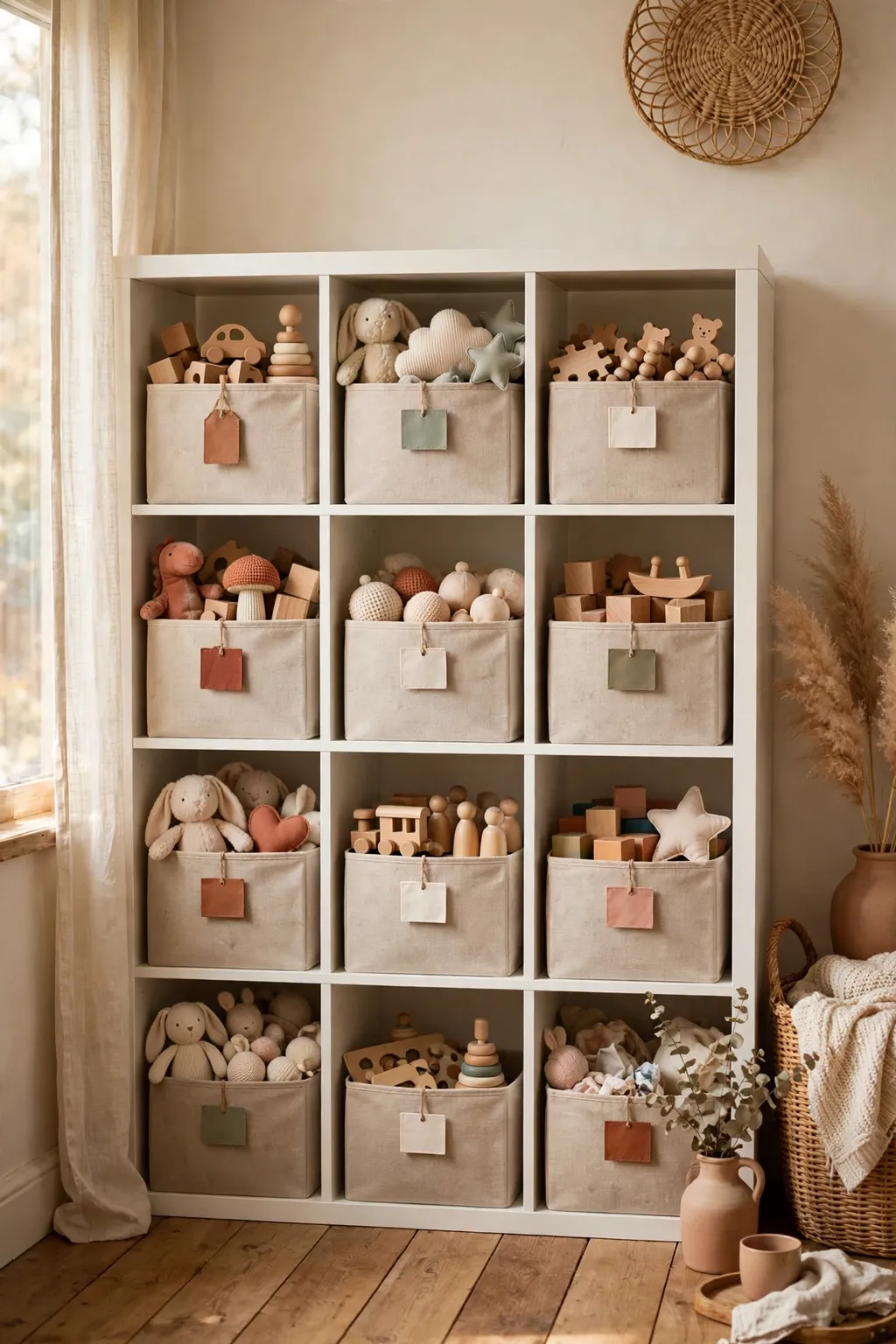
Cube Shelves With Labelled Bins for Easy Tidy-Ups
Cube shelves with fabric bins turn a whole wall of toys into a tidy grid, and a small child can learn exactly where each bin lives. Label each bin with a picture as well as a word — a car, a block, a doll — so tidy-up time needs no reading and no nagging. Keep the heaviest bins on the bottom cubes and the lightest, least-used toys up top.
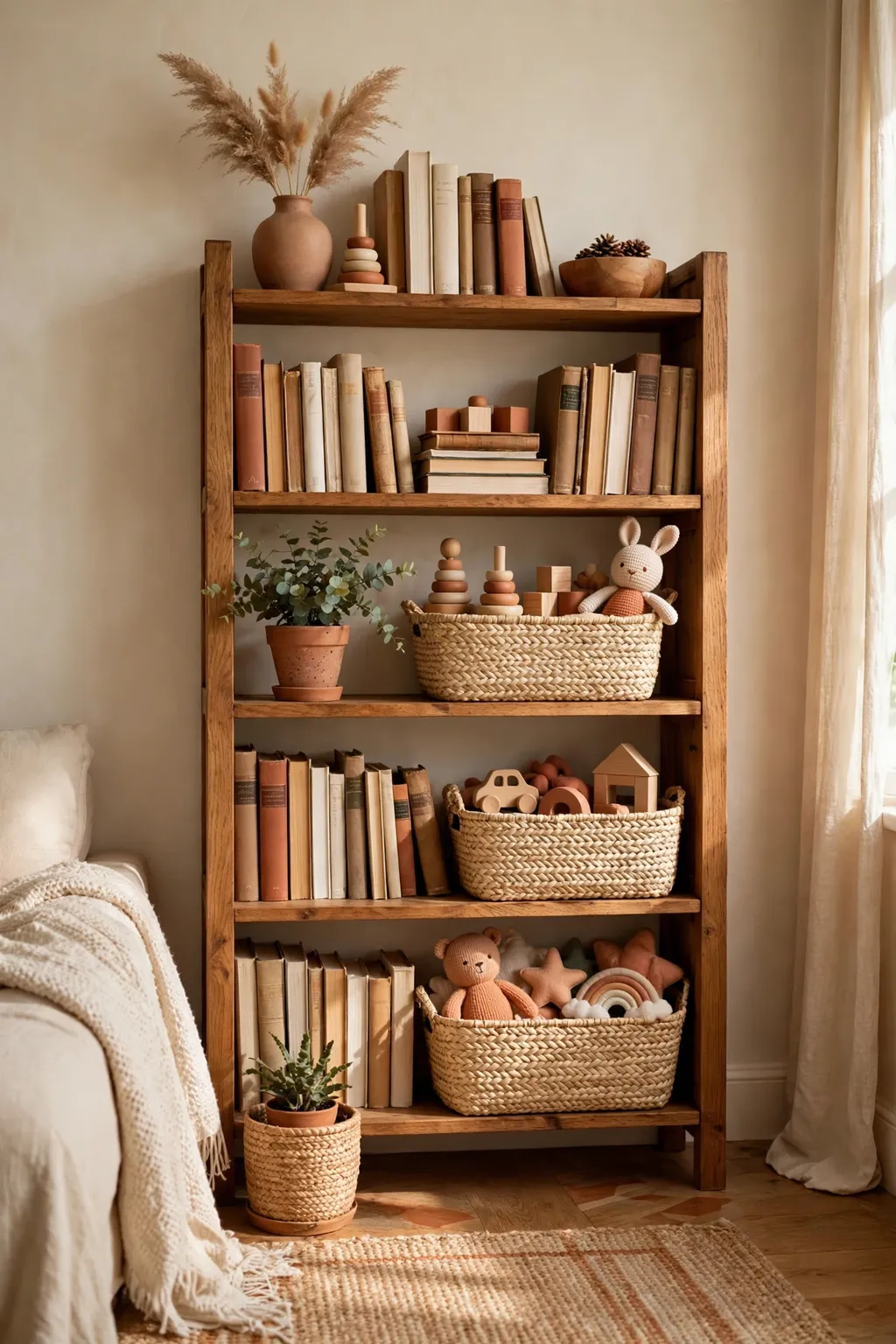
Baskets on a Bookshelf That Still Look Grown-Up
Mixing a few matching baskets into a bookshelf lets toys live alongside books, plants, and framed photos without the shelf looking like a toy shop. Use the same basket colour and size across the shelf, leave one shelf completely toy-free for grown-up things, and put the noisiest toys in the baskets with lids. The shelf stays pretty, and the toys stay put.
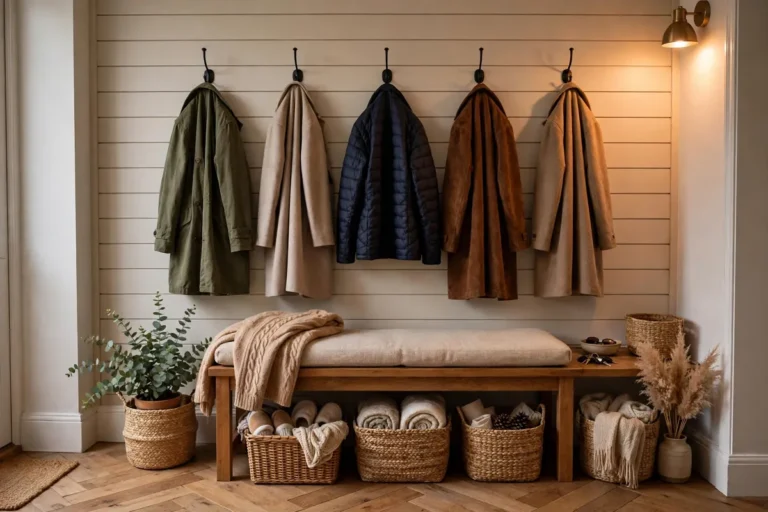
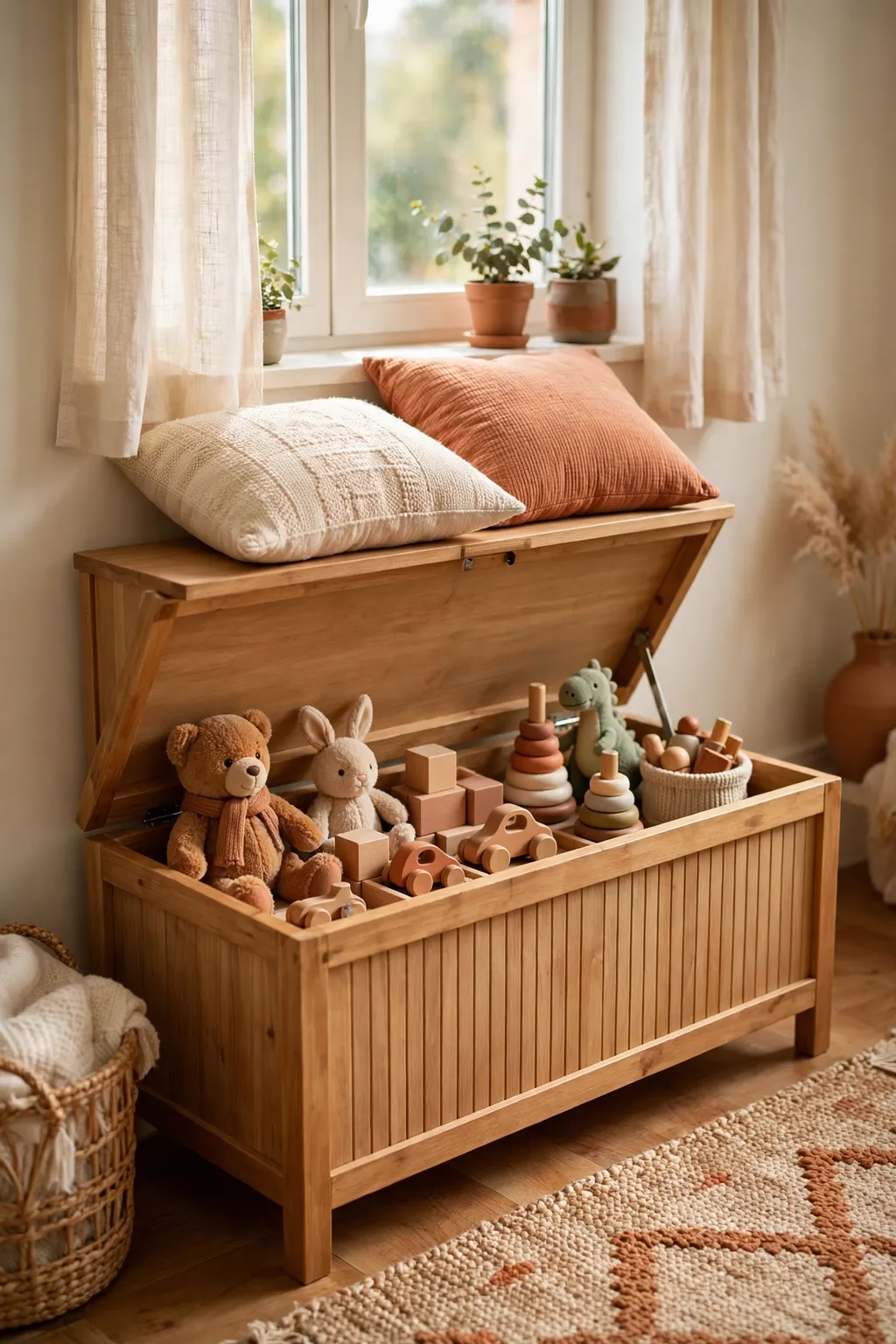
A Storage Bench That Doubles as Extra Seating
A low storage bench under a window, or against the longest wall, hides bulky toys like ride-ons and big blocks while giving guests somewhere to sit. Look for a bench with a lift-up lid and a soft top, and keep a folded throw on it so it reads as furniture first and toy storage second. It is the one piece I would buy first in a truly tiny living room.
A Slim Console Behind the Sofa for Hidden Toy Storage
The narrow gap behind a sofa is wasted space in most small living rooms, and a slim console table turns it into hidden toy storage. Baskets or low boxes slide underneath, board games stand upright on the console top, and the sofa back hides most of it from view. Measure the gap first — a console that is even an inch too deep will push the sofa into the middle of the room.
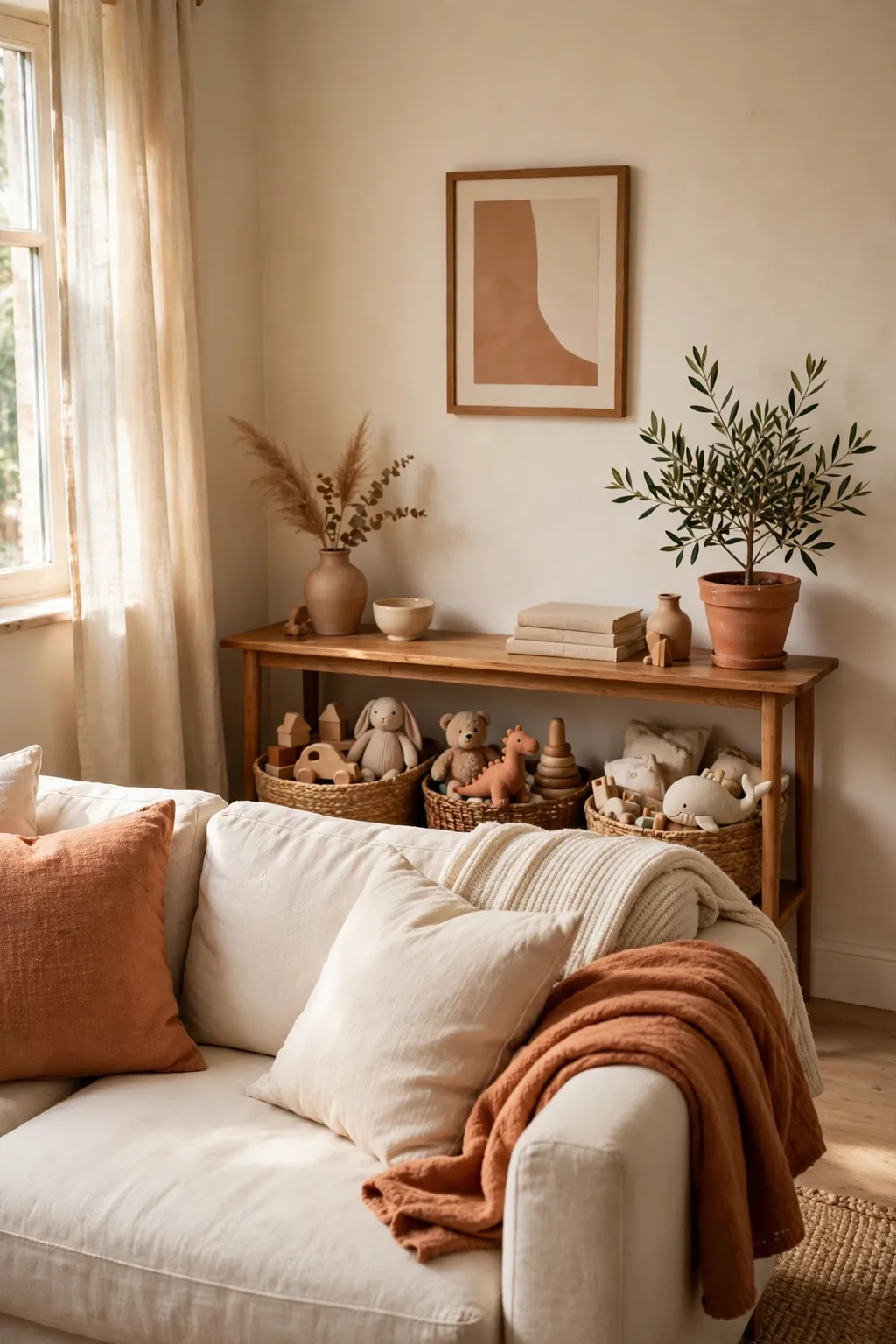
Clear Stackable Bins So You Can See What Is Inside
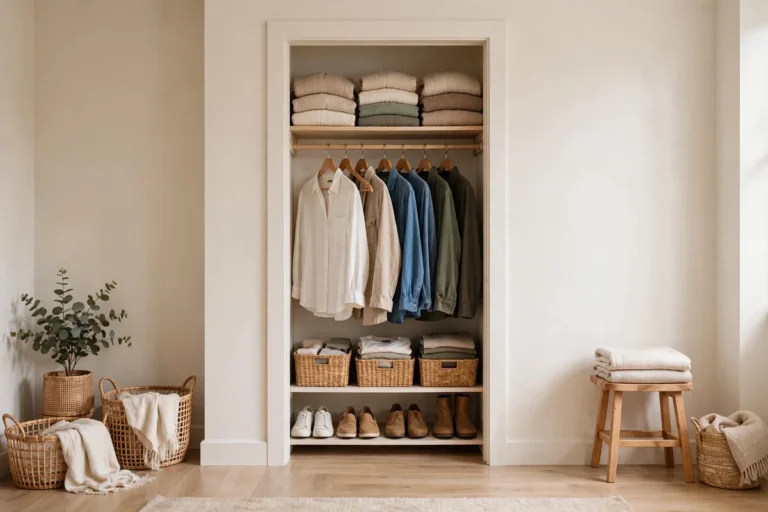
Clear stackable bins are the honest option: you can see the Lego, the dolls, and the puzzle pieces without opening a single lid, so nothing gets forgotten at the bottom. Stack them inside a cupboard or in a corner nook, like a small closet just off the living room, and label the front of each bin so the stack stays in the same order. One rule keeps them working — one bin out at a time.
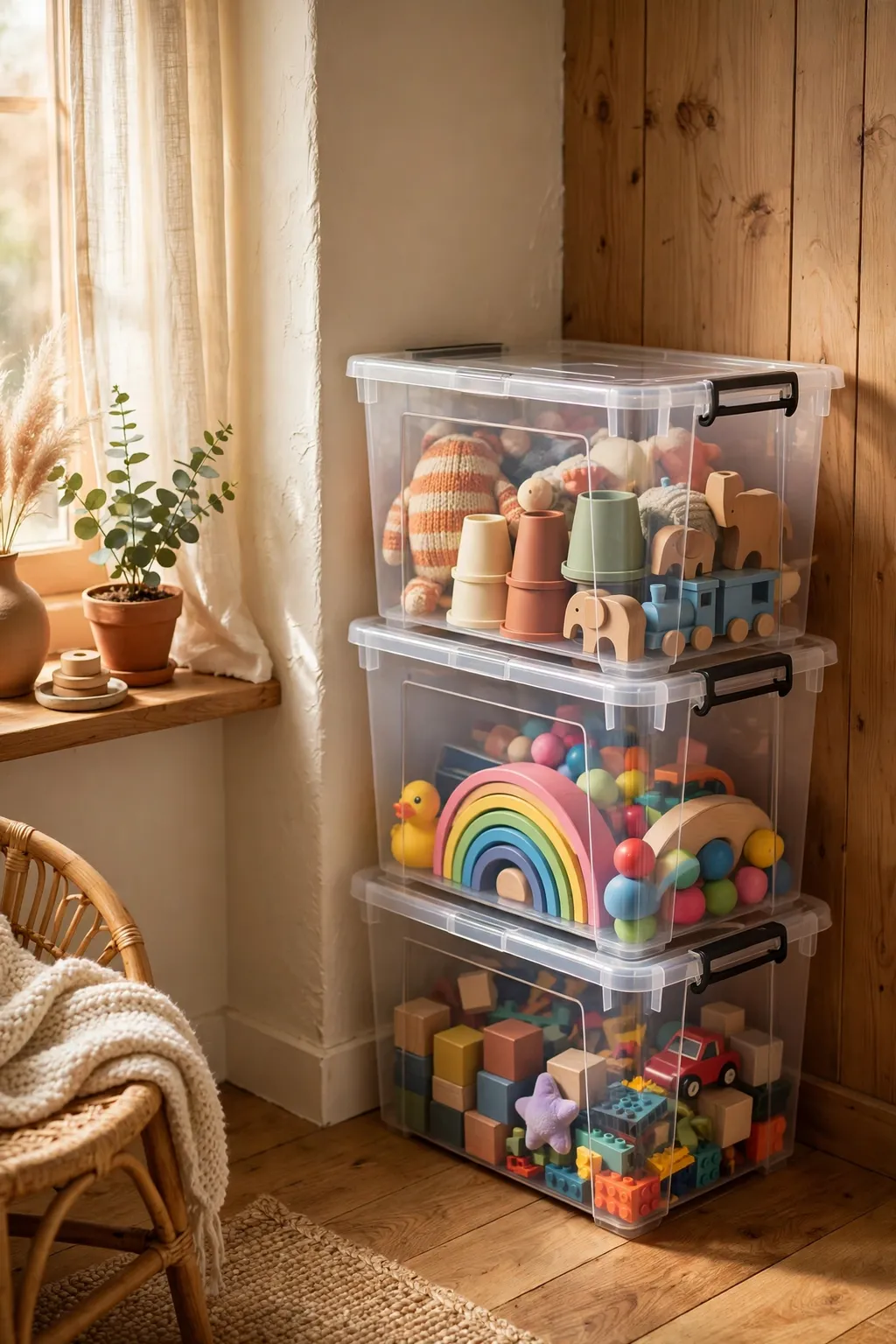
Wall-Mounted Shelves That Keep Grown-Up Toys Up High
Wall-mounted shelves lift the toys you control — paint sets, craft supplies, and small-piece sets — safely out of reach while freeing every inch of floor. Fit two or three shallow shelves above a low cabinet, keep the prettiest toys and books facing forward like a display, and store the messy supplies in small lidded boxes on the top shelf. Anchor every shelf properly, and never put heavy bins above head height.
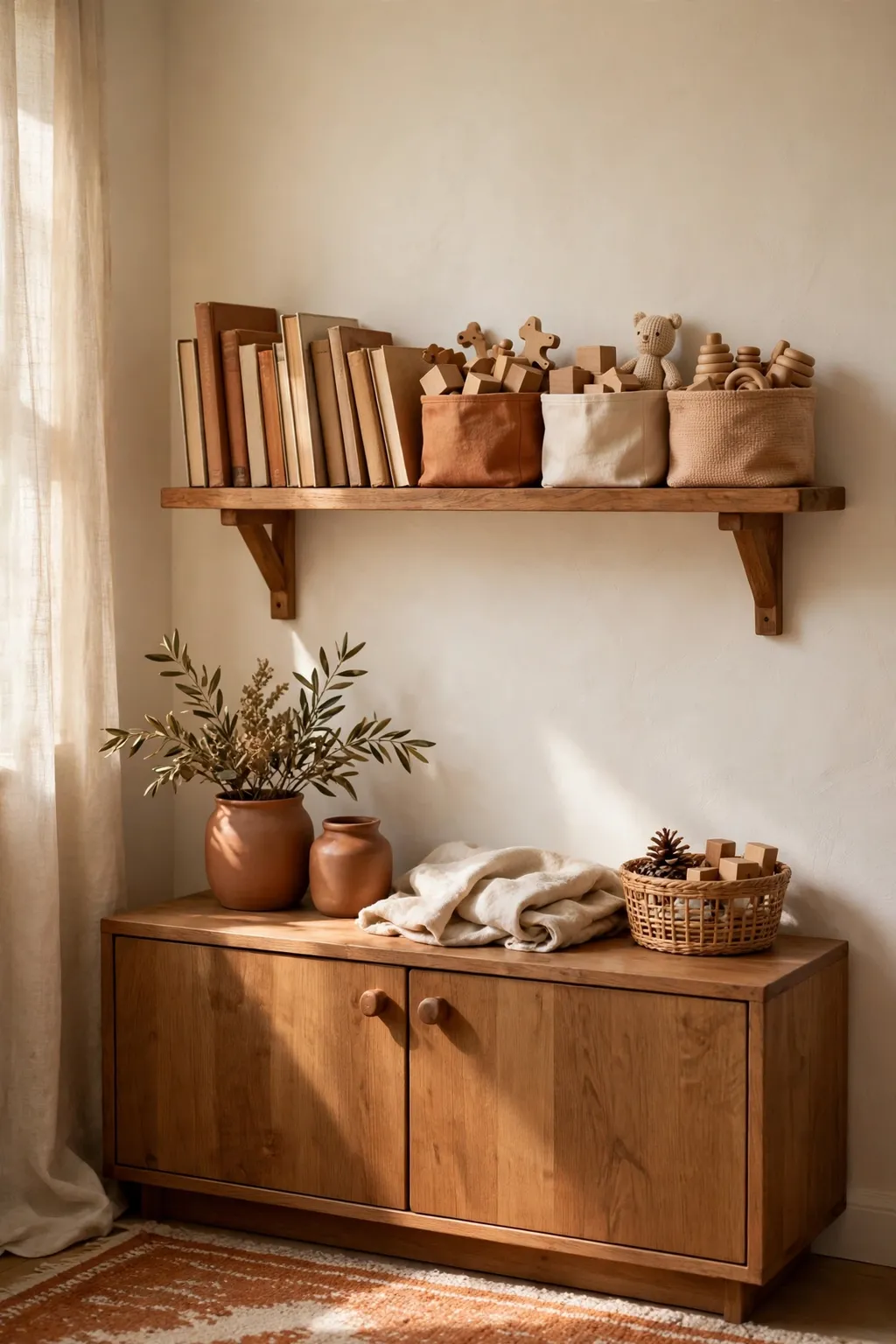
TV Console Drawers That Swallow the Toy Overflow
A TV console with deep drawers is secret toy storage hiding in plain sight — the remote, the chargers, and a whole drawer of toys can share it without a single toy on show. Give toys the bottom drawers, where little hands can reach them, and keep cables and grown-up things in the top drawer. When guests come over, one drawer push is all the tidying you need.
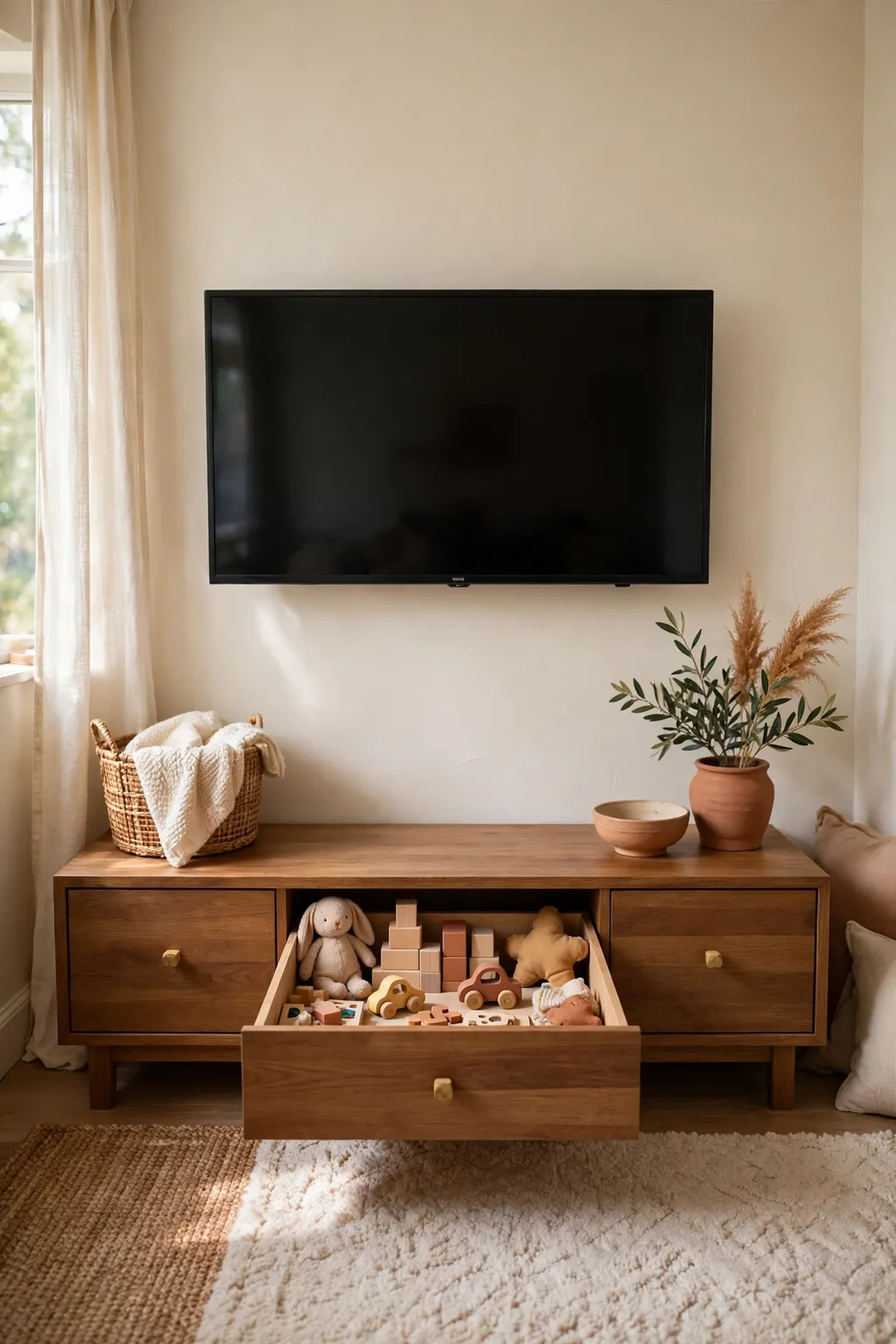
A Drawstring Play Mat Bag for a Five-Minute Tidy-Up
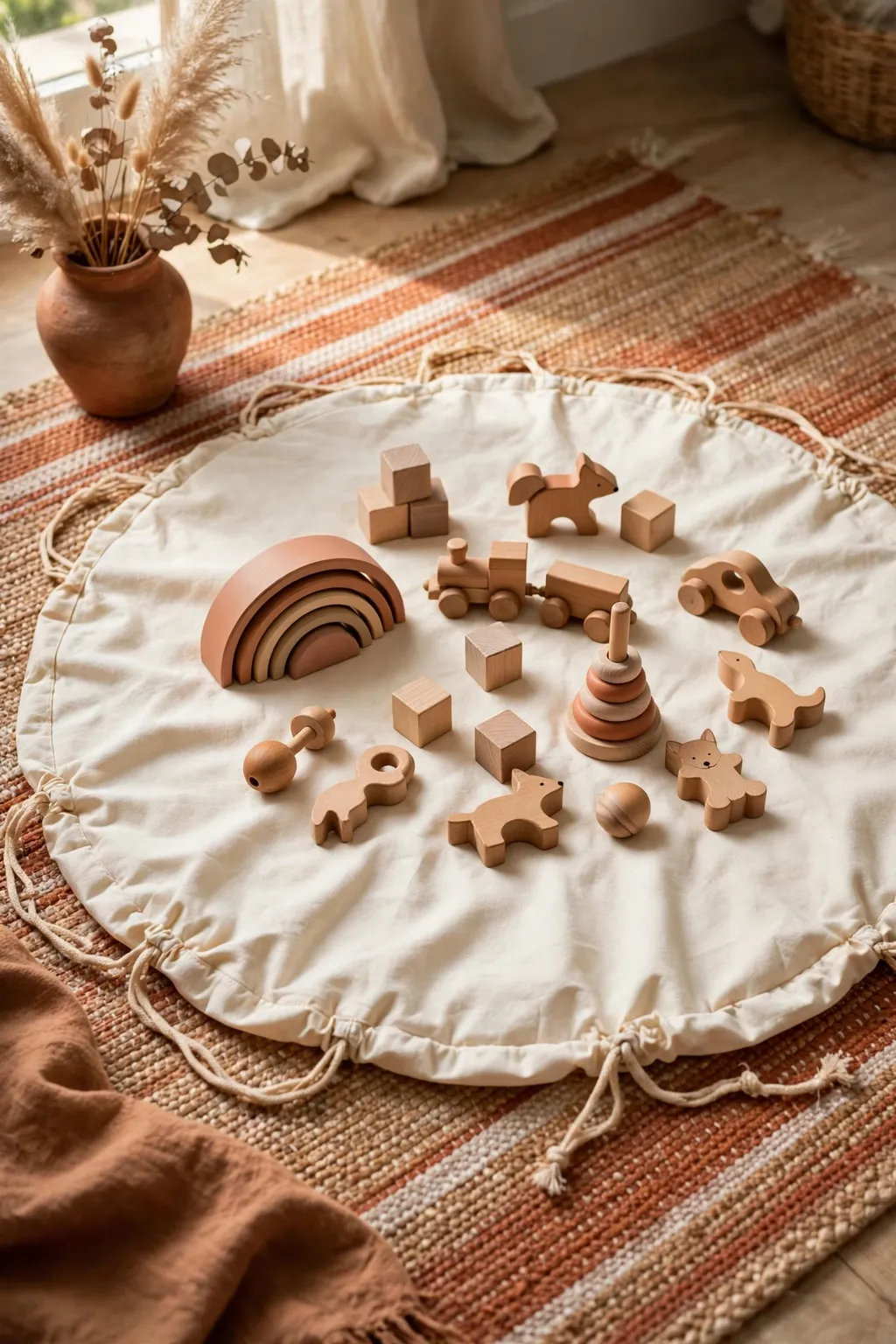
A drawstring play mat is a play surface and a toy bag in one: spread it out for building and drawing, then pull the cord and the whole lot cinches into a bag. It is the best idea on this list for Lego and small building toys, which are the hardest to tidy and the easiest to step on. Hang the closed bag on a hook by the door, and the floor is clear in under a minute.
A Few Tips Before You Start
- Give every toy group one closed home — a basket, bin, or drawer — and put it back in the same place every time, so tidy-up time is a habit, not a hunt.
- Keep the most-loved toys at child height and the messy or small-piece toys up high, where you decide when they come out.
- Rotate toys instead of displaying them all at once: a smaller set out at a time means less clutter and toys that feel new again.
- Leave one surface clear — the coffee table top, or one shelf — so the room still reads as a calm living room for grown-ups too.
- Measure before you buy: in a small living room, a basket or bench that is an inch too wide can block a walkway or a door swing.
Frequently Asked Questions
How do I store toys in a small living room without it looking like a playroom?
Use closed, matching storage — lidded baskets, a storage ottoman, or cube shelves with fabric bins — so toys disappear behind one consistent look. Keep one surface toy-free and choose storage in the room’s own colours, and the living room will read as a living room, not a playroom.
What is the best toy storage for a small living room on a budget?
Woven baskets under the coffee table and a drawstring play mat bag are the best budget options, because they cost little, need no furniture, and tidy a whole room in minutes. Add cube shelves with fabric bins later, when you want a more permanent home for each toy group.
Where should toys go in a living room with no spare closet?
Use furniture you already need: a storage ottoman, a storage bench, TV console drawers, and baskets under the coffee table. Each piece hides one toy group, so no spare closet is needed and every toy still has a home of its own.
How can I keep toys tidy when my child plays in the living room every day?
Keep only a small rotated set of toys out, give each group one labelled home at child height, and make tidy-up a short daily habit — one bin out, one bin away. A drawstring play mat helps most of all, because the whole play session gathers into one bag in under a minute.
WRAPPING UP
The Cozy Takeaway
A small living room does not need to choose between toys and calm — it just needs one closed home for each toy group, in furniture you already love. Start with baskets under the coffee table or a storage ottoman, add one idea at a time, and let the room stay a place where everyone, big and small, wants to be. Happy tidying, friend!