
15 Toy Organization Ideas on a Budget
Hi, I’m Emma! Our home used to tell on us the second anyone walked in — a trail of toy cars across the rug, blocks under the sofa, and a stuffed bunny holding court on the armchair. I did not want a playroom look, and I did not want to spend a fortune on fancy storage either. These are the 15 budget toy organization ideas that finally let our home stay calm and cozy, while still being a place where children actually play.
The best toy organization ideas on a budget are lidded baskets under the coffee table, a storage ottoman, and cube shelves with labelled bins, because they hide clutter in seconds, keep favourite toys within easy reach, and use furniture you already need. Give every toy group one closed home, keep the most-loved toys at child height, and rotate the rest — most of the ideas below cost little or nothing.
Woven Baskets Under the Coffee Table
Low woven baskets tucked under the coffee table are the fastest tidy-up I know — everything sweeps in, the low sides hide it, and the room looks calm again. Choose baskets that slide fully underneath so they never block knees or feet, and give each basket one job: cars in one, soft toys in another. Thrift shops are full of sturdy baskets for a few dollars each.

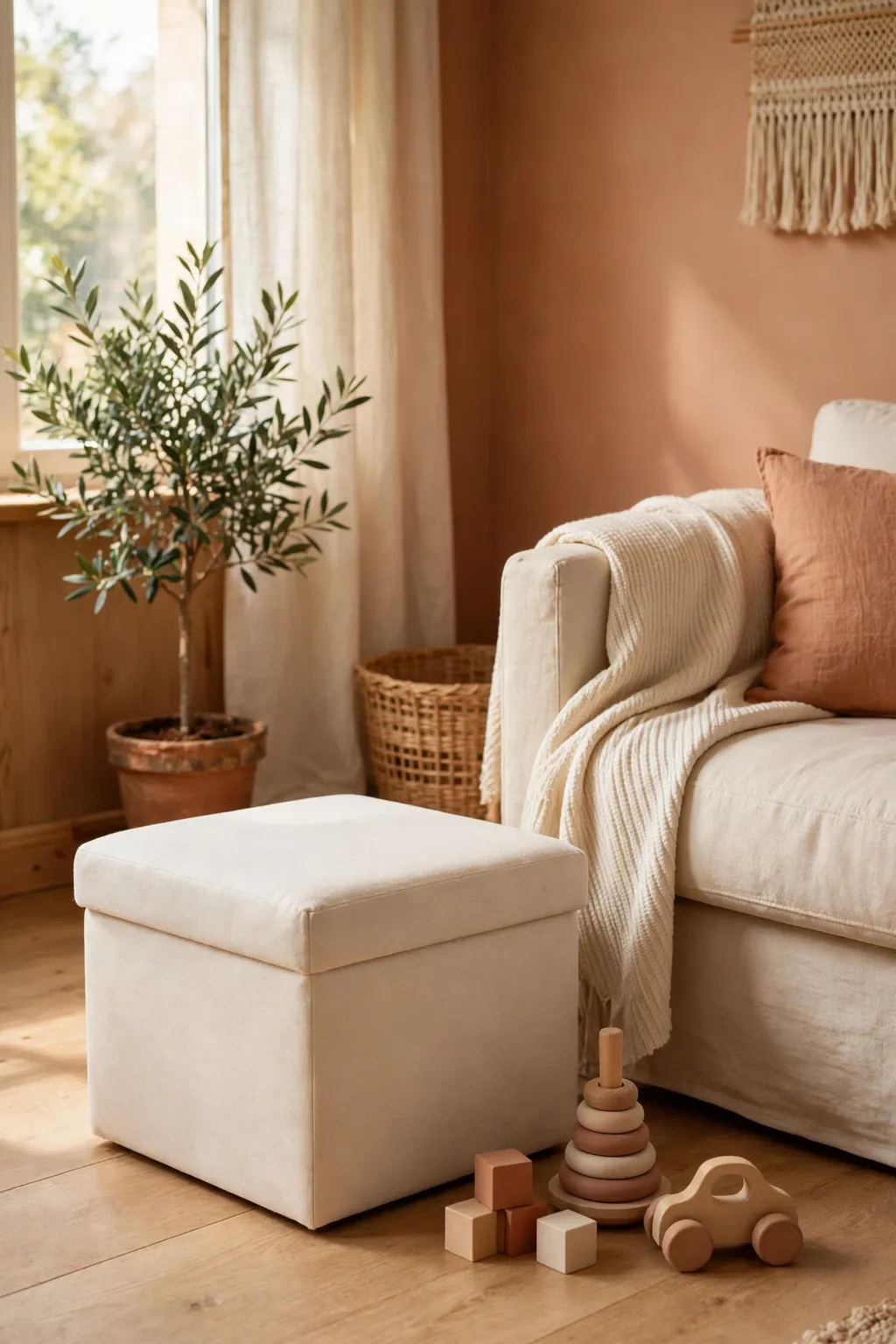
How a Storage Ottoman Hides the Toy Clutter
A storage ottoman is a seat, a footrest, and a toy chest in one, which is exactly what a small home needs. Lift the lid, drop the blocks and books inside, and close it — the clutter is gone and you have somewhere to sit. Pick a firm, flat-topped ottoman in a washable fabric so it doubles as a coffee table for grown-ups after bedtime, and watch for one secondhand.
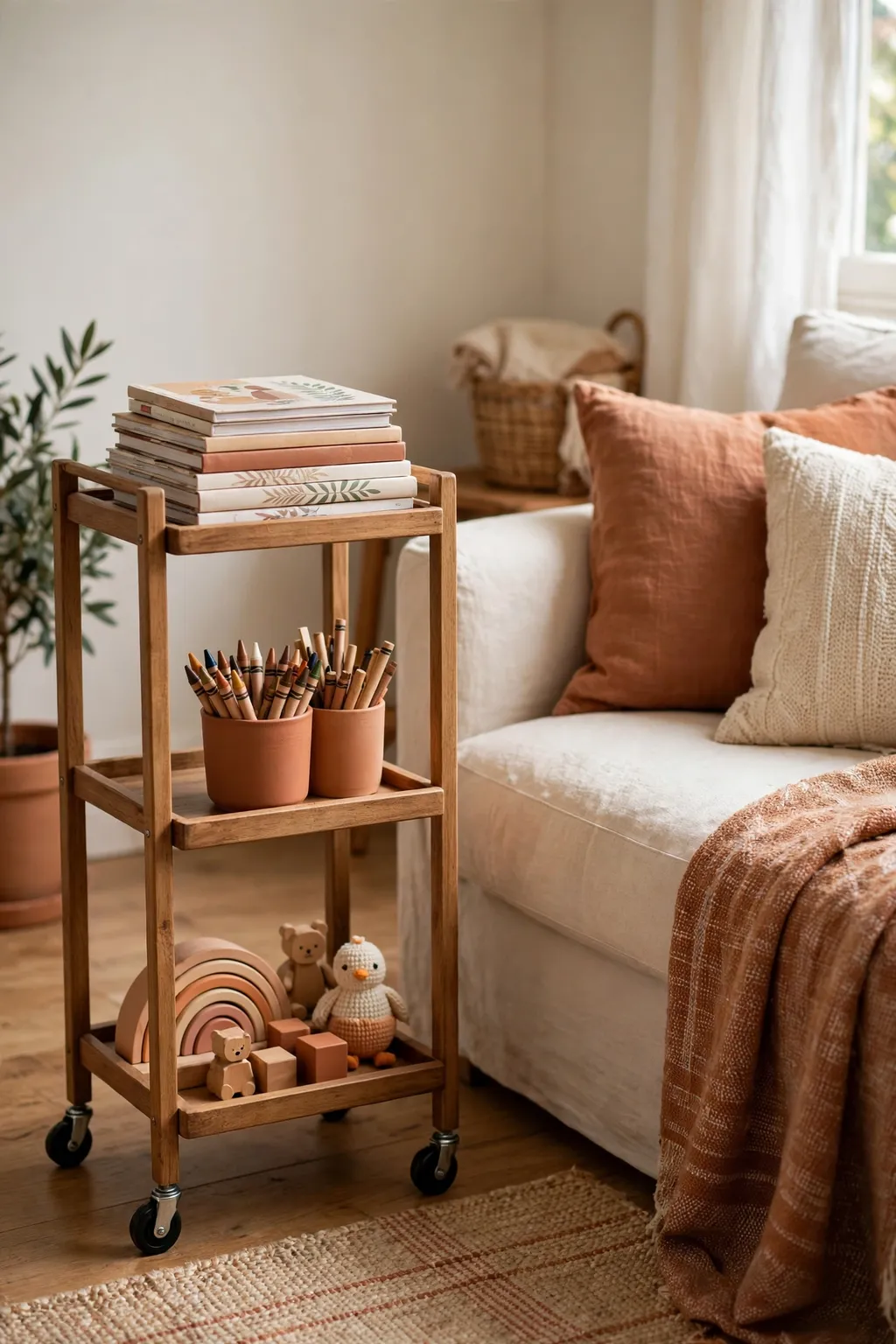
What Is the Best Slim Rolling Cart for Toys Beside the Sofa?
A slim rolling cart parked beside the sofa is the best small-space toy station, because it holds colouring books, crayons, and small toys in one narrow footprint and rolls away when you need the floor. Choose a three-tier cart with a lip on each tray so nothing slides off, and keep the top tier for the toys in daily use and the bottom tier for spares.
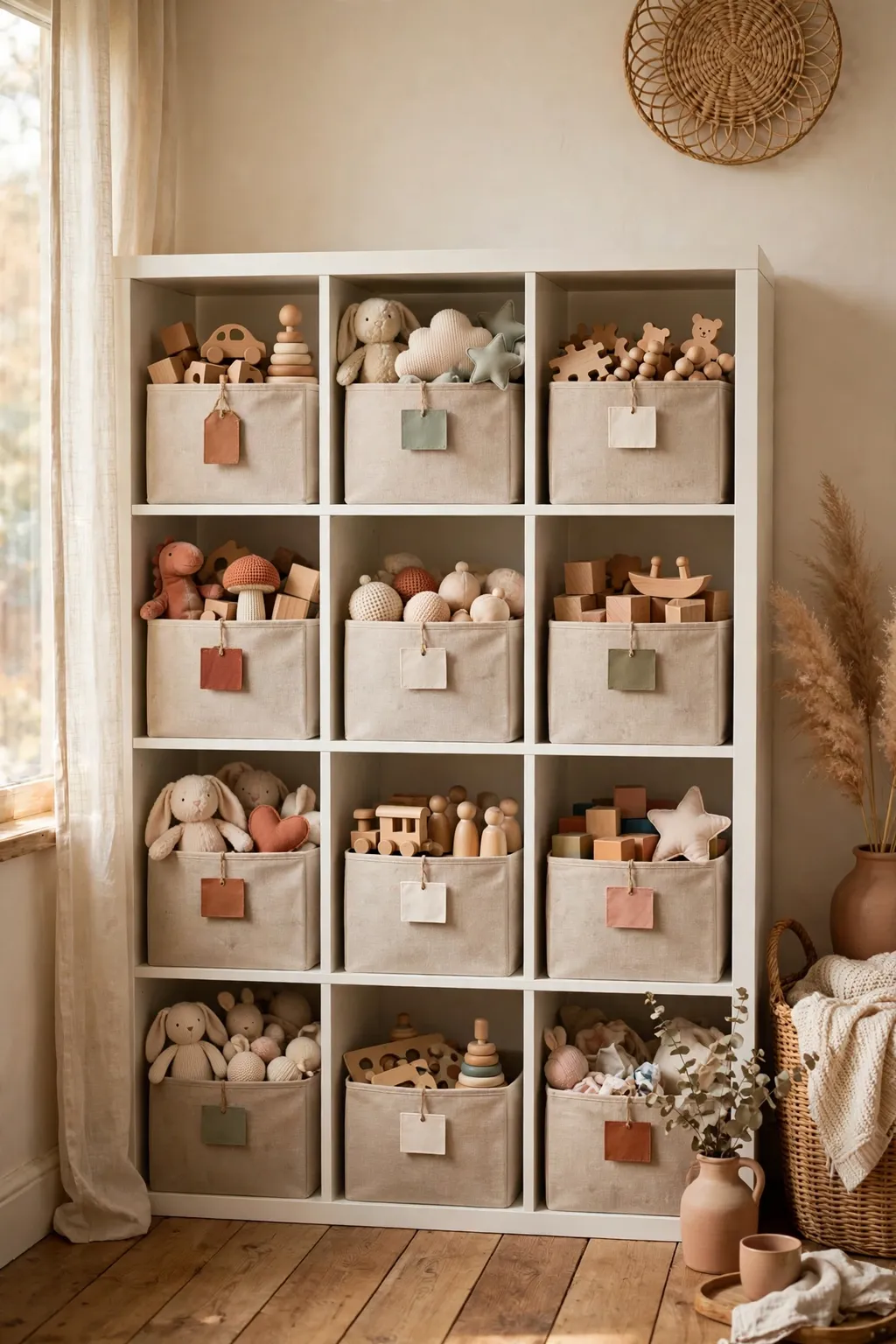
Cube Shelves With Labelled Bins for Easy Tidy-Ups
Cube shelves with fabric bins turn a whole wall of toys into a tidy grid, and a small child can learn exactly where each bin lives. Label each bin with a picture as well as a word — a car, a block, a doll — so tidy-up time needs no reading and no nagging. Keep the heaviest bins on the bottom cubes and the lightest, least-used toys up top.
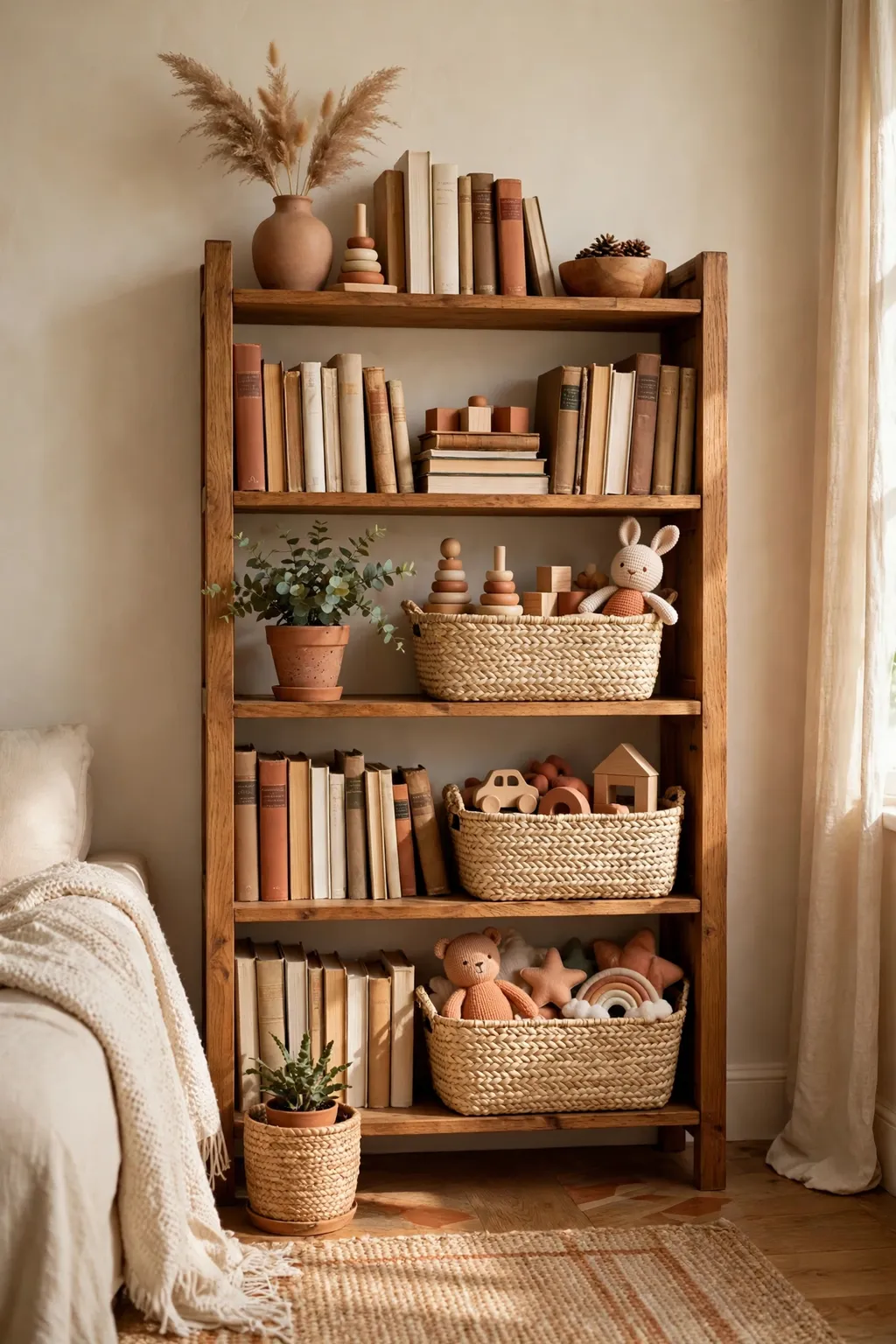
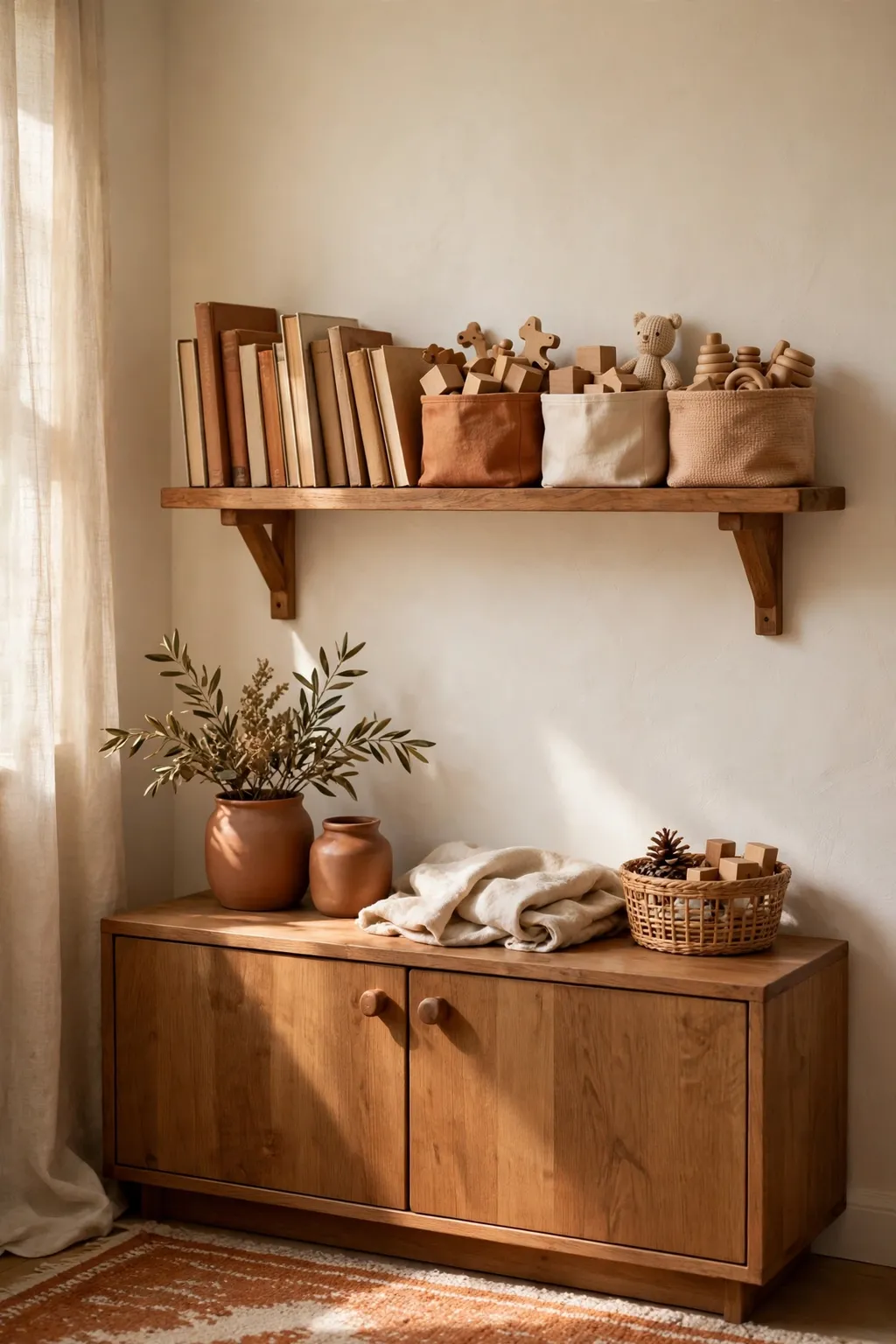
Baskets on a Bookshelf That Still Look Grown-Up
Mixing a few matching baskets into a bookshelf lets toys live alongside books, plants, and framed photos without the shelf looking like a toy shop. Use the same basket colour and size across the shelf, leave one shelf completely toy-free for grown-up things, and put the noisiest toys in the baskets with lids. The shelf stays pretty, and the toys stay put.
A Storage Bench That Doubles as Extra Seating
A low storage bench under a window, or against the longest wall, hides bulky toys like ride-ons and big blocks while giving guests somewhere to sit. Look for a bench with a lift-up lid and a soft top, and keep a folded throw on it so it reads as furniture first and toy storage second. It is the one piece I would buy first in a truly tiny living room.

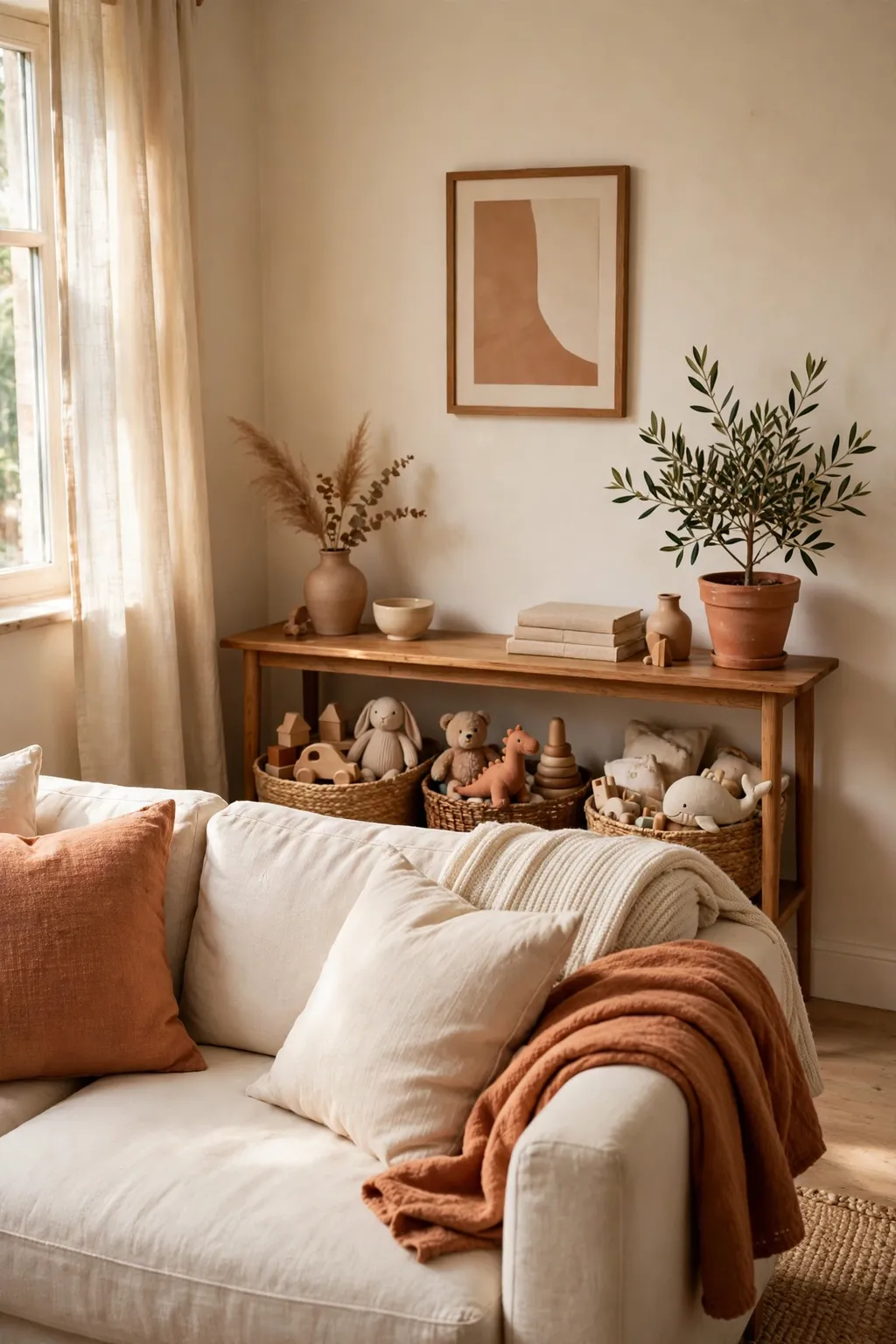
A Slim Console Behind the Sofa for Hidden Toy Storage
The narrow gap behind a sofa is wasted space in most small homes, and a slim console table turns it into hidden toy storage. Baskets or low boxes slide underneath, board games stand upright on the console top, and the sofa back hides most of it from view. Measure the gap first — a console that is even an inch too deep will push the sofa into the middle of the room. A narrow console works just as well in a hallway or a coat closet nook, if that is where your toys tend to pile up.
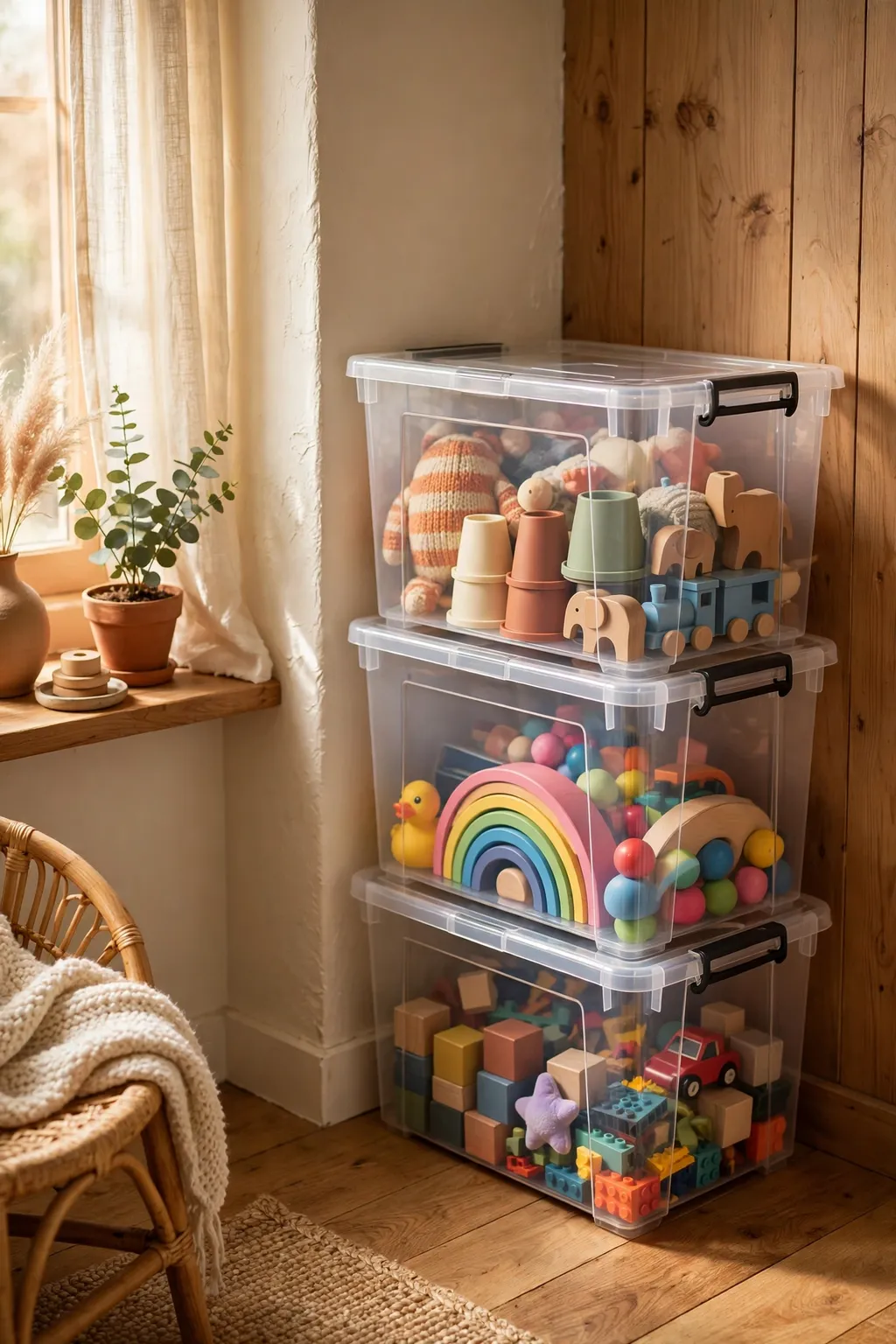
Clear Stackable Bins So You Can See What Is Inside
Clear stackable bins are the honest option: you can see the Lego, the dolls, and the puzzle pieces without opening a single lid, so nothing gets forgotten at the bottom. Stack them inside a cupboard or in a corner nook, and label the front of each bin so the stack stays in the same order. One rule keeps them working — one bin out at a time.
Wall-Mounted Shelves That Keep Small-Piece Toys Up High
Wall-mounted shelves lift the toys you control — paint sets, craft supplies, and small-piece sets — safely out of reach while freeing every inch of floor. Fit two or three shallow shelves above a low cabinet, keep the prettiest toys and books facing forward like a display, and store the messy supplies in small lidded boxes on the top shelf. The same trick keeps a craft room tidy too. Anchor every shelf properly, and never put heavy bins above head height.
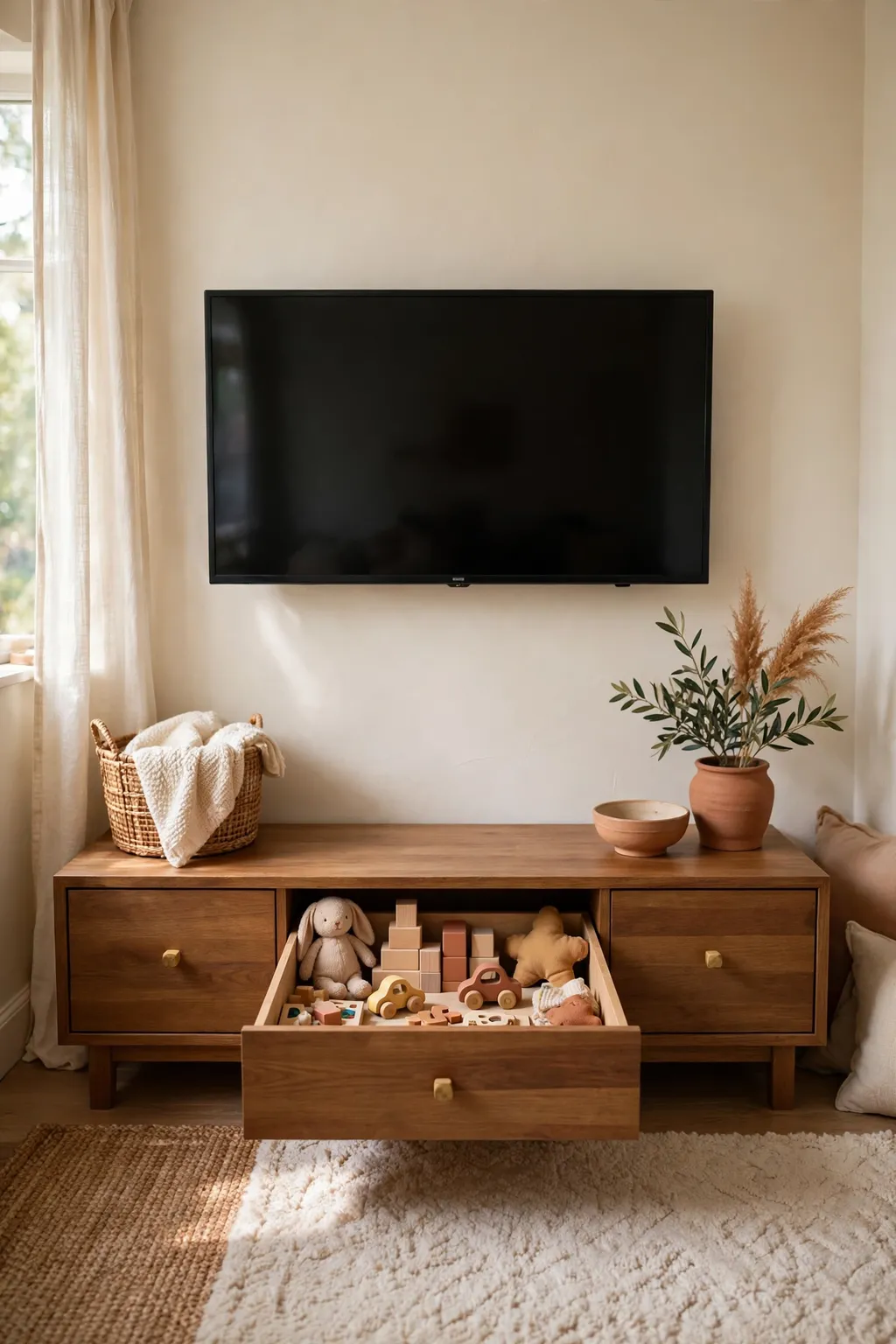
TV Console Drawers That Swallow the Toy Overflow
A TV console with deep drawers is secret toy storage hiding in plain sight — the remote, the chargers, and a whole drawer of toys can share it without a single toy on show. Give toys the bottom drawers, where little hands can reach them, and keep cables and grown-up things in the top drawer. When guests come over, one drawer push is all the tidying you need.
A Drawstring Play Mat Bag for a Five-Minute Tidy-Up
A drawstring play mat is a play surface and a toy bag in one: spread it out for building and drawing, then pull the cord and the whole lot cinches into a bag. It is the best idea on this list for Lego and small building toys, which are the hardest to tidy and the easiest to step on. Hang the closed bag on a hook by the door, and the floor is clear in under a minute.

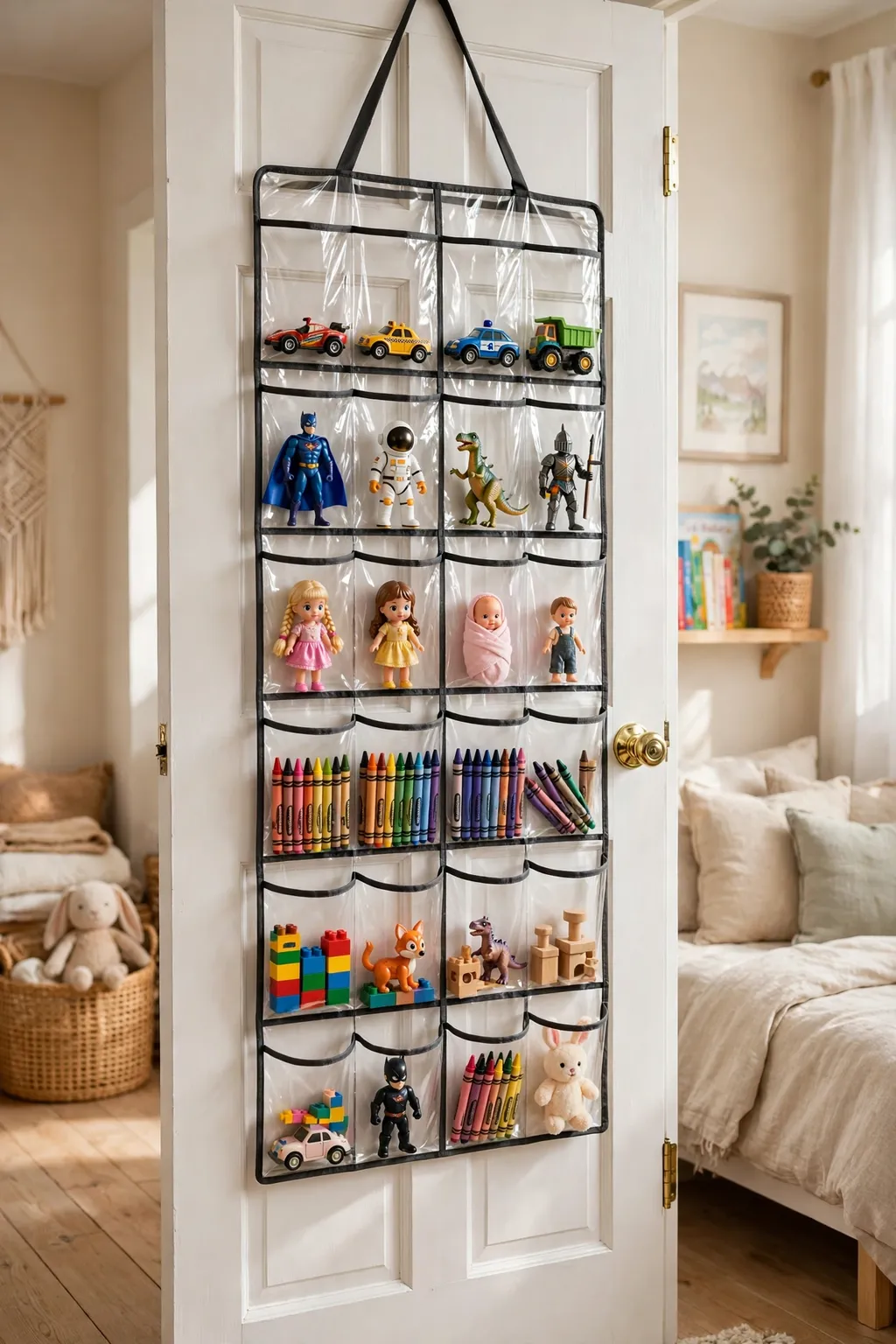
An Over-the-Door Shoe Organizer for Small Toys
A clear over-the-door shoe organizer is the cheapest toy display you will ever buy, and children love it because they can see everything at once. Hang one on the back of a bedroom or playroom door, then fill the pockets with toy cars, action figures, dolls, and crayons. Put the favourites at eye level and the crayons and small pieces up high, where you decide when they come out.
Dollar-Store Bins With Picture Labels Kids Can Read
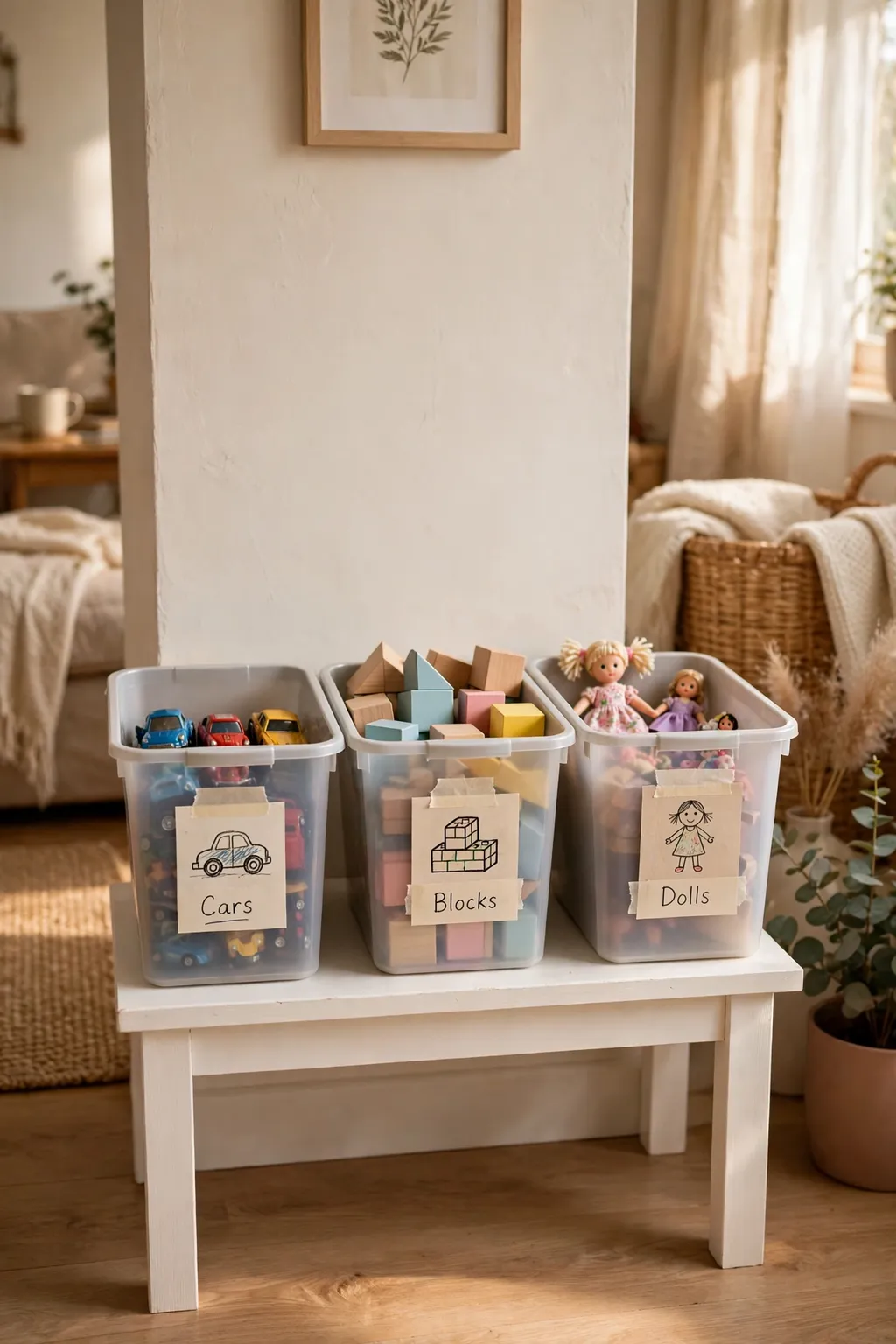
Plain plastic bins from the dollar store do the same job as the expensive ones, once you add a picture label. Tape a hand-drawn card to the front of each bin — a car, a block, a doll — with the word underneath, so even a child who cannot read yet knows exactly where things belong. These dollar-store bins are light enough for small hands to carry, and cheap enough to replace without a second thought.
Toy Rotation Boxes in the Closet
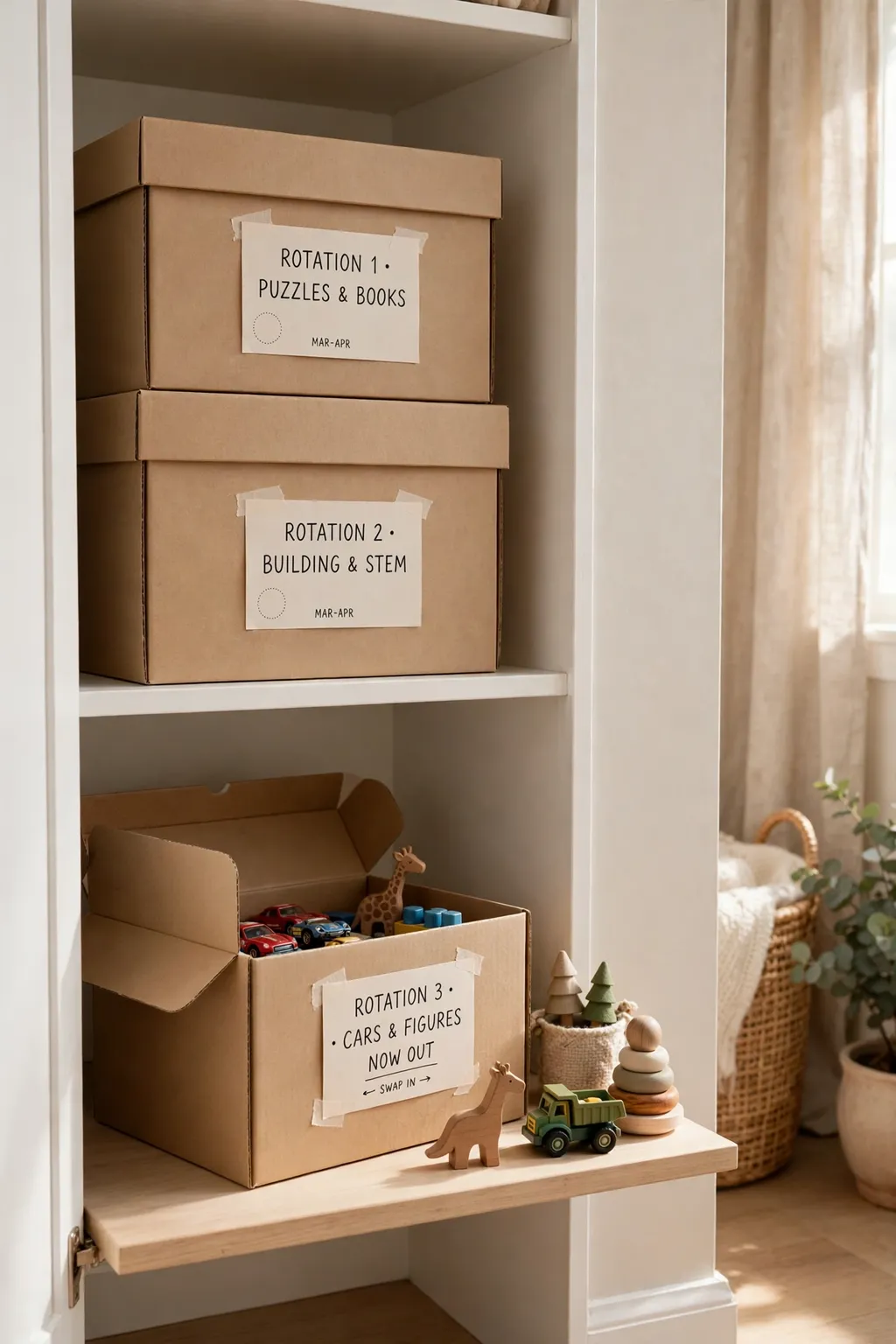
Toy rotation is the free idea that makes all the others work: keep a small set of toys out, and box the rest away in the closet. Swap one box every couple of weeks and the old toys feel brand new again, while the house stays half as cluttered. Label each box with what is inside and the month it goes out, so the swap takes five minutes — a tidy kids closet makes the whole system easy to keep.
Rolling Bins Under the Bed for Big Toys
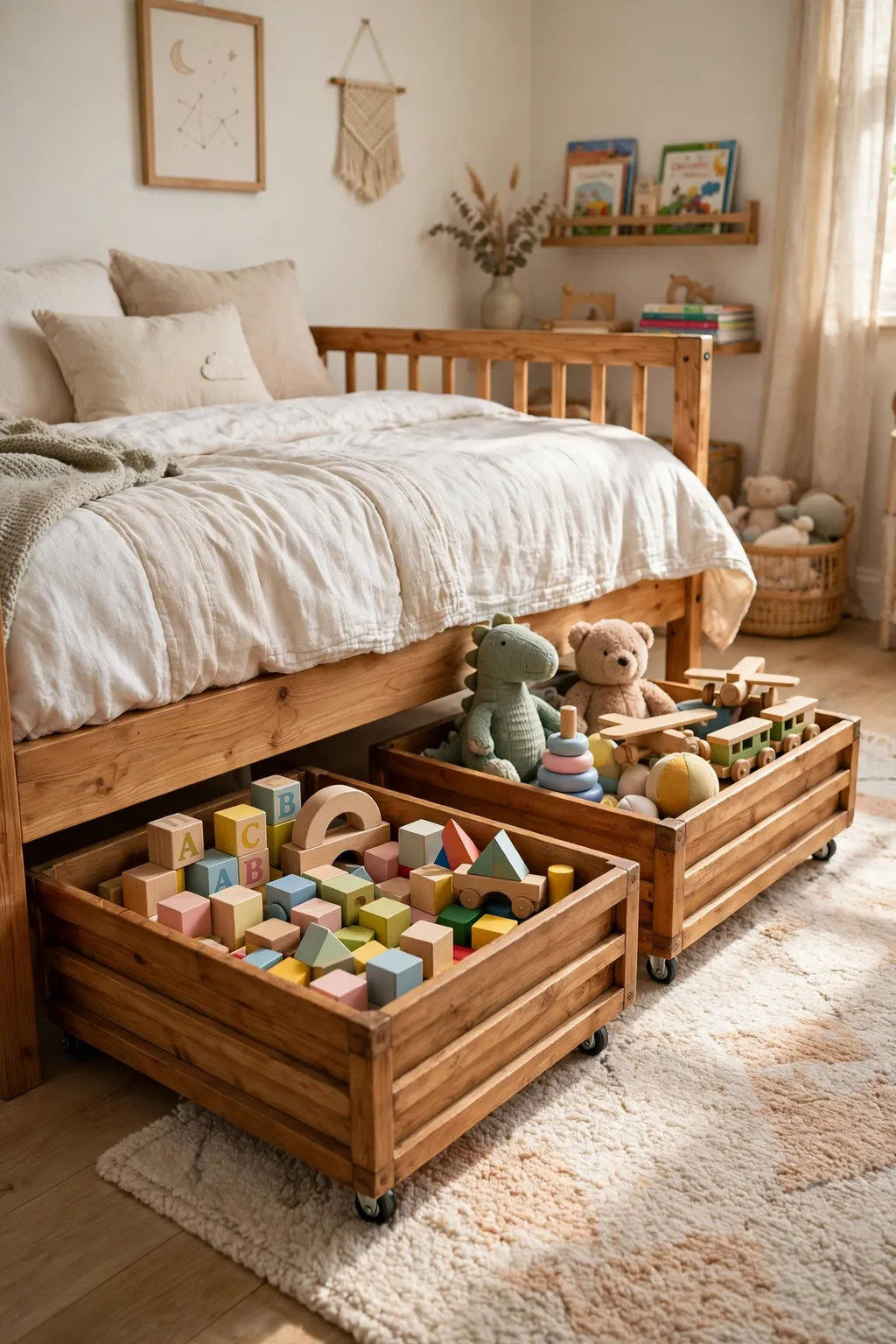
The space under a bed is the biggest unused toy cupboard in the house, and low rolling bins turn it into storage a child can actually use. Choose shallow wooden or plastic bins on wheels, fill them with blocks, big vehicles, and soft toys, and let your child roll them out to play and push them back when done. Keep one bin per child, so there is never an argument about whose mess it is.
A Few Tips Before You Start
- Give every toy group one closed home — a basket, bin, or drawer — and put it back in the same place every time, so tidy-up time is a habit, not a hunt.
- Keep the most-loved toys at child height and the messy or small-piece toys up high, where you decide when they come out.
- Rotate toys instead of displaying them all at once: a smaller set out at a time means less clutter and toys that feel new again.
- Leave one surface clear — the coffee table top, or one shelf — so the room still reads as a calm living room for grown-ups too.
- Measure before you buy: in a small room, a basket or bench that is an inch too wide can block a walkway or a door swing.
Frequently Asked Questions
How do I organize toys on a tight budget?
Start with what you already own: baskets, boxes, and a bag or two, then add one cheap piece at a time, like dollar-store bins or an over-the-door organizer. Give every toy group one closed home, label it with a picture, and rotate the toys you keep out — most of the ideas above cost little or nothing.
What is the best toy storage for small spaces?
Closed storage that doubles as furniture: baskets under the coffee table, a storage ottoman, TV console drawers, and rolling bins under the bed. Each piece hides one toy group without taking up any extra floor, so a small room still feels like a room, not a playroom.
How do I keep toys tidy when my kids play every day?
Keep only a small rotated set of toys out, give each group one labelled home at child height, and make tidy-up a short daily habit — one bin out, one bin away. A drawstring play mat helps most of all, because the whole play session gathers into one bag in under a minute.
How often should I rotate toys?
Every two to four weeks works well for most families: swap one box of toys from the closet for one that has been out, and let your child help choose. If a toy has sat untouched through two rotations, it is a good candidate to pass along or store for a younger child.
WRAPPING UP
The Cozy Takeaway
A home full of toys does not need an expensive storage system — it just needs one closed home for each toy group, in pieces you already love. Start with baskets under the coffee table or a storage ottoman, add one idea at a time, and let the house stay a place where everyone, big and small, wants to be. Happy tidying, friend!